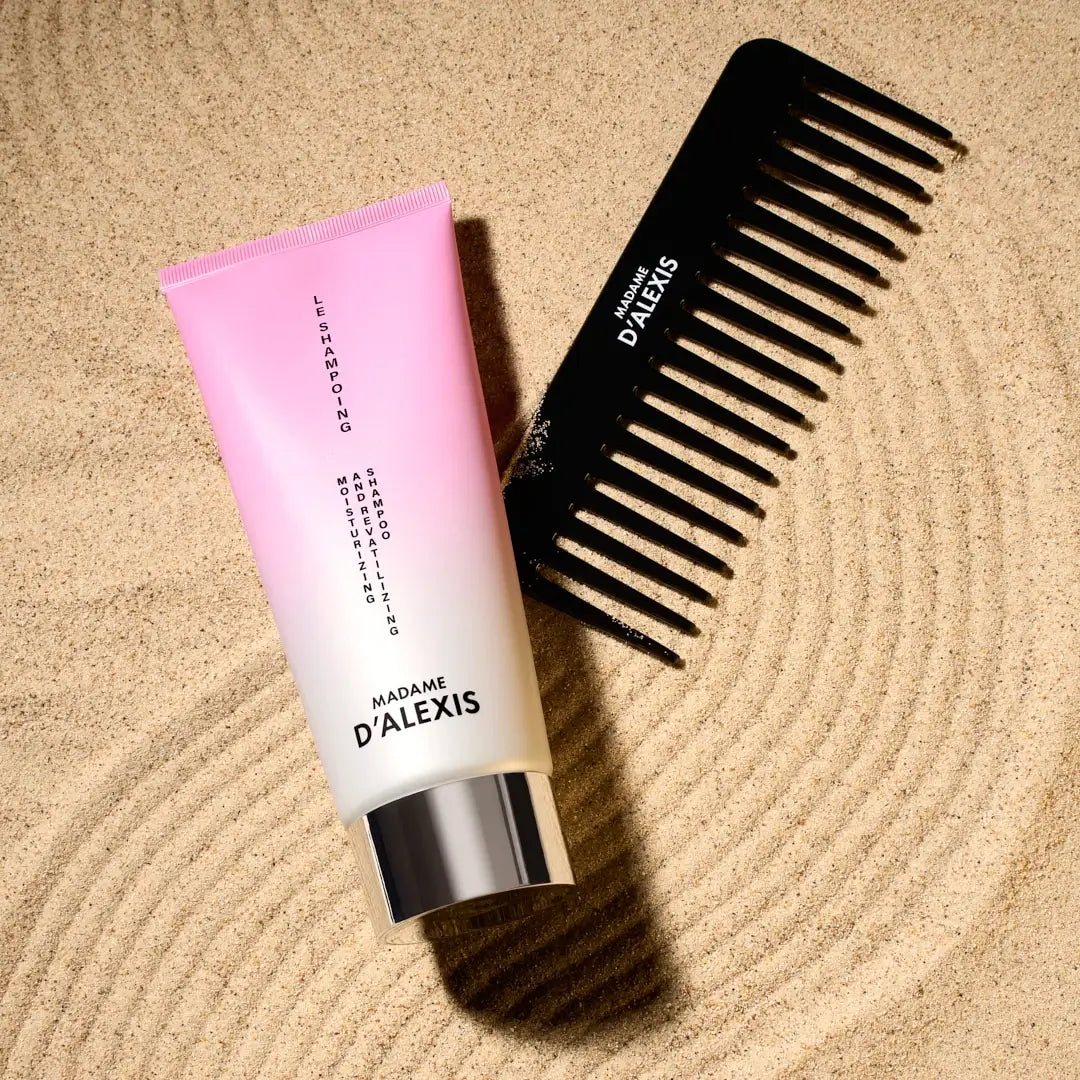
Alexis' Madame routine for oily hair and dry roots
Rebalancing does not mean stripping. This is a strong belief. Too many routines attack the scalp in the name of purity and actually aggravate sebum production.
At Madame d'Alexis, the routine for oily hair and dry roots is directly inspired by skincare. It acts simultaneously on the scalp, hair fiber, and microbiome, with a simple logic: to restore normal, lasting functioning without harshness.
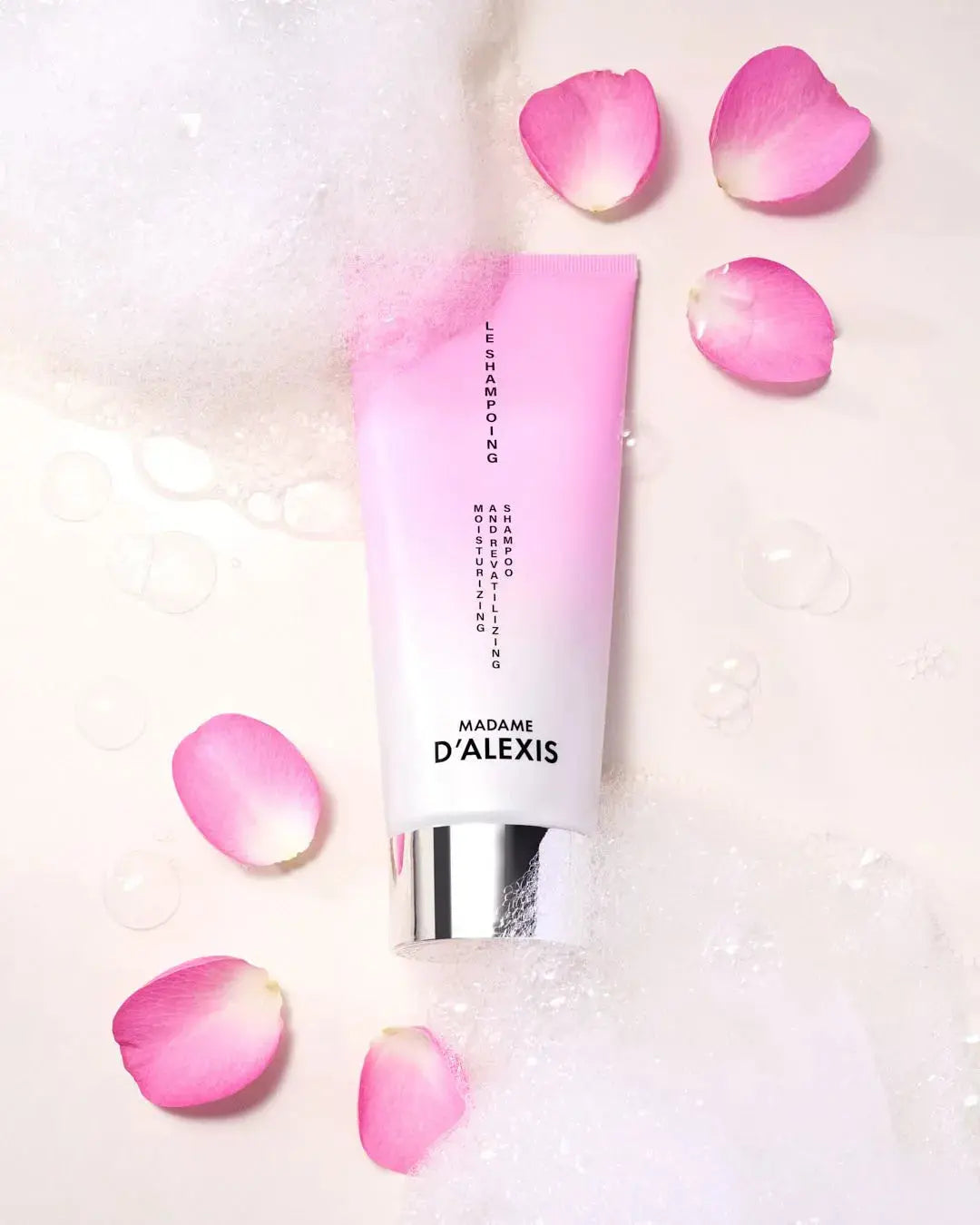
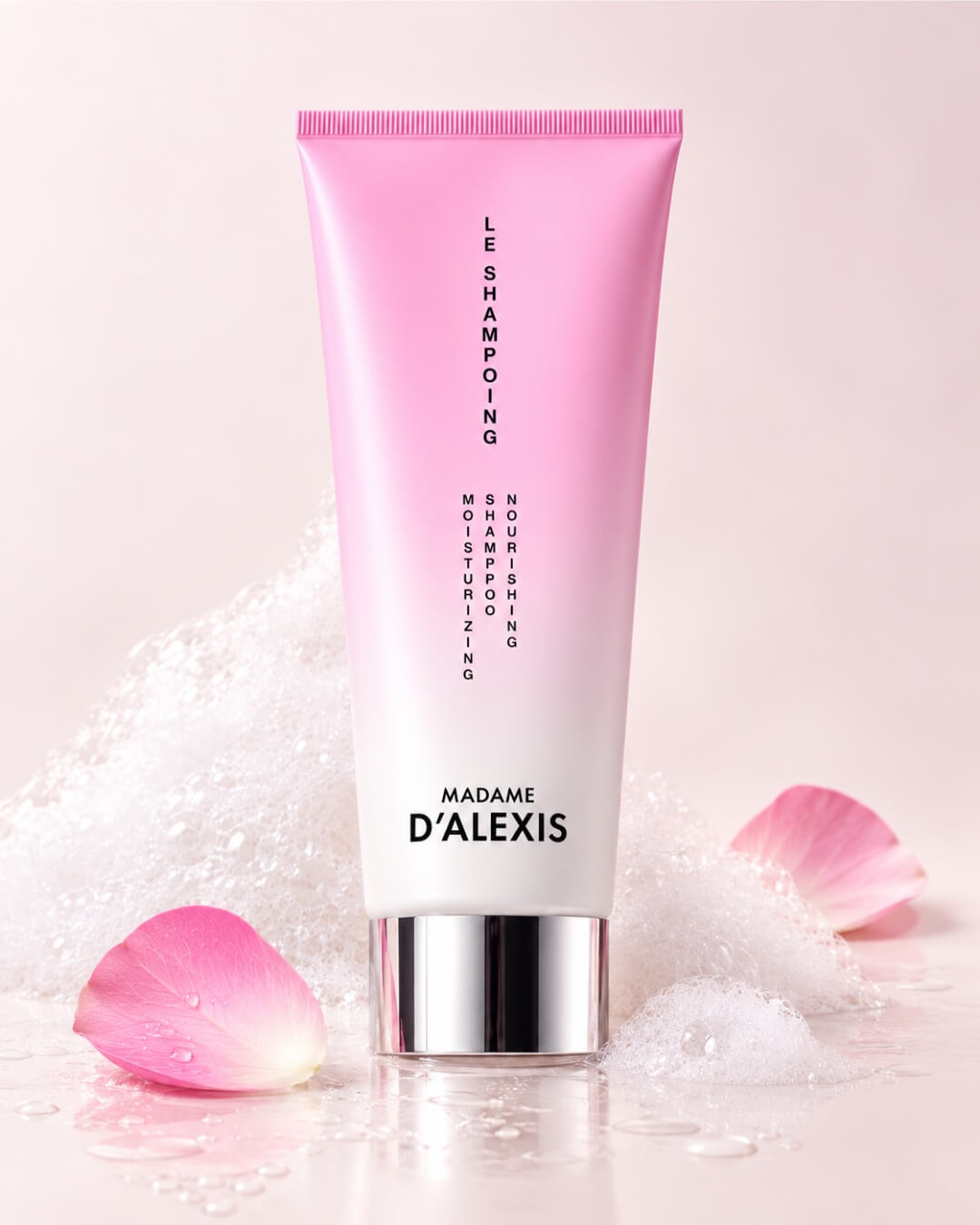
The Shampoo
Gentle cleaning · 98% natural
- Organic hydrosols, sulfate-free
- Prebiotics, cationic AH
- Softness, shine, suppleness
$39.00 (80)
See the treatment
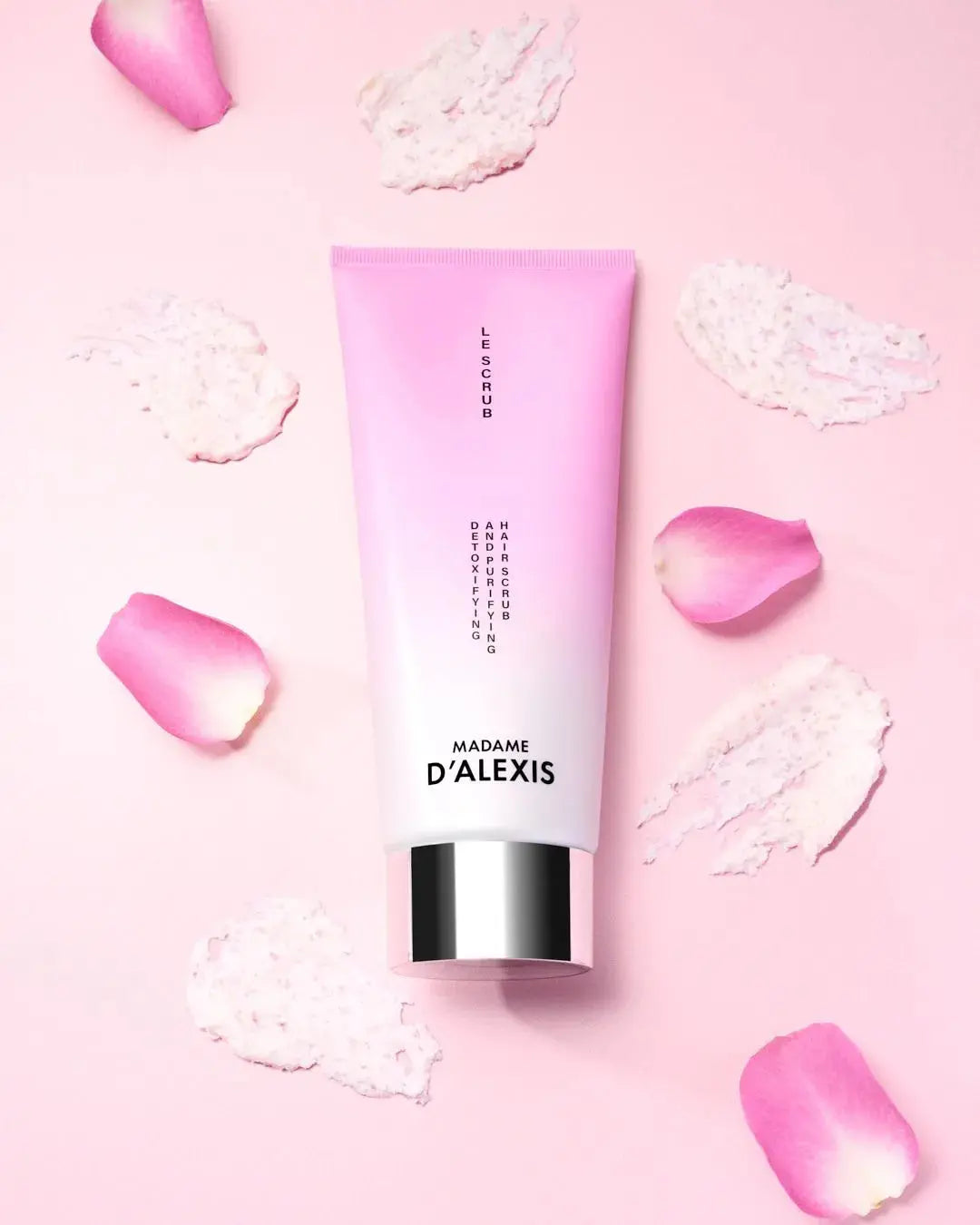
The Scrub
Scalp detox · 98% natural
- Removes residue and excess sebum
- Organic hydrosols, fleur de sel
- Lightness, comfort, shine
€42.00 (33)
See the treatment
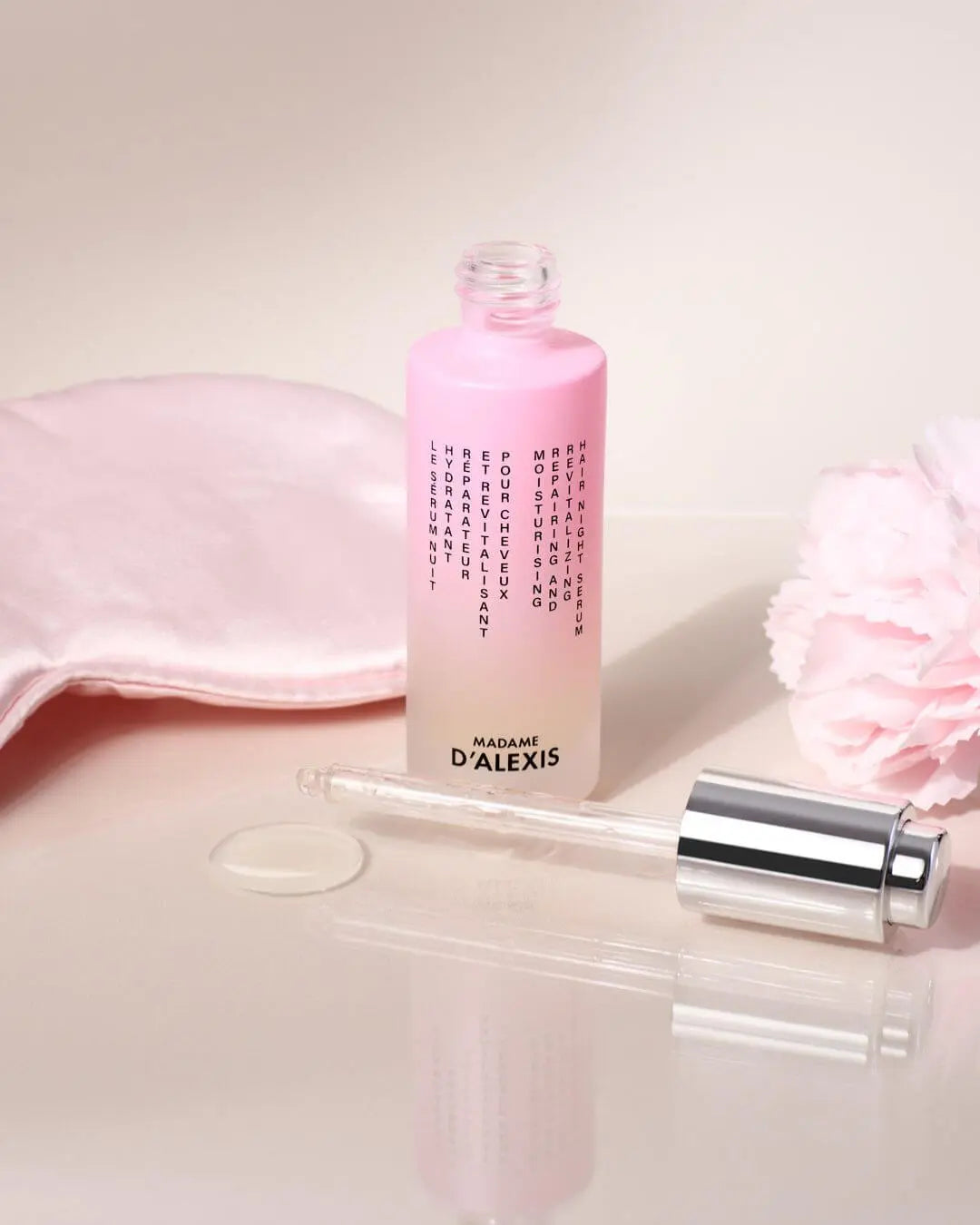
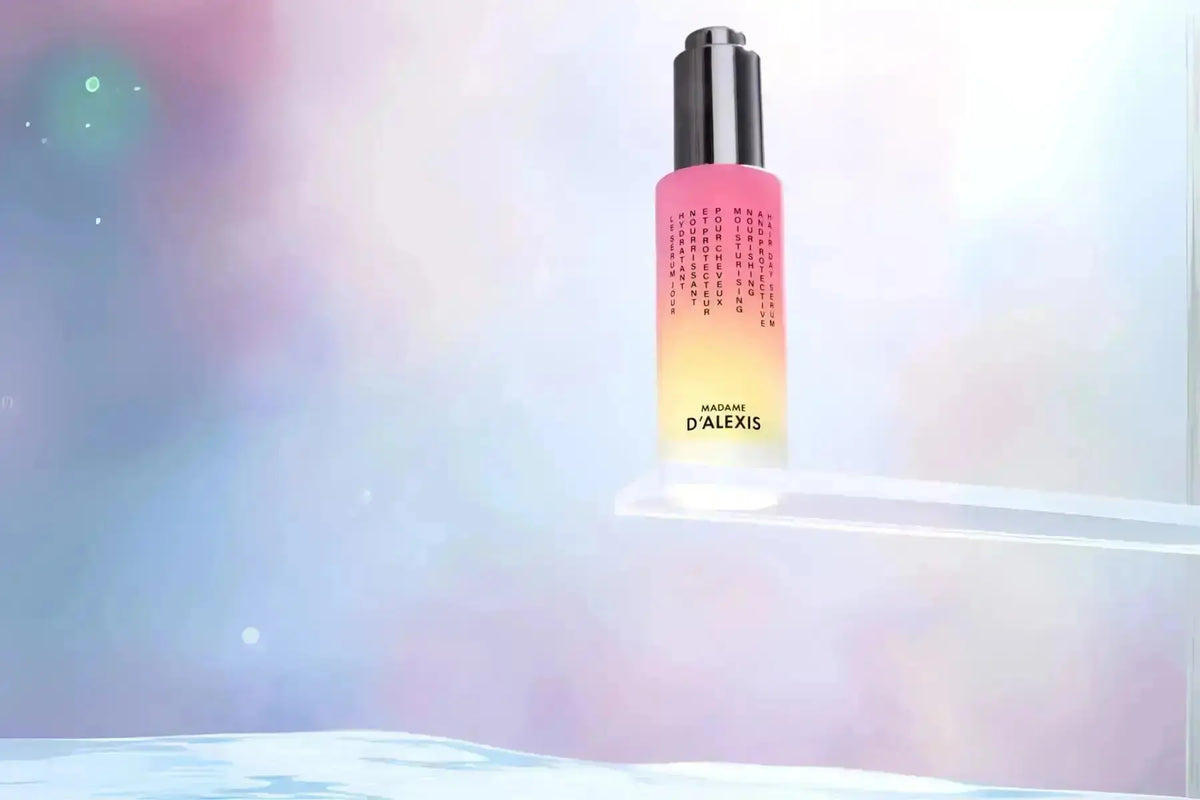
The Night Serum
Nighttime regeneration · 98% natural
- Moisturizes the scalp without leaving it greasy
- Organic hydrosols, probiotics
- Comfort, density, balance
€35.00 (27)
See the treatment
Step 1 – Detoxify the scalp without damaging it
This first step is fundamental. A scalp saturated with sebum, pollution, or product residue cannot regulate itself. Detoxing is not optional, but it must be controlled.
Why this step is essential
- Remove excess sebum and polluting particles
- Remove residues that suffocate the skin
- Oxygenate the scalp
- Reset sebum production without causing a rebound effect
The right move
- Scalp scrub or targeted detox treatment
- Slow and gentle massage with fingertips
- No aggressive rubbing, never nails
Madame Alexis's vision
- Organic active hydrosols with physiological pH
- Strict respect for the scalp microbiome
- Simultaneous purifying and moisturizing action
The scalp skin does not like to be treated roughly. When treated gently, it regulates itself.
Ideal frequency
Every 10 to 15 days, depending on the level of excess sebum.
The Scrub
Scalp detox · 98% natural
- Removes residue and excess sebum
- Organic hydrosols, fleur de sel
- Lightness and shine
€42.00 (33)
See the treatment
Step 2 – Choose a shampoo that regulates sebum without stimulating it
A shampoo for combination hair should not seek to "dry out" the hair. It should cleanse intelligently.
What a good shampoo should do
- Clean without stripping
- Regulate sebum production
- Preserving the scalp barrier
- Maintain softness and lightness
What Madame d'Alexis profoundly changes
- Formula with no added water
- Base of bioactive hydrosols
- Prebiotics to stabilize the microbiome
- Cationic hyaluronic acid to moisturize without greasiness
This approach avoids the well-known vicious cycle of oily hair: the more you strip it, the more the scalp overproduces.
The right move
- Apply only to the scalp
- Gentle massage
- Thorough rinsing
- Lukewarm or cold water, never boiling water
The Shampoo
Gentle cleaning · 98% natural
- Organic hydrosols, sulfate-free
- Prebiotics, cationic AH
- Shine and flexibility
$39.00 (80)
See the treatment
Step 3 – Moisturize and repair the lengths without greasing the roots
Dry ends are not inevitable. They are a symptom of sebum no longer reaching the hair fiber.
Why are the ends dry?
- Sebum remains concentrated at the root
- The fiber is weakened, the cuticle is open
- Breakage often occurs during brushing.
The right treatment
- Moisturizing and nourishing mask
- Plant ceramides to restore the fiber
- Hyaluronic acid for deep hydration
- Exclusive application on lengths and ends
Variations as needed
A well-hydrated fiber does not weigh hair down. It stabilizes it. It is often at this precise moment that balance really begins to take hold.
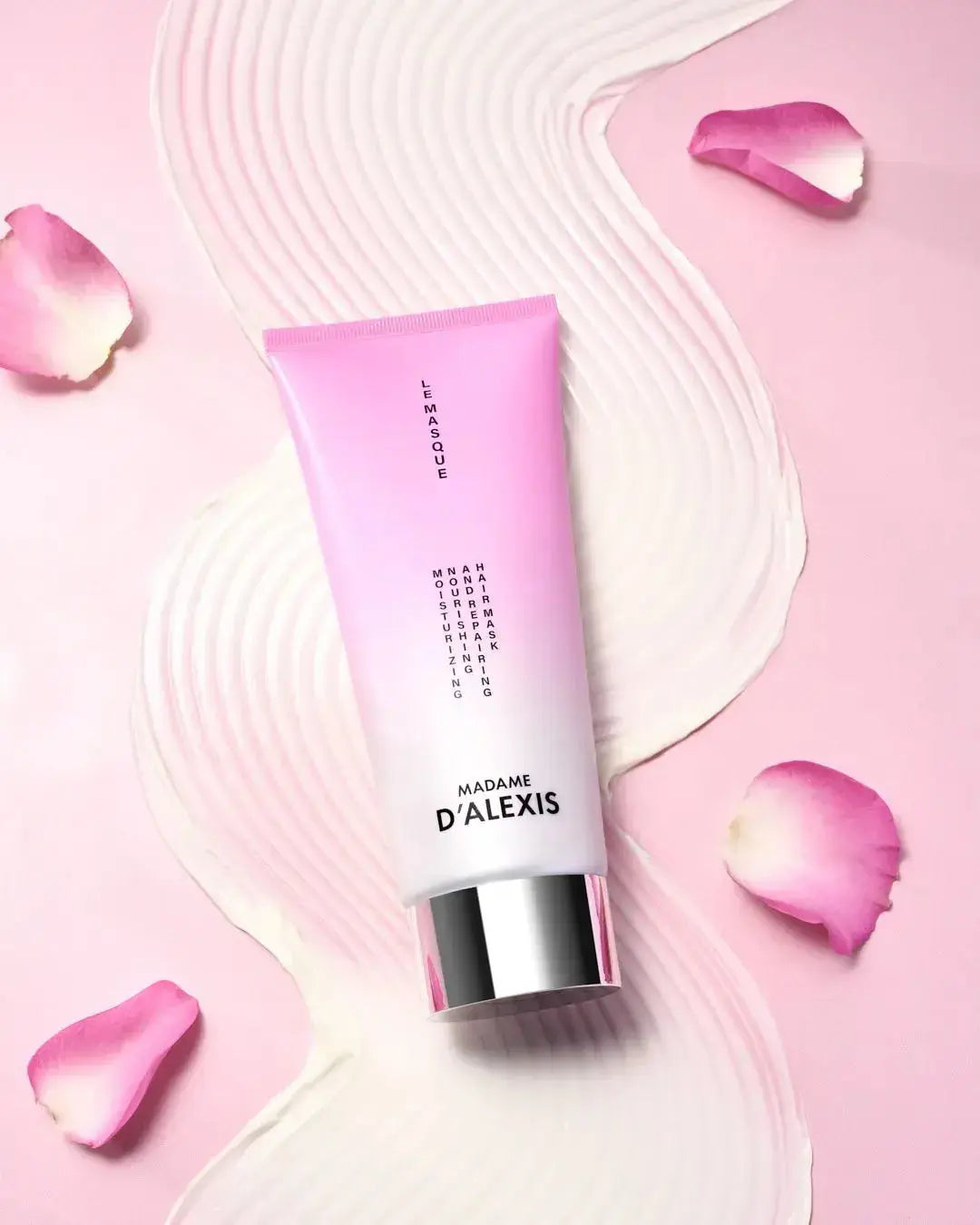
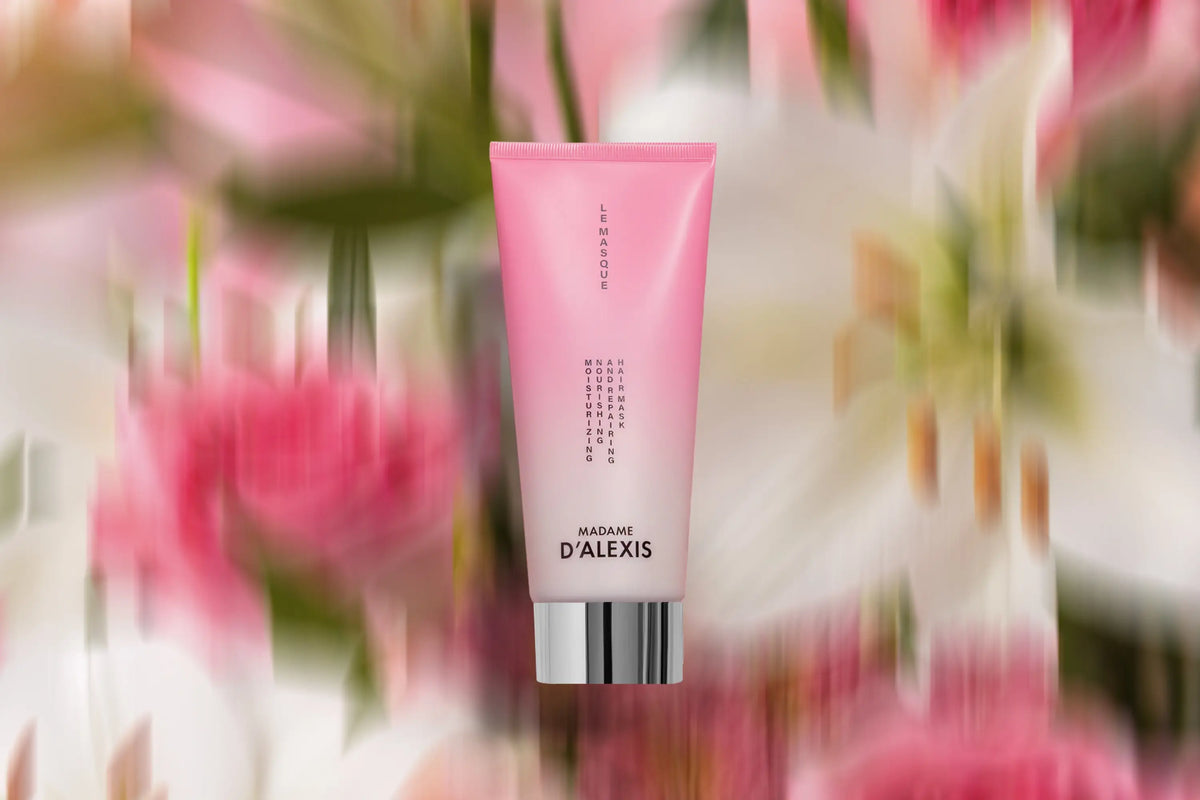
The Mask
Intense hydration · ceramides
- Plumps and smooths the cuticle
- Cationic hyaluronic acid
- Repairs and reduces frizz
€53.00 (82)
See the treatment
Key actions to stabilize balance over time
Rebalancing oily hair and dry roots isn't just about using the right products. Your daily routine makes all the difference. That's often where balance is gained or lost.
-
Gradually spacing out shampooing is essential. Washing too frequently mechanically stimulates sebum production. The goal is not to force it, but to lengthen the intervals, week after week, to give the scalp time to regulate itself.
-
Limiting the use of dry shampoo is just as important. Used occasionally, it can be a lifesaver. Used too often, it clogs the scalp, promotes sebum buildup, and maintains imbalance.
- Water that is too hot is a widely underestimated aggravating factor. It dilates and weakens the skin barrier and increases sebum production. Lukewarm or even slightly cool water at the end of washing, on the other hand, helps to soothe the skin.
- Mechanical heat deserves the same vigilance. Hair dryers, flat irons, and repeated blow drying dry out the hair fiber and cause the scalp to produce more oil to compensate. Reducing the temperature and frequency is a simple but effective solution.
- Gentle brushing plays a key role. It helps to naturally distribute sebum from the roots to the ends, where it is needed. Provided you use a suitable brush and avoid sudden movements.
Finally, hair balance also comes from within.
- Balanced diet
- Adequate hydration
- Stress management
The scalp is living skin. It reacts to lifestyle as much as it does to skincare.
Last but not least, and often overlooked: consistency. A stable hair care routine is always better than a series of changes dictated by urgency or frustration.
Complete routine for oily hair and dry roots – Madame d'Alexis essentials
An effective routine is not an accumulation. It is a coherent structure, designed to work in synergy.
The essentials
Each step meets a specific need. Nothing is superfluous. Everything is functional.
Expert option
A complete routine for mixed-type hair, designed as a whole, allows for faster and longer-lasting results.
A premium vision
A routine designed as a ritual, not as a succession of products. Hair regains its rhythm. The scalp regains its logic.
FAQ – Oily hair and dry ends: understanding and treating them long-term
How to treat oily hair and dry ends?
Treating oily hair with dry ends requires recognizing a specific issue: combination hair. The scalp produces excess sebum, while the hair shaft—deprived of protection along its length—becomes dehydrated and damaged. Trying to treat just one aspect almost always leads to further imbalance in the hair as a whole.
The right approach is to regulate sebum production at the source, while providing targeted hydration to the lengths. Hair care must therefore act differently depending on the area. Cleanse without stripping the scalp. Moisturize without weighing down the ends.
Stripping the roots stimulates the sebaceous gland. Nourishing the roots accentuates the oily effect. Balance can be achieved through a precise, consistent routine tailored to combination hair.
What causes oily roots?
Oily roots are linked to excessive sebum production by the sebaceous gland. This gland plays a natural protective role, but it can become unbalanced when overworked or irritated.
The most common causes are:
- washing too frequently,
- shampoos that are too harsh or chemical-based,
- repeated use of excessively hot water,
- chronic stress and fatigue,
- environmental pollution,
- poor, unbalanced diet.
The scalp behaves like skin. When it is attacked, it defends itself by producing more sebum.
What hair care products should I use for oily roots?
Hair with oily roots requires specific care designed to cleanse and rebalance without causing an excessive reaction. A gentle shampoo is the basis of any suitable hair care routine.
The most relevant treatments are:
Scalp exfoliation removes excess sebum and residue. The mask nourishes the hair fiber without disturbing the scalp. This separation is essential for effectively treating hair with oily roots.
How can I space out my shampoos for oily hair?
Spacing out shampooing is a key factor in regulating oily hair, but this must be done gradually. Reducing the frequency too abruptly creates discomfort and temporarily increases sebum production.
The most effective method is to:
- extend the intervals between washes,
- use a mild, suitable shampoo,
- use dry shampoo only occasionally,
- Avoid handling or touching your hair during the day.
Over time, the scalp learns to produce a more stable and appropriate amount of sebum.
Which shampoo should I use for oily roots and dry ends?
The ideal shampoo for oily roots and dry ends must be balancing. A purifying shampoo that is too aggressive dries out the hair fiber and stimulates sebum production. Conversely, a shampoo that is too nourishing weighs down the roots.
Priority should be given to:
- a mild shampoo,
- a formula that is gentle on the scalp,
- products suitable for combination hair.
The shampoo should only be applied to the scalp. The lengths of the hair should be treated separately with a moisturizing product.
How can you balance an oily scalp with dry ends?
Balancing an oily scalp and dry ends is based on a simple logic: regulate sebum at the root and moisturize the lengths. These two actions must be carried out in parallel.
This involves:
- a targeted hair care product for the scalp,
- regular hydration of the fiber,
- a consistent and stable routine.
When the scalp regains its balance, sebum is distributed more evenly and the hair fiber regains its suppleness and protection.
What should you do for combination hair?
Daily habits are crucial for combination hair. An effective hair care routine depends as much on the products you use as on how you use them.
The essential steps are:
- gentle brushing to distribute sebum,
- a scalp massage with your fingertips,
- precise application of care according to the areas,
- regularity in routine.
These simple steps, repeated over time, help to maintain a lasting balance between an oily scalp and dry ends.