Why does a leave-in hair treatment change your entire hair routine?
-
Save water and time: you avoid having to shower twice, reduce water consumption, and gain five precious minutes every morning.
-
Continuous care between shampoos: the nourishing film remains active for up to 24 hours, prolonging hydration and shine without weighing hair down.
-
Heat and UV barrier: applied before blow-drying or sun exposure, it limits heat-related breakage and protects the pigments in colored hair.
-
Targeted repair with lightness: plant peptides and hyaluronic acid attach themselves to damaged fibers, whereas a traditional mask is rinsed off before it can take full effect.
- Styling versatility: smooths frizz, defines curls, reshapes bangs... one product meets multiple needs without multiplying bottles.

The quest for healthy hair often comes up against a lack of time; this is where leave-inhair care products, commonly known as leave-in hair care , have earned their stripes.
A simple gesture, no steps in the shower, and yet an active protective shield from morning to night. Their success is not a passing fad: it is based on lightweight formulas that seal in moisture, tame frizz, and protect hair fibers from heat damage.
Between the lines, I see this format as a small revolution in everyday life: it democratizes a "professional" treatment that used to be applied in salons. By the end of this article, you will know how to define a leave-in product, distinguish it from a classic mask, and, above all, choose the one that will enhance your natural texture.

What is a leave-in hair treatment?
A leave-in product is a treatment that is left on the hair until the next shampoo. It can vary in nature:
- Milk or light cream: ideal for fine hair that becomes puffy at the slightest excess of oil.
- Spray or mist: water-based formula, perfect for touch-ups to protect against UV rays or to reactivate curls on the second day.
- Fluid gel: provides definition without a stiff effect, ideal for curly hair.
- Serum: an oily or two-phase concentrate, the king of detangling and instant shine.
Difference with a rinse-outmask: a mask works deep down and is then removed to avoid weighing hair down; a leave-in product forms a continuous, finer nourishing film that is designed to remain in place. As for pure styling products (mousse, wax), they are designed to provide hold rather than improve the health of the hair fiber.
Why does every hair fiber and type benefit from a leave-in treatment?
- Dry hair: the occlusive film slows down the evaporation of internal water.
- Fine hair: light textures do not weigh down the roots.
- Kinky hair: the lipid gain restores suppleness and makes styling easier.
- Colored hair: antioxidants and sunscreens preserve the pigment's shine.
Choosing a leave-in hair care product is like selecting a tailor-made wardrobe: you can adjust the texture, control the amount of nourishment, and protect the color. In my opinion, it is the most versatile tool in the modern hair care routine.

Why incorporate a leave-in treatment into your hair care routine?
Using a leave-in hair treatment is less about vanity and more about a genuine hair care strategy. Unlike traditional masks, these formulas remain on the hair fiber until the next shampoo.
They create a thin nourishing film that locks in moisture, strengthens cuticles, and protects color. I consider leave-in conditioner to be the "day cream" for hair: you apply it in the morning, forget about it, and it works discreetly.
The figures confirm this intuition: 75% of consumers say they use a leave-in product because it is easy to use (Kantar study, 2024). The time savings are obvious: two pumps are enough, with no need to shower.
Beyond practicality, there are two scientific interests:
- Limitation of transcutaneous evaporation thanks to plant-based film-forming agents.
- Reduction in heat-induced protein degradation, as the film acts as a heat shield.
The result: hair that is more supple, less brittle, and overall shinier. In my opinion, a well-chosen leave-in conditioner prevents split ends just as effectively as a quarterly haircut.
How to choose a leave-in treatment for your hair type
Not all leave-in hair care products follow the same logic. Their texture must match the nature of the hair fiber; the wrong product on the wrong hair type will weigh it down, make it greasy, or, worse, dry it out.
Fine hair
• Water-based mists and sprays are best; they will moisturize without weighing hair down.
• Avoid mineral oils or butters, which stick to the roots and cause hair to lose volume.
Thick or frizzy hair
• Shea butter and cocoa butter combined with omega-9-rich vegetable oils create a long-lasting lipid barrier.
• A thick cream texture limits curl contraction and combats mechanical breakage.
Curly or frizzy hair
• Moisturizers containing glycerin and hyaluronic acid maintain elasticity.
• Choose formulas with a slightly acidic pH; they smooth the cuticle, resulting in less frizz.
Colored or damaged hair
• Look for hydrolyzed plant proteins that fill in gaps in the cuticle.
• Ceramides restore intercellular cement; color stays vibrant longer.
Which leave-in conditioner for blonde hair?
Choose a mist enriched with chamomile or amino acids to preserve the shade without yellowing.
Leave-in conditioner and sensitive scalp?
Choose a formula that is free of silicone and denatured alcohol, preferably one based on soothing hydrosols such as rose. Apply only to the lengths of your hair; the scalp does not need an occlusive film.
The general public underestimates the synergy between leave-in products and overall hair care routines. A gentle shampoo prepares the hair fiber, a weekly mask provides deep treatment, and leave-in hair care products act as daily protectors.
This triad, applied consistently, significantly reduces the need for corrective cuts and helps maintain length and vitality.
Ultimately, leave-in conditioner is not a supplementary product; it is the centerpiece of a coherent hair care routine.

Ingredient spotlight: what should a good leave-in hair care product contain?
The formula for a leave-in hair treatment is not random; it strikes a precise balance between hydration, nutrition, and protection. I always encourage my clients to read the label: their hair is nourished by science as much as it is by nature.
-
Hyaluronic acid: its hygroscopic properties lock moisture into the hair shaft without weighing it down, making it ideal for fine hair in need of bounce.
-
Organically grown argan, jojoba, and coconut oils: their omega-rich lipid profile restores intercellular cement and smooths the cuticle. I always prefer first cold pressing to preserve vitamins and antioxidants.
-
Hydrolyzed plant proteins: fractionated wheat, rice, or silk adhere to porous areas, reducing breakage during daily brushing. On fragile blonde hair, improved resistance can be felt after just three applications.
- Botanical antioxidants such as vitamin E or Damask rose hydrosol: they neutralize free radicals and prolong the radiance of hair color.
Conversely, two types of ingredients warrant caution: occlusive silicones, which ultimately suffocate fragile hair lengths, and denatured alcohols listed at the top of the ingredient list, whose rapid evaporation causes gradual drying.
My advice is simple: look for products labeled "natural ingredients," "natural origin," or "silicone-free"; you'll gain in lightness and durability.
Instructions for use: apply a leave-in treatment like a pro
The best leave-in loses its magic if the technique is not precise. Here is my method, tried and tested in the salon and easy to replicate at home.
- Work on damp, well-towel-dried hair: the slightly open cuticle promotes absorption.
- Use sparingly: cream: a small amount for shoulder-length hair, twice that amount if your ends reach your shoulder blades; spray: two pumps from 20 centimeters away; serum: three drops for medium-length hair, five for thick hair.
- Choose the right technique: spray: adopt the "pray and pray" method, spray on top and then smooth with your palms; curls: "squish to condish," press the strands toward the roots to redefine the bounce; serum: warm the product between your hands, distribute from the ends toward the ears to avoid greasing the roots.
- Do not rinse; allow to air dry or use a warm diffuser. Excessively hot air expands the cuticle and dilutes the protective action.
- Adjust the frequency: a light leave-in product should be used every morning; a rich cream should be limited to two or three applications per week.
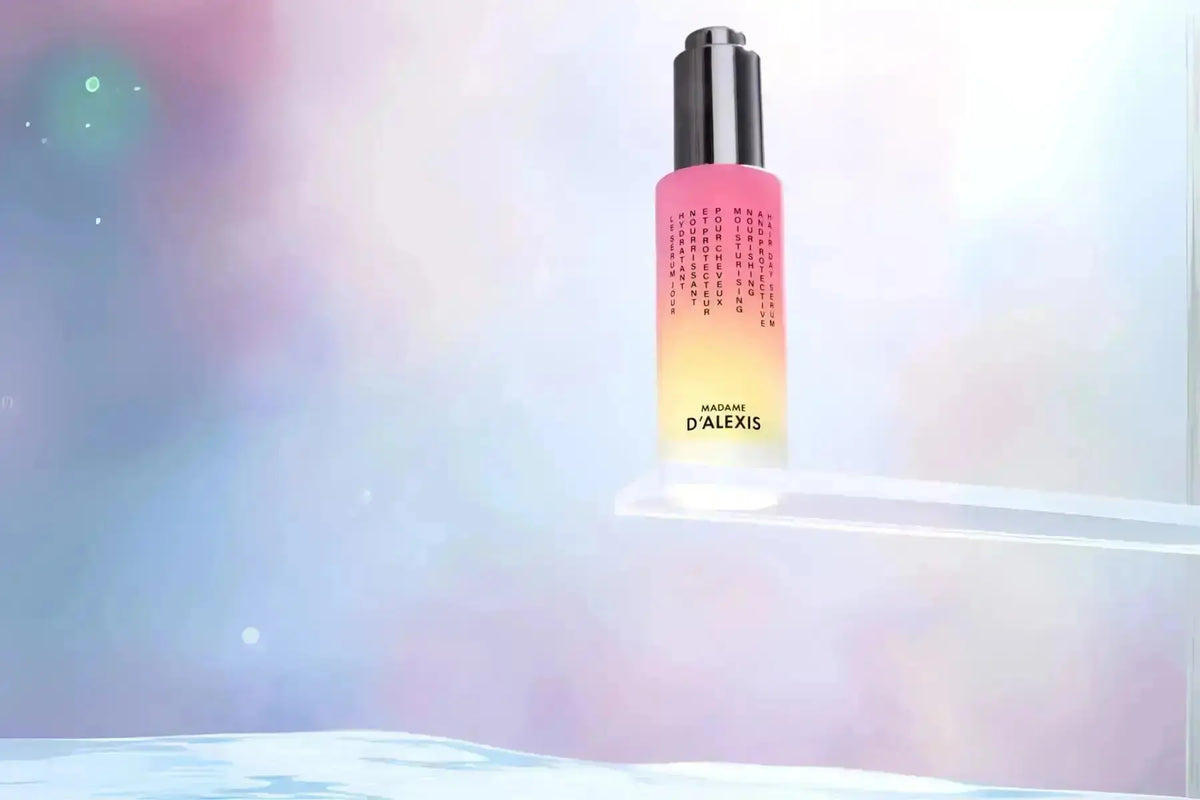
Tip : when my hair seems thirsty at the end of the day, I spray on a fine mist of floral water, which instantly reactivates the moisturizing active ingredients without weighing down the hair fiber, or I use Madame d'Alexis day serum.
When used correctly, a leave-in hair treatment becomes your best ally: it prolongs the effect of the mask, protects color, tames frizz, and gives hair that silky finish that is often mistakenly attributed solely to professional blowouts.
Case study: the 24-hour leave-in routine with Madame d'Alexis serums
A successful leave-in routine should be thought of as a continuous cycle: protect during the day, repair at night. Madame d'Alexis' two leave-in serums fit perfectly into this pattern.
I appreciate the two-step approach because it simplifies the ritual while covering all of the hair's physiological needs. In the morning, we create a nourishing shield against heat and pollution.
In the evening, cell regeneration is promoted as the body enters its resting phase.
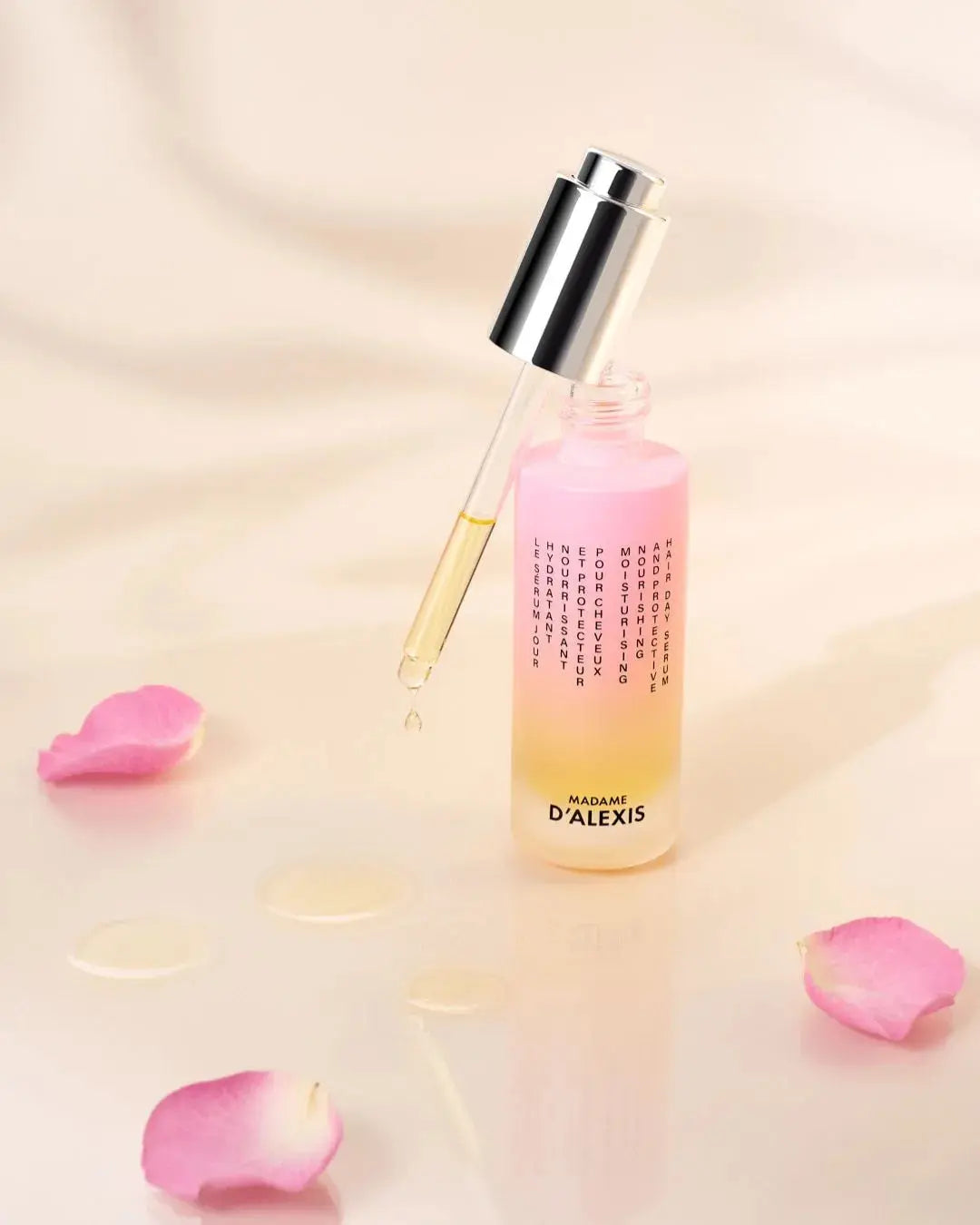
Leave-in day serum: nourishing and anti-frizz shield
- 99 percent natural dry oil texture, enriched with plant ceramides and organic jojoba oil.
- Instant shine without greasy residue: three drops are enough to tame shoulder-length hair.
- Heat protection tested up to 200 degrees; blow-drying no longer damages the internal keratin.
- Anti-frizz effect visible from the first application, even in humid weather
- A subtle floral scent that dissipates within fifteen minutes so as not to interfere with your personal fragrance.
My recommendation: apply to damp hair, starting at the lengths and working toward the ends, before using any heat styling tools. For a midday refresh, warm a single drop between your palms and smooth over flyaways.
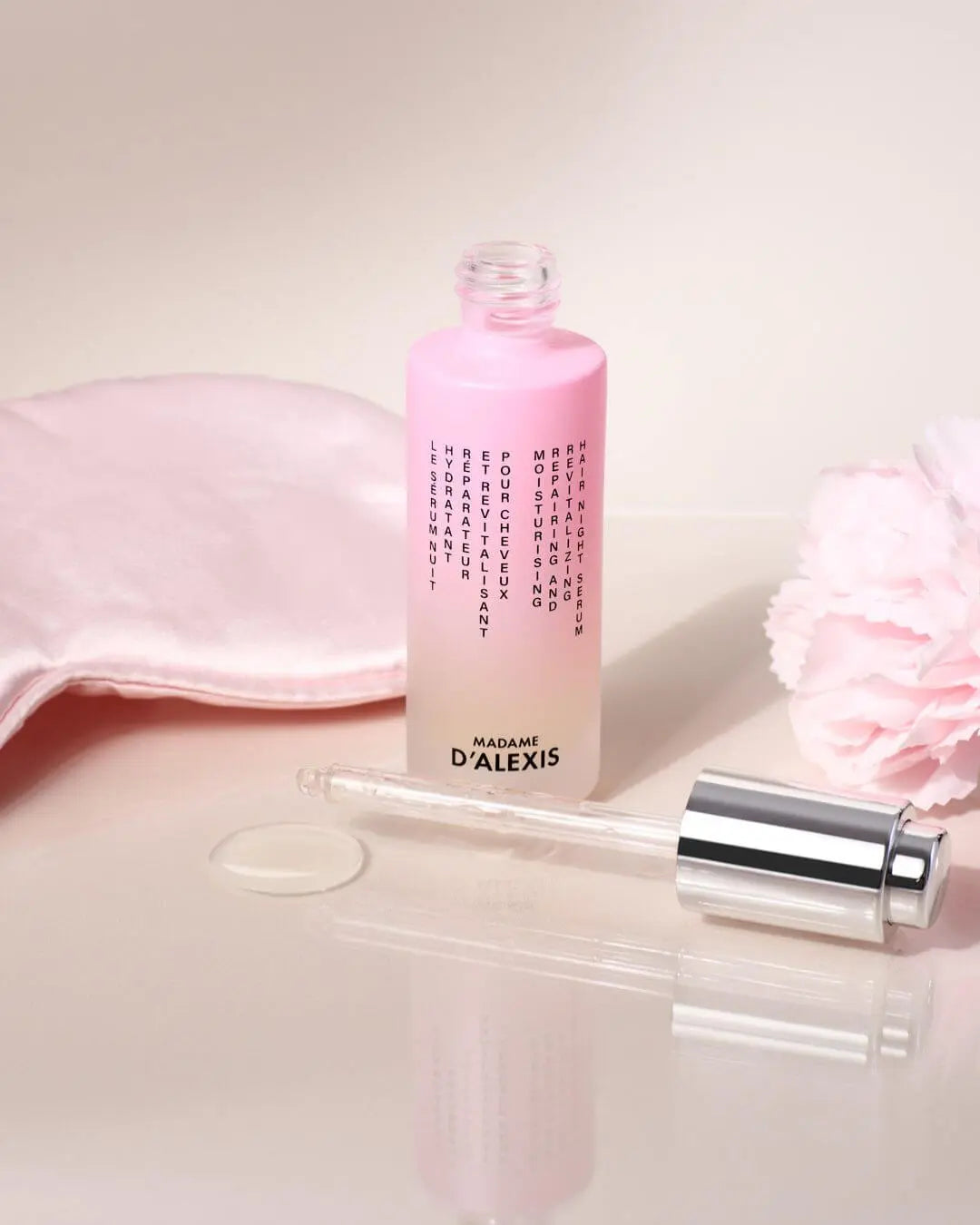
Leave-in night serum: repair and density while you sleep
• 98% natural formula, based on certified organic hydrosols of Damask rose, chamomile, and orange blossom.
• Cationic hyaluronic acid: deeply hydrates the scalp without weighing down the roots.
• Probiotic complex and extracts of oak bark, nettle, and licorice: proven to stimulate growth and limit hair loss.
• Precision pipette: apply four parallel lines, massage for one minute to activate microcirculation, and leave on overnight.
• Upon waking, hair is more supple, the scalp remains dry, and hair lengths have a natural shine.
My vision: I see this duo as a haircare "circadian cycle." During the day, we fortify the hair fiber against mechanical damage. At night, we work on the matrix in an environment free from oxidative stress. The result: hair that feels thicker to the touch, less breakage when blow-drying, and shine that doesn't require finishing oil.
The best leave-in hair care products from Madame d'Alexis
How to use Madame d'Alexis leave-in hair care products? Video guide on how to use our leave-in serums
How to use Madame d'Alexis leave-in day serum for hair?
How to use Madame d'Alexis leave-in night serum for curly and textured hair?
How to use Madame d'Alexis leave-in night serum for straight and normal hair?
Frequently asked questions about leave-in hair care
When should you use a leave-in treatment?
After each shampoo to seal in moisture. Before blow-drying to protect from heat. As an anti-frizz touch-up throughout the day.
Where and how should you apply a leave-in hair treatment?
Two-thirds on lengths and ends. For a scalp serum, target the parting and then distribute using circular massage movements.
Homemade leave-in conditioner or ready-to-use?
Homemade products are appealing but often lack stable preservatives. Professional formulas offer microbiological safety and precise dosing of active ingredients.
Should you space out your shampoos?
Yes. Leave the protective film on for forty-eight hours. Washing your hair every day removes nutrients prematurely and causes the scalp to produce more sebum.
How can you remove excess oil without rinsing?
Use a dry shampoo made from rice starch or a diluted apple cider vinegar rinse. Two sprays are enough to absorb excess oil and restore volume.
How much should be applied depending on the length?
On a plunging square, a pea-sized amount of cream or three drops of serum is sufficient. Use a hazelnut-sized amount or five drops on mid-lengths to ends. The hair should slide between your fingers, never stick; if your hands remain shiny, reduce the amount.
Do leave-in treatments weigh down fine hair?
No, provided you choose a mist or light milk formulated without mineral oil. Spray from 15 centimeters away, leave on for 30 seconds, then comb. The hair gains body without losing its natural volume.
Can you combine several leave-in products?
Yes, but layer wisely. First, apply a moisturizing mist rich in hyaluronic acid, then a nourishing serum to the ends. However, avoid mixing conflicting textures; a rich cream on top of a protein spray would negate the desired lightness.
Is a leave-in conditioner compatible with styling products?
Perfectly. First apply the leave-in hair treatment, dry, then apply mousse or gel. The protective film preserves the fiber while the styling product sets the shape.
How should you store your leave-in conditioner?
Keep the bottle closed and away from direct light. Natural formulas without silicone or synthetic preservatives require a stable temperature, ideally below 25°C.
Can men use leave-in conditioner?
Absolutely. A light spray reduces breakage on short hair and soothes a scalp that has been sensitized by frequent styling or clippers.
Should you still apply a leave-in conditioner after a deep mask?
Yes. The mask deeply conditions the hair fiber and then rinses out; the leave-in seals in moisture and creates a protective barrier until the next shampoo. The combination of the two optimizes nourishment without weighing hair down.
Is a leave-in hair treatment suitable for sensitive scalps?
Choose a formula that does not contain denatured alcohol and is enriched with soothing ingredients, such as chamomile hydrosol. Apply to the lengths of your hair, then massage the treated area very gently; avoid vigorous scratching.
What are the best leave-in treatments?
The best leave-in treatments combine floral water, plant lipids, and protective agents for a complete leave-in treatment.
- Dry oil serum: light moisturizer, ideal for daytime use.
- Rich care cream: tames frizz and deeply nourishes.
-
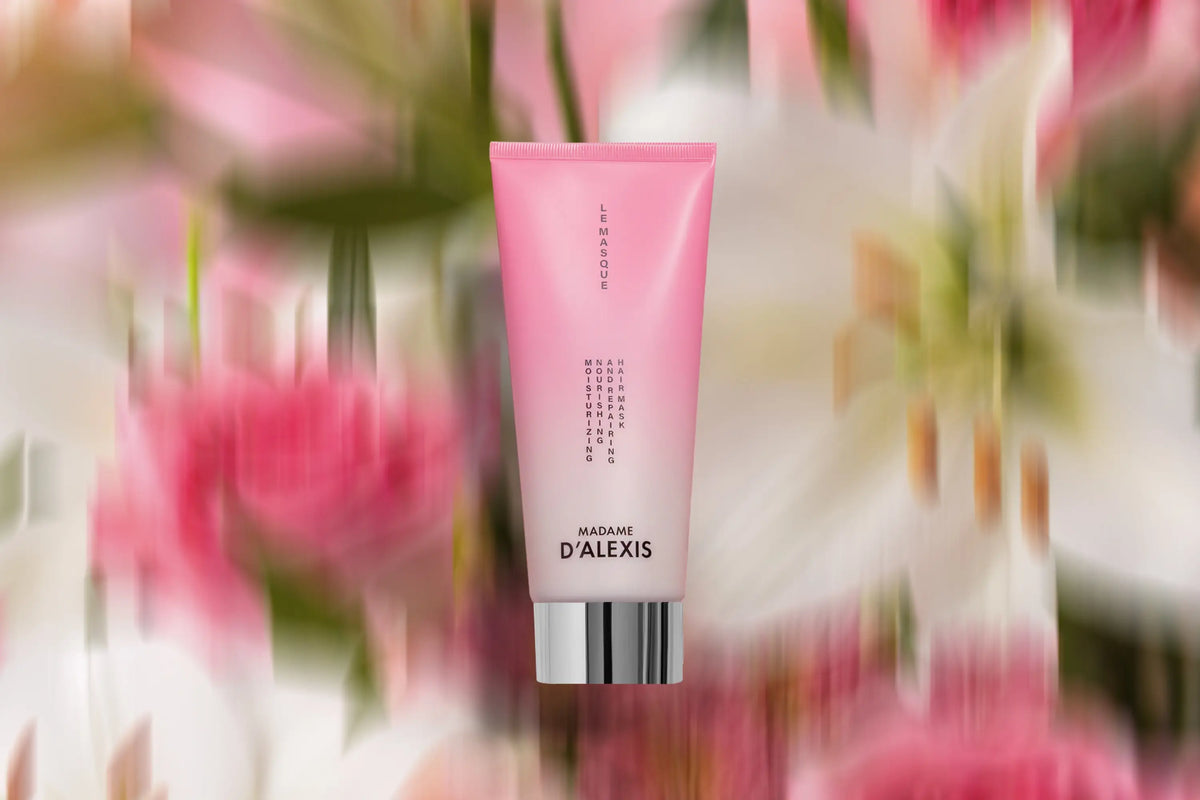
Overnight leave-in mask: regenerates hair fibers while you sleep.
These three formats form a modular hair care system for all leave-in hair treatments.
How to choose a leave-in treatment?
To choose a suitable leave-in treatment:
- Assess your hair type: fine, thick, curly.
- Define the need: dry, sensitized, or straightened hair.
- Select the texture: moisturizing cream, butter mask, or light hair oil.
- Choose dermatologically tested formulas that are free from heavy silicones.
What treatments are available for damaged hair?
The best treatments for damaged hair are based on a repairing treatment that combines nourishment and restructuring:
- Keratin + ceramides skincare cream.
- Night mask withorganic jojoba oil and shea butter.
- Anti-frizz serum to seal in moisture.
A leave-in treatment integrated into each step speeds up recovery.
What hair types are suitable for leave-in treatments?
All hair types benefit from a well-formulated leave-in conditioner:
- Curly hair: glycerin mist for elasticity.
- Frizzy hair: shea butter cream, long-lasting nourishment.
- Colored hair: antioxidant spray that protects pigments.
- Fine hair: lightweight serum that doesn't weigh hair down.
- Dry or damaged hair: rich mask, suitable treatment after each wash.
What ingredients are in leave-in treatments?
A good leave-in product enhances active leave-in care ingredients:
- Hyaluronic acid: captures water and plumps up the fiber.
- Argan and jojoba oil: lipophilic nutrition.
- Aloe vera: natural soothing and moisturizing agent.
- Shea butter: protective film and shine.
- Silicone-free formula, made with organic ingredients whenever possible.
What are the prices for no-rinse treatments?
The price of leave-in treatments varies depending on the concentration of active ingredients:
- Lowest price: €10 for a basic spray.
- Mid-range hair care: €25 for enriched cream or mask.
- Premium segment: €35-45 for specialized serums, often certified organic skincare treatments.
How can you moisturize your hair without rinsing?
To moisturize hair without rinsing:
- Spray on a floral mist before styling.
- Apply a moisturizing cream to damp hair lengths.
- Seal the water with three drops of nourishingoil.
- Reapply the light cream mask midweek to nourish dry hair without weighing it down.