Advice
Leave-in treatment for dry hair: how to nourish without weighing it down
How a leave-in treatment for dry hair (nourishing leave-in conditioner) instantly nourishes, tames frizz, and protects the hair fiber day after day.


Leave-in Conditioner for Dry Hair: How to Choose a Lightweight, Protective, and Effective Leave-in Conditioner
A leave-in treatment for dry hair should protect the lengths between washes without weighing the hair down. At Madame d’Alexis, this role is primarily fulfilled by two serums: the Day Serum for the lengths and ends, and the Night Serum for the scalp and roots.
- A leave-in treatment is a product that does not require rinsing: it remains on the hair or scalp, depending on where it is applied.
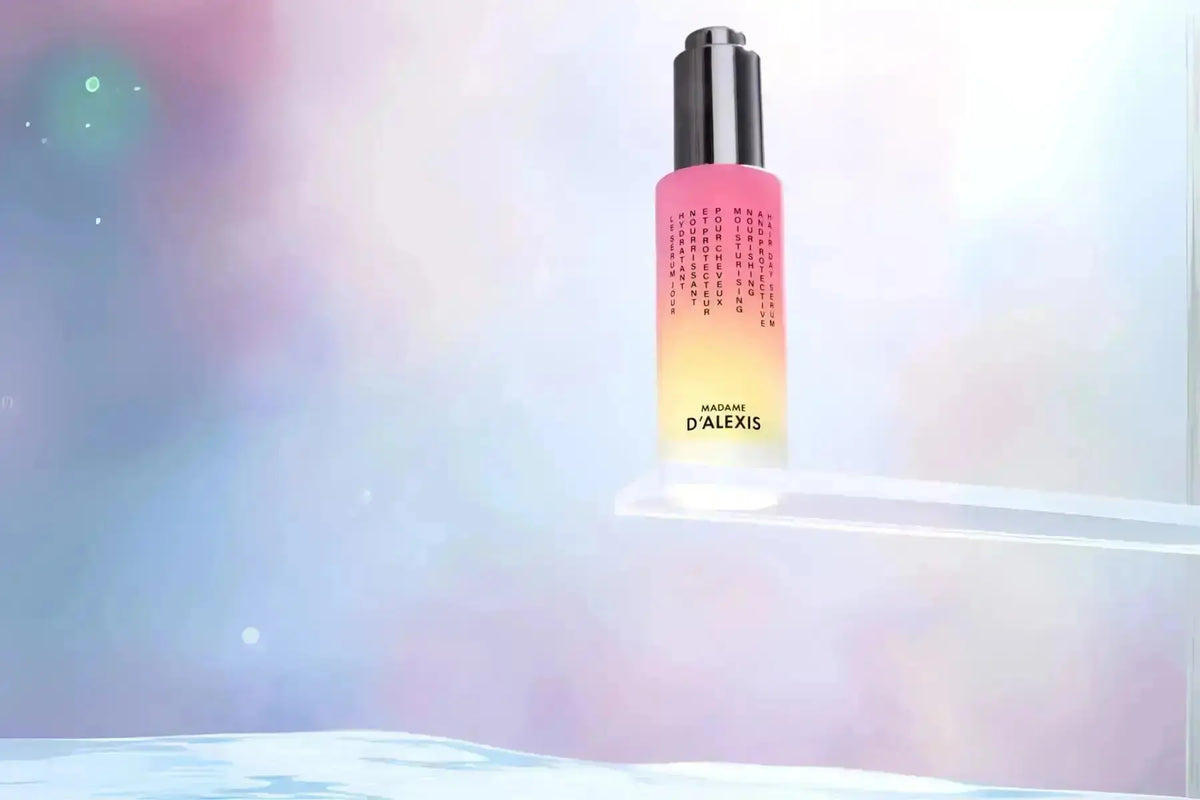
- Madame d’Alexis Day Serum is the key treatment for dry hair lengths: dry oil, organic jojoba, plant-based ceramides, and heat protection up to 200°C.
- Madame d’Alexis Night Serum rounds out the scalp care routine: organic hydrosols, probiotics, postbiotics, applied in the evening section by section.
- Do not apply the Day Serum to the scalp. Do not use the Night Serum on the lengths of the hair as a finishing oil.
- For dry hair, the best approach is simple: wash gently, use a hair mask if needed, and then apply the right serum to the right areas.
The two Madame d’Alexis leave-in treatments: Day Serum and Night Serum
To make things clear for the reader, it’s important to distinguish between the two products: the Day Serum protects the visible hair shaft, while the Night Serum nourishes the scalp. They don’t serve the same purpose, but they complement each other very well in a routine for dry hair.
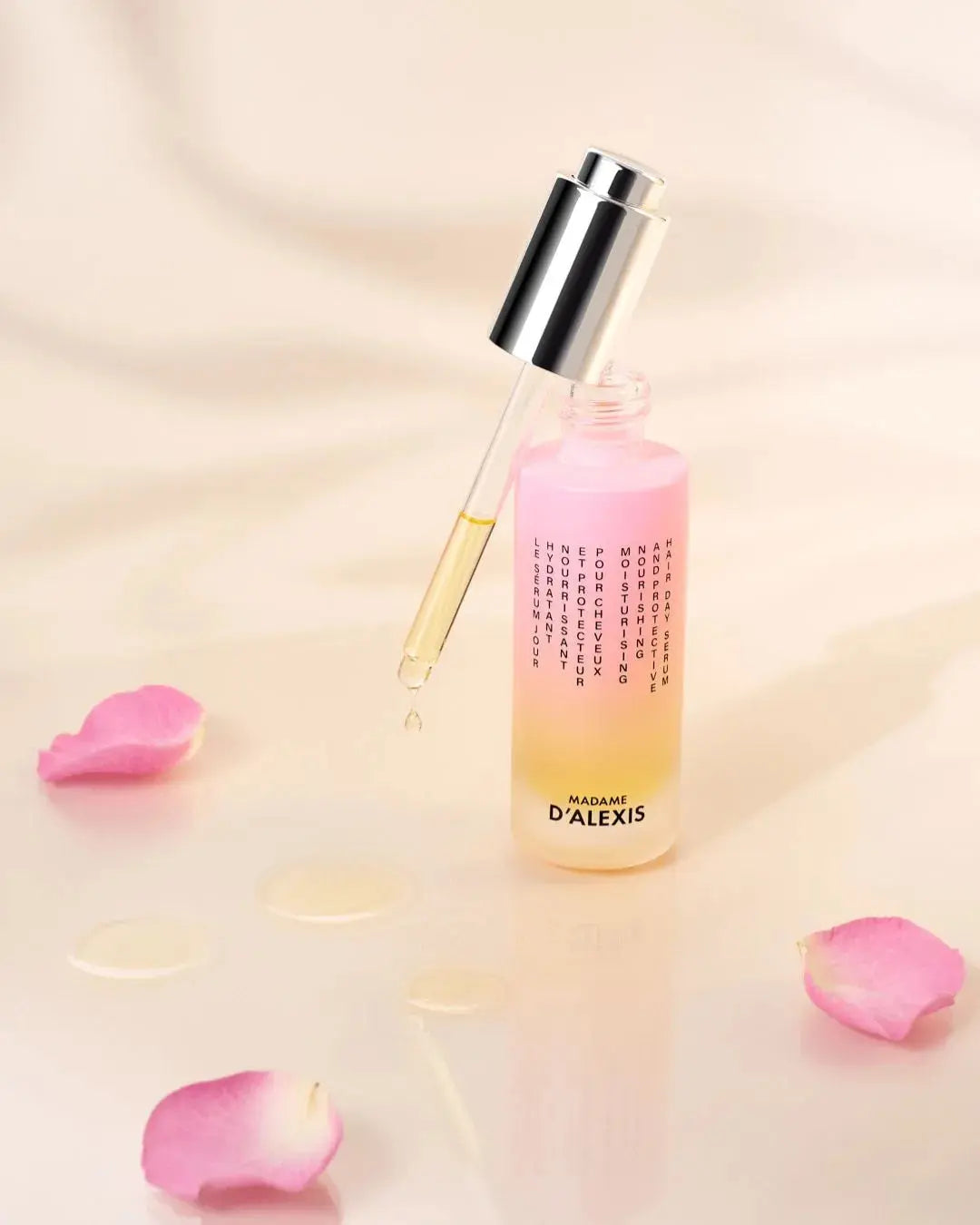
Leave-In Day Serum for Dry Hair
- For lengths and ends only
- Lightweight dry oil that doesn't leave a greasy residue
- Heat resistance up to 200°C
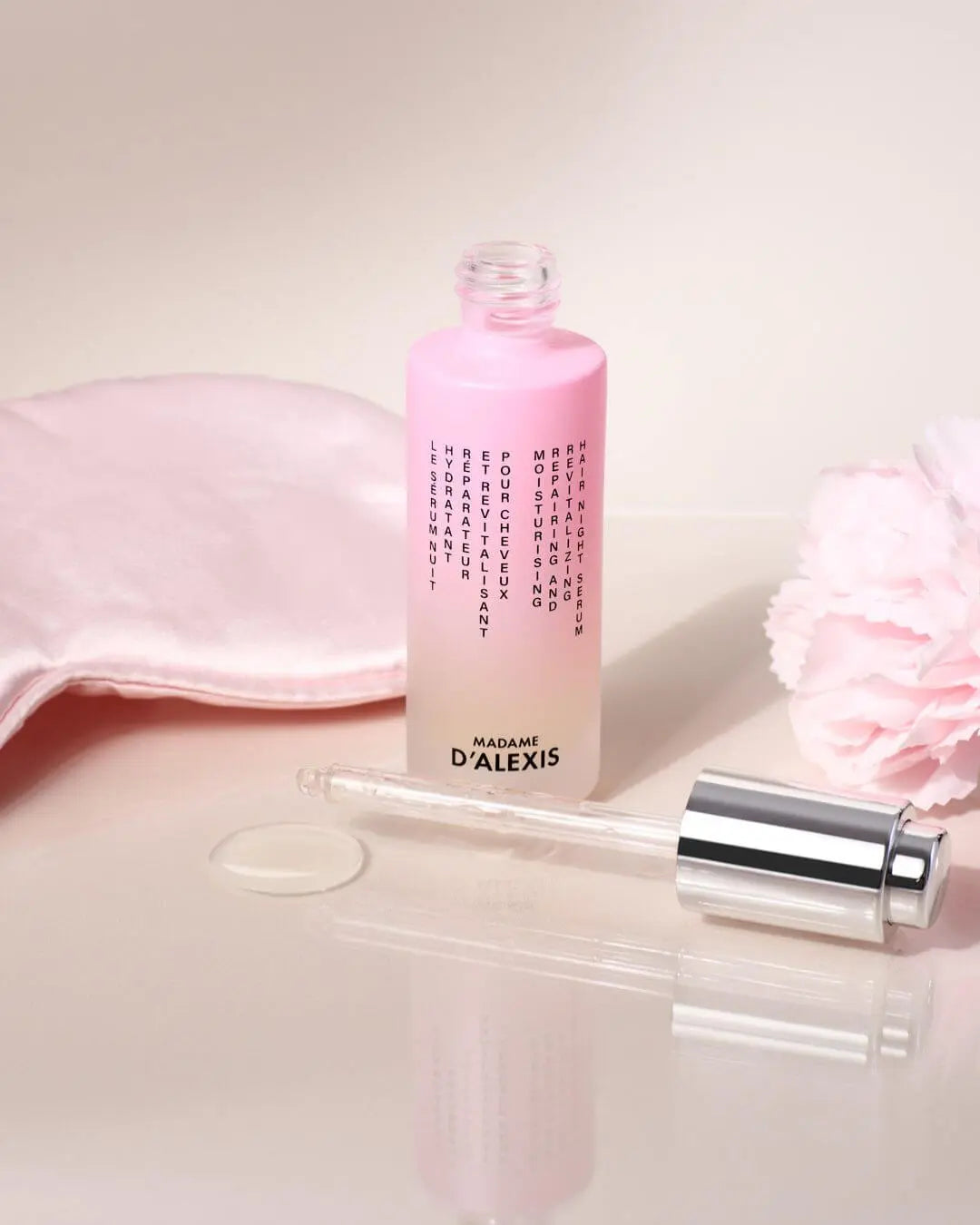
Leave-In Night Serum for the Scalp
- In the evening, row by row, a few drops
- For the scalp and roots only
- Probiotics, postbiotics, and plant-based active ingredients
Why use a leave-in treatment when your hair is dry?
When the hair shaft dries out, the cuticle becomes less smooth. The hair loses its suppleness, gets tangled more easily when brushed, and becomes frizzy more readily in humid conditions. A leave-in treatment for dry hair acts as a light protective barrier between washes.
Fiber Protection
The Day Serum leaves a light veil on the lengths and ends of your hair to help protect against heat, UV rays, pollution, and frizz.
Quick Gesture
A very small amount is all you need. The goal isn't to apply too much, but to create a soft, luminous finish.
24-Hour Routine
Daytime care protects the hair strands, while nighttime care nourishes the scalp. That’s the true philosophy behind Madame d’Alexis serums.
To understand the underlying need, see also the guide on common misconceptions about hair hydration and nutrition.

How do you choose a leave-in treatment for dry hair?
The right choice depends on the area you're treating. The ends of your hair need a protective finishing treatment. Your scalp, on the other hand, requires a formula that's designed for the roots—one that's lightweight and non-greasy.
| Need | Recommended format | Madame d'Alexis Product | Application |
|---|---|---|---|
| Dry ends, rough tips | Dry Oil Serum | Day Serum | 1 to 3 drops on the mid-lengths and ends. |
| Frizz, heat, pollution | Leave-in protective serum | Day Serum | Use before blow-drying or as a finishing touch on dry hair. |
| Scalp Discomfort | Lightweight Night Treatment | Night Serum | A few drops in the evening, streak by streak. |
| Density and Roots Routine | Leave-in scalp treatment | Night Serum | A gentle massage; no rinsing required; not an oil bath. |
For very dry hair, combine this treatment with a mask for dry hair. For shine, check out our guide to natural hair serums for shine.
Video: How to Apply the Leave-In Day Serum
The format below is in a 9/16 vertical layout, designed for Shorts. It illustrates how to apply the Day Serum to the mid-lengths and ends, either as a finishing touch or before styling.
Application routine: when, where, and how much?
After shampooing
Thoroughly towel-dry your hair. Apply 1 to 3 drops of Day Serum to the damp lengths, depending on the thickness of your hair. Avoid the roots.
Preheat
Whether you're blow-drying, using a diffuser, or a hot air brush, the Day Serum helps protect your hair up to 200°C.
For touch-ups on dry hair
Warm a small amount between your hands, then smooth only the ends and frizzy areas.
In the Evening on the Scalp
Apply the Night Serum strand by strand, using just a few drops. Gently massage it in; do not rinse, and do not use as an oil treatment.
For curly or wavy hair, the same principle applies: Day Serum on the lengths, Night Serum on the scalp. The page on curly and wavy hair helps you tailor your routine to your hair’s texture.
Day Serum or Night Serum: Which One Should You Choose Depending on the Time of Day?
| Moment | Serum | Area | Objective | Mistake to avoid |
|---|---|---|---|---|
| Morning | Day Serum | Lengths and tips | Shine, anti-frizz, heat, UV rays, pollution. | Apply it to an oily scalp. |
| Before styling | Day Serum | Lengths and tips | Heat resistance up to 200°C. | Apply a generous amount before blow-drying or straightening. |
| Evening | Night Serum | Scalp and Roots | Nighttime comfort, microbiome, cosmetic density. | Use it on the lengths of your hair like an oil. |
| Treatment | Night Serum | Scalp lines | Apply regularly, a few drops, and massage gently. | Apply an oil treatment or saturate the roots. |
For more information, check out our guides on the best serum for dry hair and serum for curly hair.
What ingredients should you look for in a leave-in treatment?
An effective leave-in treatment must address a specific need. For the hair shafts, look for lightweight lipids, ceramides, and protective agents. For the scalp, look for a lightweight, non-greasy formula with active ingredients designed to balance the skin.
Day Serum: Cuticles, Hair Shafts, Ends
- Organic jojoba oil to nourish without leaving a heavy residue.
- Plant-derived ceramides to help smooth the lipid barrier.
- Antioxidants and thermal protection against daily environmental stressors.
Night Serum: Scalp, Roots
- Organic hydrosols for a gentle, sensorial base.
- Probiotics and postbiotics to support the microbiome.
- Plant extracts from oak, stinging nettle, and licorice to complement your scalp care routine.
If you're looking to learn more about key ingredients, be sure to check out the articles onhyaluronic acid for hair and ceramides for hair.
Alternatives and “miracle cures”: What to Keep, What to Take with a Grain of Salt
Oil treatments, shea butter, coconut oil, or homemade remedies can provide temporary relief for very dry hair. But a leave-in treatment should be easy to measure out, comfortable to wear, and compatible with your daily routine. An oil that’s too rich, applied too often, can weigh down the hair shaft and make the roots feel sticky.
- The oil treatment is rinsed out: it's not an everyday leave-in product.
- Use the Day Serum as a finishing touch or before heat styling, applying only a very small amount.
- The Night Serum is applied to the scalp in the evening; it is not intended for use on the ends of the hair.
- Textile protection—whether a satin pillowcase or a cap—is primarily designed to reduce friction during the night.
For textured hair, this guide to night caps for curly hair is a great addition to your nighttime routine.

Mistakes to Avoid When Using a Leave-In Conditioner for Dry Hair
- Applying too much product: It’s better to reapply a tiny amount than to overload the hair shaft.
- Confusing Day Serum with Night Serum: the former is for the hair strands, the latter for the scalp.
- Applying oil to the roots: on fine or oily hair, this is the best way to make your hair look heavy.
- Replace the entire routine with a leave-in treatment: a leave-in treatment complements shampooing and a hair mask—it does not replace them.
- Promising medical treatment: A cosmetic serum improves the appearance, texture, and comfort of the skin, but does not treat a medical condition.
For a consistent routine, the essential products are simple: Day Serum for Dry Hair, Night Serum for the Scalp, treatments for dry hair, and a guide to controlling frizz.
FAQ - Leave-in Treatment for Dry Hair
How to choose a leave-in treatment?
First, choose based on the area. For dry lengths, opt for a lightweight dry oil serum with ceramides and organic jojoba. For the scalp, choose a non-greasy overnight treatment designed for the roots, such as the Night Serum.
What are the benefits of leave-in treatments?
They help protect the hair between washes, reduce frizz, add shine, and make styling easier. The benefits depend mainly on using the right product in the right place.
How do I apply a leave-in treatment?
On the lengths, apply 1 to 3 drops of Day Serum to damp or dry hair, starting below the ear. On the scalp, apply Night Serum in the evening, section by section, using a few drops.
What types of hair require leave-in conditioner?
Dry, curly, colored, frizzy, voluminous, or damaged hair benefits particularly from this product. Fine hair can also use it, but in a much smaller amount.
Are the Day Serum and Night Serum used the same way?
No. The Day Serum is applied to the lengths and ends of the hair. The Night Serum is applied to the scalp and roots. Both are leave-in treatments, but they are applied to different areas and serve different purposes.
Can the Day Serum replace a heat protectant?
Yes, when used as part of a controlled styling routine: it protects the hair shaft up to 200°C. It should be applied in small amounts to the mid-lengths and ends before blow-drying, using a diffuser, or a heated brush.
Can you use a leave-in treatment every day?
Yes, if the amount is very small. On dry hair, a microdose of Day Serum applied to the ends can be helpful. On the scalp, Night Serum is best used as a treatment or as needed.