Conseils
Sulphate Free Shampoo: How to Choose a Truly Clean Formula
Is sulphate free shampoo worth it? Benefits, ingredients to avoid and how to choose the right formula for your hair type.

Sulphate free shampoo: how to choose a truly clean formula
Is your hair dull and heavy, and does your scalp feel tight after every wash? It does not have to be that way: your shampoo may contain cleansing agents that work thoroughly but are harsh on your hair and scalp.
In short: sulphates, parabens, silicones, harsh alcohols, and synthetic fragrances can irritate the scalp, weaken the hair fibre, or build up over time.
A sulphate free shampoo cleanses just as effectively, provided harsh agents are replaced with a truly gentle cleansing base and beneficial actives: organic hydrosols, cationic hyaluronic acid, plant-based keratin, and prebiotics.
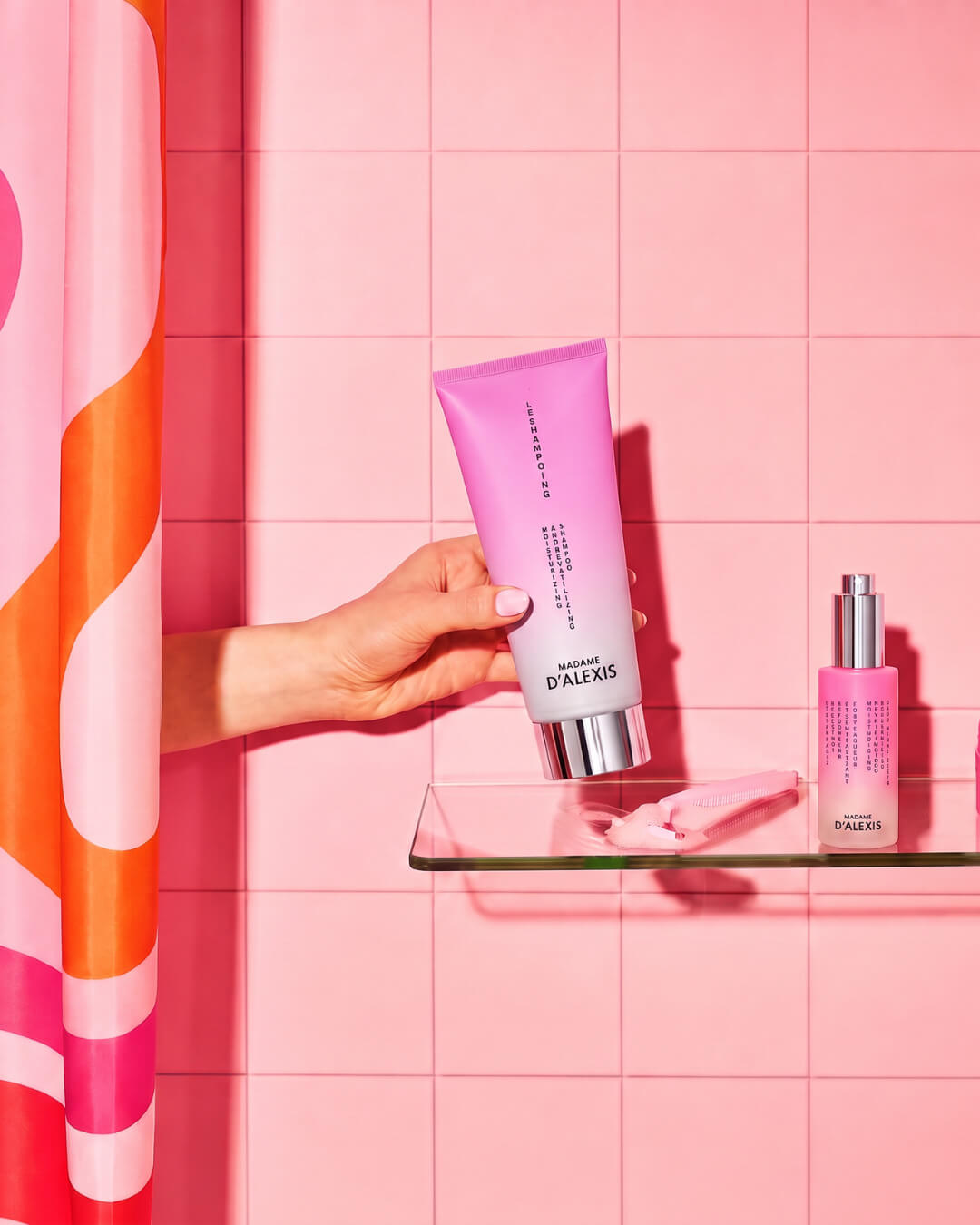
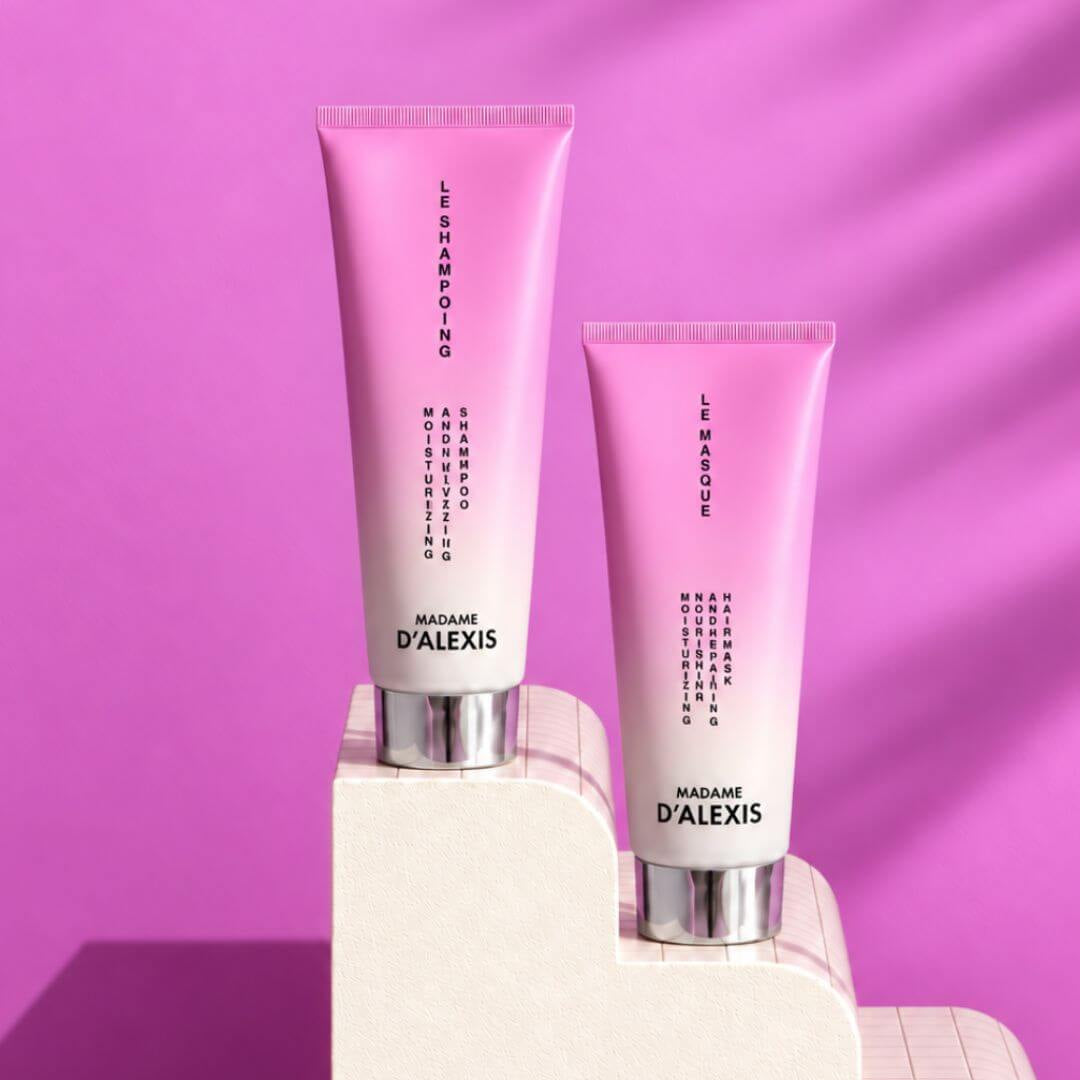
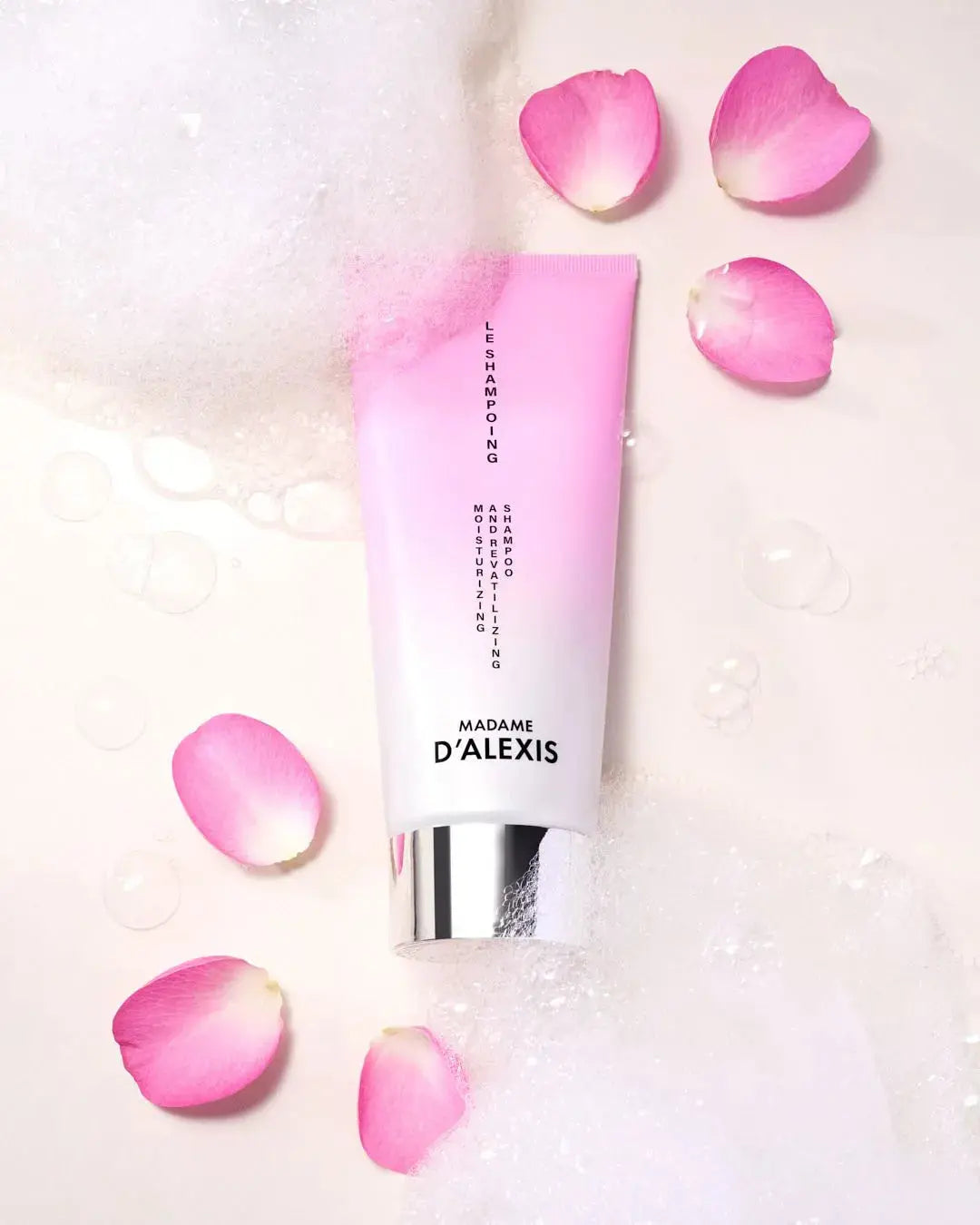
Le Shampoing by Madame d’Alexis follows this principle: no sulphates, no silicones, and a base of active organic hydrosols instead of plain water.
Sulphate free shampoo: what to avoid, at a glance
Before you choose a clean shampoo, know what to avoid. “Free-from” claims only mean something when they refer to families of substances that genuinely cause problems for the hair and scalp.
| Ingredient | Problem | Effect on hair | Avoid | Certified/formulated organic |
|---|---|---|---|---|
| Sulphates (SLS, SLES) | Stripping, harsh | Scalp irritation, dry hair and breakage | ✓ YES | Prohibited in Cosmos Organic |
| Parabens | Controversial preservatives | Irritation, increased sensitivity, less reassuring routine | ✓ YES | Prohibited in Cosmos Organic |
| Silicones | Build-up, occlusive effect | Heavy, dull hair with no volume | ✓ YES | Prohibited in Cosmos Organic |
| Harsh alcohols | Drying | Weakened fibre, breakage, rough texture | ✓ YES | Not permitted or strictly regulated depending on function |
| Synthetic fragrances | Potential allergens | Irritation, itching, scalp discomfort | ✓ YES | Prohibited in Cosmos Organic |
The origins of the “free-from” trend: why is it so popular?
A rejection of potentially irritating substances
The “free-from” trend has a short history: it stems from a widespread rejection of controversial substances, such as parabens, sodium lauryl sulphate, and silicones. Many reactive scalps do not tolerate harsh conventional shampoos.
A quest for clean beauty and responsible hair care
This trend goes beyond simply rejecting every chemical-sounding name. It is part of a quest for simpler, more transparent formulas that work over time. Choosing a sulphate free shampoo means looking for a formula that respects the hair as much as the scalp.

What really changes when you move away from a conventional routine
Switching to a sulphate free routine does not simply mean removing a few components. It requires rebuilding the formula in a different way: cleansing without stripping, hydrating without greasing, smoothing without suffocating, and protecting without building up residue.
The cleansing base better respects the hydrolipidic film.
The hair fibre is no longer coated by a persistent silicone film.
Hydrating actives reach the hair fibre more easily.
The hair regains movement, volume, and suppleness.
The scalp gradually rebalances, for an easy, low-maintenance routine.
What do dermatologists and hairdressers think of sulphate free shampoo?
Dermatologists’ view: scalp health first and foremost
Dermatologists stress the importance of a mild shampoo free from harsh agents to keep the hair and scalp healthy. Sodium lauryl sulphate, found in many traditional shampoos, is known for its highly detergent action.
Sulphate free shampoos are particularly useful for reactive scalps, chronic itching and anyone with sensitive skin who wants to reduce irritation.
Hairdressers’ advice: preserving the hair fibre
In salons, the reasoning is simple: when hair is weakened by colouring, blonde highlights, balayage or keratin treatments, you should avoid using multiple agents that strip the hair or mask its true condition.
- Coloured hair: sulphate free shampoos help protect colour and limit damage, which is why they are recommended by many colourists.
- Keratin treatments: the absence of harsh sulphates helps preserve the texture and lasting effect of the treatment.
- Volume: silicone-free shampoos avoid the heavy effect that can flatten fine hair.
Which ingredients should you absolutely avoid in your shampoos?
Parabens, sulphates, and silicones: why are they singled out?
As part of a responsible approach to haircare, certain very common components are best left out of your routine, especially if your scalp reacts easily or your hair is coloured, dry or damaged.
Sodium lauryl sulphate (SLS) and sodium laureth sulphate (SLES), for example, produce a generous lather, but they can irritate the scalp and dry out the hair. Silicones, meanwhile, provide instant shine but can stop nourishing and hydrating actives from working properly.
Other things to watch out for on the label
Used to thicken certain formulas, it may not be well tolerated by fragile scalps.
Certain harsh alcohols can dry out the hair fibre and increase breakage.
They are not all problematic, but clean formulas favour gentler systems.
They can trigger skin sensitivities, especially on reactive scalps.
Homemade sulphate free shampoo vs shop-bought: which is best?
Many people try to make a homemade sulphate free shampoo. It is tempting, but the cosmetic science is more nuanced: a hair formula must be stable, properly preserved, correctly balanced, and adapted to the scalp’s pH.
Advantages: low price, simple recipe, minimalist approach.
Limitations: unstable formula, unpredictable pH, short shelf life, variable results on coloured or fragile hair.
Advantages: built-in hydrating actives, tested formula, better stability, reproducible dosage.
Limitations: higher price, but better consistency of use over the long term.
Le Shampoing by Madame d’Alexis: a clean, active formula
If you are looking for a truly consistent sulphate free shampoo, Le Shampoing by Madame d’Alexis ticks all the boxes: no added water, active organic hydrosols, cationic hyaluronic acid, plant-based keratin, prebiotics, no sulphates, no parabens, and no silicones.
Le Shampoing
A base of organic hydrosols, with no added water, combined with cationic hyaluronic acid, plant-based keratin, and prebiotics to cleanse without stripping.
- Organic hydrosols of Damask rose, chamomile, and orange blossom.
- No sulphates, no silicones, no parabens.
- Suitable for dry, coloured, fine, oily, or sensitive hair.
Why Le Shampoing stands out
| Comparison | What you often find | What Madame d’Alexis changes |
|---|---|---|
| Conventional sulphate-free shampoos | Gentle base, but often highly diluted in water. | Base of active organic hydrosols, with no added water. |
| General organic shampoos | Serious certification, but often with a very broad positioning. | Skincare for hair approach with cationic hyaluronic acid, plant-based keratin, and prebiotics. |
| Conventional professional shampoos | Immediate feel, sometimes enhanced by silicones or synthetic conditioning agents. | Shine and softness without an occlusive silicone film. |
How to use a sulphate free shampoo: the first 30 days
Switching to a sulphate free shampoo may require a short adjustment period. Your hair is not “less clean”: it is simply moving away from a highly lathering and sometimes very harsh cleansing logic.
After shampooing, you can apply a hydrating mask to the lengths if your hair is dry, coloured, or sensitised.
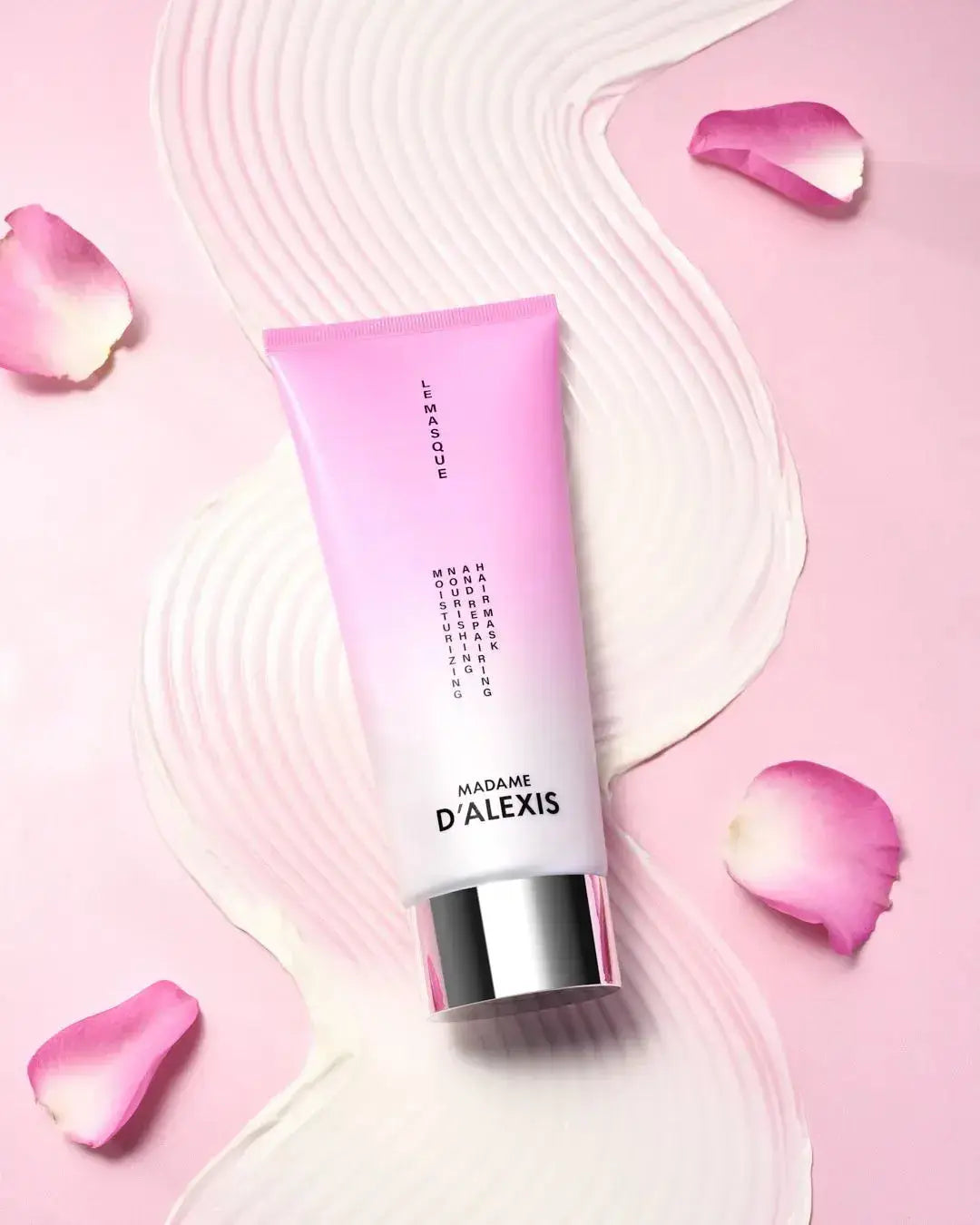
Le Masque
A deep treatment with orange blossom wax, organic apricot and jojoba oils, plant-based ceramides and cationic hyaluronic acid, to seal in moisture without silicone.
View Le Masque5 common mistakes with sulphate free shampoo
Sulphates mainly create a spectacular lather. A mild shampoo can cleanse effectively with a finer lather.
A sulphate-free shampoo must remain balanced so as not to weigh down the roots.
Incomplete rinsing leaves dirt and residues that dull the hair and irritate the scalp.
After years of harsh shampoos, the scalp may need 2 to 4 weeks to stabilise.
Returning to sulphates and silicones disrupts the transition and muddies the results.

Sulphate free shampoo benefits: what can you really expect?
A mild formula for reactive, irritated scalps
This type of formulation offers a gentler experience, respecting the hair fibre and the delicate skin of the scalp. Dry hair, curly hair, coloured hair, and sensitised hair are often the first to notice the difference.
Soothing actives such as aloe vera, hydrosols, natural oils (argan oil, coconut oil, shea butter) or ceramides help with moisture retention and make your routine more comfortable, especially within a stable, well-balanced formula.
Healthier, shinier, soft hair
By cutting out harsh sulphates and silicones, you allow the hair fibre to breathe. Your hair gradually regains lightness and volume, for soft, shiny, healthy hair without artificial shine.
- Restores the hydrolipidic film.
- More balanced sebum production.
- Lighter hair that is less dull and less weighed down by residue.

How to choose the best sulphate free shampoo for your hair type
Colour-treated, fine, or damaged hair: what is the best solution?
There is no perfect formula for everyone. Colour-treated, blonde, fine or damaged hair is particularly fragile. To limit colour fading or revitalise weakened hair, opt for a mild cleansing base such as coco-glucoside or decyl-glucoside.
Also choose formulas enriched with plant-based ceramides, light plant oils and hydrating actives that soften the hair without weighing it down.
Oily or normal hair: balancing and purifying shampoos
Hair prone to oiliness requires a formula that regulates sebum without stripping the hair. A shampoo that is too harsh can sometimes create the illusion of immediate cleanliness, but it may perpetuate the sebaceous rebound effect.
A useful link for more information: our guide to organic shampoo for oily hair.
Organic sulphate free shampoo: what is the difference?
A “sulphate free” label does not mean much on its own. The real question is what is used instead, and whether the “organic” label on the packaging represents something concrete or is simply clever marketing.
Certified “organic” vs. claimed “organic”: the difference the label doesn’t always tell you
A truly organic shampoo must meet the COSMOS Organic standard and be certified by an organisation such as Ecocert, Cosmébio or, in the UK, the Soil Association: at least 95% ingredients of natural origin, and at least 10% ingredients from organic farming in the total formula for a rinse-off product like shampoo. Silicones, parabens, synthetic fragrances, and colourants are explicitly excluded.
Without this certification, the word “organic” can become more ambiguous. A brand may highlight a single organic ingredient, such as “with organic aloe vera,” without the entire formula being certified. This is where hair greenwashing begins: an image-focused promise that does not always reflect the actual quality of the formula.
Why organic, sulphate free, hydrosol-based formulas are rare
Several certified organic brands on shelves in the UK and Ireland, from health food shops to online beauty stores, offer COSMOS-certified shampoos without harsh sulphates. This is a real difference, and it is already better than average. But their positioning often remains general: the cleansing base is mild, the formulas are clean and the certification is legitimate.
What they rarely do is replace water, the first ingredient in almost every shampoo on the market, with functional actives. In most formulas, even organic ones, it serves as a neutral solvent: it dilutes the product without providing any benefits to the hair.
Replacing it with organic hydrosols of Damask rose, chamomile, and orange blossom is a formulation decision that changes the product’s active concentration. Each millilitre then contains genuine botanical actives, not just an inert carrier.
The Madame d’Alexis approach: no added water, made in Brittany
The Madame d’Alexis range contains 97% to 99% ingredients of natural origin, depending on the product. The difference lies in the absence of added water: active organic hydrosols form the formula’s aqueous base, increasing its plant-based content while delivering genuine actives such as cationic hyaluronic acid, plant-based keratin, and prebiotics.
Production takes place in Brittany, with full traceability of raw materials through to the finished product. For a shampoo, this short supply chain is more than a detail: it supports batch-by-batch quality control and ensures consistency between the brand’s stated values and its actual production conditions.
A moisturising organic hair mask formulated on the same principles, active hydrosols, plant-based ceramides, and no silicones, logically completes this routine, protecting the lengths of the hair from losing the benefits the shampoo preserves on the scalp.
Checklist: how to tell if a shampoo is truly sulphate free
Check the INCI list for sodium lauryl sulfate (SLS) and sodium laureth sulfate (SLES), the official spellings used on labels.
Look for methylparaben, propylparaben, or any ingredient ending in paraben.
Look for dimethicone, cyclomethicone, amodimethicone, and any suffix ending in -cone.
Hydrosols, plant oils, hyaluronic acid, and plant-based keratin: the formula should offer more than just being “free from” certain substances.
COSMOS Organic, Ecocert, Cosmébio, the Soil Association or, failing that, clear information about its natural-origin content.
Le Shampoing by Madame d’Alexis: meets all the criteria for clean formulation, with an active organic hydrosol base.
Sulphate free shampoo: a smart, sustainable choice
Choosing a sulphate free shampoo is a thoughtful, healthy and sustainable choice, far removed from a passing trend.
- Benefits for reactive, colour-treated or damaged hair: the hair fibre is less stressed, and the scalp is better protected.
- A transition period to prepare for: after years of using conventional shampoos, it can take 3 to 4 weeks for your hair to find its balance.
- A transparent formulation to prioritize: avoid opaque ingredient lists, even when the marketing is appealing.