Conseils
What are the differences between sulfate-free and sulfate shampoos?
Are you torn between the spectacular lather of sulfate shampoos and the gentleness of sulfate-free formulas? Benefits, limitations, alternatives: the keys to making an informed choice.

Does your hair get greasy quickly? Does your scalp feel tight or itchy? Have you tried conventional shampoos without lasting results?
The difference between a shampoo with sulfates and a shampoo without sulfates is much greater than you think. It's not just a matter of "natural vs. chemical": it's a matter of comfort for your hair and scalp.
Sulfates are powerful but harsh cleansing agents. They strip your scalp, irritate the hair fiber, and in the long term, create the very problems they claim to solve.
This article explains exactly:
- What sulfates are and why they are problematic
- The real differences between shampoos with and without sulfates
- Why switching to sulfate-free transforms your hair
- How to choose the best sulfate-free shampoo for oily hair
- What to expect during the first few weeks after switching
Expected result: lighter hair, a less stressed scalp, and a more natural shine, wash after wash.

When you pour shampoo into the palm of your hand, two experiences stand in contrast: the abundant lather that envelops your hair in a creamy cloud, and the almost silent gentle formula, barely crowned with bubbles.
Behind this difference lies the presence or absence of sulfates, an iconic but controversial cleansing agent. However, a hasty choice can turn a routine into either a pleasure or a source of irritation.
In just a few minutes, you will know exactly which shampoo is right for your hair type, whether it is fine, thick, colored, or accompanied by a sensitive scalp. You will also understand why a "good" surfactant is not necessarily the one that lathers the most.
Understanding sulfates: role and common types
Sulfates belong to the surfactant family, those double-sided molecules whose hydrophilic head loves water while the lipophilic tail captures sebum and impurities.
When in contact with liquid, they organize into micelles; the hydrophilic-lipophilic part then acts as a mediator, detaching the oily film before being rinsed away. This chemical gymnastics creates lather, synonymous with quick cleaning but not always gentleness.
Main sulfates found in cosmetics:
| INCI (international name) | Degreasing power* | Usual pH in formula |
|---|---|---|
| Sodium lauryl sulfate (SLS) | High: strongly degreases from the first pass | 7.5–8.5 |
| Sodium laureth sulfate (SLES) | Medium: ethoxylated chain attenuating the irritating effect | 6.5–7.5 |
| Ammonium laureth sulfate (ALS) | Comparable to SLES but more soluble; dense lather | 6.5–7.5 |
| Sodium coco sulfate (SCS) | Blend of fatty acids from coconut; fast action | 7.0–8.0 |
- SLS is still found in budget formulas; its effectiveness on oily hair is undeniable, but it can dry out an already porous fiber.
- SLES and ALS are less irritating, although they remain questionable for colored hair or fragile scalps.
- SCS brings the general public closer to a more plant-based origin, while maintaining a generous lather; it seduces solid shampoo enthusiasts.
A coco-glucoside formula lathers more discreetly than an SLES formula: this is confusing at first, while hair with dry ends often feels better with use. That is why understanding sulfates before buying remains a matter of science… and patience.

What a shampoo with sulfate provides
The cleansing power of a shampoo with sulfate is due to a simple mechanism: the molecule sticks to the sebum, binds to water, then washes away during rinsing.
Two steps, a dense lather, and you're done. It is this efficiency that allows for the quick removal of hairspray or styling product residue.
Major assets of a shampoo with sulfate:
- Quickly removes body oils and urban pollutants.
- Allows for a quick rinse; therefore, lower water consumption in the bathroom.
- Its manufacturing cost remains modest: low-priced formulas therefore often rely on these surfactants.
However, the medal has a downside, here are the disadvantages of a shampoo with sulfate
- Stripping action that weakens the cuticle, leading to dryness and rough ends.
- Risk of irritation on an already sensitized scalp; the feeling of tightness post-shower is the first sign.
- Accelerated pigment bleeding: a light color can turn faster and lose its shine.
- Contraindicated after a Brazilian straightening: sulfates open the scales and cancel the hard-earned sealing.
And the environment? The biodegradability of SLS or SLES varies depending on the chain length; although the industry has reduced emissions, some surfactants still reach aquatic environments, altering surface tension and benthic fauna. The debate remains lively between green chemists and industrialists.
The promises of a shampoo without sulfate
Conversely, a shampoo without sulfate relies on alternative surfactants: coco glucoside, decyl glucoside, sodium cocoyl isethionate, cocoyl glutamate or sodium lauroyl sarcosinate.
They all derive from sugar or coconut, displaying a plant-based origin that appeals to consumers looking for more "natural" formulations.
Why adopt sulfate-free shampoos?
- Gentle cleansing: the hydrolipidic film remains intact, preserving the shine and suppleness of the fiber.
- Reduced itching: a sensitive scalp regains more comfort, provided you avoid occlusive silicones.
- More discreet fragrance, less chemical; a detail that counts when you wear your signature perfume.
Limitations to know about a shampoo without sulfate:
- Fine lather, sometimes confusing; you need to massage longer to cover all the lengths.
- On oily hair, a light film may remain; a solid shampoo with clay or a sugar scrub once a month restores balance.
With a coco glucoside base, washing requires a little more massage time in the shower.
In return, curls remain more supple and the scalp less stressed: sulfate-free requires a little time, and offers hair that is easier to live with.
Beyond the marketing effect, choosing one or the other comes down to assessing your immediate need: degrease or protect? The key lies in an honest observation of your scalp and your aesthetic goals.
Comparison table: shampoo with sulfate vs without sulfate
| Criterion | Formula with sulfate | Formula without sulfate |
|---|---|---|
| Lather / lathering agent | Abundant, creamy; the oily film disperses quickly | Fine, discreet; prolonged massage necessary |
| Degreasing power | Strong: ideal after sports or pollution | Moderate; respects the hydrolipidic film |
| Average pH | 6.5–8: slightly alkaline | 5–6: close to skin pH |
| Price per 100 ml | 2 € to 4 € | 6 € to 12 € (expensive raw materials) |
| Environmental impact | Variable biodegradability, possible residues | Surfactants of plant origin, better eco-tox profile |

Which shampoo for which hair type?
- Normal hair: alternate two washes; a shampoo with sulfates to remove styling product, one without for daily softness.
- Oily hair: start with a shampoo with sulfates (SLES or SCS), then space out with one without enriched with zinc to regulate sebum production.
- Dry and damaged hair: favor the sulfate-free base, added with avocado oil or oat proteins; the fiber stays shiny longer.
- Curly hair: sulfate-free maintains the elasticity of the spiral, especially if you practice the "curly girl" method.
- Fine hair: avoid heavy silicones; a sulfate-free with coco glucoside cleans without weighing down.
- Colored hair or Brazilian straightening: ban SLS/SLES to preserve the cuticle.
- Sensitive scalp: choose a decyl glucoside base scented with hydrosols, ideal for calming redness and tingling.
Potential disadvantages of a shampoo without sulfate
- Higher cost: the search for a gentle surfactant and the cold extraction of coconut justify a higher price tag. The good news: we often use less product, because rinsing does not require two passes.
- Lather learning: massage in slow circles, add a few drops of water to "reveal" the cream; in two weeks the gesture becomes a reflex.
- Presence of other irritants: some laboratories compensate for the absence of sulfate with powerful preservatives. Scan the label: parabens, formaldehyde releasers or allergenic fragrances are to be avoided.
- Debated efficiency: the "less cleansing" myth is mostly due to the first attempts. A surfactant like sodium cocoyl isethionate cleans sebum effectively from the first pass.
Sulfate-free is not a panacea, but a tool. Think about your real needs; your hair will thank you, the planet too

Decoding a sulfate-free shampoo label
Recognizing a sulfate-free shampoo requires a trained eye and, above all, a healthy dose of skepticism. Your first instinct should be to turn the bottle over and hunt for the INCI list.
If you see "sodium coco sulfate", don't be fooled by the coconut claim; this surfactant is still a true sulfate, simply derived from a plant-based raw material.
In contrast, coco glucoside or decyl glucoside indicate a sulfate-free base obtained through a sugar-oil reaction.
Second tip : use the INCI Beauty mobile app, which color-codes controversial ingredients; a green flash on the "sulfate" line means you're good to go.
Finally, check for organic labels; Cosmebio or Cosmos require the absence of SLS and SLES, including in solid products whose waterless cleansing base frequently excludes these foaming agents.
The new sulfate-free alternative surfactants
Formulators now draw from a pool of gentle ingredients; here are the most common:
- SCI (sodium cocoyl isethionate): creamy, biodegradable lather.
- Plant-based betaines (cocamidopropyl, lauryl betaine): reduce static electricity.
- Sugar esters (sucrose laurate): cleanse while maintaining the shine of colored hair.
- Glucosides (coco, decyl, lauryl): derived from corn and coconut, with a pH close to that of the skin.
- Sarcosinates (sodium lauroyl sarcosinate): enhance shine without weighing down fine hair.
Their benefits go beyond cosmetics: low surface tension means they rinse quickly and reduce their environmental impact. In terms of packaging, the absence of water allows for concentrated formats; one solid bar replaces two plastic bottles.
For extra softness, apply a few drops of jojoba oil as a pre-shampoo treatment; its structure, similar to sebum, makes detangling easier.

Scientific myths and facts about sulfates
Suspicions of toxicity: what research really says
Rumor has it that sulfates, especially SLS, are "carcinogenic". However, neither the European Chemicals Agency nor the FDA has found a direct link between these surfactants and cancer.
Their real Achilles' heel lies in their potential to cause irritation: by opening the cuticles, SLS increases the permeability of the scalp, which can trigger micro-inflammation and itching.
Very hot water combined with a highly foaming shampoo can thus cause the scalp to itch a few days later. In genetically predisposed individuals, this skin stress can accelerate seasonal hair loss, but it does not cause androgenetic alopecia on its own.
In practice, hormonal factors, oxidative stress, and poor diet have a much greater impact on hair health.
Sulfate-free shampoo: is it really less effective?
Another belief: "a sulfate-free shampoo doesn't clean". Comparative tests disprove this idea: a gentle surfactant such as sodium cocoyl isethionate (SCI) effectively cleanses the lipid film in a single wash, with only a modest difference compared to SLES.
The difference lies mainly in the technique; a low-lather product requires:
- very generous wetting,
- patiently emulsifying for at least forty seconds,
- and rinsing with the head slightly tilted to guide the flow.
When applied correctly, this technique allows a low-lather shampoo to leave the lengths feeling light.
The side benefit: a preserved hydrolipidic film, meaning less frizz and one more step toward a sustainable routine, as these natural-origin bases biodegrade more quickly.
The question is no longer whether to choose lather or performance, but which chemistry respects your needs, your scalp, and the environment.
Changing your routine: successfully transitioning to a sulfate-free shampoo
Preparing the scalp before showering
Switching from a shampoo with sulfates to a gentle formula temporarily disrupts the hydrolipidic balance; the hair may feel heavy, and the scalp may sometimes feel tight. The solution is to:
- perform a scrub with brown sugar and jojoba oil the day before; it removes silicone residue;
- thoroughly wet the hair the next day: a full minute under lukewarm water opens the cuticles and "pre-lathers" the plant-based surfactant;
- apply a dollop of sulfate-free shampoo, massage the scalp with your fingertips, then wait thirty seconds before emulsifying; this leave-on step, forgotten by most users, compensates for the lack of a powerful foaming agent.
In-shower technique: two smart washes
A sebum-laden scalp, stubborn hairspray, or a return from the beach warrants a quick second wash; an additional eight to ten mL is enough.
Finish with a rinse using vinegar water (one tablespoon of apple cider vinegar per liter), a technique inherited from 19th-century laundresses: an acidified pH, tightened cuticles, and guaranteed shine.
Creating your own custom cleanser
DIY enthusiasts can pour the following into an empty bottle:
- 150 mL of sulfate-free base,
- 10 mL of melted coconut oil for nourishment,
- 5 g of sodium cocoyl glutamate to boost the lather,
Then shake vigorously. The result: a creamy lotion perfectly suited for curly hair prone to dryness, as well as fine hair that is easily weighed down. However, it is still best to use a well-established formula like our Madame d'Alexis shampoo.
Madame d'Alexis Hydrosol Shampoo: the sulfate-free solution
Now that you understand the differences between shampoos with and without sulfates, it is time to take action. But which sulfate-free shampoo should you choose?
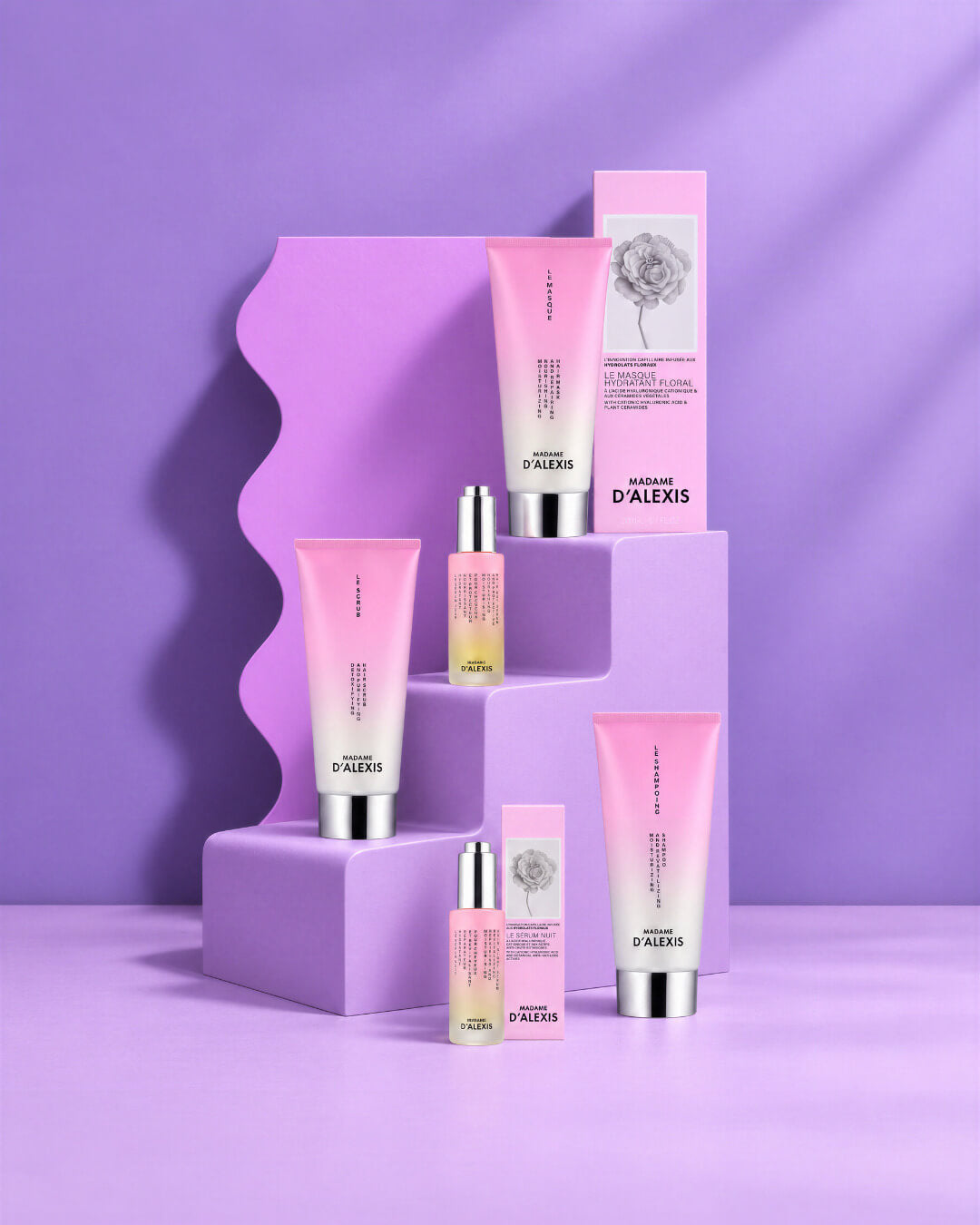
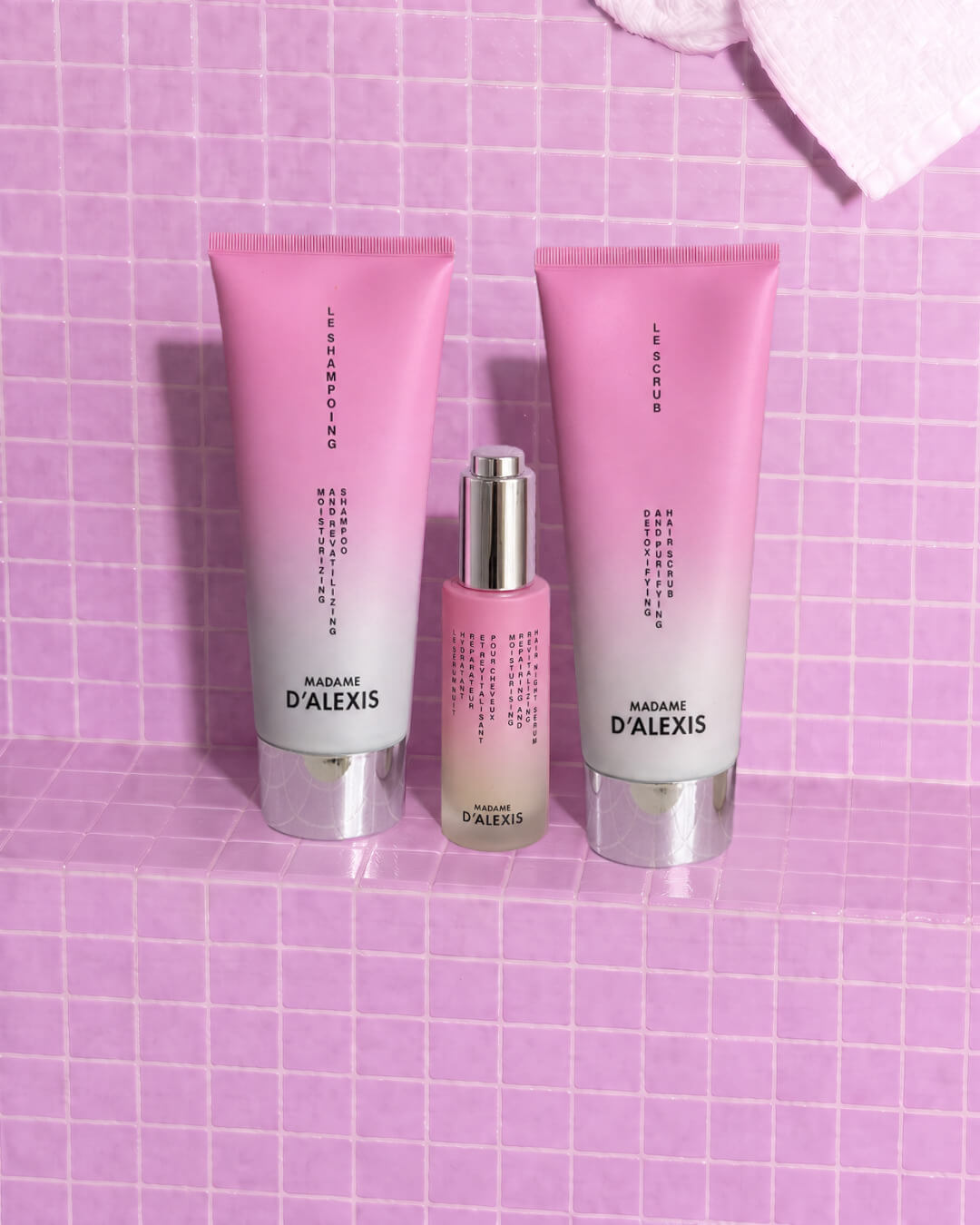
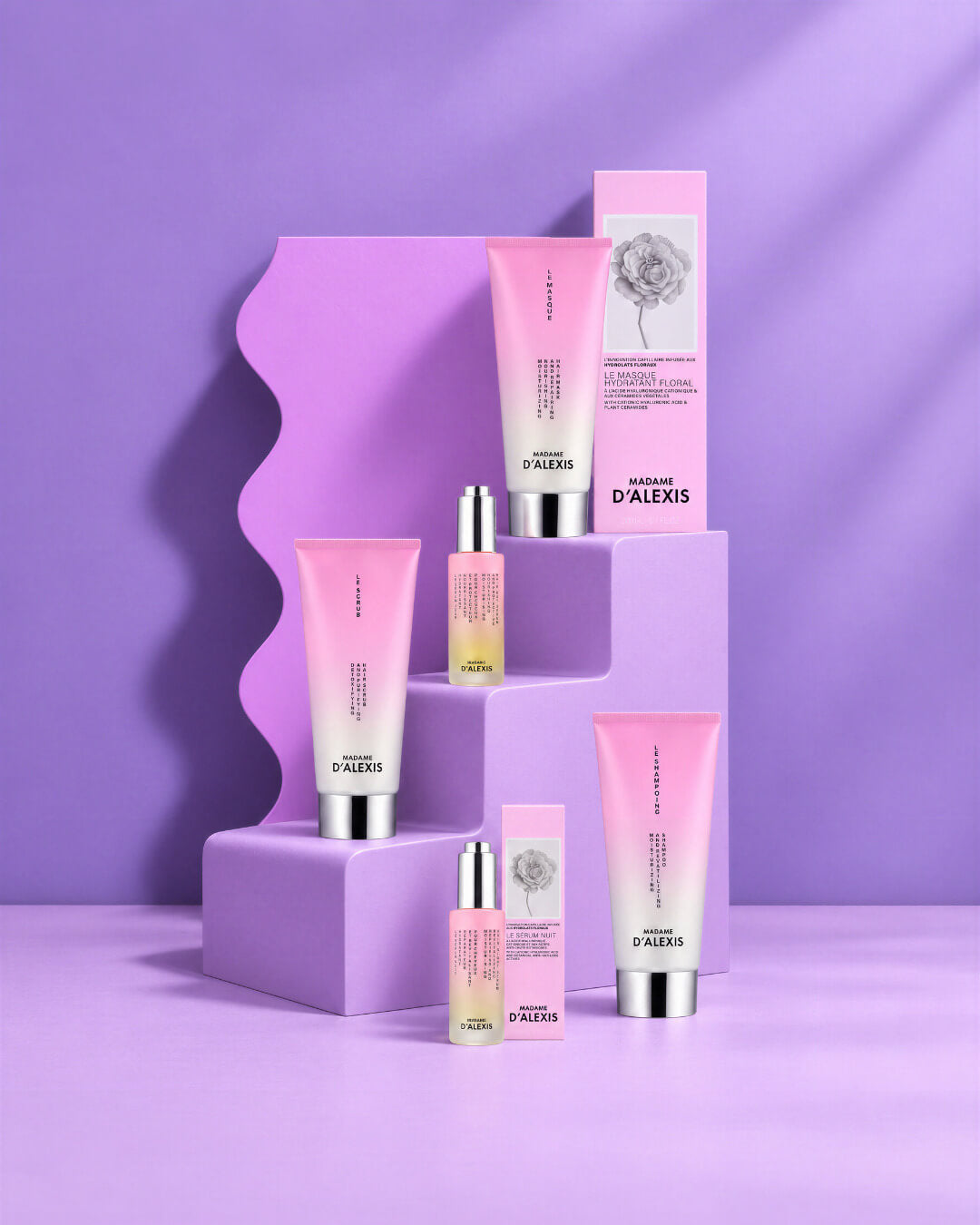
The Madame d'Alexis Hydrosol Shampoo is the premium answer to this question. It is much more than just a sulfate-free shampoo: it is a gentle, effective shampoo formulated to transform your scalp and hair.
What the Hydrosol Shampoo brings to a sulfate-free shampoo
1. Formulated without added water
While a conventional shampoo is formulated on an aqueous base, the Hydrosol Shampoo is based on organic hydrosols, without added water.
Result: a formula that delivers the benefits of flowers itself.
2. Active organic hydrosols: the heart of its effectiveness
The aqueous phase of the Hydrosol Shampoo consists of three organic floral hydrosols:
- Damask rose hydrosol : rich in antioxidants, soothes irritation, restores natural shine
- Matricaria chamomilla hydrosol : soothing, appreciated by sensitive scalps, naturally illuminates
- Orange blossom hydrosol : toning, brings a sensation of freshness and comfort to the scalp and roots
These hydrosols are not just fragrances: they form the core of the formula's care, without added water.
3. Gentle plant-based surfactants
Instead of harsh sulfates, the Hydrosol Shampoo uses gentle surfactants:
- Coco glucoside : effective cleansing without stripping
- Decyl glucoside : maximum gentleness, respectful of the scalp
- Zero sulfates : no irritation, no dryness
Result: Effective cleansing + scalp respect + light hair.
4. Skincare actives applied to hair
The Hydrosol Shampoo applies premium skincare standards to hair:
- Cationic hyaluronic acid : hydrates deeply without drying out or weighing down the hair fiber
- Plant-based keratin : strengthens the internal structure, improves elasticity, reduces breakage
- Prebiotics : nourish the skin flora, stabilize the scalp microbiome
5. Ultra-natural composition
- Sulfate-free: gentle cleansing, respectful of the scalp
- Silicone-free: real, non-artificial shine
- Paraben-free: clean composition, respectful of the microbiome
- Microplastic-free: respectful of the environment
- 98% ingredients of natural origin
6. Made in France in Brittany
Every Madame d'Alexis product is made with the same level of excellence as premium skincare.
7. Visible effectiveness from the first uses
A visible effect from the first wash, amplified over time:
- Lighter, more voluminous hair
- Purified and soothed scalp
- Natural shine restored
- Less greasy or less dry hair (depending on your type)
Comparison: Hydrosol Shampoo vs. conventional sulfate-free shampoos
| Criterion | Hydrosol Shampoo | Conventional sulfate-free shampoos |
|---|---|---|
| No added water | ✓ YES | ✗ NO (aqueous base) |
| Active hydrosols | ✓ YES (3 hydrosols) | ✗ Synthetic fragrances |
| Gentle surfactants | ✓ YES (coco + decyl glucoside) | ✗ Often synthetic |
| Hyaluronic acid | ✓ YES | ✗ Rarely |
| Plant-based keratin | ✓ YES | ✗ Rarely |
| Prebiotics | ✓ YES | ✗ NO |
| No silicones | ✓ YES | ✓ YES |
| Paraben-free | ✓ YES | ✓ YES |
| Made in France | ✓ YES | ✗ Industrial production |
| Visible effectiveness | ✓ From the 1st wash | Variable |
| Price | €35 (200 ml) | €20-40 |
| Customer reviews | 4.81/5 (180 reviews) | Variable |
Verdict: The Hydrosol Shampoo combines organic hydrosols, gentle cleansing surfactants, and skincare-derived active ingredients, without sulfates, silicones, or parabens.
With or without sulfates: what to expect in the first few weeks
Here are the changes generally described when switching from a shampoo with sulfates to a sulfate-free shampoo like the Hydrosol Shampoo. These are general observations, not promises: every head of hair reacts at its own pace.
Week 1: The transition to sulfate-free
With sulfates (before):
- Hair that gets greasy quickly
- Irritated, tight scalp
- Dull, flat hair
- A "heavy" feeling even after washing
- Itching or sensitivity
Without sulfates (Hydrosol Shampoo):
- Lighter hair from the 1st wash
- Less irritated scalp
- First sensation of lightness
- Hair that is easier to style
- Less itching
Weeks 2-3: Rebalancing
With sulfates (before):
- Scalp continues to overproduce sebum (compensation)
- Dull and brittle hair
- Significant frizz
- Hair that tangles easily
- Artificial shine (silicones)
Without sulfates (Hydrosol Shampoo):
- Scalp begins to rebalance
- Naturally shinier hair
- Reduced frizz
- Hair that is easier to detangle
- Natural shine restored
- Increased volume
Week 4 and beyond: a new balance
With sulfates (before):
- Chronically irritated scalp
- Dull, lifeless hair
- Significant breakage
- Oily roots and dry ends
- Need to wash every day
Without sulfates (Hydrosol Shampoo):
- Rebalanced and soothed scalp
- Shiny and supple hair
- Less breakage, strengthened hair fiber
- Natural balance restored
- Can space out washes (every 2-3 days)
- Hair that is easier to manage day to day
What to expect after a few weeks with the Hydrosol Shampoo
- Purified and rebalanced scalp
- More voluminous and lighter hair
- Reduced irritation and itching
- Shinier and more supple hair
- Regulated oily or dry hair (depending on your hair type)
- Strengthened hair fiber
- Hair that is easier to manage day to day
Frequently asked questions about shampoos with or without sulfates
What are the dangers of shampoos with sulfates?
Sodium laureth sulfate or sodium lauryl sulfate are not classified as carcinogens, but their high degreasing power dissolves the lipid barrier; the result: irritated scalp, rough ends, and color that fades faster. On recently straightened or Brazilian-straightened hair, repeated use can even damage the cuticle and dull the hair fiber.
Why choose a sulfate-free shampoo?
Opting for a coco glucoside or decyl glucoside base preserves the hydrolipidic film, soothes itching, and maintains curl hydration. Gentle surfactants are also less harsh on colored hair and preserve color better than an SLS formula.
How can you tell if a shampoo contains sulfates?
Read the INCI: the keywords "sulfate", "SLS", "SLES", or "sodium coco sulfate" reveal their presence. Conversely, a sulfate-free shampoo often lists cocoyl glutamate or sodium cocoyl isethionate. Cosmos and Ecocert labels systematically ban conventional sulfates.
Does a shampoo without lather really clean?
Lather is not a guarantee of effectiveness; it reassures the user. A sugar ester also removes sebum, simply in a less aggressive way than SLES. The difference becomes negligible as soon as a second rinse is performed using the proper technique.
Are sulfates harmful to colored hair?
Yes: their alkaline pH opens the cuticles, allowing pigments to escape. On colored strands, a sulfate-free shampoo therefore helps preserve the color's vibrancy for longer.
Which hair types benefit most from a sulfate-free shampoo?
- Curly hair: enhanced definition, reduced frizz.
- Dry or porous hair: better water retention.
-
Sensitive scalp: more comfortable washing.
- The oily hair types may, however, prefer alternating with a more lathering amphoacetate cleanser.
What is the best sulfate-free shampoo brand?
There is no absolute best-of list; it all depends on the hair type. Look for a first cleansing ingredient such as sodium cocoyl isethionate and a short list of additives. French brands in solid format, often scented with organic essential oils, receive good ratings for transparency and biodegradability.
How to properly use a sulfate-free shampoo?
Thoroughly wet the hair, pre-emulsify a small amount between the palms, and massage for 40 seconds. Add a splash of water to activate the lather, leave it on for a deep breath, then rinse thoroughly. A quick second wash is recommended after exercise, using a styling spray, or exposure to heavy pollution.
What ingredients replace sulfates in sulfate-free shampoos?
- SCI (sodium cocoyl isethionate) for creamy lather.
- Coco glucoside for its gentleness on sensitive skin.
-
Coconut betaine for a natural conditioning effect.
These derivatives of coconut or glucose break down quickly in water, reducing their environmental impact.
Does a shampoo always have to lather?
No. Lather mainly serves as a sensory indicator. In the 1950s, advertising associated lather with cleanliness, creating a cultural habit. A non-lathering surfactant can clean just as well; the key is the micellar ability to encapsulate oils and dust before rinsing.
Why choose a sulfate-free shampoo?
Choosing a sulfate-free shampoo means prioritizing a gentle and respectful approach to the scalp. The major advantage: it cleanses without stripping the hydrolipidic film, thus avoiding dull ends and recurring irritation.
Switching to sulfate-free often restores suppleness to the hair, simply because the scalp is no longer stripped with every wash.
What are the effects of sulfates on hair?
The effects of sulfates on hair are a double-edged sword: high cleansing power, but an irritating and drying nature.
SLS lifts the cuticle, causes the fiber to swell, and then carries away protective oils.
In the short term, this gives a sensation of sparkling cleanliness; in the long term, the scalp compensates by producing more sebum, and the curl closes.
How to recognize a sulfate-free shampoo?
To recognize a sulfate-free shampoo, read the label: avoid lines containing "laureth sulfate" or "sodium coco sulfate".
Check the composition; gentle surfactants are called "coco glucoside", "decyl glucoside", or "SCI". Cosmos and Ecocert labels are good indicators, as are INCI apps that rate the formula by scanning the barcode.
What ingredients replace sulfates?
Several ingredients can replace sulfates. Natural surfactants (SCI, coconut betaine, sarcosinate, sugar esters) cleanse without stripping essential lipids. They come from coconut or corn sugar, offer a fine but stable lather, and biodegrade quickly.
Formulators often combine them with aloe vera or panthenol to boost hydration. The result: an effective wash, a planet less burdened by detergents.
How long before you see results with a sulfate-free shampoo?
You can feel a difference from the first wash: lighter hair, less irritated scalp. The results amplify over time:
- Week 1: visible lightness and suppleness
- Weeks 2-3: natural shine restored, increased volume
- Week 4 and beyond: more comfortable scalp, easier to space out washes
Is the Hydrosol Shampoo suitable for all hair types?
Yes. Thanks to its soothing hydrosols and hydrating active ingredients, the Hydrosol Shampoo is suitable for all hair types:
- Oily hair : gently purifies without stripping
- Dry hair : deeply hydrates
- Sensitive hair : soothes irritation
- Colored hair : sulfate-free, preserves color
- Curly/coily hair : nourishes and respects curls
Can I use a sulfate-free shampoo if I have a very sensitive or irritated scalp?
Yes, it is even recommended. A sulfate-free, paraben-free, silicone-free shampoo is ideal for sensitive scalps. The Hydrosol Shampoo is particularly suitable thanks to its soothing hydrosols (chamomile, rose) and the gentleness of its surfactants.