Advice
Hair Damaged by a Flat Iron: How to Repair It and Restore Its Softness
Signs, step-by-step routine, settings, and care: how to repair hair damaged by a flat iron and restore a more supple, less brittle, and shinier hair shaft.

The hair straightener holds a special place in the bathroom. It tames unruly hair in seconds, smooths out a wayward fringe, and gives your hair that sleek, shiny look associated with a salon blowout. Then one day, the results reverse: the length loses its suppleness, the ends stand on end, and light no longer glides over the hair shaft. You lower the temperature, you straighten your hair less often, and the texture remains coarse, almost cardboard-like.
Let’s be clear: a strand of hair damaged by heat does not regenerate. It does not rebuild what excessive heat has taken away. However, it does heal itself, forming a protective layer on the surface, nourishing itself, and protecting itself enough to regain softness, body, and shine. That is the whole point of this article, which is dedicated to hair repair.
Here you'll find the telltale signs, a step-by-step routine, common mistakes to avoid, temperature guidelines for each hair type, and the treatments to turn to when your hair needs a serious overhaul.
How can you tell if your hair has been damaged by a flat iron?
Hair damaged by a flat iron doesn’t always result in a visible disaster. More often than not, the damage sets in gradually. Repeated heat exposure lifts the scales of the cuticle—the layer that protects the hair shaft—and causes the keratin to lose moisture. The surface is no longer smooth; it becomes rough, and each time you straighten your hair with a flat iron, the texture becomes more pronounced instead of being smoothed out.
You can tell just by touching it—the diagnosis is pretty simple. Healthy hair glides through your fingers, lets a comb run through it smoothly, and springs back into shape when you stretch it. Damaged hair does the opposite: it feels rough, gets caught, and seems dry even after a thorough rinse. The mid-lengths are dull, the shine doesn’t last, and the ends split into several strands. The hair becomes brittle and loses the elasticity that allows it to bend without breaking.
Burnt hair indicates a more advanced stage of damage. The hair shaft has been exposed to excessive heat, often on damp hair or in an area already weakened by bleaching, highlights, or a permanent straightening treatment. The signs are clear: frizzy, curled-up ends; strands that snap clean off; a stiff, cardboard-like texture; and sometimes a burnt smell when straightening. At this stage, no routine can restore the hair to its original condition. The goal is to minimize breakage and support regrowth.
Colored hair is the first to show signs of heat damage. Hair coloring, highlights, or bleached blonde hair have already opened the cuticle, and the color fades faster when the flat iron is applied. Bleached hair doesn’t handle high heat well: as long as you stay below 160 °C and don’t hold the flat iron in one spot for too long, you can avoid most of the damage. Recently highlighted hair requires the same caution, as do blonde hair, fine hair, or hair that’s already brittle. Exposure to the sun, chlorine, or saltwater further weakens the hair, increases frizz, and contributes to a dull color.
There is one very telling indicator: porosity. Porous hair absorbs water quickly and loses it just as quickly; it swells when exposed to moisture, becomes frizzy, and breaks more easily. When the hair starts to look like straw, the cuticles no longer hold onto anything, and the hair appears dry along its entire length—even after using a hair mask.
How can I repair hair damaged by a flat iron?
Repairing doesn’t mean erasing. Hair is a dead material: it doesn’t heal; it just forms a protective layer. The goal of a good routine is therefore twofold: to restore enough suppleness and shine to the surface so that the hair becomes manageable again, and to minimize breakage while it grows back. Here’s the sequence of steps that works—stick with it for several weeks before judging the results.
- Assess before treating. Take a few strands of hair, gently stretch them, and then let go. If they don’t return to their original length, they’re damaged. Also identify the most damaged areas: usually the mid-lengths and ends, which aren’t protected by sebum and are more exposed to the styling tool.
- Wash gently, without stripping the hair. A shampoo that’s too harsh strips the hair shaft of its natural oils and leaves the hair dry even before styling. Wet the hair thoroughly, massage the scalp with your fingertips, then rinse very thoroughly so that no residue clings to the hair strands.
- Apply a mask regularly. This is the key step. On towel-dried hair, work the product from the mid-lengths to the ends, avoiding the roots. The processing time does the work: a short time for detangling, a longer time for deep conditioning.
- Detangle without breaking the hair. Use on towel-dried hair, never on dripping-wet hair. Start at the ends and work your way up gradually, holding the strand between your fingers so as not to pull on the roots.
- Squeeze out the water without rubbing. Press the water out with a soft towel or a T-shirt, then let it air dry or use a warm setting. Wet hair is more fragile: that’s when breakage occurs, which you’ll notice later.
- Nourish and seal. A few drops of oil or serum applied to the mid-lengths and ends of dry or slightly damp hair seal the cuticle and restore shine without weighing the hair down.
- Reevaluate how often you use it. Space out your sessions, lower the heat setting, and limit the number of passes. Hair that’s in the process of repairing itself recovers much faster when the cause of the problem is removed.

This routine won't turn damaged hair into brand-new hair. It improves the appearance, helps soften the texture, and reduces breakage—which is often enough to make your hair feel nice to the touch and easy to style.
What mistakes should you avoid when using a hair straightener?
Much of the heat damage to hair isn't caused by the styling tool itself, but by improper use. The damage builds up session after session, without any immediate warning signs. Here are the habits you should correct first.
- The temperature is set too high. Many hair straighteners heat up well beyond what is necessary. Keep these guidelines in mind: 140 to 160 °C for fine or fragile hair, 160 to 180 °C for normal hair, and up to a maximum of 200 °C for thick or curly hair. Above these temperatures, the risk of burning the hair shaft increases significantly.
- Using it too often. Straightening your hair every day doesn't give the cuticle time to close. Alternate with heat-free styling and save the straightener for the days when you really need it.
- Damaged or dirty plates. A scratched coating catches the hair and pulls off cuticles with each straightening session. Plates covered in product residue heat unevenly. Clean them regularly, while they’re cool.
- Straightening wet hair. This is the most damaging mistake. Water heated to high temperatures turns into steam inside the hair shaft and severely weakens the cuticle. Always dry your hair completely before using a straightener.
- Avoid ironing the same spot repeatedly. Ironing the same spot five or six times doesn't make the fabric any smoother—it just builds up heat. Two slow, even passes are enough, working on a narrow, taut section of fabric.
- Working on sections that are too thick. The iron will only heat the surface, and you'll be tempted to keep applying pressure. Separate the hair into thin sections—it's faster and much gentler.
Heat protection remains the most basic step. To use a flat iron without causing damage, apply a heat protectant to towel-dried hair, making sure to wait until it’s completely dry before straightening. The product’s texture matters: a lightweight spray works best for fine hair, a richer cream for thick hair, and a dry oil serves as a finishing touch. Be sure to use a heat protectant every single time you straighten your hair, without exception: it’s the simplest way to prevent breakage and avoid further damage to the hair shaft when using a heated styling tool. A tip to remember: despite the trend toward daily straightening, it’s better to straighten your hair section by section and use a lower temperature setting. This new approach may seem time-consuming at first, but it significantly reduces damage and is the best way to minimize thermal shock.
If your primary goal is to prevent the situation from getting worse, taking the right steps beforehand is just as important as the treatment itself: the choice of product, how to apply it, and the appropriate temperatures for each area are detailed in our article on heat protection for hair.
Which hair straightener should I choose to cause the least damage?
The right tool isn't the one that gets the hottest; it's the one that heats evenly and can be adjusted with precision. A straightening iron whose temperature fluctuates erratically exposes the hair shaft to heat spikes that weaken the keratin, even when the display shows a reasonable temperature.
First, take a look at the plates. Ceramic and tourmaline glide smoothly and distribute heat evenly, which helps prevent hot spots. Titanium heats up faster and is suitable for thick hair, but requires more careful attention to the temperature setting. Regardless of the material, check that the coating is intact: a plate that’s chipped or catches on your finger is a plate that will break.
The settings are just as important as the material. Choose a tool with an electronic thermostat, fine temperature increments, and a low minimum setting, so you can work at 140 °C on fine hair or sensitized areas. A straightener that doesn’t go below 180 °C leaves no room for adjustment when working on hair that’s still recovering.
Price, brand, and online reviews do not guarantee the quality of a heater. Before making a purchase, check the material of the heating elements, the temperature range, and the precision of the controls. Models with a reliable thermostat and smooth temperature increments are the safest, and the best heater is the one you know how to use at low temperatures.
Finally, the width of the plates and the shape of the straightener should match your hair texture and length. A narrow plate is best for short hair and bangs, while a wider plate saves time on long, thick hair. A swivel cord and plate lock prevent twisting motions that can pull out hair. As for decorative features, they have no effect on the health of the hair shaft.
How do you moisturize damaged hair?
Hydrating and nourishing are two complementary steps that are often confused. Hydration supplies water to the hair shaft and locks in that water using humectants. Nourishment, on the other hand, provides lipids that soften the hair and seal the cuticle. For hair damaged by flat irons, both are necessary: moisturizing without nourishing results in frizzy hair, while nourishing without moisturizing results in hair that’s greasy on the surface but dry on the inside.

When it comes to hydration, organic hydrosols are particularly well-suited because they deliver moisture and active plant molecules in a single step. Damask rose hydrates, soothes, and enhances shine; German chamomile soothes, brightens the hair, and helps reduce dryness and breakage; and orange blossom tones and revitalizes the roots. Combined with cationic hyaluronic acid, which locks moisture close to the hair shaft, they restore body to brittle, straw-like hair.
It’s still essential to lock in this moisture. Plant-based ceramides and a thin layer of oil applied to the lengths of the hair close the cuticle and prevent water from evaporating too quickly. This is what distinguishes soft, supple hair from hair that becomes coarse again within a few hours—especially in the case of porous hair, which loses moisture very quickly.
What hair care products should you choose for hair damaged by a flat iron?
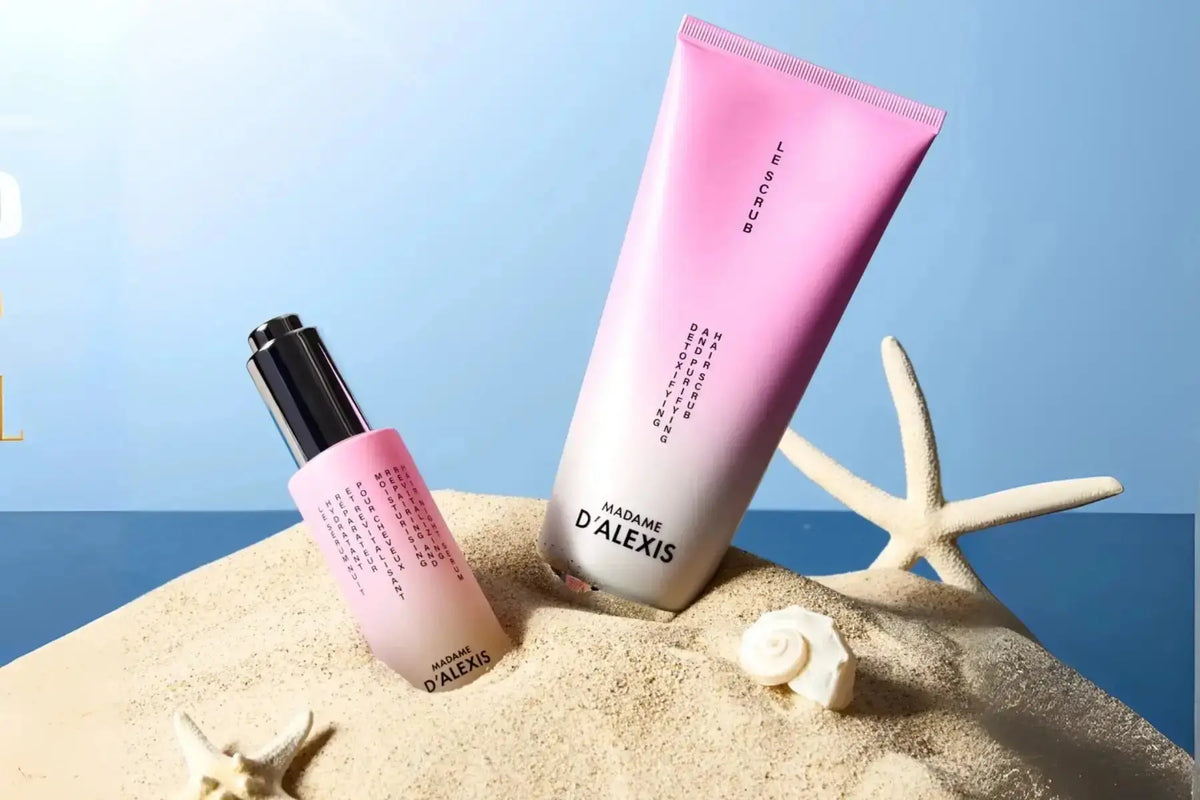
A hair repair routine doesn’t have to be time-consuming. It needs to be consistent, with formulas that complement each other rather than repeat the same steps. The most effective repair treatments are those that gently nourish the hair shaft without overloading it with silicones, which mask the problem without addressing it. At Madame d’Alexis, every product is formulated without added water, using organic hydrosols as a base, and is free of sulfates, silicones, and parabens. They’re made in France, in Brittany. No miracle cures here—just products designed to care for the hair fiber.
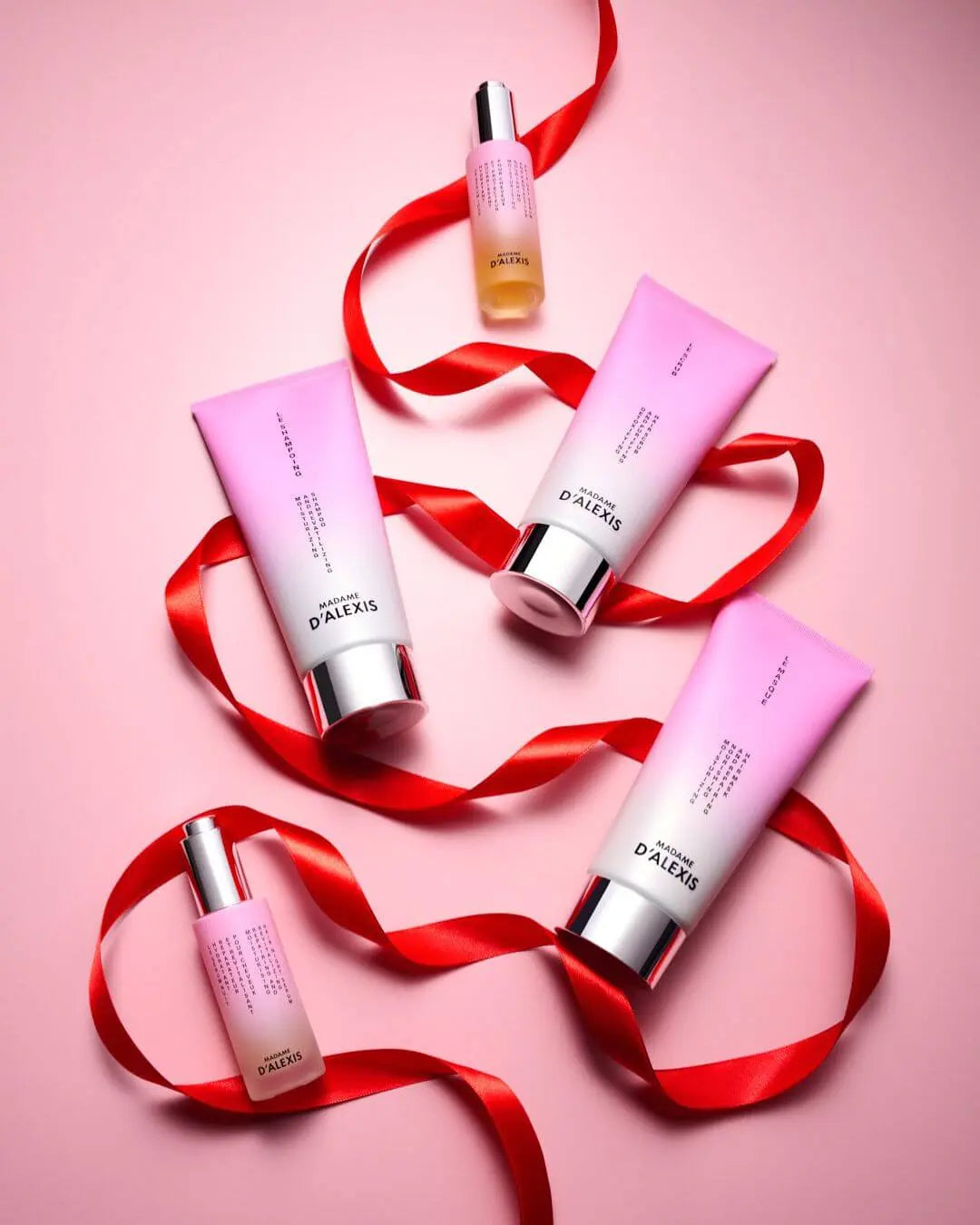
A gentle restorative shampoo, a mask rich in plant-based ceramides, and a lightweight dry oil make up the basic selection. There’s a wide range of products on the market, but for brittle hair, three steps are all it takes to establish a clear new routine: cleanse without drying out, deeply nourish, and then seal in the moisture as a finishing touch. Check the ingredients before choosing a product: an effective solution is recognized by its list of active ingredients, not by its claims. If you’re looking for a more targeted selection, here are the four products to apply step by step.
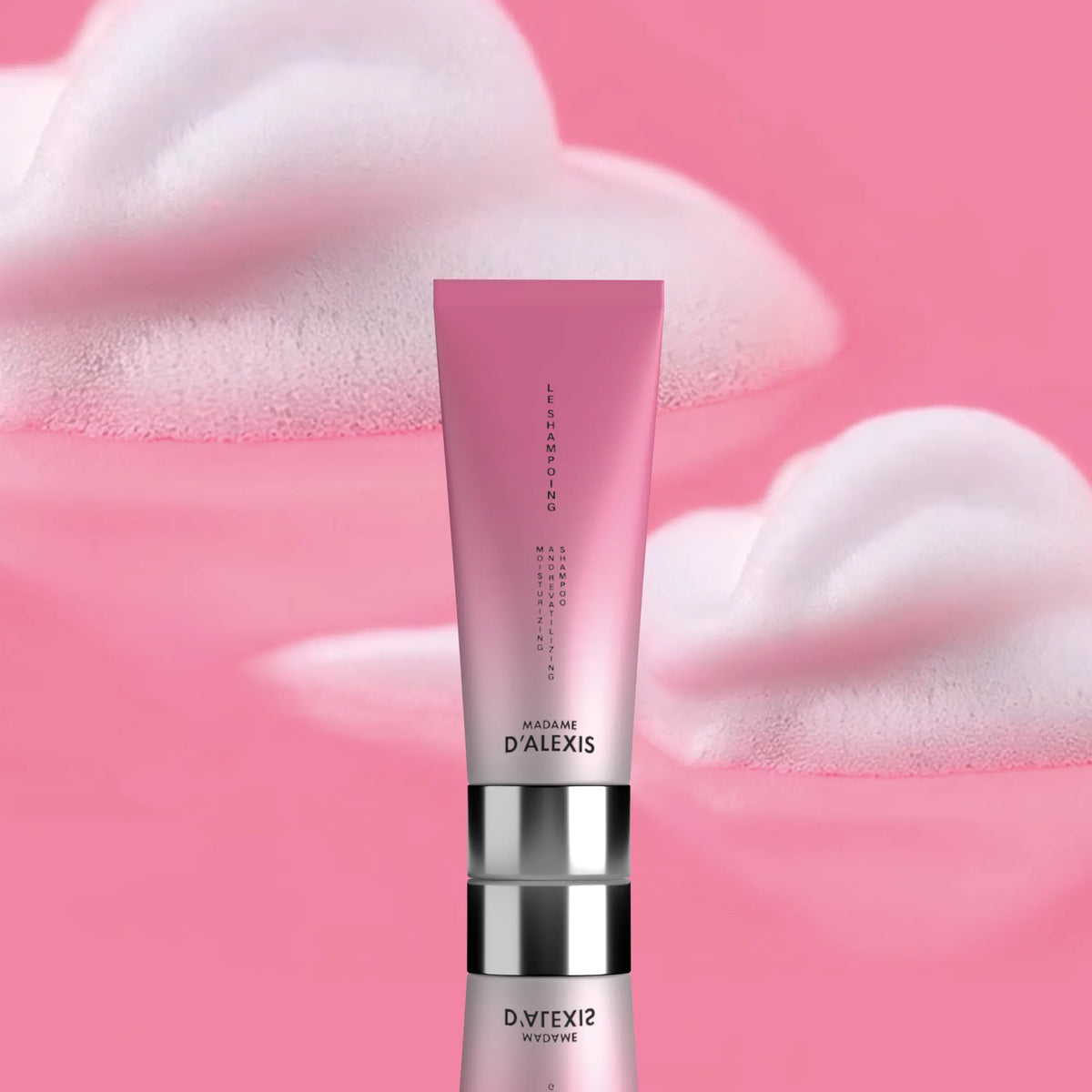
The Shampoo
Formulated with 98% naturally derived ingredients, it hydrates, soothes, and brightens. Its base of organic hydrosols—including Damask rose, German chamomile, and orange blossom—prepares the hair shaft to absorb the treatment, while cationic hyaluronic acid, prebiotics, and plant-based keratin help soften the hair’s surface. Use it as a double shampoo on a thoroughly wet scalp, massage in with your fingertips, then rinse very thoroughly. It is safe for daily use.
The Mask
It’s the treatment that makes all the difference for damaged hair. Formulated with 97% naturally derived ingredients, it repairs, nourishes, and softens thanks to plant-based ceramides, cationic hyaluronic acid, orange blossom wax, and organic apricot and jojoba oils. Allow 2 to 5 minutes for detangling, 5 to 10 minutes for a standard treatment on towel-dried hair, and 20 to 30 minutes for a deep treatment. Once a week, an overnight treatment is suitable for sensitized hair. In all cases, rinse thoroughly: any residue from the mask will weigh down the hair and compromise the results of straightening. To learn more about this treatment, our article on reparative hair masks details application times and common mistakes to avoid.
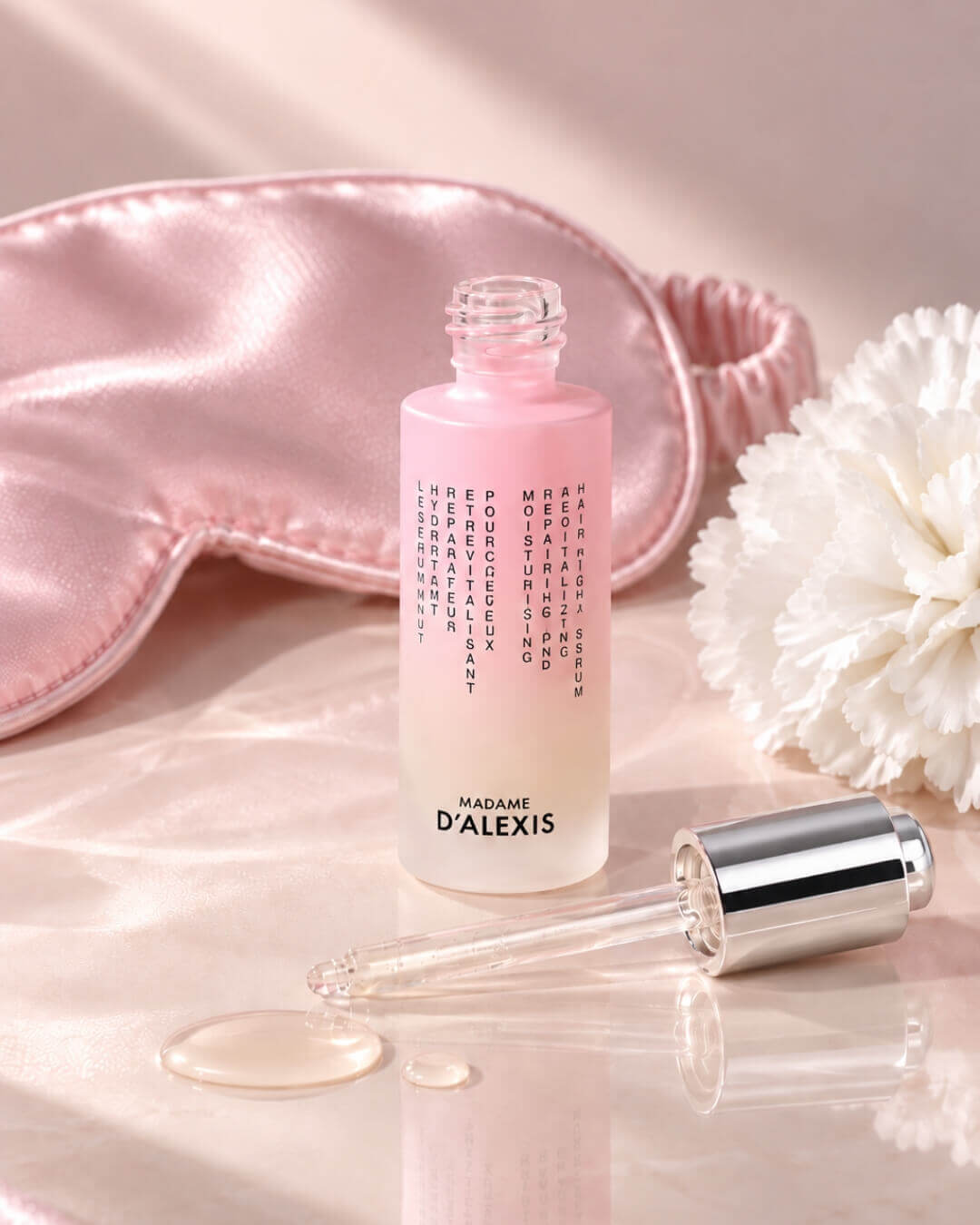
The Day Serum
Formulated with 99% naturally derived ingredients, this dry oil is the perfect finishing touch to your routine. Organic jojoba and plant-based ceramides coat the hair shaft, antioxidants provide daily support for your hair, and natural heat protectants work up to 200 °C. Apply 1 to 3 drops to the mid-lengths and ends of dry or slightly damp hair—without weighing it down—and distribute evenly throughout the length. This step restores shine and softness to the touch, especially on dry hair and damaged ends.
The Hydration Routine
The shampoo and mask duo combines these two steps into a single hair care routine, using the same base of organic hydrosols and the same balance of nourishing ingredients. It’s the simplest formula to stick with over time when you’re looking for consistency without having to think about the order of the products. If your hair is very dry, you can supplement your routine with our products for damaged and brittle hair and adjust your regimen according to the season and the condition of your hair.

The Shampoo


The Day Serum

Has your hair been damaged by the straightener?
We'll ask you a few questions about your scalp and hair, and then we'll create a personalized routine for you using our five organic hydrosol treatments, formulated without added water.
Does this sound like you?
- You reply
- Discover your ritual
- You are adjusting your selection
When should you trim your split ends or see a hairstylist?
Not all split ends are the same. A split end that’s just starting to fray, split in two, or catch on a comb can still be treated. A split end that’s several centimeters long and runs up the length of the hair cannot be repaired—it must be cut off. The longer you wait, the further the split will travel up the hair, and the more you’ll have to cut off.
A visit to the hairdresser every two to three months is usually enough to keep split ends under control without noticeably shortening your hair. However, see a professional right away if you notice a clear break in the middle of a strand, frizzy areas that no longer respond to treatment, unusual hair loss, localized hair loss, or a burning sensation on your scalp. A professional at a hair salon will know how to respect your hair’s natural texture, tailor the cut to your hair type, and support hair growth with a more comprehensive treatment plan, such as a deep conditioning treatment. A new, shorter hairstyle can sometimes help you start fresh.
Frequently Asked Questions About Hair Damaged by Straighteners
Can hair damaged by a flat iron be repaired?
No, not strictly speaking. A burned hair strand does not regenerate, and destroyed keratin does not rebuild itself. What we can do is improve the appearance, soften the texture, minimize breakage, and support regrowth with a regular routine. The most damaged ends should be trimmed.
Should you stop using your hair straightener altogether?
Not necessarily, but you need to change how you use it. A lower setting, fewer passes, less frequent use, and consistent use of a heat protectant will allow you to continue straightening your hair without causing further damage. If your hair is truly damaged, taking a break for a few weeks is still the most sensible option.
At what temperature should you straighten damaged hair?
Stick to the lower end of your device’s temperature range: 140 to 160 °C for fine or fragile hair, 160 to 180 °C for normal hair, never more than 200 °C, and only on thick or curly hair. For damaged hair, two passes at 150 °C are better than a single pass at 210 °C.
Is a heat-protective spray enough?
It helps, but it doesn't make heat harmless. A heat-protectant spray minimizes damage and improves the glide of the straightening irons, which reduces the number of passes needed. Apply it to towel-dried hair, section by section, and wait until it's dry before straightening.
Why does my hair look dull after I straighten it?
This is because the cuticle remains open and the surface no longer reflects light. Straightening hair that isn’t dry enough—or that has product residue or dirty plates—exacerbates this issue. Moisturizing followed by a light nourishing treatment usually restores shine after just a few applications.
Rediscover Gentleness, One Step at a Time
Hair damaged by a flat iron won’t look brand-new again. But it will feel better. And that’s already a big deal: a softer texture, ends that snag less, restored shine, and length that styles without a struggle. This improvement comes down to a few simple things: a gentler setting, fewer passes with the flat iron, leaving a hair mask on long enough, and a light layer of oil to seal it all in.
If you’re not sure where to start, take the time to assess your hair before choosing a product: porosity, elasticity, damaged areas, and hair type. Our hair assessment helps you identify what your hair needs so you can adopt a routine that’s truly tailored to you, with a clear idea of which treatments to prioritize. It’s not about beauty or achieving perfect results—it’s about consistency.