Advice
Repairing Hair Mask: How to Deeply Repair the Hair Fiber?
Which repairing hair mask offers the most effective deep action? Madame d'Alexis hair care restores the hair fiber thanks to its organic hydrosols, plant ceramides, and cationic hyaluronic acid.


Repairing Hair Mask: Restore the hair fiber, reduce breakage, and restore shine
A comprehensive guide to understanding how a reparative mask works, recognizing the signs of damaged hair, and choosing a formula that provides deep repair without weighing hair down.
What a repairing hair mask really does for the hair fiber
- Deep strengthening of the hair fiber, thanks to active ingredients that target damaged areas and restore the internal structure.
- Long-lasting hydration, supported by humectants and lipids that keep water at the heart of the hair despite external aggressions.
- A significant reduction in breakage and improved resistance to heated styling tools, thanks in part to ceramides and protective agents.
- Gain softness, suppleness, and natural shine, made possible by smoothing the cuticles and restoring cohesion to the hair surface.
- An overall improvement in your hair care routine, with hair that is easier to style, less dull, and better protected against factors that cause damage.
The active ingredients target porous, brittle, or weakened areas to restore the fiber's cohesion.
Cationic hyaluronic acid helps the hair retain moisture without weighing it down or leaving a greasy finish.
Plant-based ceramides smooth the cuticle and help protect against damage caused by heat, UV rays, or hair coloring.
The Hydrosol Mask: The Restorative Treatment That Transforms Your Routine
A premium hair care product designed for dry, brittle, color-treated, or damaged hair. It hydrates, nourishes, and strengthens with professionally formulated active ingredients that cannot be replicated in a homemade recipe.
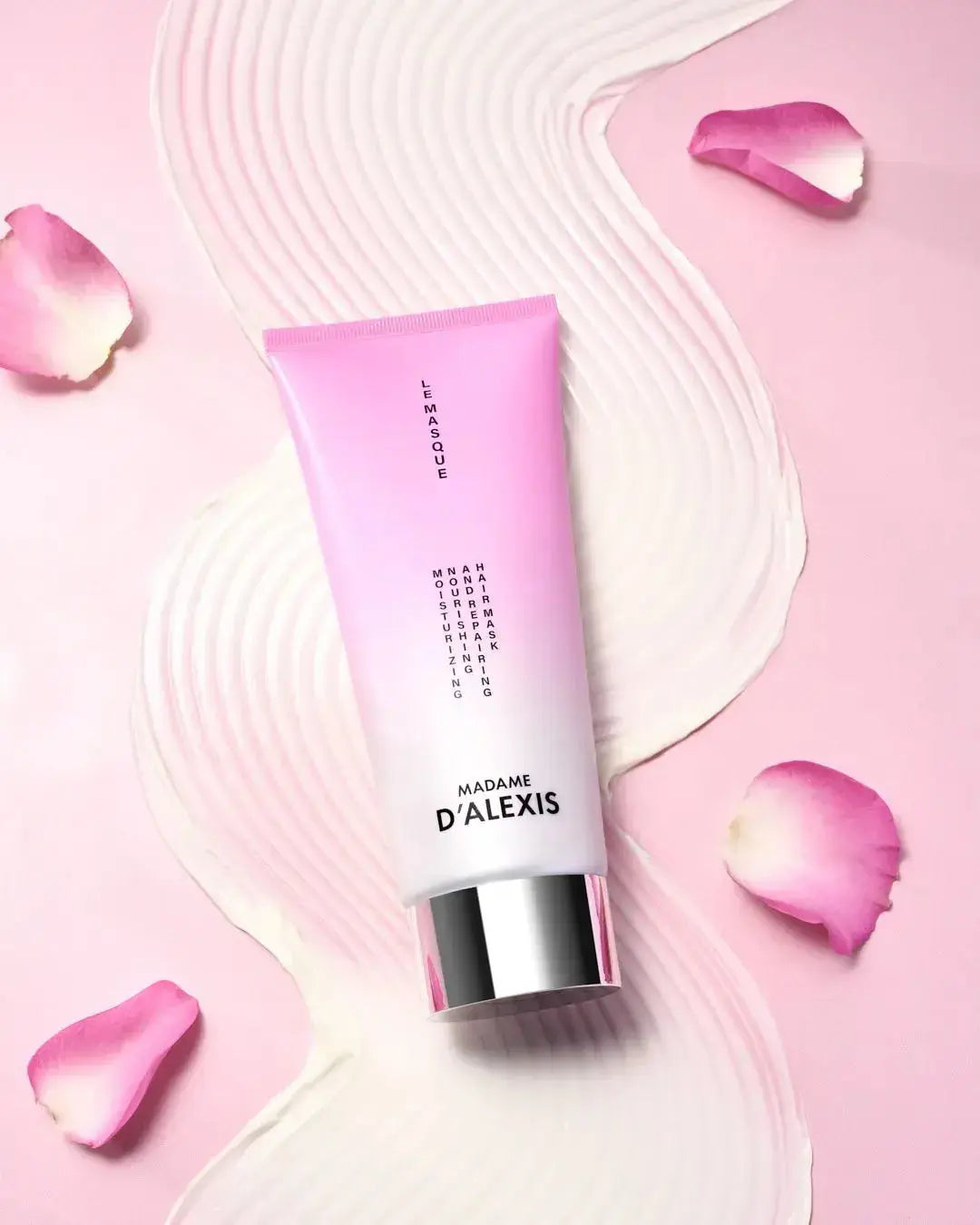
The Hydrolat Mask
Plant ceramides · specialized hyaluronic acid · organic plant waters
- Visibly repairs dry, brittle, and porous hair
- Strengthens the cuticle with plant-based ceramides
- Moisturizes without occlusive silicones or a heavy feel
- Sensory texture, ideal for use 1 to 2 times a week
Damaged hair cannot be repaired with just a surface treatment. When a hair strand loses its cohesion, the cuticle scales open, and the keratin breaks down, only deep-penetrating treatment can truly restore the hair’s structure.
This is precisely the role of a repairing mask: to provide the hair fiber with the nutrients, proteins, and essential fatty acids that restore its strength, softness, and lasting shine.
Why does damaged hair need a repairing mask?
Understanding what damages hair
The mechanisms of hair damage are now well documented. Several factors weaken the hair fiber:
- Repeated heat from styling tools weakens keratin.
- Chemical hair coloring and bleaching, which profoundly alter the hair's internal structure.
- UV rays oxidize pigments and dry out hair lengths.
- Mechanical friction, towels, pillowcases, brushing.
- Severe dehydration linked to a lack of fatty acids and vitamins.
Over time, the fiber becomes permeable, porous, and more vulnerable to external damage.

What are the signs of weakened hair fibers?
The diagnosis is often straightforward for an experienced eye. The same characteristics are found:
- Dry, brittle hair that becomes "straw-like."
- Open scales giving a rough texture.
- Loss of natural shine.
- Persistent frizz.
- Difficulty styling, even after shampooing.
Each symptom reflects a weakening of the hair's internal structure.
How does a repairing mask work on hair?
An effective repairing hair mask does more than just coat the ends. It must:
- Penetrate deep into the hair to restore the hair fiber.
- Strengthen the structure to limit moisture loss.
- Smooth the scales to improve the feel.
- Provide protein, vitamins, and fatty acids to nourish the fiber.
- Repair the lipid barrier with ceramides.
It is this synergy that enables genuine, visible, and lasting repair.
The best repairing hair mask? Focus on Alexis' Madame Mask
An exceptional formula of natural origin
This mask stands out for its exceptionally well-developed formula, designed entirely for deep repair. It is based on:
- 97% natural ingredients.
- A sulfate-free, silicone-free, and paraben-free formula.
- A base of organic hydrosols of Damask rose, chamomile, and orange blossom, much more active than regular water.
- Plant ceramides to strengthen the lipid barrier.
- Cationic hyaluronic acid, known for its affinity with damaged hair.
- Organic apricot and jojoba oils, nourishing yet lightweight.
- An essential orange blossom wax that seals in moisture.
The combination creates a restorative hair mask that combines hair care, naturalness, and technical effectiveness.
Organic hydrosols, ceramides, hyaluronic acid: a more technical repair process than a traditional skincare treatment
The treatment card isn't just a product insert: it helps explain why the Hydrosol Mask specifically addresses the needs of damaged hair.
The Hydrolat Mask
For dry, brittle, colored, or damaged hair
- Organic hydrosols instead of added water
- Cationic hyaluronic acid for plumping
- Plant ceramides and fine oils
- Free of sulfates, parabens, and silicones
Repairing Action: What Is the Specific Role of Each Active Ingredient?
Damask rose, chamomile, and orange blossom replace the added water to create a more active base.
They restore the fiber's strength and protect it from heat damage.
It targets damaged areas, plumps the skin, and maintains hydration.
- Rose hydrosol brings natural shine, suppleness, and soothing properties to the scalp.
- Chamomile enhances shine, reduces breakage, and protects thanks to its antioxidants.
- Orange blossom revitalizes the hair fiber and supports root vitality.
- Plant ceramides restore fiber cohesion and protect against heat.
- Cationic hyaluronic acid plumps, hydrates, and strengthens each strand.
- Organic oils nourish without weighing down the skin, thanks to their high content of essential fatty acids.
| Active | Origin | Scientific action | Visible benefit |
|---|---|---|---|
| Damask rose hydrosol | Organic plant-based | Improves cuticle cohesion, rich in antioxidants | Shine, softness, soothing of the scalp |
| Chamomile hydrosol | Organic plant-based | Anti-inflammatory, antioxidant, anti-breakage | Natural shine, softness, protection |
| Orange blossom hydrosol | Organic plant-based | Revitalizes the fiber, stimulates root vitality | Revitalized hair, enhanced shine |
| Plant ceramides | Plant-based | Restore intercellular cement | Reinforced fiber, heat protection |
| Cationic hyaluronic acid | Biotechnology | Targets damaged areas, retains water | Intense hydration, plumped fibers |
| Organic oils, apricot, jojoba | Organic plant-based | Light nutrition rich in essential fatty acids | Softness, shine, protection |
Visible results from the very first application
Customers quickly notice:
Instant softness, restored suppleness, and a more radiant shine.
Less breakage when brushing, strengthened hair, and smoothed cuticles.
Reduced frizz, better hold, and hair that's easier to style.
This mask quickly becomes a staple of an effective hair care routine for dry, brittle, or damaged hair.
What hair types is this repairing mask ideal for?
Understanding which hair types benefit most from a reparative mask allows you to tailor your routine and achieve measurable results.
They lack moisture and fatty acids. The mask restores the lipid barrier and improves the skin's texture.
The ends become brittle, and the hair shaft splits. Ceramides help strengthen the hair's structure.
Colored hair is more porous. A restorative mask helps maintain shine for longer.
They need nourishment and hydration without compromising the natural definition of the curl.
They require a balanced, nourishing yet lightweight treatment that preserves their natural volume.
The mask smooths the surface, restores cohesion, and enhances light reflection.

How to use a hair repair mask correctly?
Precise application determines the effectiveness of the treatment. Every step counts, because the mask works deep down.
As a deep treatment before shampooing
- Apply the mask generously to dry hair lengths.
- Leave on for at least twenty minutes to allow the active ingredients to penetrate.
- Wrap your hair in a warm towel to slightly open the cuticles.
- Rinse thoroughly before shampooing.
Conditioner to nourish and soften the hair fiber
- Squeeze the hair to remove excess water.
- Apply the mask to the lengths and ends.
- Leave on for ten to twenty minutes, as needed.
- Massage the lengths to promote distribution.
- Rinse with warm water to gradually close the scales.
Express detangling
- Apply a small amount to wet hair.
- Leave on for three minutes.
- Rinse thoroughly.
Mistakes to avoid with a repair mask
- Avoid applying the mask to the roots.
- Avoid using water that is too hot, as it dries out the skin.
- Do not overload the fiber.
- Do not rinse too soon so that the active ingredients can take effect.
| Hair type | Quantity | Leave-in time | Frequency | Expert tip |
|---|---|---|---|---|
| Very damaged hair | 2 hazelnuts | 20 min or overnight | twice a week | Warm towel |
| Dry hair | 1 small amount | 10 to 15 min | Once a week | Detangling with a wide-tooth comb |
| Fine hair | Very small hazelnut | 3 to 5 min | Once every 10 days | Rinse with lukewarm water |
| Colored hair | 1 small amount | 10 to 20 min | Once a week | Avoid hot water |
| Curly/kinky hair | 1 to 2 hazelnuts | 20 min | Once a week | Scrunch after application |
The benefits of using a repairing mask every week
A restorative mask applied once a week acts as a true deep-conditioning treatment. Its effectiveness is not based solely on immediate hydration, but on a series of biological and physicochemical mechanisms that gradually transform the condition of the hair fiber.
1 treatment per week to restore fiber cohesion
When used regularly, the Hydrosol Mask replenishes lost lipids, improves moisture retention, and strengthens the hair’s surface where it needs it most.
The Hydrolat Mask
For a softer, stronger, shinier fiber
- Repairs hair fibers deep down
- Provides long-lasting hydration to the hair fiber
- Reduces breakage and protects from heat
Repairs hair fibers deep down
Damaged hair has gaps in its cuticle and damage to its cortex. Cationic active ingredients target precisely where repair is needed, while plant-derived ceramides strengthen the intercellular matrix.
Provides long-lasting hydration to the hair fiber
An effective repair mask replenishes the hair with moisturizing agents, improves moisture retention, and restores the lipid barrier that prevents moisture loss.
Strengthens and fortifies the internal structure
The cortex is composed mainly of keratin. Regular use provides essential fatty acids, film-forming active ingredients, and a noticeable improvement in mechanical strength.
Reduces breakage and protects from heat
Repair masks create a protective layer around the fiber, limit thermal shock, and reduce the formation of internal microcracks.
Provides softness, suppleness, and natural shine
The smoother the cuticle, the better the light reflects off it. The hair feels silkier and moves more freely.
Protects color and restores vitality
Colored hair is more porous. A weekly routine seals the cuticle, prevents dullness, and slows the fading of warm or cool tones.
Makes styling easier and improves hold
When the hair is better hydrated, repaired, and strengthened, it tangles less, resists brushing less, and responds better to daily styling.

Comparison: repairing mask vs. nourishing mask vs. moisturizing mask
Not all masks serve the same purpose, even if their texture may seem similar. This distinction is essential, because the wrong mask can weigh down the hair, make it look dull, or leave the hair strands under-treated.
| Type of mask | Main objective | For what hair types | Result obtained | When to use it |
|---|---|---|---|---|
| Repairing mask | Restore hair fiber, fill internal gaps | Damaged, brittle, colored, weakened hair | Less breakage, smoother surface, increased density | 1 to 2 times per week |
| Nourishing mask | Provide lipids and fatty acids | Dry, frizzy, curly, dull hair | Flexibility, softness, radiance | Once a week |
| Moisturizing mask | Replenish fluids and stay hydrated | Dehydrated, frizzy, tangled hair | Lightness, movement, elasticity | As needed, on an alternating basis |
To make it easier to read, here is a clear chart that helps you identify the right treatment for your specific hair concern: dry hair, brittle hair, colored or highlighted hair, dull hair, curly hair, damaged hair, or heat-styled/straightened hair.
FAQ - Frequently Asked Questions About Repair Masks
What is the best repair mask for damaged hair?
A good repair mask must target damaged fibers with precision. Formulations rich in ceramides, cationic hyaluronic acid, essential fatty acids, and active hydrosols show the most consistent results.
Personally, I prefer silicone-free masks because they allow you to see the real improvement in the hair fiber without any misleading cosmetic effects.
How to repair hair like straw?
The "straw" effect indicates high porosity: the cuticles are open and the fiber no longer retains water. A combination of hydration and lipids is needed. A repairing mask used once or twice a week, combined with a gentle shampoo, gradually rebuilds the lipid barrier. Consistency is key.
Which mask should you use for very damaged hair?
Severely damaged hair requires a concentrated repair formula capable of strengthening its internal structure. Look for ingredients such as ceramides, cationic hyaluronic acid, and organic plant oils to provide support, suppleness, and density.
How to apply a mask without weighing down your skin?
The product should only be applied to the lengths and ends. Leave on for the recommended amount of time, then rinse thoroughly with lukewarm water. The roots do not need rich active ingredients, which prevents them from becoming weighed down.
Homemade masks: how good are DIY recipes?
Homemade hair mask recipes provide temporary relief, but they aren't as effective as a professional formula. Hair needs cationic active ingredients and ceramides to repair the hair shaft —these are components that can't be replicated in a kitchen.
How often should you use a repairing mask?
Once a week is ideal. Severely damaged hair may require two applications at first. The important thing is to maintain a regular routine in order to see lasting results.
Can you use a mask on colored hair?
Yes, and it is even recommended. Colored hair is more porous. A repairing mask prolongs shine, stabilizes pigments, and limits fading.
Which ingredients are most effective?
Ceramides, cationic hyaluronic acid, floral hydrosols, organic vegetable oils rich in fatty acids, natural humectants, and antioxidants form the basis of truly effective formulas.
Where can I buy a natural repairing hair mask?
For those looking for a natural, effective, and perfectly suited restorative hair mask for damaged hair, the Madame d’Alexis online store offers a complete line of products. Shipping is free in France on orders of €60 or more, and in the EU and worldwide on orders of €120 or more, with samples available while supplies last.
What is the best repair mask?
The best repairing hair mask is one that targets the hair shaft deep down, rather than just providing a superficial effect. An effective repairing hair mask contains plant-based ceramides, moisturizing ingredients, and natural oils that can restore the hair’s internal structure.
How to use a hair mask?
The effectiveness of a hair mask depends largely on how carefully it is applied. After shampooing, gently squeeze out excess water to prevent it from diluting the treatment. Apply the mask to the lengths of your hair, avoiding the roots. The recommended processing time for a hair mask ranges from 3 to 20 minutes, depending on the condition of your hair.
What ingredients are needed for a homemade mask?
Homemade face masks are appealing because of their simplicity. The most effective ones are made with ingredients rich in lipids and humectants, such as shea butter, coconut oil, honey, or plain yogurt. A homemade face mask recipe can complement a skincare routine, but it is no substitute for a professional mask.
Which mask should you use for curly hair?
Curly hair requires special care, as its spiral structure makes it prone to dryness. Hair masks for curly hair should have a rich texture that nourishes the lengths without disrupting the curl pattern.
What are the benefits of hair masks?
A hair mask offers numerous benefits: it nourishes the hair shaft, promotes repair, adds softness and suppleness, enhances natural shine, and strengthens the hair’s resistance to external stressors.
Where can I buy an organic hair mask?
When choosing an organic hair mask, it’s essential to check the origin of the ingredients and the quality of the oils used. At the Madame d’Alexis online store, the products are formulated using organic hydrosols and natural ingredients, with a clear approach.
A softer, stronger, more lustrous fiber
Madame d’Alexis’s Hydrosol Mask is formulated with plant-based ceramides, cationic hyaluronic acid, and organic hydrosols to care for dry, brittle, color-treated, or damaged hair.
Discover the Hydrolat Mask