Conseils
Sore scalp: causes and how to soothe it

A tight, pulling feeling when you tie your hair up, a diffuse ache under your fingertips when you massage your roots, a scalp that hurts as soon as the brush goes through: these signals are more common than you might think, and they tend to set in during autumn, when the cold outside meets the central heating indoors. A sore scalp is not just a minor discomfort. It is the skin on your head telling you that something is bothering it: water that is too hot, a formula that is too stripping, a hairstyle that pulls, a lifestyle that is running away with you.
In this guide, you will find the most common causes of a scalp that is tender to the touch, the habits that soothe it, the signs that mean you should see a health professional, and how products with organic hydrolats, formulated with no added water, fit into a gentle routine.
Sore, tight or painful scalp: what are we talking about?
Several sensations hide behind the same complaint. Some people describe a scalp that feels tight, as if the skin were too small for the head, especially after shampooing or after tying their hair up. Others talk about a tense scalp, a mild burning feeling, tingling, or real pain when they touch their roots or run their fingers through their hair. Others still feel sore roots with no visible redness at all, which makes the situation confusing.
The term trichodynia is sometimes used to describe this kind of scalp pain, particularly when it comes back in episodes with tingling or tightness. You can read more in Allodocteurs' article on scalp pain (in French). This guide does not make any diagnosis: it helps you spot the everyday factors you can act on, and know when it is time to see a doctor.
Why is my scalp sore to the touch?
The scalp is skin like any other, with one difference: it is rich in sebaceous glands, follicles and nerve endings, and every day it is subjected to friction from hair, brushes, hats and hair ties. Several factors, often combined, can make it more reactive.
Washing that is too hot, too frequent or too stripping
Very hot water, vigorous scrubbing with your nails and a shampoo that cleanses too hard weaken the skin's natural barrier. The result: the scalp tightens, feels taut and becomes sensitive to the slightest touch. Conversely, leaving too long between washes lets sebum, sweat and product residue build up, which can also cause discomfort. The right balance is lukewarm water, a fingertip massage and a very thorough rinse. If you are unsure about your rhythm, our guide to how often to wash your hair by hair type can help you adjust it.
Cold weather, central heating and dry air
When temperatures drop and the heating comes on, the air dries out and the skin loses its comfort more easily. Many people notice their scalp feels tighter from November to March. If your skin also tends to come away in small flakes, our article on a peeling scalp explains the difference between dryness and flaking.
Hairstyles that pull and tight accessories
A tight high bun, a ponytail pulled back all day, clips always placed in the same spot: repeated traction strains the roots and can cause a diffuse ache that disappears as soon as you let your hair down. Close-fitting hats worn for long periods also play a part through friction and heat. We cover this in our article on the effects of beanies on hair.

Colouring, heat and styling products
Colouring, colour removal, straightening, a hairdryer on too high a setting or a spray applied too close to the roots can make the skin more reactive for the following days. If your scalp hurts after colouring, avoid piling on products and let the skin recover before doing it again.
Stress, tiredness and changes in routine
Nervous tension sometimes shows up as sensations in the scalp. Although it cannot be put down to a single cause, many people find their scalp becomes more sensitive during busy weeks, when sleep gets shorter. This link is hard to measure, which is why it makes sense to start with what you can control: gentle habits and gentle care.
Excess sebum, dandruff or already irritated skin
An oily scalp, dandruff or itching that makes you scratch can keep an area sensitive, or even sore. If your discomfort comes with itching, read our guide on how to soothe an itchy scalp, and our article on scalp irritation if the skin is red or hot.
When should you see a doctor rather than adjust your routine?
A gentle routine helps improve everyday comfort, but it does not replace medical advice. Make an appointment with your GP or a dermatologist if the pain lasts several weeks despite suitable habits, if it gets worse or wakes you at night, or if you notice patches, crusts, spots, widespread redness, discharge, fever, sudden hair loss or areas where hair is disappearing. A sore scalp on one side only, with blisters, also needs to be seen quickly. In these situations, cosmetic products are not the right answer.
How can you soothe a sore scalp day to day?
The habits that count are simple, and you can start them tonight.
- Wash with lukewarm water. Wet your scalp thoroughly before applying shampoo, massage with your fingertips without ever scratching with your nails, then rinse very thoroughly.
- Loosen your hairstyles. Vary how you tie your hair, avoid pulling in the same place and let your hair down whenever you can, especially in the evening.
- Dry gently. Pat the roots with a towel, then use your hairdryer at a moderate temperature, held well away from the skin.
- Brush without pressing. Choose a brush with soft bristles and detangle the lengths first before working up to the roots.
- Focus on hydration. A comfortable scalp is a well-hydrated scalp. Our article on how to hydrate your scalp sets out the right habits.
- Simplify your routine. For a few weeks, cut back on new products, undiluted essential oils and heavily fragranced products to let the skin settle.
When it comes to exfoliation, caution is key: avoid any scrub on raw or broken skin. Our article on scrubbing a sensitive scalp explains when it makes sense and how often.
Which products should you choose for a scalp that feels tight?
For a sensitive scalp, gentleness is the rule: formulas free from sulphates, silicones and parabens, hydrating actives and soothing hydrolats. Madame d'Alexis products are formulated with no added water: water is replaced by organic hydrolats of Damask rose, German chamomile and orange blossom, combined with actives drawn from skincare. Here is how each one helps a scalp that feels tight.
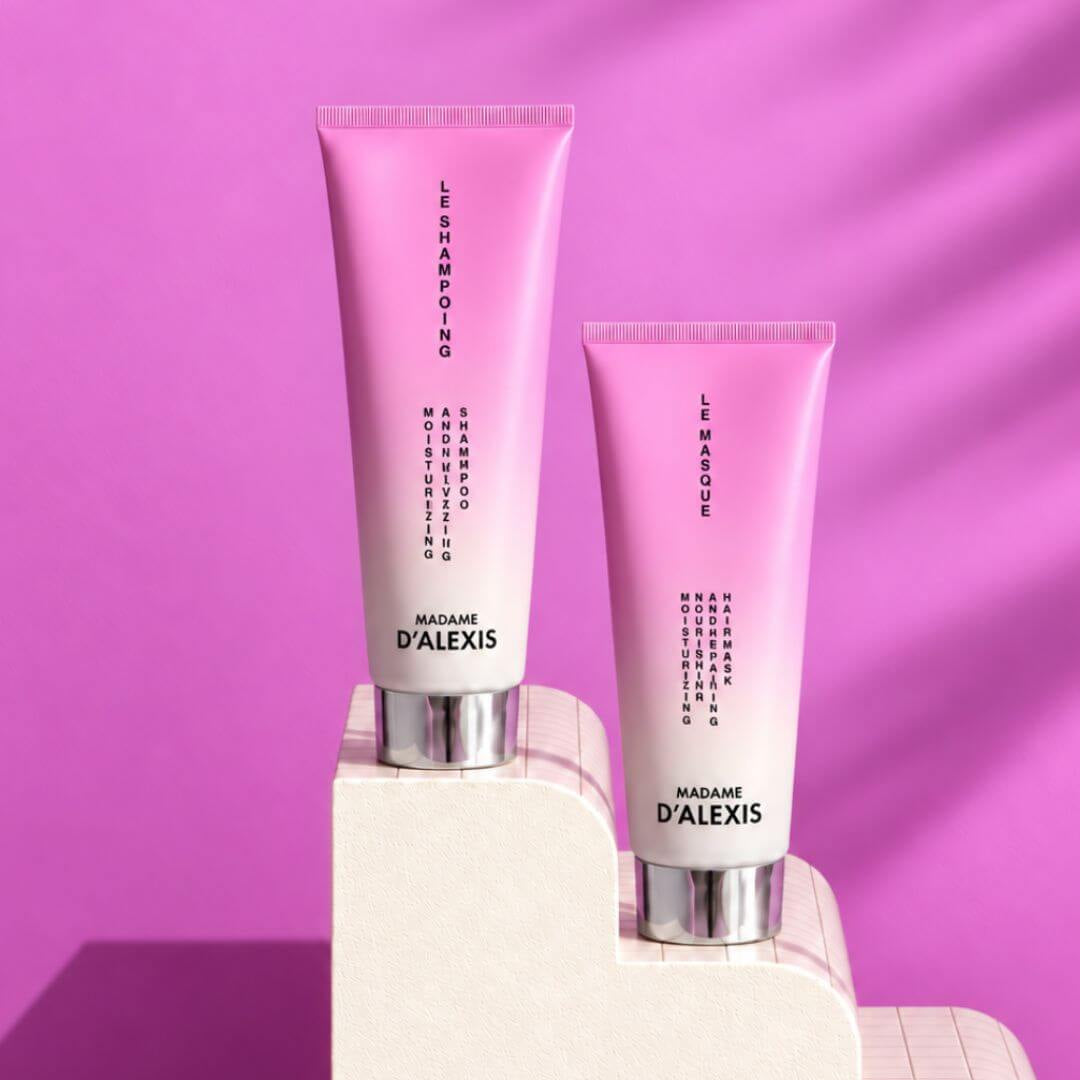
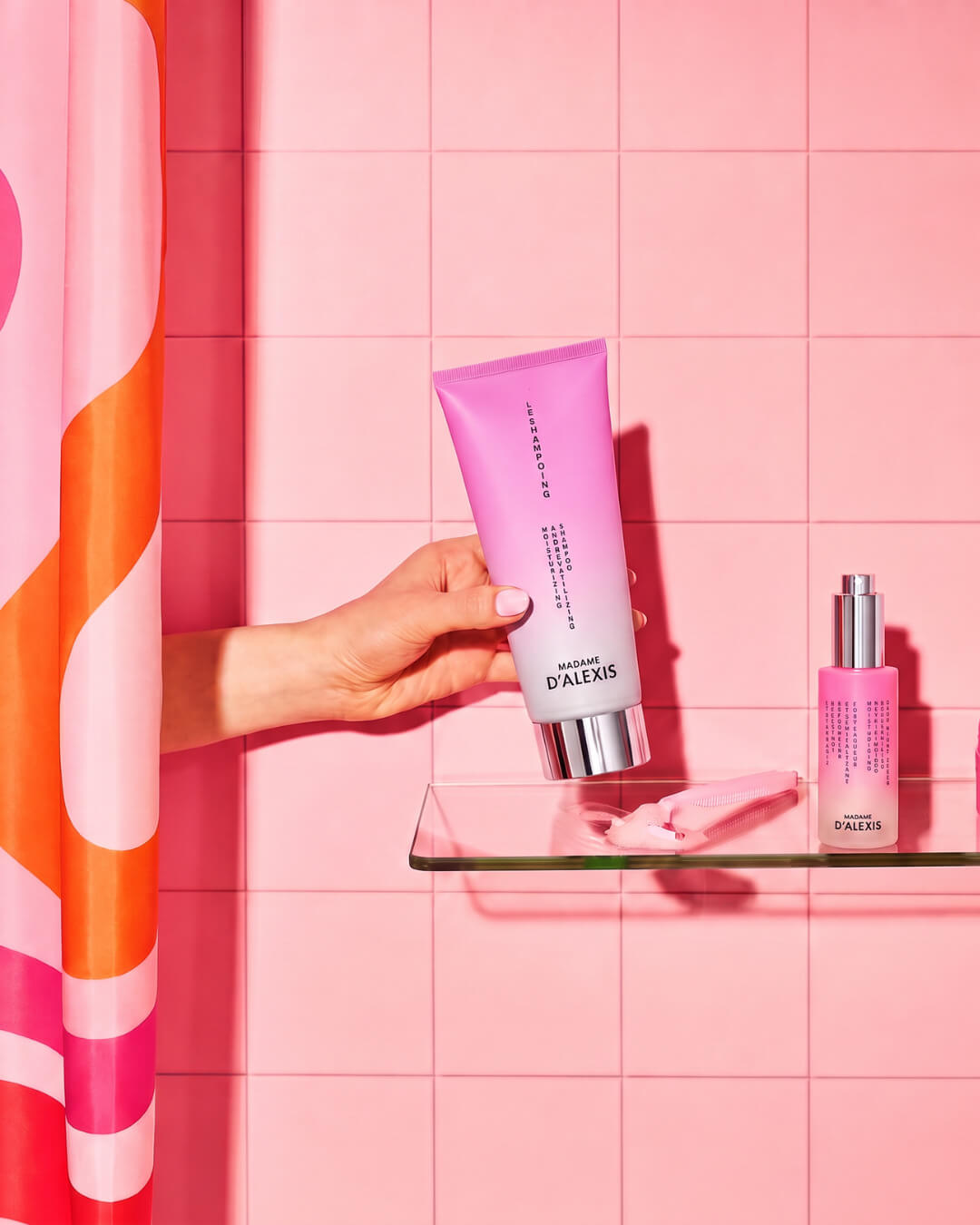
Le Shampoing is the foundation. Its formula is 98% natural origin, with cationic hyaluronic acid, prebiotics and plant keratin. It hydrates, soothes and brightens, which makes it a natural ally when your skin feels tight after washing. Apply it as a double shampoo on a thoroughly wet scalp, massage with your fingertips and rinse very thoroughly. It can be used every day or alternated with Le Scrub.
Le Scrub is a 98% natural origin exfoliating shampoo with fleur de sel, hydrolats, organic coconut oil and cationic hyaluronic acid. It is suitable for sensitive scalps, and that is exactly why it is used only every 10 to 15 days: on Scrub day, it replaces Le Shampoing, in two successive rounds like a double shampoo, then rinse. It helps remove sebum and residue without adding extra friction. If your skin is raw, wait until it has calmed down before using it.
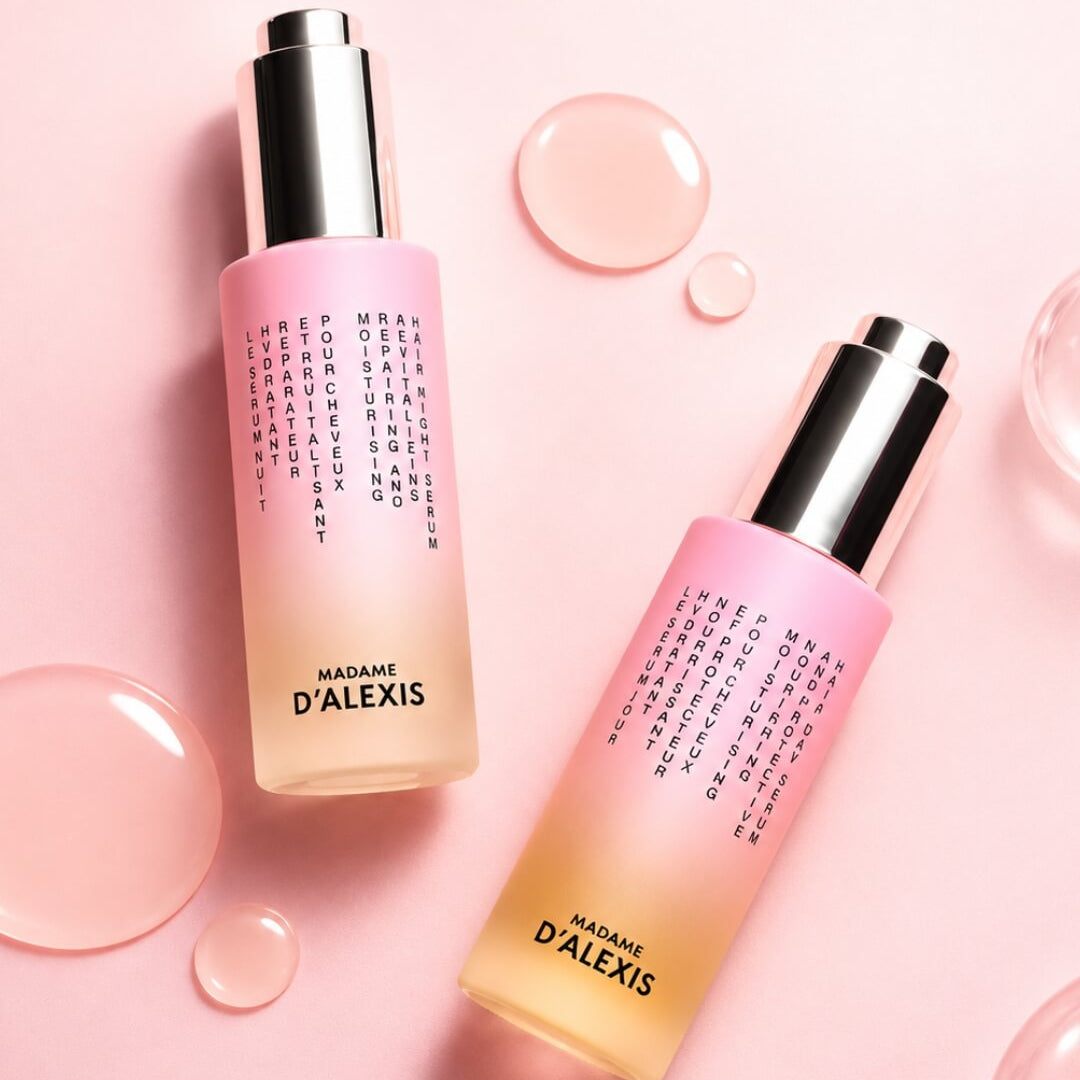
Le Sérum Nuit is the evening treatment, 98% natural origin. It combines probiotics and postbiotics, fermented extracts, cationic hyaluronic acid and actives of natural origin such as oak, nettle and liquorice. Apply one pipette section by section on the scalp, massage gently and do not rinse. As a course, use it 3 to 5 times a week, then 1 to 2 times a week to maintain. This slow massage is also a relaxing ritual, especially welcome when stress settles on your roots.
If you prefer a ready-made duo, Le Pack Cuir Chevelu Sensible brings together Le Shampoing and Le Sérum Nuit. You will also find the full selection in our collection of products for an irritated scalp.

Le Shampoing


Le Sérum Nuit
Scalp feeling tight?
Answer a few questions about your scalp and lengths, and we will build your ritual from our 5 organic hydrolat treatments, formulated with no added water.
Sound familiar?
- You answer
- You discover your ritual
- You fine-tune your selection
What does a gentle two-week routine look like?
Here is a simple outline, to adapt to your pace and hair type. It does not replace medical advice if the pain persists.
- Every day or every other day: double shampoo with Le Shampoing, in lukewarm water, a fingertip massage and a very thorough rinse.
- Every 10 to 15 days: Le Scrub instead of Le Shampoing, in two rounds, only on skin that is not raw.
- In the evening: one pipette of Le Sérum Nuit, section by section, massaged in without pressing, no rinsing. As a course, 3 to 5 times a week, then 1 to 2 times a week to maintain.
- Every day: loose hairstyles, a soft brush, a hairdryer held at a distance and set to a moderate temperature.

Frequently asked questions about a sore scalp
Why is my scalp sore to the touch?
There is no single cause. Washing that is too hot or stripping, dry winter air, a hairstyle that pulls, recent colouring, dandruff, excess sebum or a stressful period can all make the skin more sensitive. If the pain is intense, long-lasting or comes with other symptoms, see a health professional.
Scalp feels tight after shampooing: what should you do?
First check the water temperature, how long you rinse and how gentle your shampoo is. Not rinsing enough leaves residue; rinsing too hot dries the skin. Choose a sulphate-free formula, massage with your fingertips and rinse very thoroughly. A hydrating evening treatment can then help restore comfort.
Can stress make your scalp sensitive?
Many people link their episodes of scalp sensitivity to periods of tiredness or stress, even though the connection is hard to measure. Slowing down, loosening your hairstyles and treating yourself to a gentle massage in the evening are comforting habits that cost nothing.
Can you exfoliate when your scalp hurts?
No, not on raw, broken or very inflamed skin. When the skin is intact and simply sensitive, gentle, spaced-out exfoliation can have its place. Le Scrub is used only every 10 to 15 days, in place of Le Shampoing on that day, in two rounds, then rinsed.
When should you see a dermatologist about a sore scalp?
See one if the pain persists for several weeks, gets worse, or comes with patches, crusts, spots, widespread redness, fever or sudden hair loss. Medical advice can rule out a cause that needs proper treatment.
In short: listen to your scalp before it has to speak louder
A sore or tight scalp is a signal to listen to, not something to put up with. In most everyday cases, the answer comes down to three words: gentleness, hydration, consistency. Lukewarm water, a fingertip massage, loose hairstyles and products formulated without sulphates, silicones or parabens often bring comfort back to the skin. And if the discomfort persists, a health professional takes over. To build a routine suited to your scalp, the hair diagnosis guides you in two minutes.