Advice
The Difference Between Curly, Wavy, and Kinky Hair: The Complete Guide to Identifying Them
Curly, wavy, or coily? This comprehensive guide helps you identify your hair type (2a to 4c) and develop a hair care routine that’s truly tailored to your texture.

Difference between curly, kinky, and coily hair: the complete diagnostic guide
A clear guide to identifying your curl type, understanding porosity, tailoring your hair care routine, and avoiding mistakes that damage your hair.
The key takeaways in 30 seconds
- Curly, Type 3: wide to tight spiral curls, good elasticity, requires moderate hydration.
- Curly hair, types 4a–4b: very tight S- or Z-shaped curls, often high porosity, high nutritional needs.
- Kinky, Type 4c: the most compact texture, maximum fragility, and difficulty retaining moisture.
- The André Walker classification helps with diagnosis, but porosity, density, and thickness are just as important as the curl pattern.
Curly, wavy, or kinky: Why this distinction is essential for your hair care routine
Using the wrong product on the wrong hair type is the leading cause of chronic dryness, breakage, and undefined curls. Not because the product is bad, but because it isn't suited to your hair texture.
The difference between curly, wavy, and coily hair isn't just a matter of appearance. It involves the very structure of the hair shaft.
The tighter the curl, the harder it is for natural sebum to travel down the hair shaft. Although the scalp produces just as much sebum, it doesn’t lubricate the lengths of the hair. The result: dryness, lifted cuticles, increased porosity, and brittleness at the points of curvature.
This is also why the scalp’s microenvironment varies depending on hair texture. A scalp covered in very tightly coiled, kinky hair accumulates less sebum on the surface, which alters the balance of its microbiome. Understanding your hair texture, therefore, means understanding the actual needs of your scalp—not just the needs of your hair strands.
Curly, Wavy, or Kinky: Understanding Hair Types at a Glance
Types 2, 3, and 4 are distinguished primarily by the shape of the curl, the degree of tightness, natural dryness, and care requirements. Here’s a simple guide to help you figure out which type you are.
Type 2 · Wavy
S-shaped wave, mild to pronounced
- Appearance: supple texture, roots often flatter
- Subtypes: 2A, 2B, 2C
- Key needs: lightness, definition, anti-frizz
- Caution: Avoid using skincare products that are too rich, as they can weigh down the skin
Type 3 · Curly
Defined curls, from loose to tight
- Appearance: visible spirals, natural volume
- Subtypes: 3A, 3B, 3C
- Key needs: hydration, definition, moderate nutrition
- Caution: Keep the loop intact without breaking the structure
Type 4 · Curly / Kinky
Very tight zigzag loops
- Appearance: significant shrinkage, dense texture
- Subtypes: 4A, 4B, 4C
- Key needs: intensive nourishment, protection, gentle skincare routine
- Caution: More pronounced mechanical fragility and dryness
A simple rule of thumb: the tighter the curl, the more likely the hair is to be dry, brittle, and in need of nourishment. Conversely, the more wavy the hair, the more it needs lightness and definition to avoid looking flat or weighed down.
The Curly Hair Classification System: From 2a to 4c
The global reference system is André Walker's, which classifies hair textures from 1 (straight) to 4 (coily), with three subcategories—A, B, and C—ranging from the loosest to the tightest. Types 2, 3, and 4 correspond to wavy, curly, and coily hair.
| Type | Texture | Shape of the loop | Approximate diameter |
|---|---|---|---|
| 2a | Light wavy | S (slightly marked) | > 5 cm |
| 2b | Defined Wavy | S visible | 3–5 cm |
| 2c | Thick corrugated | Very pronounced S | 2–3 cm |
| 3a | Loose curls | Flexible coil | ~2.5 cm |
| 3b | Tight curls | Dense spiral | ~1.5 cm |
| 3c | Very tight curls | Corkscrew | ~0.5 cm |
| 4a | Curly | S or tight spiral | < 0,5 cm |
| 4b | Curly, kinky | Z is not well-defined | Very short |
| 4c | Kinky | Z flattened or invisible | Virtually zero |
An important point: Most people have different hair types on the same head. The hair at the temples is often finer and curlier than the hair at the nape of the neck. This is normal, and it affects how you apply hair care products.
S-shaped waves, more or less pronounced. Priorities: lightness, definition, and frizz control without weighing the hair down.
Visible spiral curls. Priority: regular hydration, definition, and frizz control.
Tight to very compact curls. Priorities: nutrition, moisture retention, and minimal handling.
Type 2 - Wavy Hair, 2a, 2b, 2c
- 2a: Slightly wavy, often straight. Easy to straighten, easy to curl, not prone to dryness.
- 2b: More defined waves, with a little volume. Starts to get frizzy in humid weather.
- 2c: Thick, very pronounced waves, similar to 3a. Prone to frizz; already requires targeted moisturizing care.
Type 2 hair is often overlooked in hair care routines. People tend to use products that are either too heavy—which weigh it down—or too light—which don’t provide enough definition. Lightness and definition are the two key words.
Type 3 - Curly Hair, 3a, 3b, 3c
- 3a: Wide, supple, shiny curls. Good elasticity; tends to frizz if not properly moisturized.
- 3b: Tighter, more voluminous curls. More pronounced dryness; requires regular moisturizing.
- 3c: Very tight, corkscrew-like curls. Often confused with 4a; generally higher porosity; increased need for nourishment.
Type 4 - Curly and Kinky Hair, 4a, 4b, 4c
- 4a: Very tight S-curls that are still visible. Dense texture, often high porosity, and a strong need for hydration.
- 4b: Loose Z-shaped curls. Significant shrinkage, up to 75% of actual length. Very prone to breakage.
- 4c: the tightest texture. The curl is almost invisible when dry. Extreme shrinkage, maximum fragility, and a need for intense nourishment.
How to Identify Your Hair Type: The 3-Step Test
Wash curly hair with a gentle, sulfate-free shampoo; do not apply any styling products; let it air dry; and let the natural shape take hold.
Slide a clean strand of hair between your thumb and index finger: if it’s barely noticeable, it’s fine; if it’s clearly noticeable, it’s thick.
Place a clean strand of hair in a glass of water. If it floats, the porosity is low; if it stays in the middle, it is medium; if it sinks, it is high.
Your complete hair type = number + letter + thickness + porosity. One person might be a 3b with fine hair and high porosity, while another might be a 3b with thick hair and low porosity. Their hair care routines will be very different.
Key Differences Between Wavy, Curly, and Kinky Hair: Porosity, Hydration, and Fragility
| Criterion | Curly, Type 3 | Curly, 4a-4b | Curly, 4c |
|---|---|---|---|
| Porosity | Moderate to high | Often high | Very often high |
| Hydration | Moderate | Strong | Intense and steady |
| Fragility | Moderate | High | Maximum |
| Withdrawal | 20–40% | 50–70% | 70–80% |
| Natural sebum | Partially lower | Doesn't go down much | Rarely goes down |
Curly hair: softness and moderate hydration
Type 3 curly hair has good natural elasticity. Its main enemy is a lack of moisture, which breaks up the curl definition and causes frizz.
What they want: regular hydration, light-to-medium-weight active ingredients, and definition without weighing the hair down.
Curly Hair: High Porosity and a Need for Nourishment
Curly hair, types 4a and 4b, has cuticles that are naturally more raised at the points of curvature. Water penetrates easily and escapes just as quickly. This is the definition of high porosity.
What they need: deep hydration, emollient ingredients, and a barrier to lock in moisture.
Kinky hair: maximum fragility and moisture retention
Type 4c is the most mechanically fragile texture. The closely spaced curl points create many areas of potential weakness.
What they need: intensive nourishment, minimal handling, powerful occlusive care, and consistent nighttime protection with a satin cap or pillowcase. To structure this routine, the nighttime routine for curly hair can serve as a foundation for the driest hair types.
A Routine Tailored to Each Skin Type: The Active Ingredients That Make a Difference
For wavy and curly hair, types 2 and 3
Priority: lightness, definition, and hydration without weighing the hair down.
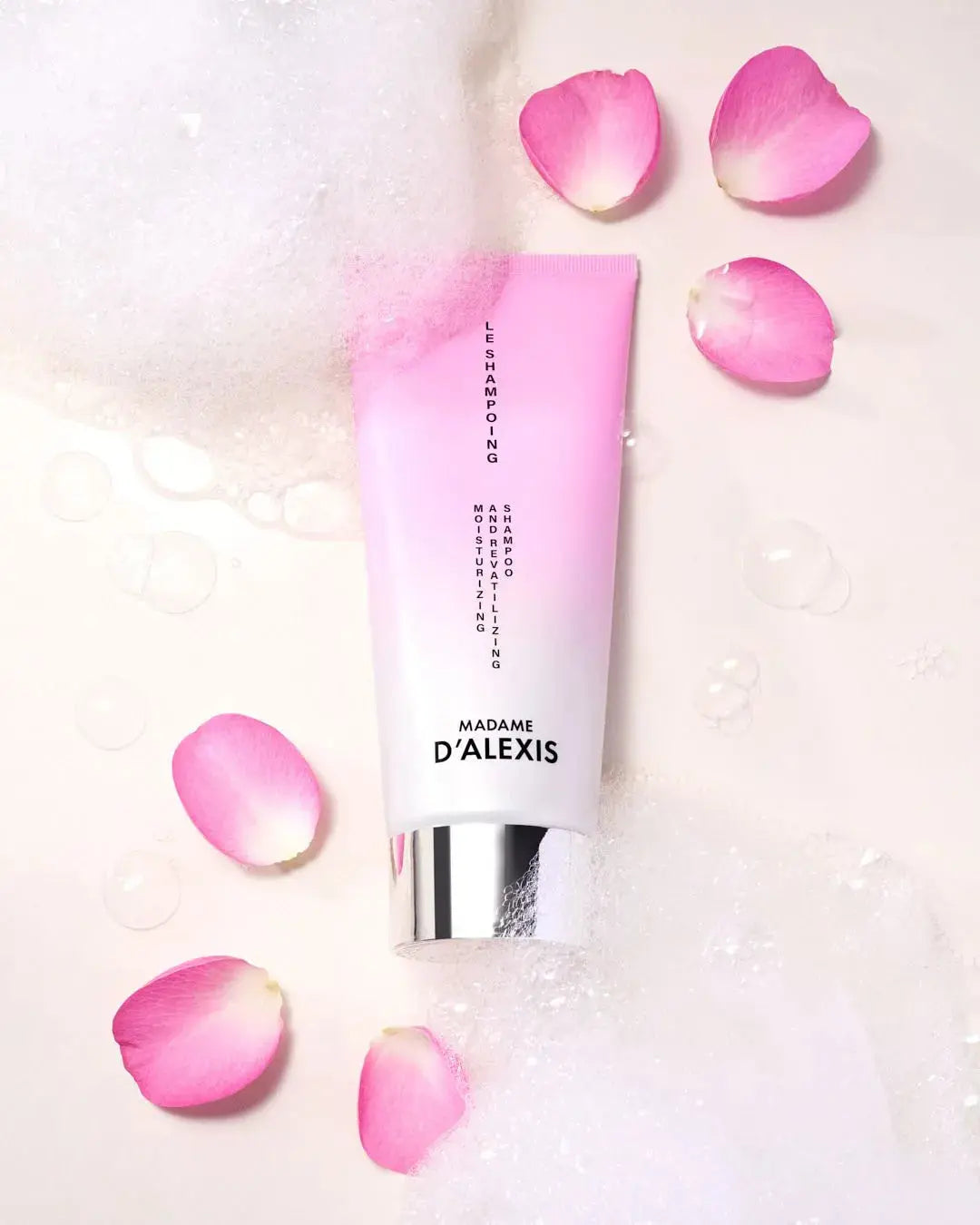
- Shampoo: free of harsh sulfates, to preserve the hydrolipidic film without stripping it.
- Conditioner or light hair mask: once a week for Type 2 hair, twice a week for Types 3b–3c.
- Key ingredients: aloe vera, floral hydrosols, lightweight proteins.
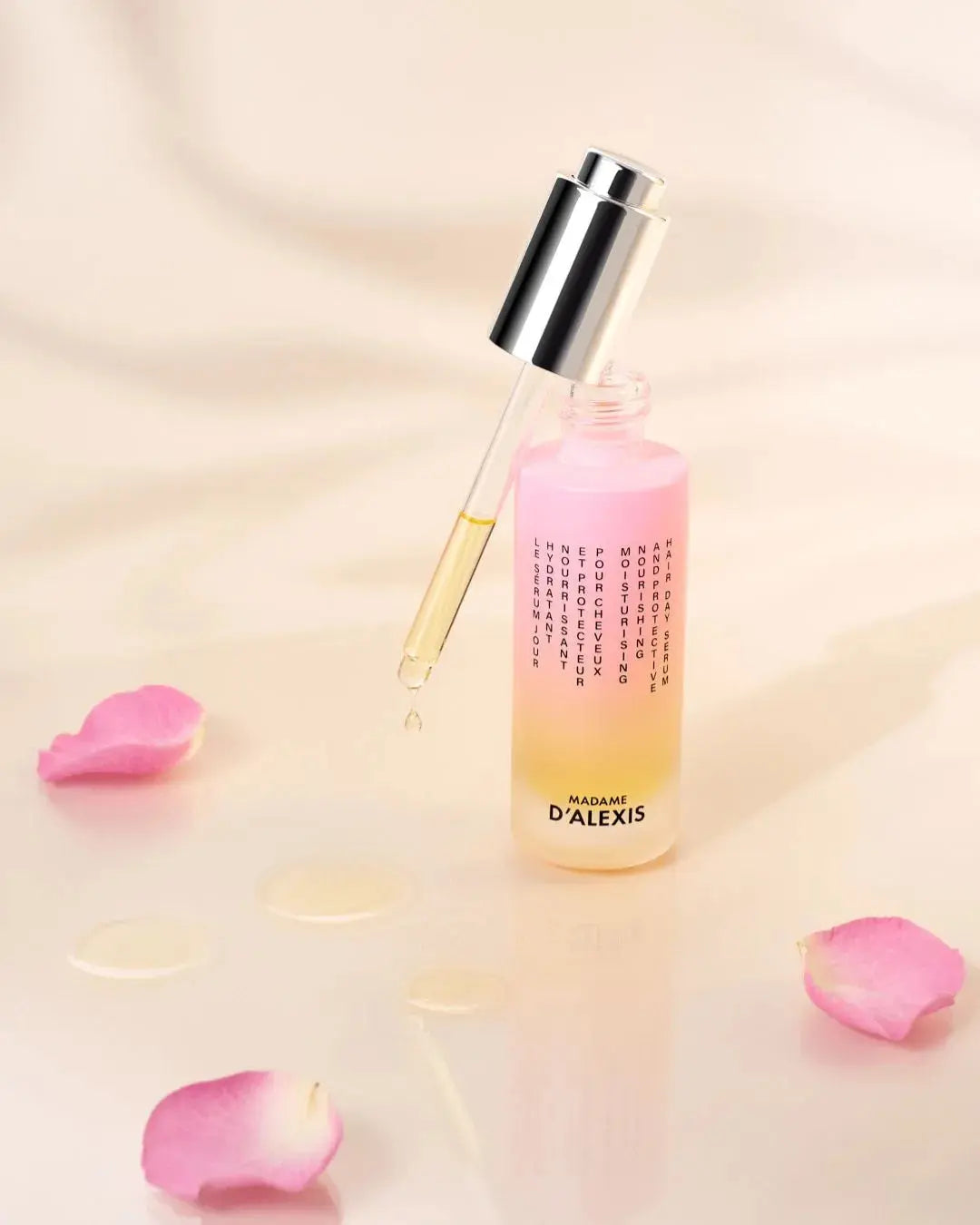
- Serum or leave-in treatment: A defining serum for curly hair is applied to damp hair after shampooing and before blow-drying to set the curls without leaving any residue.
A light routine cleanses, moisturizes, and defines without weighing your hair down. Discover the collection for curly and wavy hair.
For curly and coily hair, Type 4
Priority: comprehensive nutrition, occlusion, and minimal manipulation.
- Shampoo: Use a gentle, sulfate-free shampoo no more than 1–2 times a week. A co-wash can be used between shampoos.
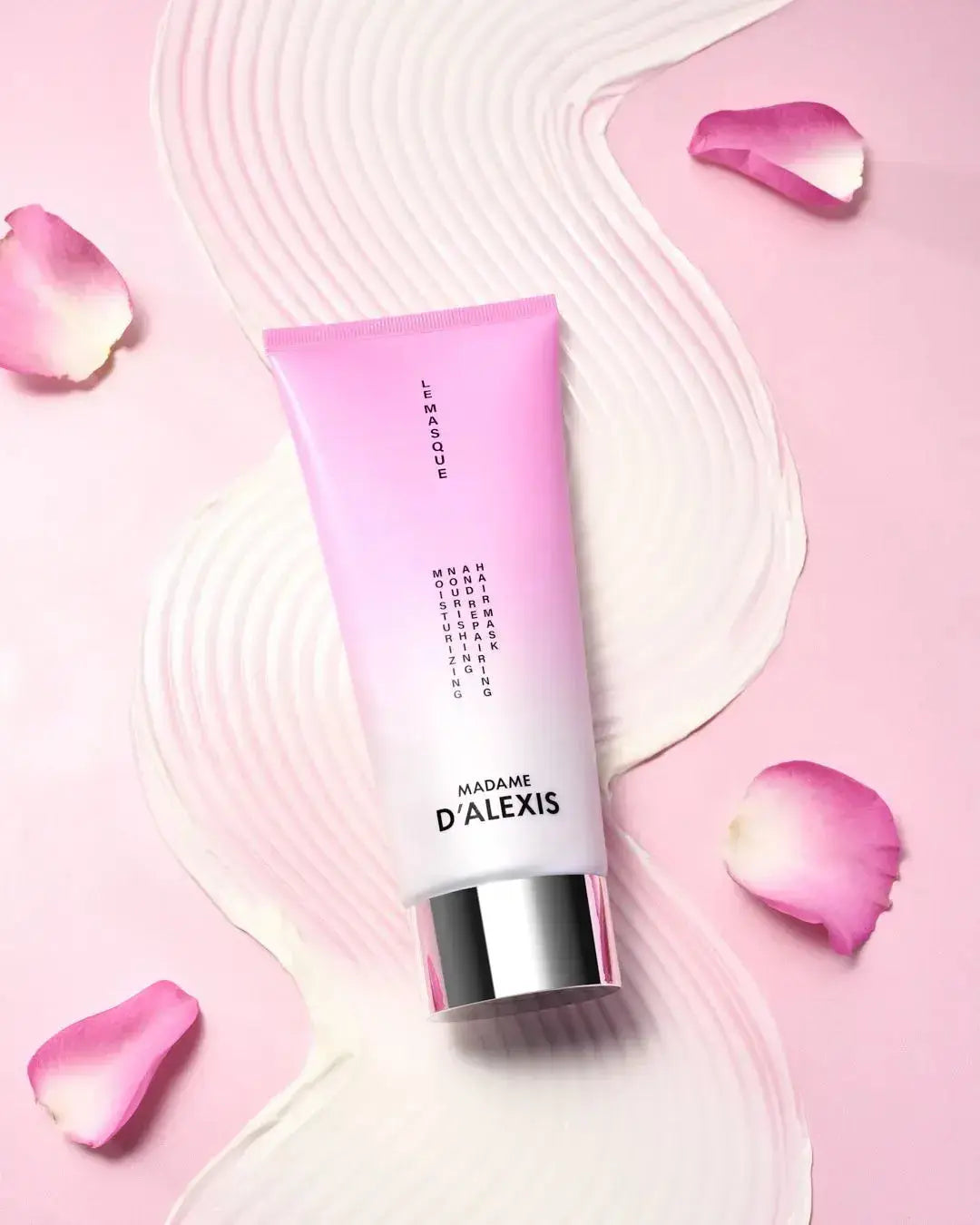
- Nourishing mask: essential, use once or twice a week; leave on for 20 to 30 minutes under gentle heat. Madame d'Alexis’s nourishing mask for curly and kinky hair meets the nutritional needs of hair types 3 and 4.
- Key ingredients: shea butter, castor oil, aloe vera, hydrosols, and a light oil to seal in moisture.
- LOC or LCO method: Liquid, Oil, Cream, or Liquid, Cream, Oil, depending on porosity.
- Nighttime protection: always wear a satin nightcap or use a satin pillowcase.
Skincare Products for This Routine
Common Mistakes Based on Hair Type
Even with the right products, certain habits can undermine your routine.
For all types of curly, wavy, and coily hair
- Dry detangling: the leading cause of hair breakage. Detangle damp or wet hair using conditioner or a hair mask, starting at the ends.
- Rubbing with a terry cloth towel: The rough fibers lift the cuticles and cause frizz. It’s best to use a microfiber cloth or a cotton T-shirt.
- Touching your curls while they're drying: every time you touch them before they're completely dry, you ruin the definition.
Errors specific to types 2 and 3
- Using products that are too rich: weighed-down hair, limp curls, oily scalp.
- Washing too often: dryness of the fibers, loss of elasticity.
- Using a shampoo with harsh sulfates: strips away natural oils, increases frizz.
Errors specific to Type 4
- Not moisturizing often enough: chronic breakage, hair that stops growing.
- Applying hair care products to hair that is too dry: poor absorption, mediocre results.
- Neglecting nighttime protection: friction against the pillow = breakage and frizz when you wake up.
- Using excessive heat without thermal protection: embrittlement at points of curvature.
FAQ
How can I tell if my hair is curly or wavy?
Wash your hair without using any styling products and let it air dry. If your curls form visible spirals more than 0.5 cm in diameter, you have Type 3, wavy hair. If the curls are very tight, S-shaped or Z-shaped, with significant coiling, you have Type 4, coily hair.
How to identify your hair type?
Determining your hair type involves three steps: the natural curl test, the strand test, and the porosity test. This assessment provides a complete profile: type, thickness, and porosity.
What is the difference between curly hair and kinky hair?
Curly hair (types 4a–4b) still has a visible S- or Z-shaped curl. Kinky hair (type 4c) has curls so tight that they are nearly invisible when dry, and it is more prone to shrinkage and breakage.
Why is curly hair more fragile?
Each kink is a point of mechanical weakness. The tighter the curl, the more of these areas there are. Therefore, the treatment begins with detangling while the hair is damp—using a hair mask or conditioner—always starting at the ends.
What's the best hair care routine for 3a hair?
Type 3a hair needs light hydration and definition: sulfate-free shampoo, a light conditioner, a defining serum or gel applied to damp hair, and blow-drying with a diffuser on a low heat setting.
What products are best for curly and coily hair?
A solid hair care routine is based on four pillars: a gentle, sulfate-free shampoo, a weekly hair mask, a lightweight oil to lock in moisture, and a defining styling product applied to damp hair.
What's the best hair care routine for 4b hair?
Type 4b requires intensive hydration: co-wash or a gentle shampoo 1 to 2 times a week, a nourishing mask for 20 to 30 minutes, the LOC method, a satin night cap, and detangling only on damp hair.
What are the best hair care products for coily and curly hair?
Curly and coily hair requires a routine focused on nourishment and moisture retention: an oil treatment before shampooing, a weekly nourishing mask, the LOC method, and gentle handling.
What is hair porosity, and how is it measured?
Porosity measures the cuticle's ability to allow water to enter and exit. Low porosity: closed cuticles. High porosity: open cuticles. The water glass test provides an indication, but not a definitive answer.
What natural products are best for frizzy hair?
The active ingredients are aloe vera, floral hydrosols, shea butter, castor oil, and jojoba oil. The order of application matters: apply the water-based ingredients first, followed by the oils.
How to moisturize coily hair?
Moisturizing curly hair means adding water and then sealing it in. The LOC method remains the most effective: hydrosol, lightweight oil, cream, or butter. For a ready-to-use solution, discover our natural hair care products for curly hair.
Does wavy hair require a specific care routine?
Yes. Wavy hair needs a sulfate-free shampoo, light hydration, and styling products that define the curls. Products that are too heavy weigh the hair down and flatten the curls.
Is it possible to have more than one type of hair on the same head?
Yes, that's actually quite common. Some areas may be 3b, while others are 4a. In that case, we tailor the treatment to each area or choose versatile products.
How can you prevent frizz in curly hair?
Do not detangle dry hair; apply products to damp hair; do not touch your curls while drying; use a microfiber towel; and sleep with a satin pillowcase or satin bonnet.
Is the André Walker classification sufficient for choosing hair care products?
No. The type of curl describes the shape, not all the factors involved. Porosity, density, and fiber thickness are just as important.
Useful sources
- André Walker Classification System - Orescence Laboratory: Analysis of the Walker Grid and Its Application in Hair Care Formulations.
- Scalp Microbiome - PMC / NCBI: A study of microbial communities on the scalp and in hair according to hair texture.
- Characteristics of Curly Hair - Clauderer Center: Dermatological Analysis of the Structural Characteristics of Curly Hair.
- Hair Porosity - Dyson: An Explanation of Hair Porosity and Its Impact on Hair Care.