Advice
Why Hair Turns Yellow and How to Restore a Radiant White Color Naturally
Do you have white or blonde hair that’s turning yellow? UV rays, hard water, silicones, pollution—there are many causes—and natural solutions are very much a reality. Here’s what really works.

Why Hair Turns Yellow and How to Restore a Radiant White Color Naturally
Yellowing isn’t inevitable. It occurs on the surface of the hair shaft: UV rays, hard water, pollution, heat, silicones, and porosity. The right strategy is to remove buildup, neutralize warm tones, and then protect the cuticle.
Key takeaways
- Yellow hair is primarily caused by photooxidation, mineral deposits, and the gradual buildup of impurities in the hair shaft.
- Gray hair is more vulnerable because its cuticle is often more open and its hair shaft is more porous.
- The most beneficial ingredients are chamomile, citric acid, organic floral hydrosols, plant-based keratin, and cationic hyaluronic acid.
- The most logical routine: start with the Scrub, gently cleanse with hydrosols, protect your skin with the Day Serum, and nourish your color-treated hair with the Mask.
Rapid Diagnosis
Does your hair turn yellow, especially after summer?
Make UV and heat protection a priority.
Do they lose their luster after every wash?
Limescale and mineral deposits are likely to be the cause.
The skincare products listed in the anti-yellowing routine
Compact carousel approved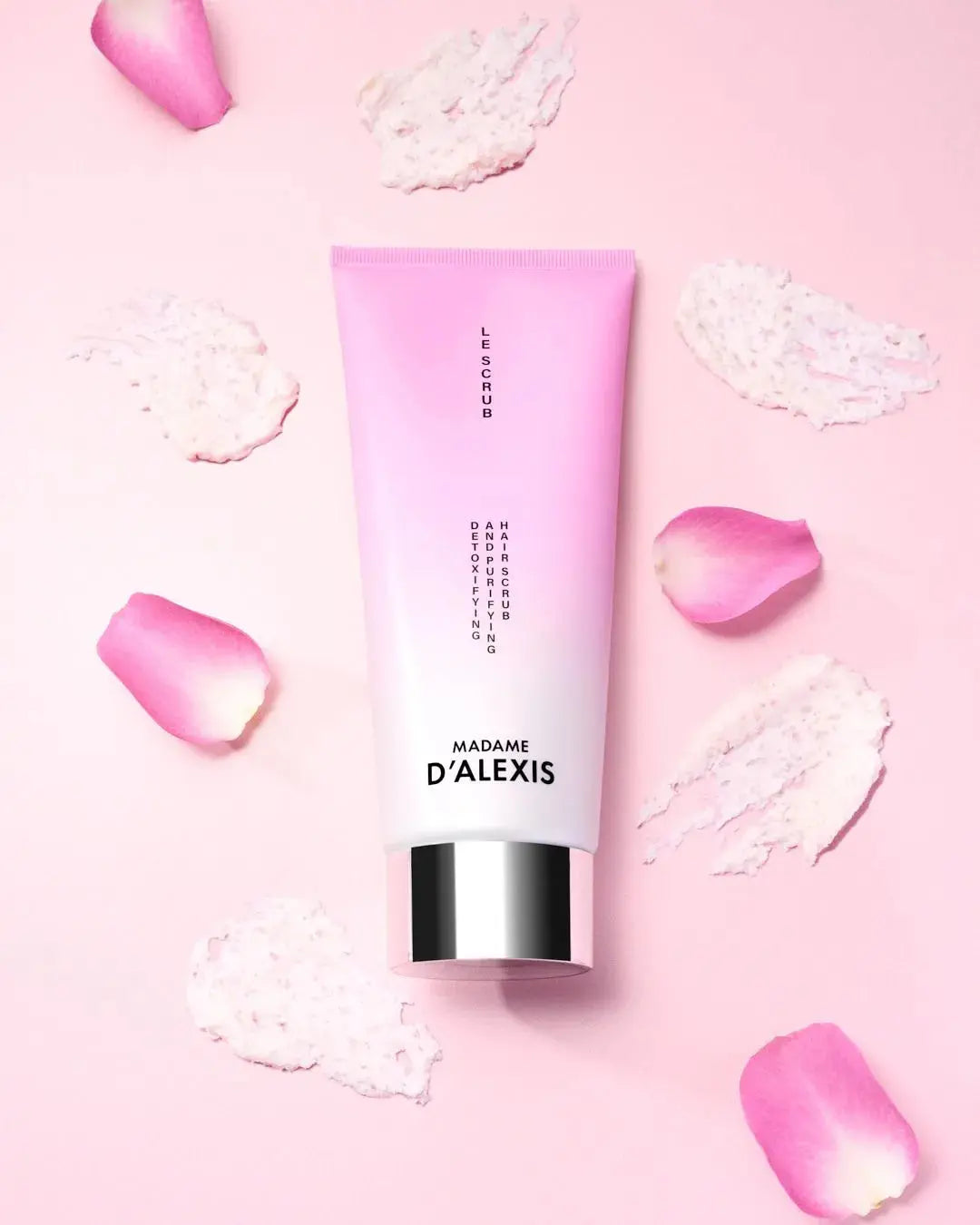
Madame d'Alexis Skincare
The Floral Scrub
Scalp Detox · Fleur de Sel · Organic Hydrosols
- Removes mineral deposits
- Helps cleanse the scalp
- Prepares the hair for anti-yellowing treatments
Madame d'Alexis Skincare
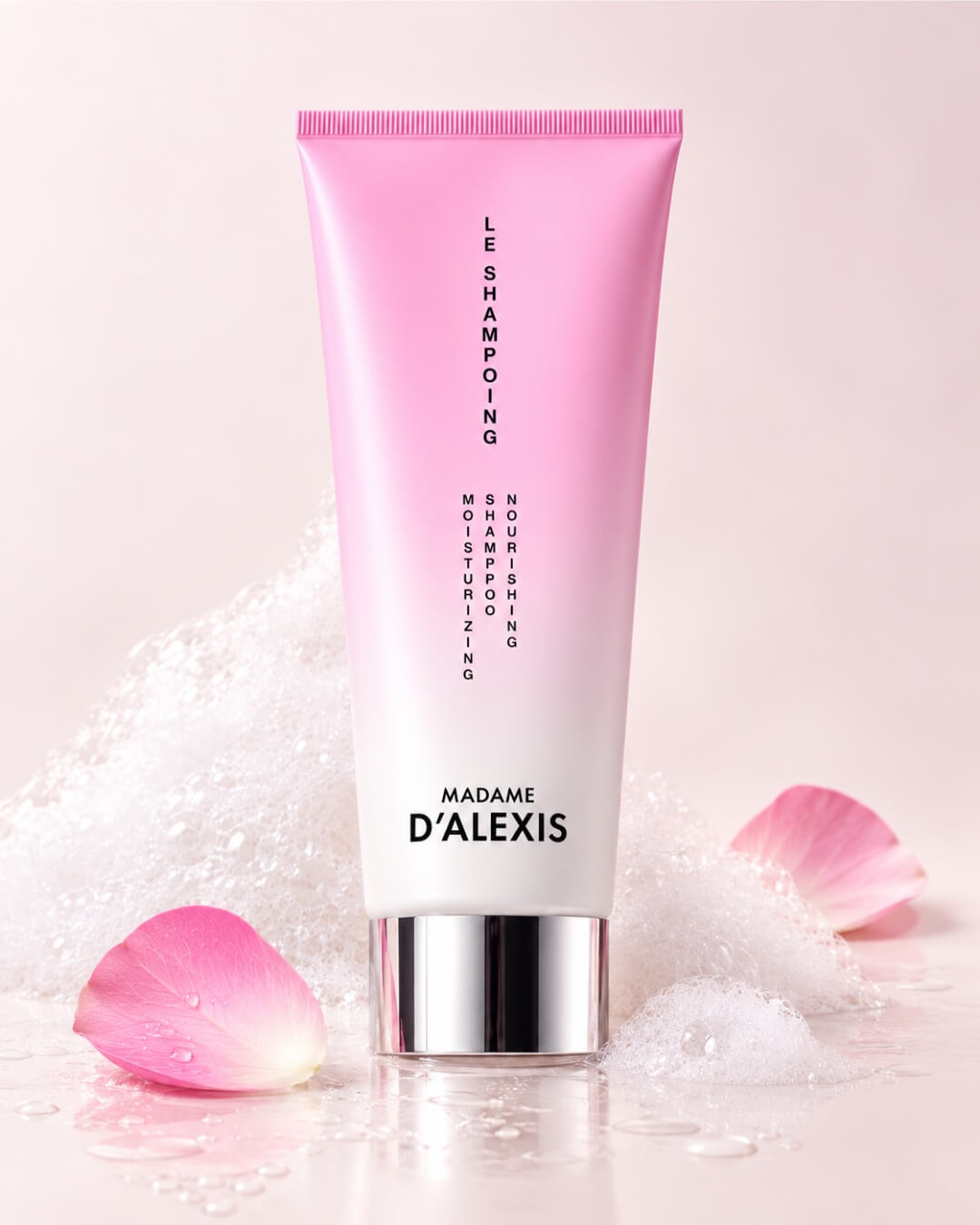
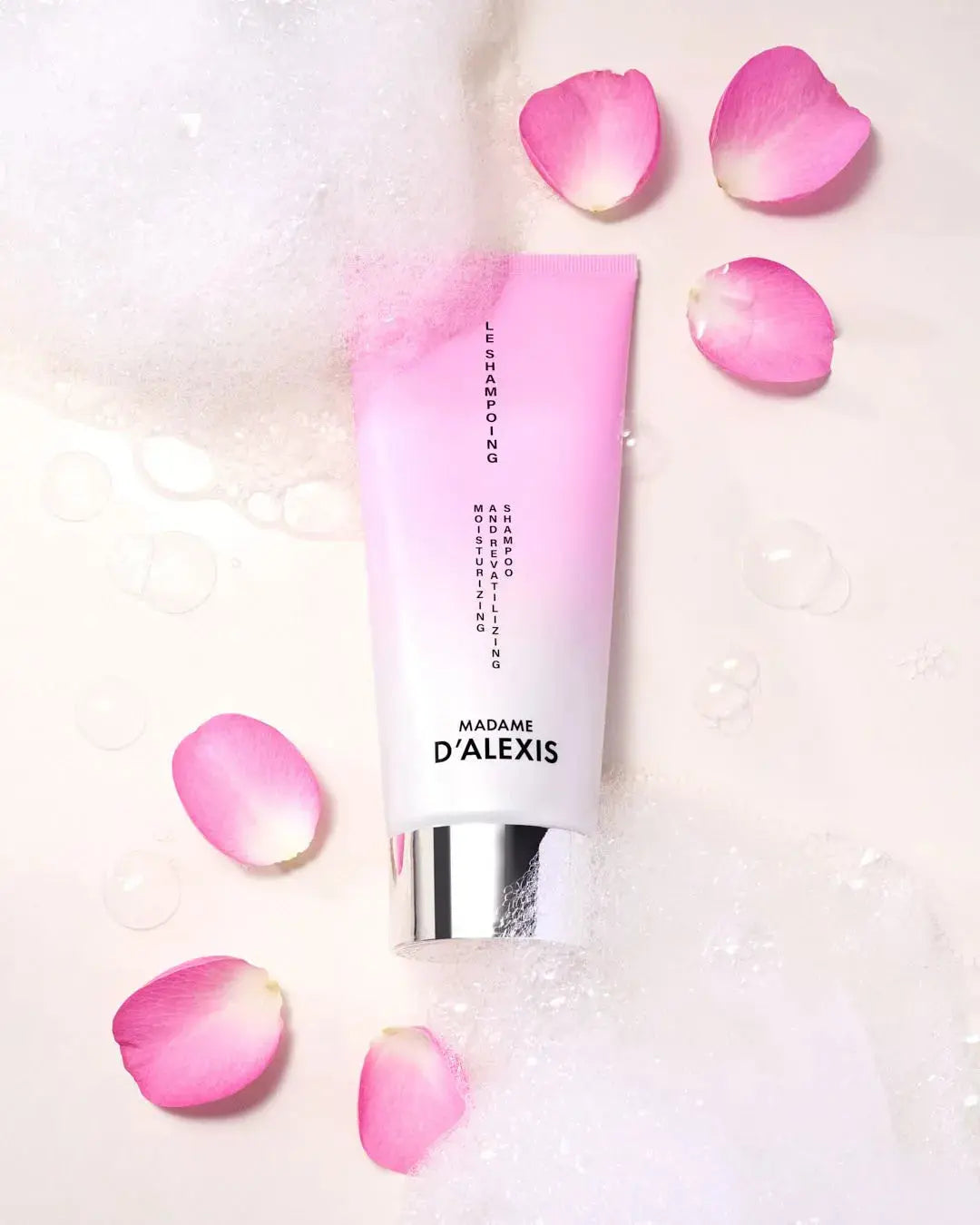
Hydrolat Shampoo
Sulfate-free · organic floral waters · hyaluronic acid
- Cleans without stripping
- Helps keep cuticles smooth
- Organic hydrosol base, with no added water
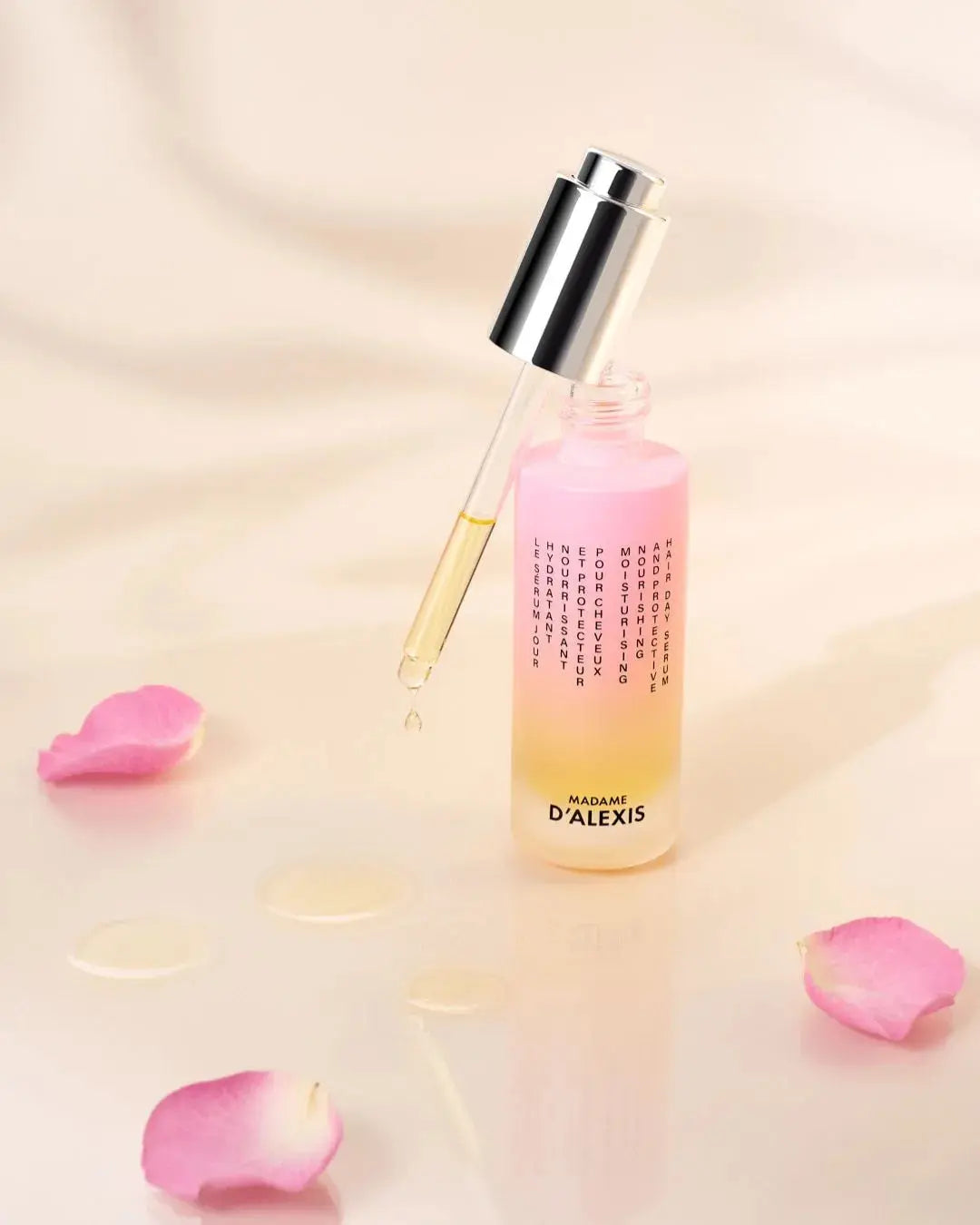
Madame d'Alexis Skincare
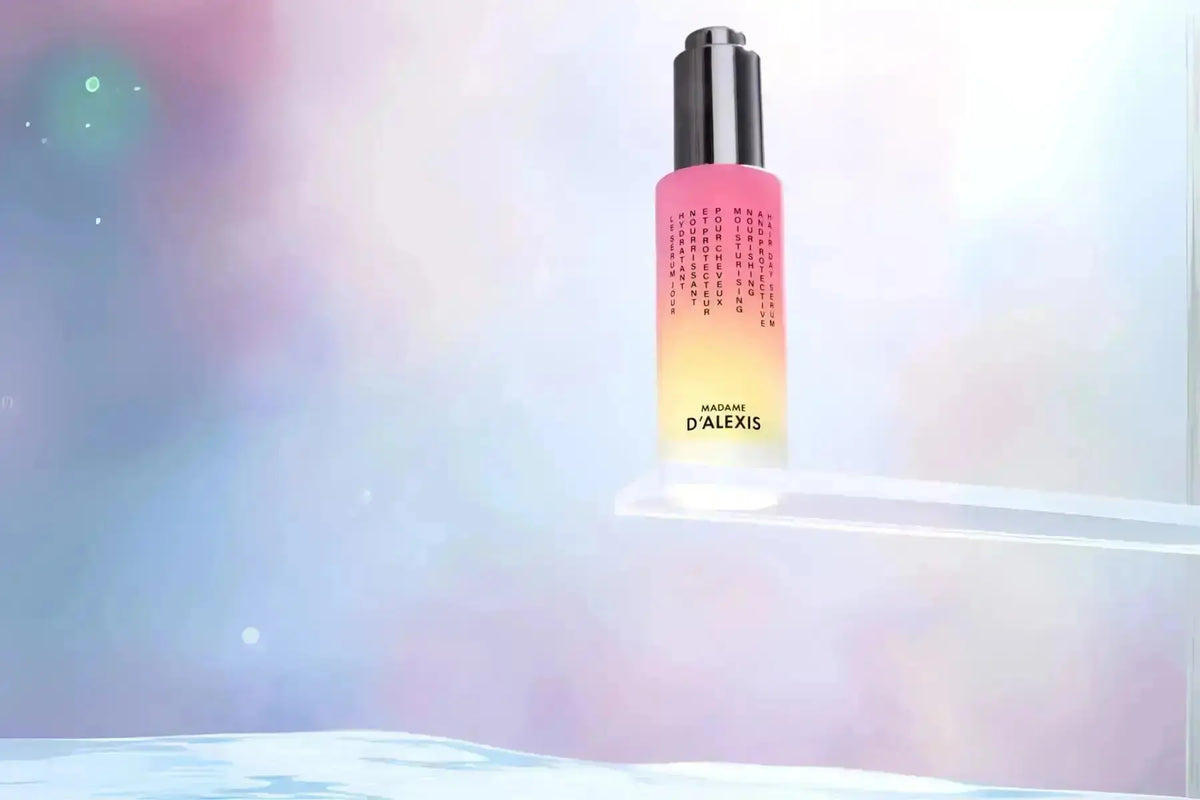
The Day Serum
Organic jojoba · ceramides · heat and UV protection
- Lightweight anti-deposit film
- Protects against heat and UV rays
- Glossy finish without a greasy feel
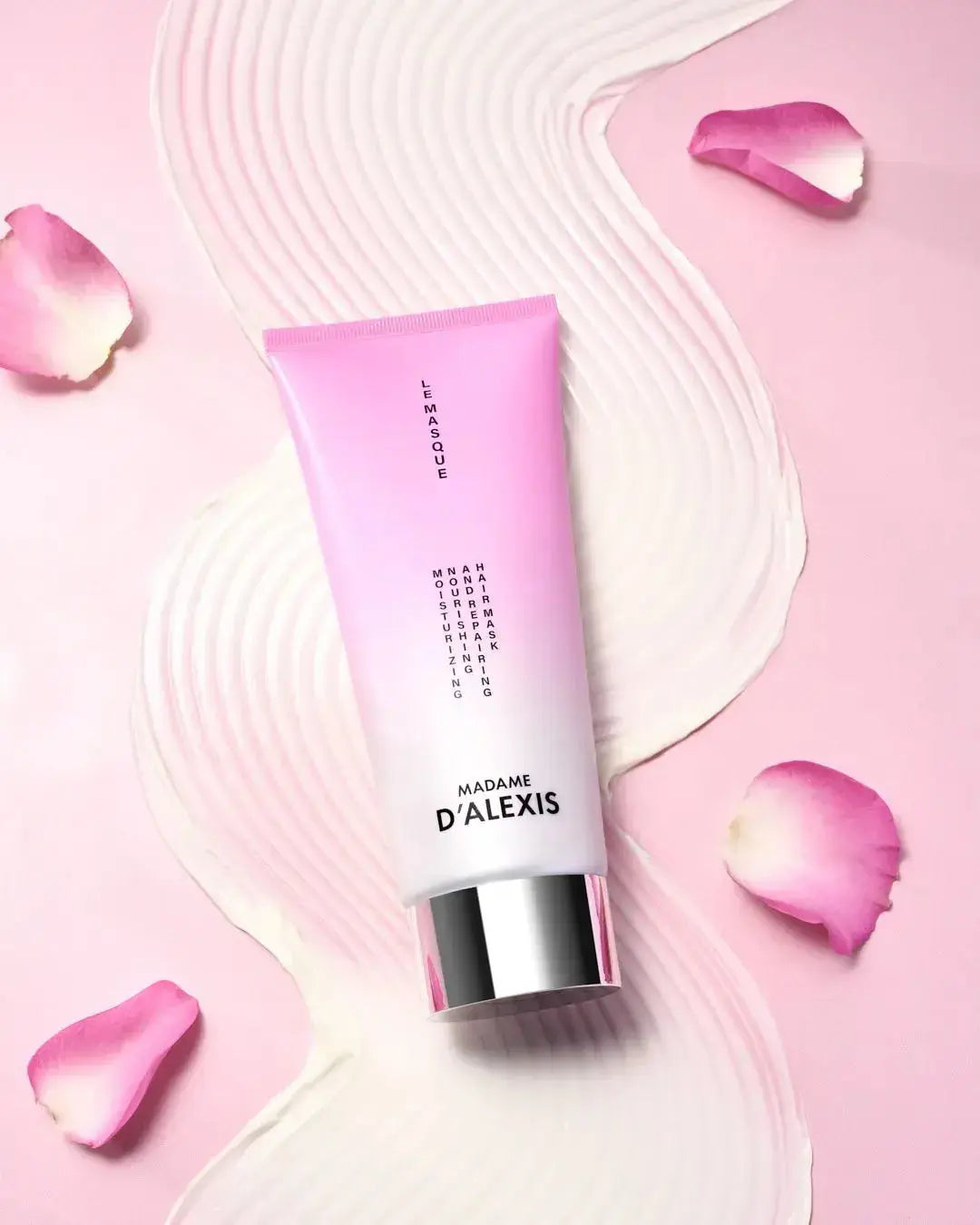
Madame d'Alexis Skincare
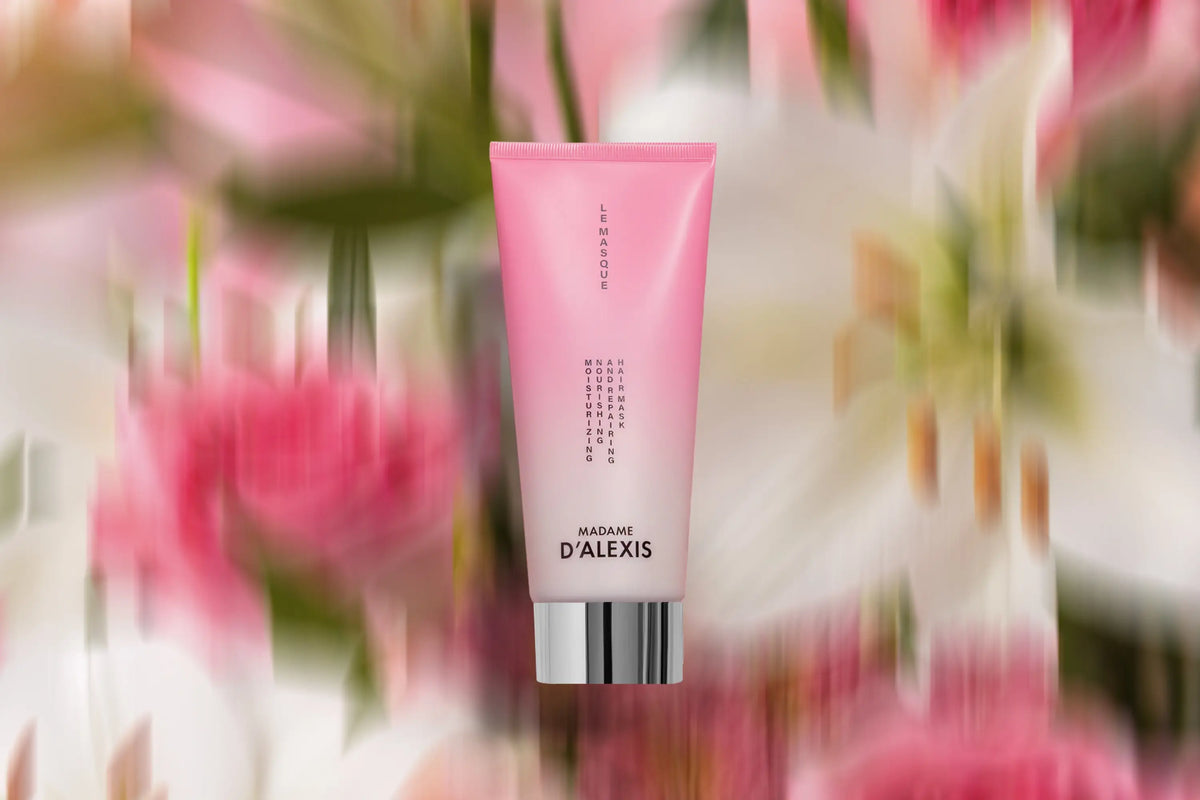
The Hydrolat Mask
Plant-based ceramides · nutrition · luminous fiber
- Helps smooth the cuticle
- Locks in moisture
- Ideal for colored or highlighted hair
Why Hair Turns Yellow: The 5 Main Causes
Yellowing doesn't happen overnight. It's a gradual process, often unnoticeable until you realize that the pearly white has turned into a duller sheen. Understanding this phenomenon allows you to target the problem effectively, without using a bunch of unnecessary products.
UV
UVA and UVB rays break down the tryptophan in keratin and produce yellow molecules called kynurenines.
Hard water
Calcium, magnesium, iron, and copper build up on the cuticle with each wash.
Silicones
Film-forming deposits trap impurities, make the fiber opaque, and accentuate yellow tints.
Pollution
Tobacco, fine particulate matter, and exhaust fumes generate free radicals that accelerate oxidation.
Porosity
An open cuticle absorbs unwanted pigments and minerals more easily.
1. UV Rays and the Photooxidation of Keratin
This is the number one cause. Under the influence of UVA and UVB radiation, tryptophan—an amino acid found in hair keratin—breaks down. This reaction produces kynurenines, molecules with a strong yellow color that accumulate in the hair shaft. The more the hair is exposed to the sun without protection, the more these degradation pigments build up.
2. Limescale and minerals in tap water
Hard water contains calcium and magnesium, as well as traces of iron and copper. These minerals build up on the cuticle with each wash, forming an opaque film that dulls the hair shaft and gradually gives it a yellowish tint. This buildup is particularly noticeable on gray hair, since there is no natural pigment to mask it.
3. Residues from silicones and styling products
Silicones build up with each wash, creating a waterproof layer that traps impurities and colored pigments from the environment. The result: gradual dulling, and hair that looks increasingly yellow for no apparent reason.
4. Tobacco, Pollution, and Fine Particles
Fine particles and exhaust fumes generate free radicals that accelerate the oxidation of keratin. Tobacco directly deposits colored resins on the hair shaft. These daily aggressors compound the effects of photo-oxidation.
5. High porosity: a sponge for unwanted pigments
Porous hair is hair with an open or damaged cuticle. It passively absorbs everything around it: pigments from water, product residue, and minerals. Naturally porous white hair is therefore an ideal target for passive yellowing.
Gray Hair vs. Blonde Hair: Is the Yellowing the Same?
Blonde hair
Some residual melanin remains, particularly pheomelanin. Under the influence of UV rays and oxidation, this melanin breaks down and releases unwanted coppery or golden tones.
Gray Hair
There is no longer any melanin. The yellowing is therefore mainly due to the external oxidation of keratin, mineral deposits, and surface residues.
To learn more about daily care for gray hair, our comprehensive guide to enhancing gray hair naturally details the routines best suited for this very unique hair type.
Limescale and Tap Water: The Invisible Enemy of Gray Hair
Tap water can leave deposits of calcium, magnesium, iron, and copper on the cuticle. These mineral deposits dull the hair shaft, cause light to scatter unevenly, and can create yellow—and sometimes brown—tints, especially on white hair.
| Factor | What this causes | Visible consequence |
|---|---|---|
| Calcium and Magnesium | Opaque buildup on the cuticle | Dull, lackluster hair |
| Iron and Copper | Oxidation and Color Highlights | Gradual yellowing or browning |
| pH too high | More open cuticle | A more porous fiber that is more susceptible to deposits |
The Natural Benefits of Organic Hydrosols
Madame d'Alexis skincare products are formulated not with added water, but with bioactive hydrosols of German chamomile and Damask rose. A hydrosol is the water produced during the distillation of a plant: naturally gentle, free of minerals, and with a slightly acidic pH that respects the hair’s hydrolipidic film.
Natural Ingredients That Fight Yellowing: What Really Works
Blue-Turning Azulene
German chamomile contains chamazulene, a deep blue pigment that optically neutralizes warm and yellow tones.
Gentle Chelation
It binds to mineral ions to make them soluble and help remove them during rinsing.
Smoothed cuticle
It settles on vulnerable areas and limits the passive absorption of external pigments.
Protective film
Its positive charge helps it adhere to the negatively charged hair fiber without weighing it down.
Antioxidants
Organic floral hydrosols help combat the free radicals responsible for oxidation.
Radiance and Firmness
It supports a gentle, sensory routine without damaging the hair shaft.
Natural Anti-Yellowing Routine: 3 Steps by Madame d'Alexis
The routine must be followed in the correct order: remove buildup, wash without stripping, and then protect the fibers between washes.
Detoxification and Mineral Chelation
Before neutralizing the yellow tones, you need to cleanse the hair shaft and scalp. The detoxifying scalp scrub helps remove buildup, silicone residue, and impurities. It’s also a great way to exfoliate the scalp without being too harsh.
Frequency: every 10 to 15 days, in place of shampoo on that day.
Madame d'Alexis Skincare
The Floral Scrub
Scalp Detox · Fleur de Sel · Organic Hydrosols
- Removes mineral deposits
- Helps cleanse the scalp
- Prepares the hair for anti-yellowing treatments
Gentle Cleansing with Hydrosols
This sulfate-free shampoo with organic hydrosols cleanses the hair without sulfates. Its hydrosol-based formula helps limit the drying effect of a traditional shampoo and gradually helps neutralize yellow tones.
Goal: to keep the cuticle smoother so it reflects light better.
Madame d'Alexis Skincare
Hydrolat Shampoo
Sulfate-free · organic floral waters · hyaluronic acid
- Cleans without stripping
- Helps keep cuticles smooth
- Organic hydrosol base, with no added water
Durable anti-deposit film
The leave-in serum with cationic hyaluronic acid can be applied to damp or dry hair. It forms a lightweight film made from premium oils, plant-based ceramides, and protective active ingredients to limit the passive absorption of pigments, pollution, minerals, and heat.
Frequency: daily or before sun exposure, blow-drying, straightening, or exposure to pollution.
Madame d'Alexis Skincare
The Day Serum
Organic jojoba · ceramides · heat and UV protection
- Lightweight anti-deposit film
- Protects against heat and UV rays
- Glossy finish without a greasy feel
Chemical Purple Shampoo vs. Natural MDA Routine
| Criterion | Purple or silver shampoo | Natural MDA Routine |
|---|---|---|
| Mechanism | Deposition of synthetic violet pigments | Gradual neutralization using natural ingredients + removal of deposits |
| Ingredients | Synthetic pigments, sometimes sulfates | Organic hydrosols, plant-based keratin, cationic hyaluronic acid, ceramides |
| Effect on the fiber | May dry out the skin if used too often | A basic skincare routine that helps smooth and protect the cuticle |
| Frequency | Occasional use | A gradual routine with each wash and for daily protection |
| Long-term results | Immediate but non-structural optical correction | Gradual improvement in brightness and fiber quality |
Mistakes That Make Yellowing Worse
Water that is too hot
Water at over 40°C mechanically opens the cuticle. The hair shaft becomes more porous and absorbs more pigments and minerals.
Daily Shampoo
Washing your hair every day can strip away the hydrolipidic film. Without this film, the hair shaft is more vulnerable to buildup.
Silicone buildup
Silicones can form a layer that traps impurities, causing the hair to look dull or yellowed.
Drying without protection
Heat accelerates the oxidation of keratin. Applying a protective treatment before blow-drying helps limit this damage.
Colored or highlighted hair that turns yellow: a specific case
Blonde hair that turns yellow after coloring or highlighting follows a slightly different process. Bleaching permanently opens the cuticle and increases porosity. The color fades more quickly, and the hair shaft absorbs unwanted pigments from the environment more easily.
MDA Color Protection
For colored or highlighted hair, the protective hair serum is your daily ally for minimizing color fading and blocking the absorption of external pigments. In addition, using the hair mask with plant-based ceramides once a week helps smooth the cuticle, lock in moisture, and restore shine to the hair strand after coloring.
Madame d'Alexis Skincare
The Hydrolat Mask
Plant-based ceramides · nutrition · luminous fiber
- Helps smooth the cuticle
- Locks in moisture
- Ideal for colored or highlighted hair
FAQ - Yellow Hair: All Your Questions
Why does hair turn yellow?
Hair yellowing is a gradual process that affects both gray and blond hair. Several factors come into play simultaneously: heat, sunlight, pollution, mineral deposits in water, silicone residues, and the porosity of the hair shaft.
How can I get the yellow tint out of my hair?
To naturally remove yellow tones from your hair, you need to take a three-step approach: remove residue with a chelating scrub, gradually neutralize yellow tones with a base of hydrosols, and then protect the cuticle with a leave-in treatment.
What causes yellowing?
The causes are cumulative: UV rays, hard water, pollution, tobacco, heat, styling products that form a film on the hair, and the loss of melanin that comes with age. Porous hair and gray hair are most at risk.
How can I prevent my hair from turning yellow?
Protect your hair before exposing it to the sun or heat, rinse it with lukewarm water, avoid washing it too often, steer clear of heavy silicones, and regularly use a treatment that helps remove mineral buildup.
What products should you use to remove yellow stains?
Purple shampoo is still a temporary solution, but it doesn't address the root cause. A natural skincare routine can combine Floral Scrub, Hydrosol Shampoo, Day Serum, and Floral Mask to cleanse, neutralize, and protect.
How do you take care of blonde hair?
Blonde hair needs protection from UV rays and oxidation. A well-hydrated hair strand with a smooth cuticle absorbs fewer unwanted pigments and retains its shine better.
What should I do if my hair turns yellow?
Start by identifying the cause: sun, hard water, a new styling product, a recent hair color treatment, or heat. Next, give your hair a fresh start with a scrub, follow up with a gentle wash using floral waters, and then protect your hair daily.
Useful sources
- Longo, V. M. et al., International Journal of Cosmetic Science, 2013, Photooxidation of Tryptophan and Formation of Kynurenines in Hair Keratin.
- Srinivasan, G. et al., International Journal of Trichology, 2013, Effects of Hard Water on the Hair Fiber, PMC3927171.
- French Chemical Society, Photodegradation of Hair Proteins Under UV Light, Vicendo P., 2007.
- Goà Organics: The Importance of Chelating Agents in Cosmetics.
- Compagnie des Sens, German chamomile essential oil: benefits for hair.