Advice
Men's Shampoo: How to Choose the Right One for Your Scalp


The warm water running down the back of your neck, the light lather slipping through your fingers, the delicate scent of a floral hydrosol unfolding in the shower: shampooing is a routine performed thousands of times, yet rarely given much thought. Choosing a men’s shampoo isn’t just about grabbing the most eye-catching bottle on the shelf or the one that promises the most freshness. Your scalp has its own unique nature, rhythm, and reactions, and it’s the scalp that determines which care product is right for it.
This guide helps you identify your specific needs (oily hair, dandruff, hair loss, beard care), understand ingredient lists, and follow the right steps. No magic promises—just what a men’s shampoo can actually do.
Is a man's scalp really different?
Yes, in several ways, although the nuances matter. Under the influence of androgens, the sebaceous glands in a man’s scalp often produce more sebum. As a result, the roots become oily more quickly, greasy hair can sometimes appear within a day, and the tendency to wash more often and more vigorously sets in. However, sebum isn’t the enemy—it nourishes and protects the hair shaft. It’s the excess sebum that weighs the hair down, makes it look dull, and contributes to a buildup on the scalp.
Men’s hair is also, on average, thicker: it has body, but becomes coarse when it lacks moisture. Hair loss often affects men earlier, and sweat from exercise, helmets, or pollution puts a daily strain on the hair roots. A good men’s shampoo, therefore, starts with observing your own scalp.
What is the best shampoo for men?
There is no such thing as the best all-purpose men's shampoo—only a shampoo that's right for your specific hair type and scalp. The right choice depends on four specific criteria:
- a gentle, sulfate-free cleansing formula that cleanses without stripping the skin;
- moisturizing ingredients that prevent dry hair and a tight scalp;
- a formula tailored to your main concern: excess oil, dandruff, hair loss, or simply comfort;
- A natural, easy-to-understand formula, free of silicones and parabens.
A natural men's shampoo is no less effective: it preserves the scalp's natural balance rather than disrupting it with every wash. The ideal shampoo for a man is simply a very good shampoo, formulated with the scalp in mind rather than a specific gender.
Which men's shampoo should you choose for oily hair?
Oily hair isn't fixed by washing it more vigorously. The more you strip the scalp, the more it compensates by producing sebum, and the faster the roots become oily again. A men's shampoo designed for oily hair works on two fronts: it removes excess sebum without stripping the scalp, and it maintains the scalp's natural balance to slow down the buildup of oil.
Look for a sulfate-free formula that lathers gently thanks to mild surfactants. A rich lather has never been a sign of a good wash. Organic hydrosols soothe, and cationic hyaluronic acid maintains the right level of hydration without weighing down the roots. When the scalp feels clogged (with sebum, sweat, or styling products), occasional exfoliation helps restore a clean base.

For more information, our article on shampoo for oily hair details the formulas and how to use them, and our selection of hair care products for oily hair features items that help restore balance to the scalp.
Which men's shampoo should you choose to treat dandruff?
Dandruff is primarily a matter of the microbiome: when the scalp’s flora becomes unbalanced, flaking and itching occur. A good shampoo helps the scalp restore that balance—gently and over the long term.
Avoid formulas that are too harsh, as they can irritate the scalp and perpetuate the cycle of recurring dandruff. Opt for a gentle, sulfate-free cleanser enriched with prebiotics that nourish the skin’s microbiome. For a sensitive scalp, patience is more important than strength, and exfoliation should be avoided. If flaking, redness, or itching persist, seek medical advice.
Our feature on natural anti-dandruff shampoo explains how to influence the microbiome without causing irritation.
What shampoo should men use for hair loss?
Hair loss in men has many causes: stress, fatigue, an unbalanced diet, seasonal changes, and androgenetic alopecia, which is a medical condition. Shampoo does not regrow hair, and no reputable men’s shampoo should lead you to believe otherwise. It can, however, leave the scalp clean, comfortable, and receptive to subsequent hair care products.
If you notice diffuse, persistent hair loss or a marked receding hairline, consult a dermatologist: they will make a diagnosis and recommend a treatment plan. In addition, an anti-hair-loss night treatment applied directly to the scalp can help promote hair growth and density, though it should never replace medical advice.

To understand what a skincare product can do—without making exaggerated claims—read our guide to choosing a hair loss serum.
Short hair or long hair: Does the shampoo change?
For short hair, the main focus is the scalp: a lightweight shampoo that doesn’t weigh the hair down, keeps it bouncy, and makes styling easier. For long hair, the strands dry out and tangle more easily: the same gentle formula works well, supplemented with a mask applied to the lengths. In both cases, focus the shampoo on the roots, and let the rinse wash the lather down the lengths of the hair.
Do you need a special shampoo for your beard?
A beard isn't the same as the scalp, but the skin underneath it deserves the same respect. A specialized beard shampoo isn't essential if your formula is gentle: sulfate-free, silicone-free, and free of harsh fragrances. A gel that's too harsh, on the other hand, dries out the hair and irritates the skin on your face, causing tightness and itching.
Massage with your fingertips, focusing on the skin, rinse thoroughly, then pat dry.
What ingredients should you avoid in men's shampoo, and which ones should you look for?
Here are the ingredients you should avoid first and foremost:
- harsh sulfates, which strip the scalp and produce a lot of lather, potentially stimulating sebum production;
- Silicones, which coat the surface of the hair shaft, create an artificial shine and weigh down the roots;
- parabens, which many natural formulas have chosen to exclude;
- very strong fragrances, which can irritate a sensitive scalp.
On the other hand, here are the ingredients to look for:
- organic hydrosols—floral waters obtained through distillation—which provide soothing and moisturizing benefits;
- a plant-based keratin that supports the hair shaft and gives it flexibility;
- a cationic hyaluronic acid, for hydration that targets the areas where the hair needs it most;
- prebiotics, which nourish the scalp's microbiome.
To help you distinguish between a classic formula and a gentle formula, our guide to sulfate-free shampoo breaks down the cleansing agents one by one.
How often should men wash their hair?
There is no one-size-fits-all frequency; rather, there is a frequency that’s right for your scalp. If you have oily hair, exercise regularly, or sweat heavily, washing your hair daily is appropriate. If you have a normal or dry scalp, washing your hair every two or three days is perfectly fine.
Frequency alone doesn't cause damage—it's the formula that matters. A gentle, sulfate-free shampoo can be used every day, whereas repeated use of overly harsh formulas weakens the hair shaft and disrupts sebum production.
To get more specific advice based on your hair type, check out our article that answers the question of how often you should shampoo your hair each week.
How do you wash your hair properly?
A good wash consists of three steps:
- Wet thoroughly. A thoroughly wet scalp allows the shampoo to spread and lather without rubbing.
- Massage. Apply a small amount of product to the roots, then massage with your fingertips—never with your fingernails—from the nape of the neck to the top of the head.
- Rinse very thoroughly. Rinse until the water runs clear and your fingers glide through your hair.
After exercising or a day spent wearing a helmet, shampoo your hair twice: the first wash removes oil and sweat, and the second provides a deep clean. Rinse with lukewarm water rather than hot water.
What common mistakes should you avoid?
- Scrubbing too hard, thinking it will clean better, using a very harsh cleaning product.
- Using body wash on your hair—it's formulated for the skin on your body, not for your scalp.
- Rinsing too quickly can leave residue, which causes itching and irritation.
- Wash in very hot water, which stimulates the sebaceous glands and dries out the fabric.
- Neglecting to care for your scalp after exercising or wearing a helmet, when sweat and sebum build up there.
An effective routine should be short: a gentle shampoo, a thorough rinse, a targeted treatment, and consistency.
Which Madame d'Alexis products should you choose for a man's scalp?
At Madame d'Alexis, the hair care products are unisex, and this is a deliberate choice: a formula is not designed for a specific gender but for a specific scalp. All products are formulated without added water, using organic hydrosols of Damask rose, German chamomile, and orange blossom as a base; they are sulfate-free, silicone-free, and paraben-free, and are made in France, in Brittany. Here’s how each product addresses the needs of a man’s scalp.
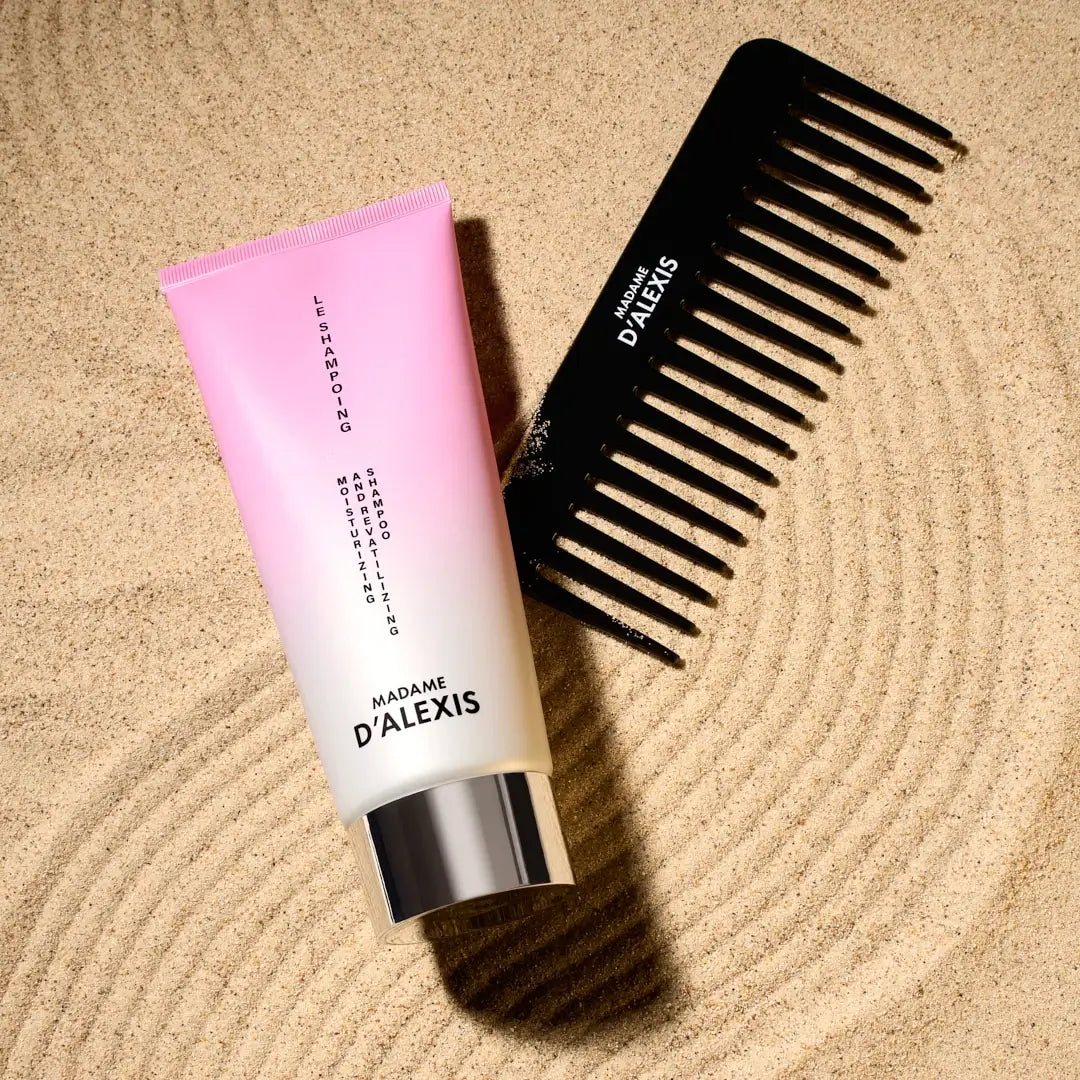
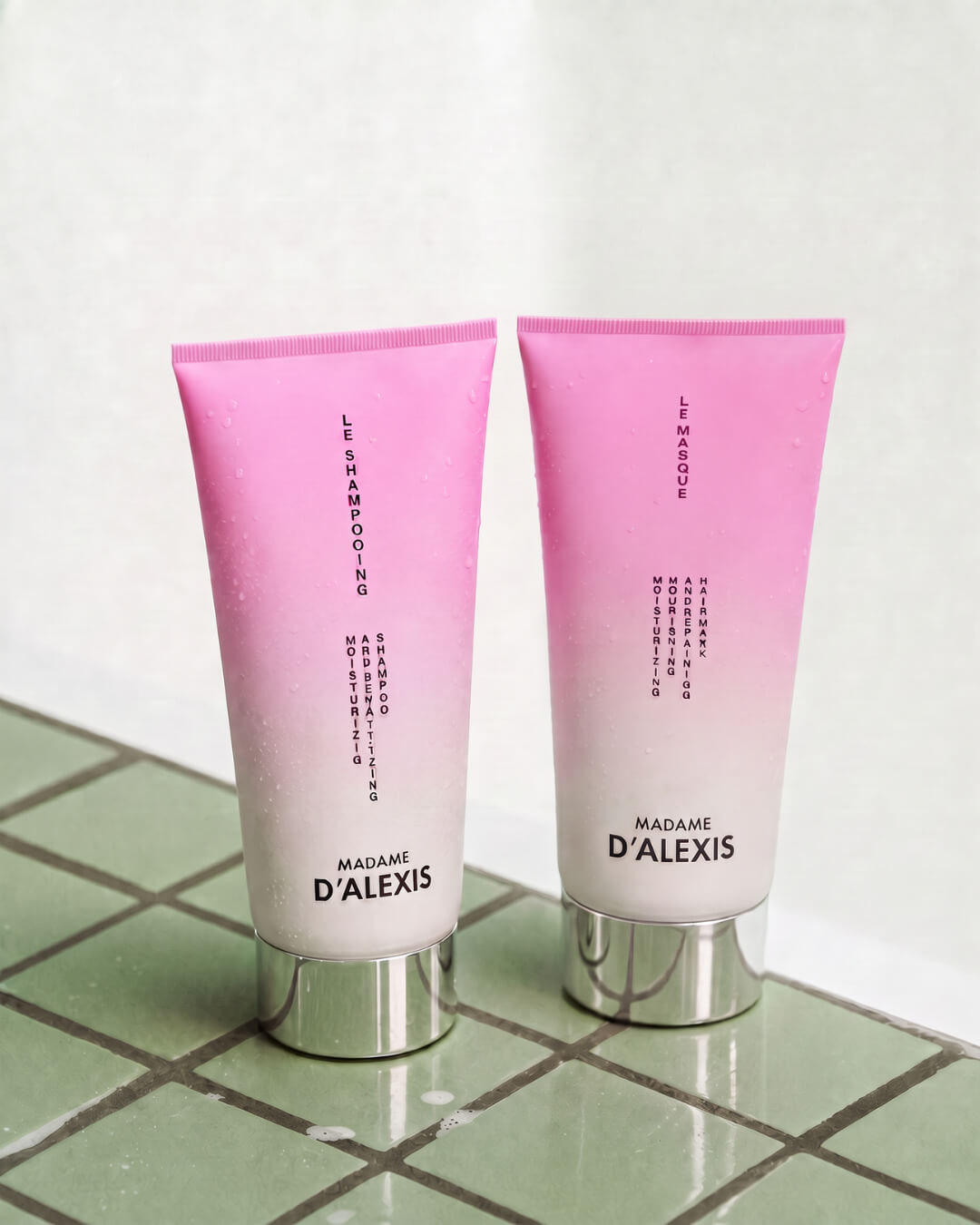
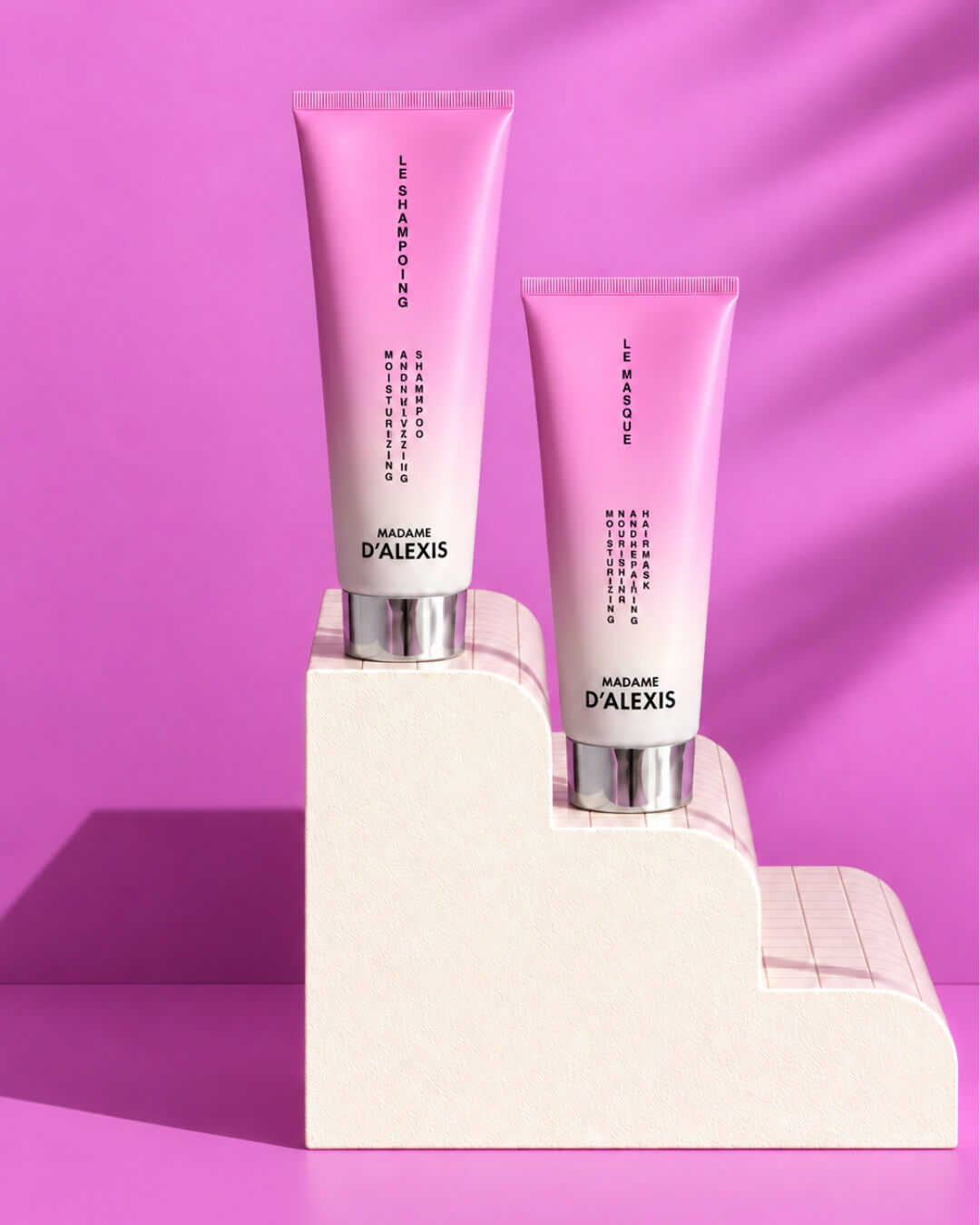
Shampoo is the foundation of your routine. Made from 98% natural ingredients, it combines cationic hyaluronic acid, prebiotics, and plant-based keratin to hydrate, soothe, and add shine without stripping the hair. This is the everyday shampoo for men: use it as a two-step wash on a thoroughly wet scalp, massage it in, then rinse very thoroughly. It’s safe for daily use and is ideal if you exercise or if your roots get oily quickly.
The Scrub is an exfoliating shampoo made with fleur de sel, hydrosols, organic coconut oil, and cationic hyaluronic acid. It removes excess sebum, sweat, and residue from the scalp. Use it every 10 to 15 days: on that day, use it in place of Le Shampoing, applying it twice in succession like a double shampoo, then rinse. It is not suitable for sensitive scalps.
The Night Serum targets hair loss. It combines probiotics and postbiotics, fermented extracts, natural anti-hair loss active ingredients (oak, nettle, licorice), and cationic hyaluronic acid to support hair growth, regrowth, and density. Apply one pipetteful in the evening, section by section, to the scalp; massage in and do not rinse: use 3 to 5 times a week as an intensive treatment, then 1 to 2 times a week for maintenance.
The Growth & Density Ritual combines The Scrub and The Night Serum: a scalp purifying treatment every 10 to 15 days, and a nighttime treatment that supports hair growth. This is the ideal duo if your hair is thinning or if you’re concerned about hair loss.
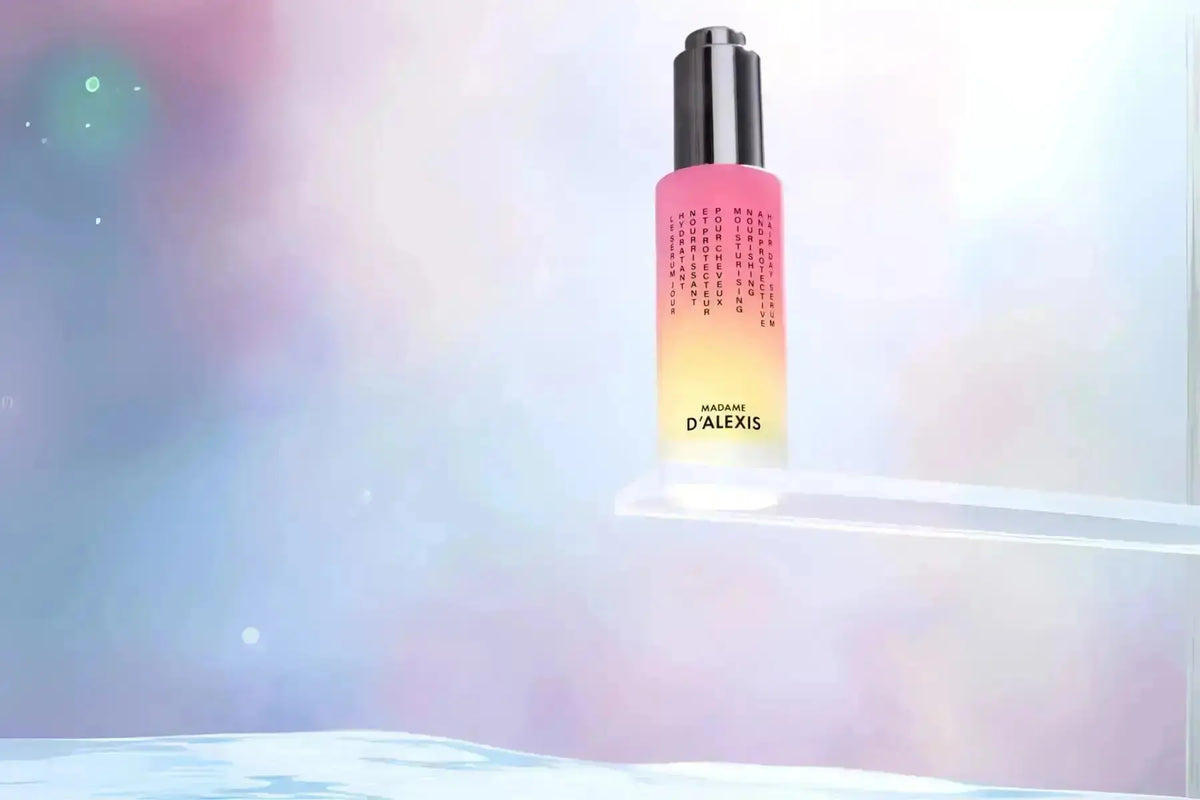
The Anti-Hair Loss & Protection Routine combines the Night Serum and the Day Serum. The Day Serum is a dry oil formulated with organic jojoba, plant-based ceramides, and natural heat protectants (up to 200 °C): Just 1 to 3 drops applied to the lengths of your hair are enough to protect it from the blow dryer without weighing it down—a real plus for medium-length or long hair.

The Shampoo


The Night Serum

The Growth & Density Ritual

Anti-Hair Loss & Protection Routine
Which shampoo is right for your scalp?
We'll ask you a few questions about your scalp and hair, and then we'll create a personalized routine for you using our five organic hydrosol treatments, formulated without added water.
Does this sound like you?
- You reply
- Discover your ritual
- You are adjusting your selection
Frequently Asked Questions About Men's Shampoo
Is men's shampoo really different from women's shampoo?
Not necessarily. Needs vary depending on sebum production, scalp sensitivity, and hair type—not on gender. A gentle shampoo designed for scalps that get oily quickly is just as suitable for men as it is for women. The differences mainly come down to fragrance and marketing.
Can you wash your hair every day with sulfate-free shampoo?
Yes, as long as the formula is truly gentle. A sulfate-free shampoo is gentle on the hair and doesn't stimulate sebum production. If your scalp gets oily quickly or if you sweat a lot, washing your hair every day is perfectly fine.
Can you use the same shampoo for your hair and beard?
Yes, as long as it's gentle and free of sulfates and silicones. Gently massage the skin under your beard without scratching, then rinse thoroughly to prevent tightness and itching.
Can shampoo stop hair loss?
No. Shampoo cleanses the scalp and improves its comfort; it does not stimulate hair growth on its own. A hair loss treatment applied to the scalp can support hair growth and density. If you experience persistent hair loss or are concerned about balding, consult a dermatologist.
Should you change your shampoo regularly?
Not if it works for you. It’s better to adjust your routine (exfoliation, targeted treatment) than to buy more products. The free hair assessment helps you figure out what you need in about 2 minutes.
In conclusion
Choosing the right men’s shampoo starts with listening to your scalp: its sebum, its reactions, and its tolerance. A gentle, sulfate-free formula enriched with organic hydrosols, simple routines, and—if needed—targeted care for hair loss or oily roots go beyond just a collection of bottles. Whether you have short or long hair, with or without a beard, it all starts with taking care of your scalp.