Advice
Kinky Hair: Routine and Natural Care
Kinky hair requires a skincare-inspired approach: deep hydration, sealing, and balancing the scalp microbiome. Here is the complete 5-step routine.


Kinky hair: understanding its structure to better hydrate, nourish, and encourage growth
Kinky hair is not "difficult." It is structurally drier, more porous, and more fragile at the bending points. The right routine must therefore hydrate, seal, and treat the scalp just like dry, reactive skin.
Key takeaways
- Kinky hair has a tightly coiled structure that prevents natural oils from easily traveling down the length of the hair.
- It needs to be hydrated with active ingredients that cling to the hair fiber, then sealed with lipids to reduce moisture evaporation.
- The scalp matters just as much as the lengths: buildup, dandruff, tightness, and imbalance can hinder healthy hair growth.
- The ideal routine combines a Scrub, Shampoo, Mask, Day Serum, and Night Serum, each with a specific purpose.
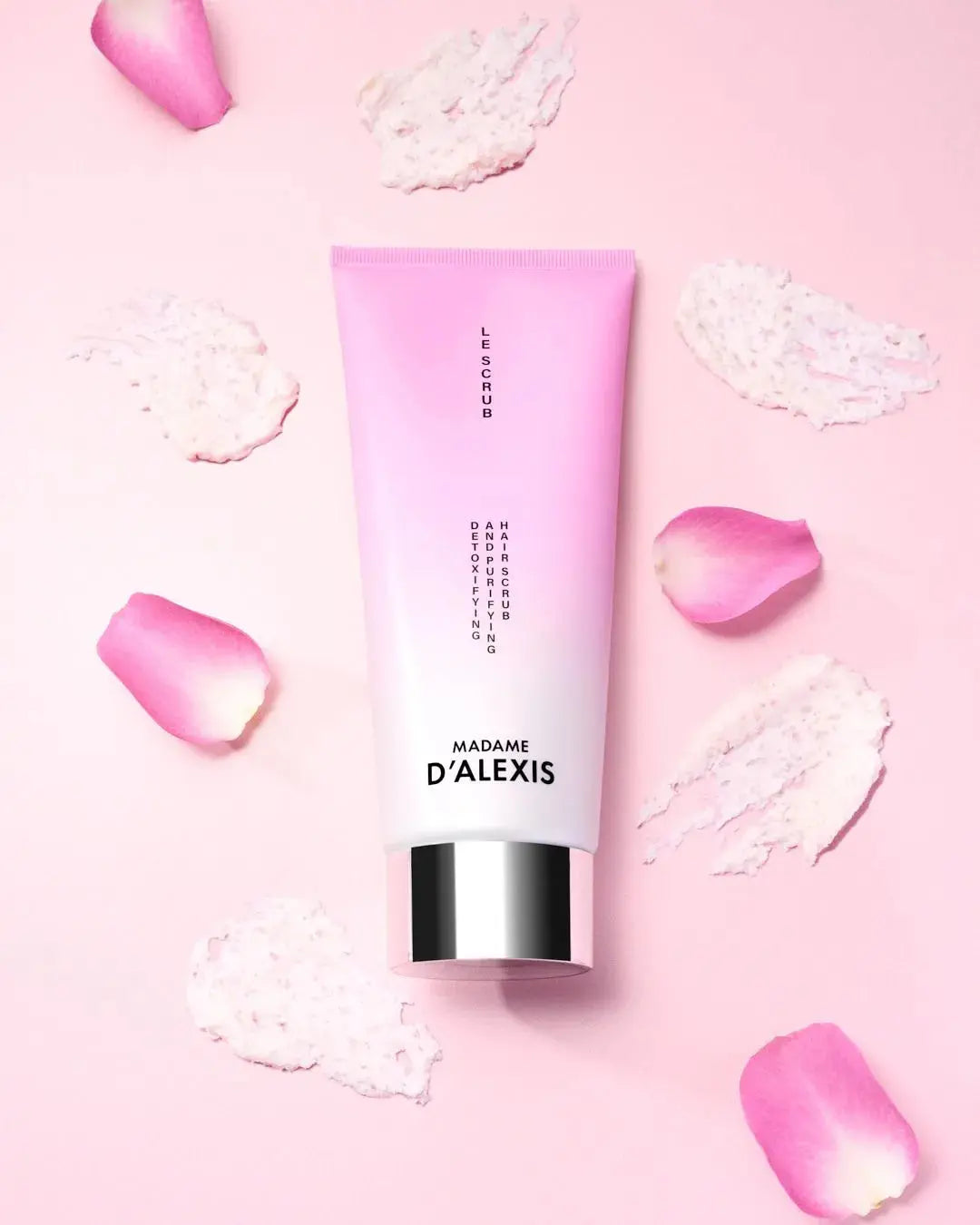
The Scrub - Exfoliating scalp shampoo
- Removes buildup
- Fine sea salt
- Cleaner scalp
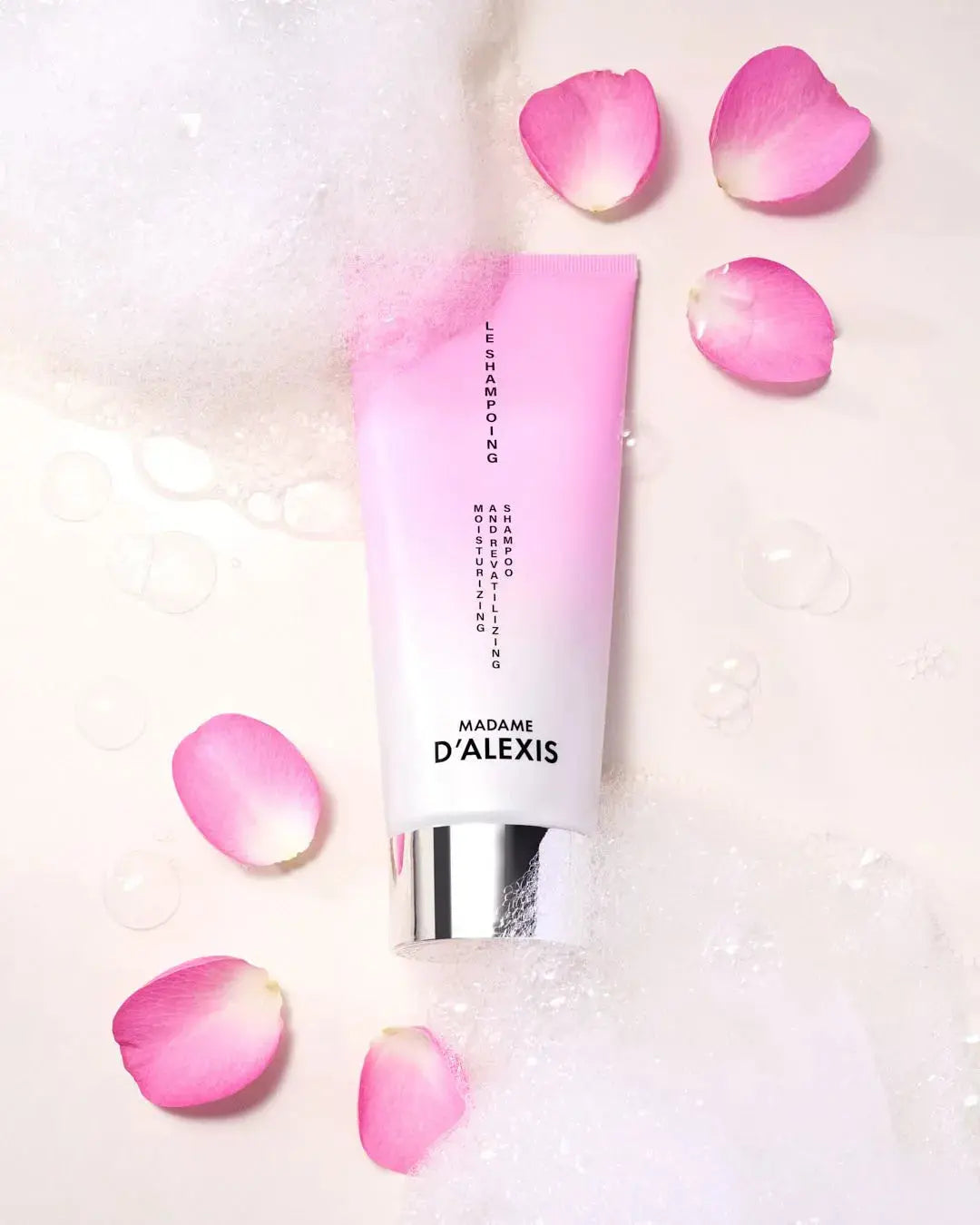
The Shampoo - Organic floral waters & hyaluronic acid
- Gentle cleansing
- Plant keratin
- Prebiotics
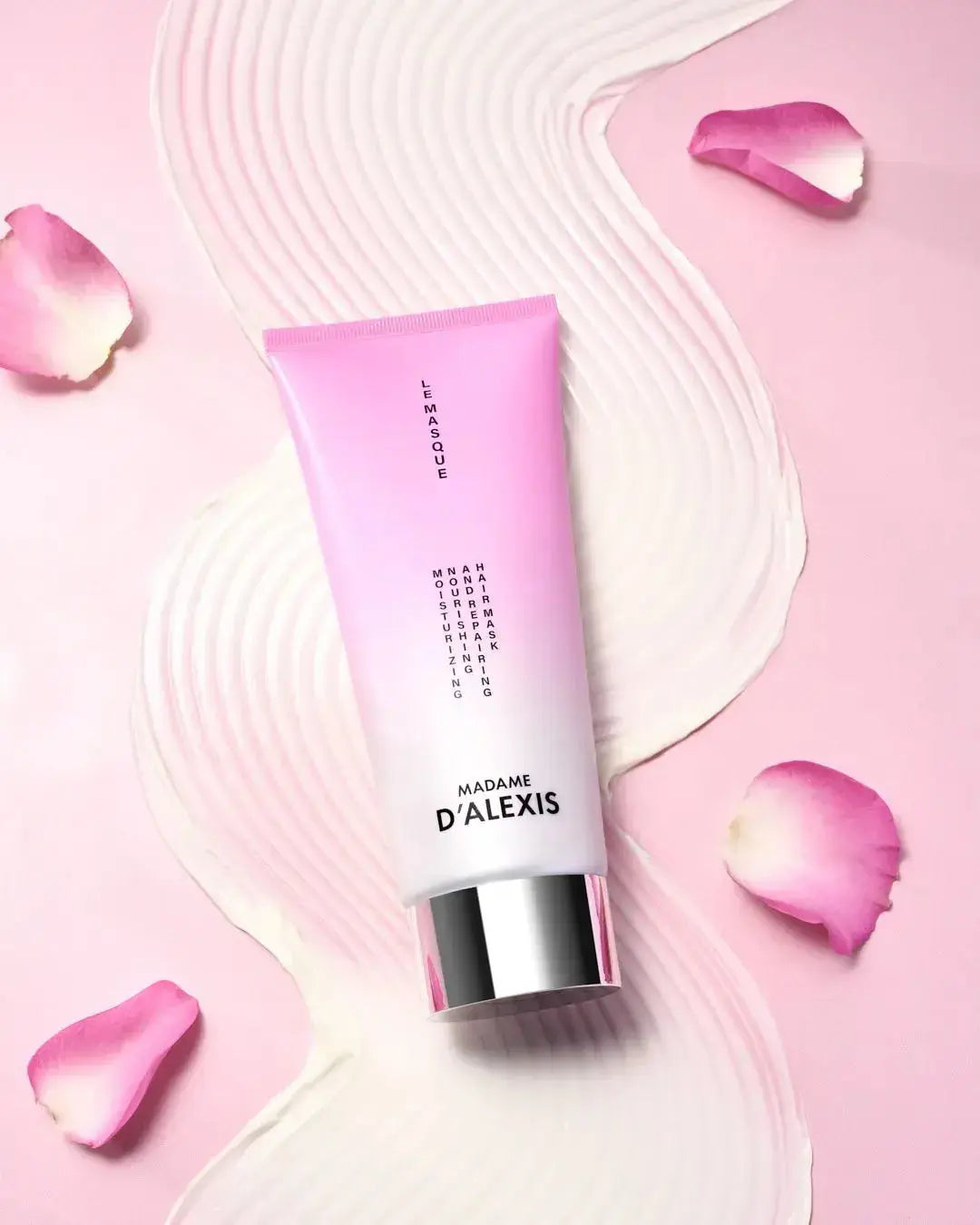
The Mask - Deep hydration with organic floral waters
- Locks in moisture
- Reduces rough texture
- Flexibility & shine
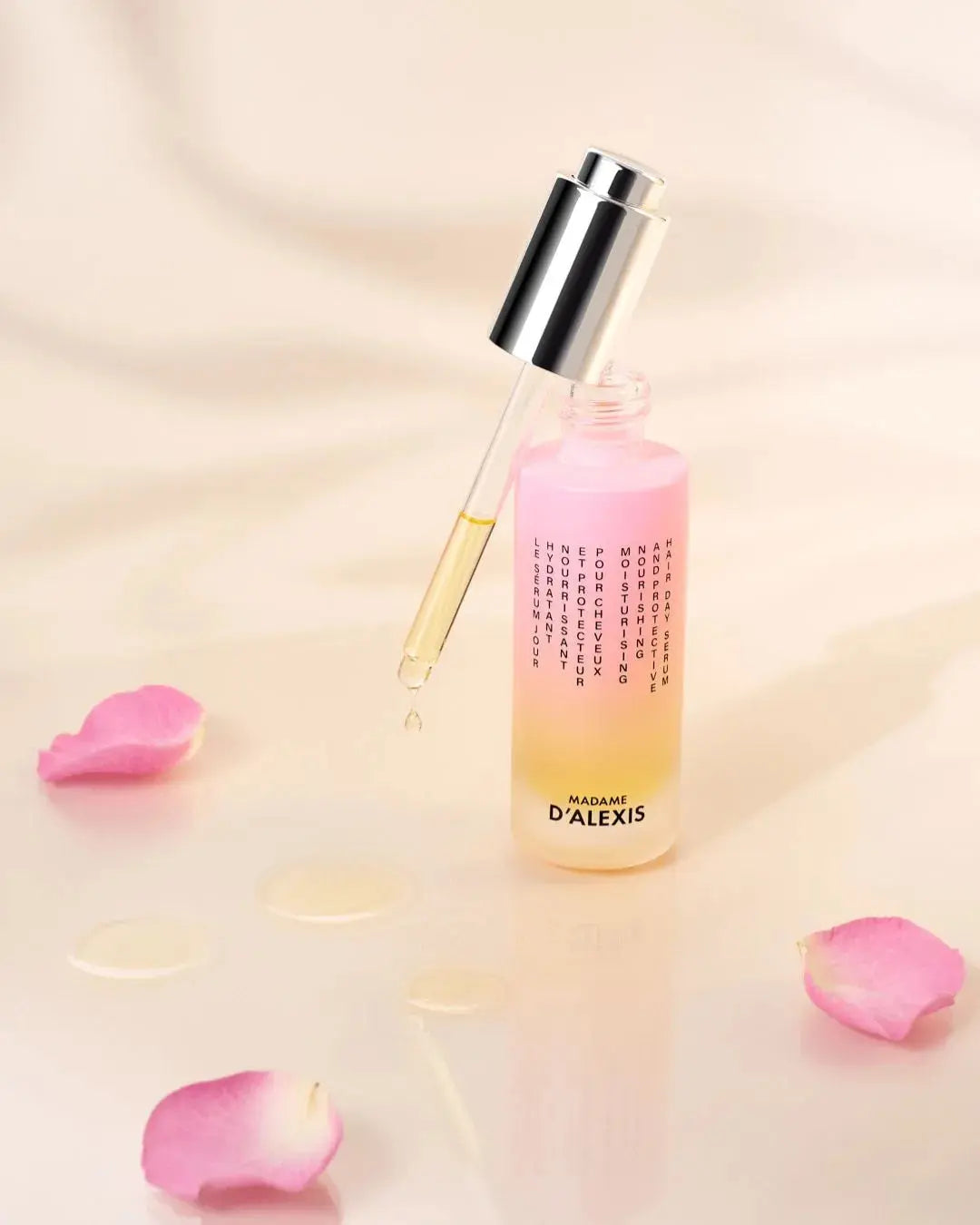
The Day Serum with ceramides & organic jojoba
- Up to 200°C
- Lengths & ends
- Dry oil finish
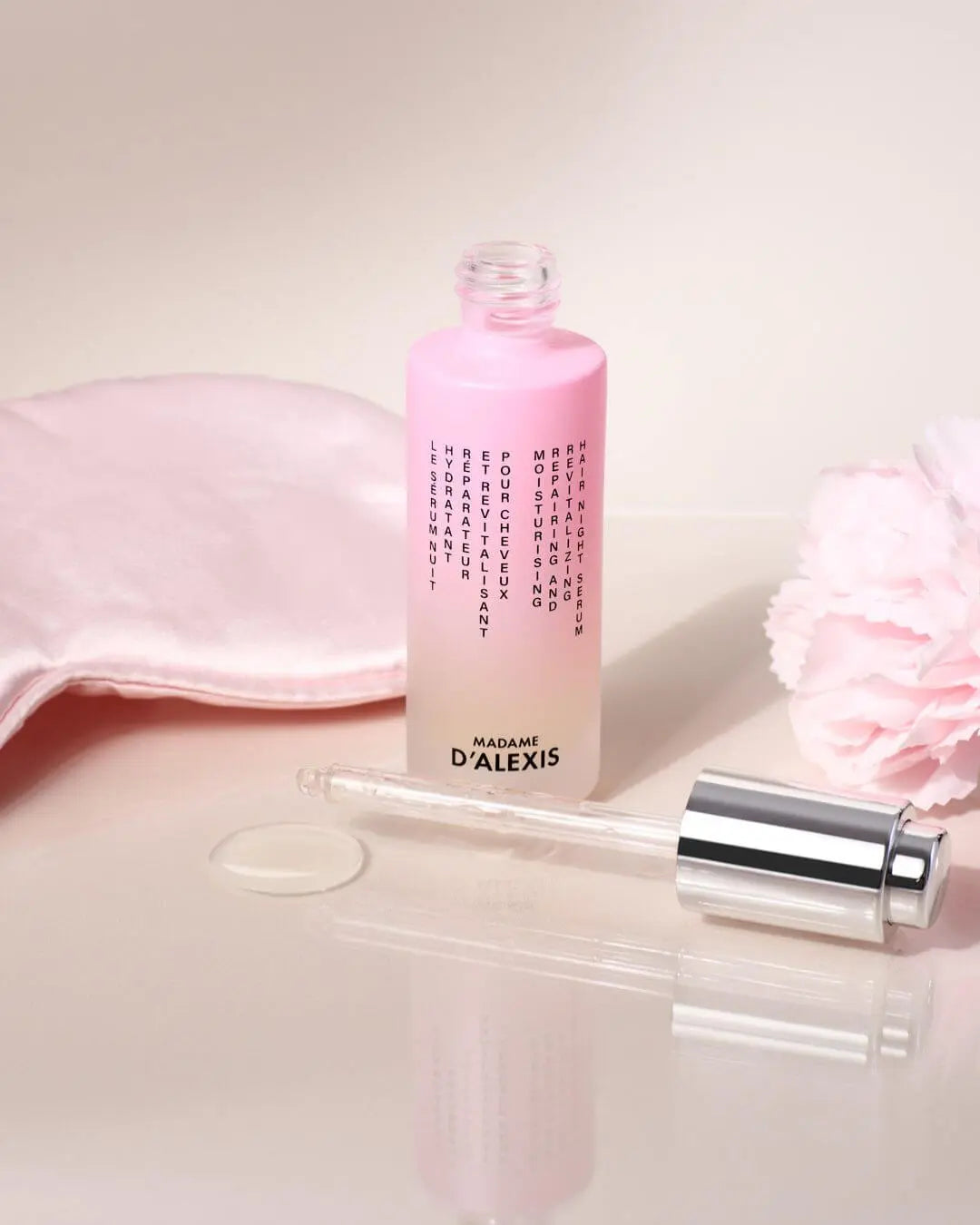
Anti-Hair Loss & Thickening Night Serum with Probiotics
- Probiotics
- Roots & density
- Night treatment
What are the characteristics of coily hair?
Coily hair is not just "very curly" hair. It has a different structure right from the root, featuring a more spiraled, porous fiber that is more vulnerable to breakage.
The follicle is elliptical, sometimes curved. The hair grows in a twisted pattern with tight zigzags that create weak points.
At the bends, the hair cuticle is often more raised. The hair absorbs water quickly, but also loses it very fast.
Natural oils struggle to travel down the lengths. This is not due to a lack of care, but a natural physical characteristic.
This structure explains why coily hair needs care for curly, wavy, and textured hair that can deeply moisturize, protect the hair strand, and reduce breakage when detangling.
The 3 key needs: hydration, sealing, scalp
| Need | Why it matters | Useful active ingredients | Mistake to avoid |
|---|---|---|---|
| Hydrate | The core of the hair fiber lacks moisture and becomes rough. | Cationic hyaluronic acid, organic floral waters, aloe vera. | Replacing moisture with oil alone. |
| Seal | Porous hair quickly loses the moisture that has just been applied. | Plant ceramides, jojoba, lightweight oils, suitable butters. | Skipping the lipid step after moisturizing. |
| Rebalance the scalp | A congested or irritated scalp hinders comfort and healthy hair growth. | Prebiotics, probiotics, gentle exfoliation, soothing floral waters. | Spacing out washes to the point of letting buildup accumulate. |
The L.O.C. or L.C.O. method remains useful: Liquid to hydrate, Oil to nourish, Cream or a rich treatment to seal. However, for coily hair, the scalp must also be treated just like facial skin.
The scalp of coily hair: the angle too often forgotten
The scalp is home to a microbiome, a community of bacteria and yeasts living in balance with sebum and the skin barrier. When this balance is disrupted, it leads to dysbiosis: tightness, dandruff, itching, flaking, and a scalp that struggles to tolerate washes or styling products.
Sebum travels less easily down the hair fiber. The scalp can be dry, sensitive, and weighed down by styling product buildup all at once.
Sulfates, overly harsh cleansing, buildup of creams, gels, heavy oils, tight hairstyles, and a lack of gentle exfoliation.
Gentle cleansing, exfoliation every 10 to 15 days, floral waters and the scalp microbiome, prebiotics, and probiotics.
The active ingredients that make a difference for coily hair
Damask rose, German chamomile, and orange blossom replace plain water to provide comfort, hydration, and a delightful sensory experience. Read also: hydrosols vs water in hair care.
Its positive charge enhances its affinity with the hair fiber. It helps retain moisture and reduces rough textures. See our guide on hyaluronic acid for hair.
They reinforce the lipid layer of the cuticle, reduce porosity, and help lock in moisture. See: ceramides for the hair fiber.
The complex of hydrolyzed wheat, corn, and soy proteins helps smooth the cuticle, strengthen the fiber, and improve elasticity.
They support the health of the scalp rather than trying to strip everything away. This approach is particularly helpful for sensitive scalps.
Jojoba, apricot, or coconut oils in balanced amounts nourish and seal moisture without weighing down the hair or making the scalp greasy.
5-step coily hair routine
The Scrub - Exfoliating scalp shampoo
Scalp detox every 10 to 15 days to gently remove buildup, dead cells, and oxidized sebum.
The Shampoo - Organic floral waters & hyaluronic acid
Gentle cleansing without sulfates or silicones, washing twice if needed to purify without stripping.
The Mask - Deep hydration with organic floral waters
An essential step for coily hair: detangling, deep conditioning, and occasional overnight treatments for very dry hair.
Day Serum with Ceramides & Organic Jojoba Oil
Protecting lengths and ends against heat, friction, UV rays, pollution, and humidity-induced frizz.
Anti-Hair Loss & Thickening Night Serum with Probiotics
Apply section by section to a dry scalp to support the microbiome, surface hydration, and density.
Day/night routine: structuring your weekly schedule
| Treatment | Frequency | Moment | Objective |
|---|---|---|---|
| Floral Scrub | Every 10 to 15 days | Pre-shampoo | Clear scalp buildup and prep for treatments. |
| Shampoo | 1 to 2 times per week | Wash day | Cleanse without stripping the protective scalp barrier. |
| Mask | 1 to 2 times per week | Post-shampoo or occasional overnight treatment | Hydrate, soften, and make detangling easier. |
| Day Serum | Daily if needed | Morning, before styling | Protect the lengths and reduce frizz. |
| Night Serum | 3 evenings a week, or more if needed | Evening, on the scalp | Support the microbiome, comfort, and thickness. |
For very dry hair, combine this routine with our selection of products for dry hair. If you experience persistent itching or tightness, try our routine for irritated scalps.
Common mistakes that damage coily hair
Styling, touching up, or detangling too often stresses hair that is already fragile at the bends.
Always detangle damp hair section by section, while it is coated in a mask or moisturizing cream.
Unprotected heat lifts the hair cuticle and increases moisture loss. The Day Serum is designed for this step.
Castor oil or oil baths can help nourish the hair, but without water or a moisturizing active ingredient beforehand, they do not rehydrate it.
The lengths get all the attention, but healthy hair growth starts with a clean, flexible, and soothing scalp.
Waiting longer between washes should not lead to a buildup of residue. Gentle cleansing remains essential.
Coily hair FAQ: moisture, growth, care, and routine
What is the difference between frizzy hair and curly hair?
Curly hair has wider curls and a follicle closer to a round shape. Coily hair has an elliptical, often curved follicle that produces much tighter spirals, a flatter strand, and generally higher porosity. The closer you get to type 4 hair, the more coiled and dry the structure becomes.
How often should coily hair be washed?
Generally, 1 to 2 washes a week are enough. The goal is to clean well enough to remove buildup, oxidized sebum, and styling products without stripping the hair's already limited natural oils.
How to moisturize coily hair?
To moisturize coily hair, start by adding moisture using a spray bottle, floral waters, or a moisturizing treatment rich in hyaluronic acid, aloe vera, or humectant ingredients. Next, lock in the moisture with a moisturizing cream, a lightweight oil, or an occasional oil bath. Castor oil can help nourish and protect, but it does not replace hydration: it should be applied after water, never on its own on dry hair. A good hair care routine alternates between gentle cleansing, a nourishing mask, a leave-in conditioner, and protection for the lengths.
How to treat dry coily hair?
Dry coily hair should be treated with a three-step routine: moisturize, nourish, and seal. Use a gentle, sulfate-free shampoo, a nourishing mask after every wash, and then a cream or serum to retain moisture. An oil bath can be useful before shampooing if the lengths are very dry, but it should be done occasionally to avoid weighing down the hair. The treatment should also target the scalp, especially if it feels tight or itchy.
How to promote coily hair growth?
To promote coily hair growth, the key is to minimize breakage, keep the scalp healthy, and maintain proper hydration. Castor oil can be used for an oil bath or an occasional massage, but growth also relies on gentle cleansing, scalp exfoliation, a regular routine, and ingredients that support the hair fiber. To achieve long hair, the goal is not just to speed up growth: it is to preserve the lengths you already have by avoiding breakage, tension, and excessive heat.
What are the best products for coily hair?
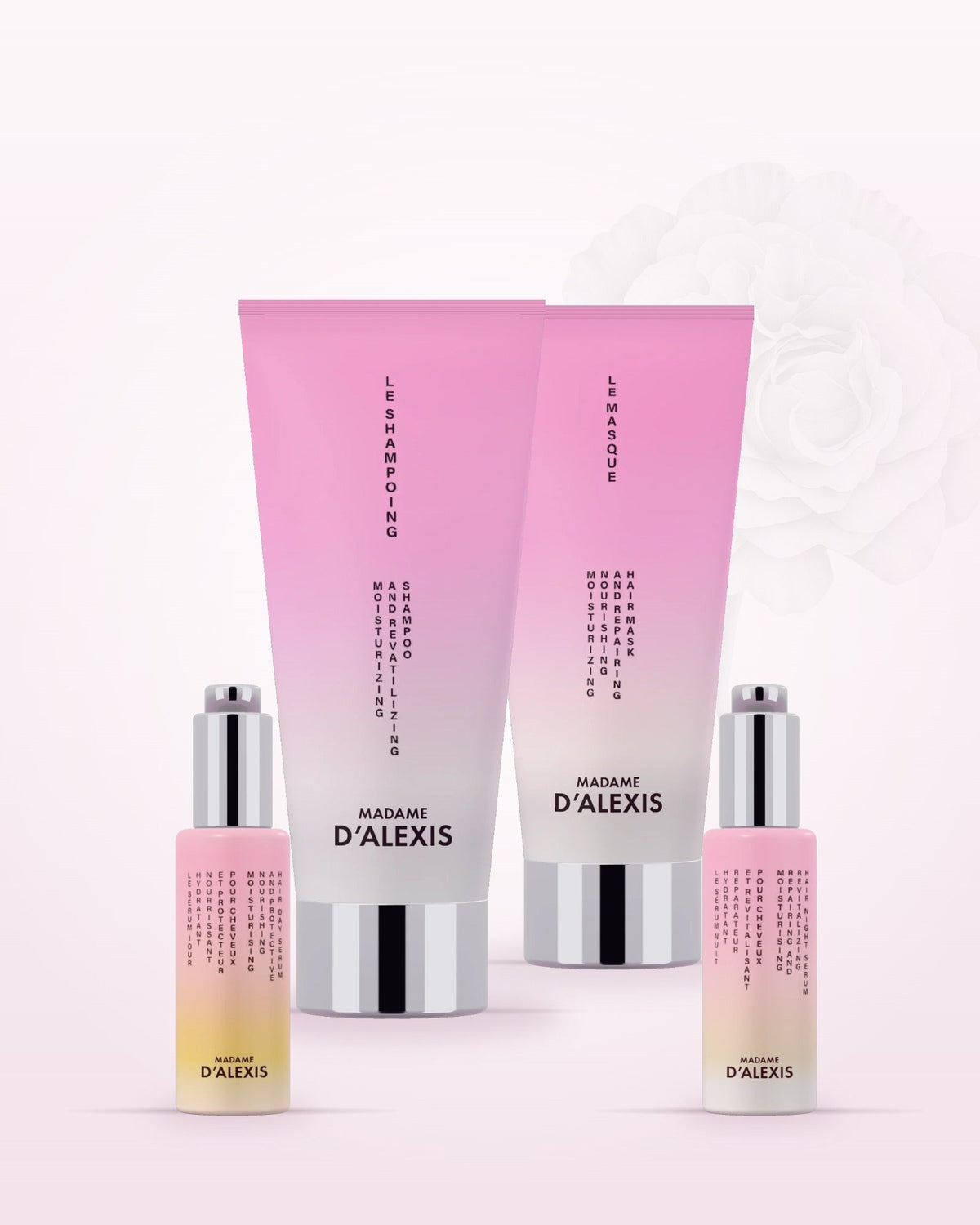
The best products for coily hair are those that respect its texture: a gentle shampoo, a rich yet lightweight mask, a moisturizing cream or light serum to seal in moisture, and a scalp treatment if the roots are sensitive. A good hair care range must combine hydration, nourishment, heat protection, natural ingredients, and a pleasant texture. At Madame d'Alexis, the combination of Shampoo, Mask, Day Serum, Night Serum, and Scrub covers all key needs: cleansing, moisturizing, nourishing, protecting, and rebalancing the scalp.
What is the proper detangling technique for coily hair?
Always detangle hair while it is damp and generously coated with a mask, conditioner, or moisturizing cream. Use your fingers or a wide-tooth comb, starting at the ends and gradually working your way up to the roots. Never force a dry knot.
What is the purpose of scalp exfoliation for coily hair?
It removes styling product buildup, dead skin cells, and excess oxidized sebum, especially when washes are spaced out. An exfoliated scalp every 10 to 15 days absorbs subsequent treatments better and helps prevent conditions that lead to dandruff and microbiome imbalance. See also our guide on scalp exfoliation.
Does coily hair fall out or break more than other hair types?
In most cases, coily hair breaks rather than falls out. Its spiral shape creates weak points where the fiber easily snaps, particularly during dry detangling or when subjected to tension. True hair loss from the follicle should be evaluated by a dermatologist if it becomes unusual or localized. To learn more: how to choose an anti-hair loss serum.
The Madame d'Alexis routine for coily hair
A complete ritual to moisturize, nourish, seal, and care for the scalp: Scrub, Shampoo, Mask, Day Serum, and Night Serum. The idea is not to pile on products, but to give every step a clear purpose.
Discover textured hair careSources
- American Academy of Dermatology, care tips for textured and African-American hair.
- Experimental Dermatology / Wiley Online Library, research on the scalp microbiome.
- Madame d'Alexis resources on floral waters, cationic hyaluronic acid, ceramides, and scalp exfoliation.
Advice