Advice
Shampoo for Thick Hair: Cleansing and Taming Dense Hair
How to choose a shampoo for thick hair, wash it without weighing it down, detangle it without breaking it, and tame frizz.

You can tell a thick head of hair by the feel of it even before you see it: your hand can’t close around a strand—the hair resists—and it holds its volume without any effort. Then comes wash day, and everything gets complicated. Water runs right off without soaking in, the shampoo barely lathers, knots form deep within the thick mass, and drying it requires the kind of patience you’d have on a Sunday. Thick, hard-to-manage hair isn’t inevitable: it requires precise techniques, a well-thought-out routine for thick hair, and a shampoo for thick hair that cleans without weighing it down. Here’s how to choose a shampoo, care for your thick hair, detangle it, and tame it without smothering it under product buildup—especially in the fall, when cold weather and heating systems come into play.
What exactly is thick hair?
Thick hair is defined by the diameter of its shaft, not by the number of strands on the scalp. Each hair consists of a cuticle—a layer of cells that overlap like scales—a cortex that contains most of the keratin and provides strength, and sometimes a medulla at the center. A hair with a larger diameter bends less easily, retains its shape, and holds a hairstyle better, but it is also less permeable to water and hair care products.
A thin strand of hair bends under a finger; a thick strand pushes the hand away and retains its curve. Next comes density, which refers to the number of hair shafts anchored to the scalp. A head of hair can be dense with fine strands, or sparse with thick strands. Density and thickness are therefore not synonymous, and if your goal is to add volume, our tips for thickening your hair address a different issue. Like all hair types, thick hair can be blonde, brown, or red: thick blonde hair does exist, even if it often appears lighter to the eye. When diameter and density combine, the result is thick, voluminous hair that effortlessly holds a hairstyle but, paradoxically, can be difficult to tame.
Why is thick hair harder to wash and detangle?
Weight is the main factor. Thick hair retains water and products longer, and anything left on the surface eventually weighs the hair down. Heavy, coating formulas—loaded with silicones or waxes—build up layer by layer: the lengths feel soft after washing, but then the roots get oily faster and the hair loses its bounce. This is the classic trap of an oily scalp combined with dehydrated ends.
Next come the knots: in a dense mass, the strands cross and become entangled beneath the surface, where the eye cannot see them.
Drying amplifies everything: it takes time for water to penetrate deep into the hair shaft, and just as long for it to evaporate. If the hair isn’t dried completely, thick hair retains moisture that weighs down the lengths.
Then there’s the scalp. Under a thick mass of hair, air circulates less freely, sebum and product residue build up, and the scalp’s balance can be disrupted. A clogged scalp often explains why roots get oily too quickly while the ends remain dehydrated. Conversely, a dry scalp feels tight and calls for an even gentler wash: scalp care starts first and foremost with the right shampoo.
Which shampoo should you choose for thick hair?
A shampoo for thick hair should cleanse, not coat. When choosing a shampoo, three criteria are enough to narrow down your options on the shelf. First, it should be free of harsh sulfates, which lather heavily and strip the hair: the scalp often reacts by producing more sebum, and the cycle starts all over again. Second, it should be free of silicones, whose immediate smoothing effect masks a buildup that accumulates wash after wash on thick hair. Finally, it should have a fluid texture that spreads easily, rinses out quickly, and leaves no residue.
The best choice is often a moisturizing and nourishing shampoo, formulated without added water, where organic hydrosols replace the water. Damask rose provides hydration, soothing, and shine. German chamomile soothes, brightens the lengths, and reduces dryness and breakage. Orange blossom tones and revitalizes the roots. Added to this base are active ingredients derived from skincare: cationic hyaluronic acid, which hydrates; prebiotics that maintain the scalp’s balance; and plant-based keratin that supports the hair shaft without making it stiff.
The Best Shampoo for Your Hair Length
If your search starts with a question like “best shampoo for thick hair” or “shampoo for dry, thick hair,” keep this in mind: the less residue the product leaves behind, the better the volume holds up and the more supple the lengths remain. A nourishing shampoo isn’t necessarily a rich shampoo—it’s one that hydrates while you wash. When your hair feels dry, our products for dry hair complement your wash routine without weighing it down. For colored, highlighted, or damaged hair, the same principle applies, with more frequent use of a hair mask.
What about dry shampoo?
Dry shampoo—whether in spray or powder form—is a lifesaver between washes, but it adds volume at the roots. If you have thick hair, use it sparingly and wash thoroughly with shampoo the next time you wash your hair to avoid clogging your scalp.
What ingredients are best for thick hair?
On the market, products for thick hair often feature shea butter, argan oil, or aloe vera, in the form of creams or balms. While these ingredients can nourish the hair, their richness can quickly weigh down thick hair if not properly balanced. The most effective active ingredients for thick hair are those that hydrate without leaving a film: floral hydrosols, cationic hyaluronic acid, plant-based ceramides that strengthen the cuticle’s cohesion, and lightweight oils like jojoba. Scent matters too: choose a formula with a delicate fragrance derived from floral ingredients rather than an overpowering scent that lingers in thick hair. A subtle fragrance goes unnoticed.
How can you wash thick hair without weighing it down?
Washing your hair twice isn't just a salon fad. On thick hair, the first wash removes sebum and residue; it doesn't lather much, which is normal. The second wash actually cleans the hair.

Start with a thoroughly wet scalp, paying special attention to the nape of the neck and behind the ears—two areas that are easily overlooked under thick hair. Massage with your fingertips—never with your fingernails—using small circular motions to loosen buildup. Then rinse very thoroughly, for longer than you think is necessary. For the lengths of your hair, the lather that runs down from the scalp is enough.
As for frequency, thick hair doesn't handle infrequent washings well, because sebum builds up beneath the hair. With a gentle formula, daily washing is still possible. To find your ideal routine, follow our guidelines on how many times to shampoo per week and adjust based on the season, your exercise routine, and your scalp.
Use lukewarm water when washing, then give the lengths a final rinse with cold water: very hot water dries out the hair and sets the stage for frizz.
How can you detangle thick hair without breaking it?
Detangling begins in the shower, or right after, when the hair is still damp and coated with conditioner: when dry, thick hair puts up resistance that breaks the most fragile ends. The right tool is just as important as the technique: a wide-tooth comb, such as the Pink Wide-Tooth Detangling Comb made of cellulose acetate, separates the strands instead of pulling on them.
Divide your hair into large sections, then start detangling each strand from the bottom, holding it halfway down to absorb the tension, and work your way up toward the roots without pulling too hard. If a knot resists, untangle it with your fingers. For stubborn tangles, discover how a natural detangler helps the comb glide through and relaxes the strands.
How can you tame thick hair and frizz?
Frizz isn’t a natural flaw: it’s caused by strands that lack moisture, whose cuticles lift when exposed to dry air, a towel that’s too rough, or uncontrolled heat. In thick hair with curly or wavy strands, frizz is all the more noticeable because of the hair’s volume. In the fall, the combination of cold weather outside and indoor heating dries out the air and brings out these little rebellious strands.
After rinsing, gently squeeze the length of your hair with a soft towel—without rubbing—then let it air dry or use a diffuser on a moderate setting. Limit the amount of styling product you use: one more holding spray or wax, and your hair will feel weighed down.
On dry or slightly damp hair, one to three drops of the Day Serum—a dry oil that’s 99% naturally derived—are enough to smooth the surface without weighing it down. Organic jojoba and plant-based ceramides nourish, antioxidants protect, and natural heat protectants provide protection against heat up to 200 °C. Distribute it along the lengths and ends, then smooth each strand between your palms: you’ll get frizz under control without a stiff, cardboard-like finish. If you’re looking to prevent frizz long-term, it all comes down to regular hydration and gentle drying.
Porous hair, which absorbs moisture and then loses it very quickly, is the most prone to these issues. Learning how to test your hair’s porosity allows you to tailor your hair care routine rather than piling on more products.
Should you adjust your routine based on your hair type?
When it comes to caring for thick hair, the basic principles remain the same—only the details change: how you distribute the products and the amount you apply. Here are our expert tips for adopting the right routine based on your hair type.
Thick, dry hair
Thick, dry hair faces two challenges: it’s coarse, making it harder for products to penetrate, and it lacks moisture, causing it to become rough and brittle. A hair mask for thick hair is essential here; apply it to towel-dried lengths so the treatment isn’t diluted, then rinse very thoroughly to remove all residue. Organic apricot and jojoba oils provide the suppleness the lengths lack, while hydrosols moisturize without leaving a greasy residue. An occasional oil treatment before shampooing complements this nourishment.

Thick, Oily Hair
When the roots get oily quickly on thick, oily hair, the instinct to wash more vigorously often makes the situation worse. Stick to a mild shampoo, rinse thoroughly, and apply the hair mask only to the ends.
Thick curls
Never brush thick curls when they're dry: detangle them while they're damp and coated with a styling product, then let them air dry without touching them. A drop of lightweight oil, rubbed into your hands and applied as a finishing touch, helps restore the curls' shape. If your curls tend to frizz, use less product rather than constantly switching products.
Thick Hair in Men
With a short haircut, the hair remains close to the roots. Choose a shampoo for thick men’s hair that’s just as gentle, and massage it thoroughly into the scalp; as soon as the hair grows out, apply the hair mask only to the lengths.
What if you're looking to thicken fine hair instead?
A thickening shampoo or professional products for fine hair often promise instant volume by coating the hair shaft. To achieve long-term density, the key lies primarily in the scalp: The Night Serum, formulated with probiotics, postbiotics, and natural anti-hair loss ingredients, supports hair growth and density when applied section by section in the evening.
Our expert tips for establishing the right routine
Here is a summary of what our experts recommend for a simple and effective routine, no matter what your style is.
- Establish a regular routine: a gentle cleanse, a nourishing treatment once or twice a week, and a light oil as a finishing touch. Using the right techniques matters more than the amount of product you use.
- Take care of your scalp hygiene: the health of the scalp affects the health of the hair shafts, and a gentle massage with your fingertips while bathing or showering is all it takes to maintain it.
- Focus on protection: heat protection before blow-drying, protection against friction with a soft towel, and a smooth pillowcase at night.
- Choose a lightweight anti-frizz treatment rather than an anti-frizz product that’s too rich: a lightweight oil tames frizz without leaving hair greasy, whereas a cream or shea butter balm with the wrong consistency can weigh hair down.
- Read the ingredients before buying: Many product lines on the market are similar; look at the list of ingredients, the fragrance, and the type of product rather than the claims on the bottle.
- Tailor your hair care routine to colored or damaged hair: more regular nourishment, a moisturizing shampoo, and a restorative mask.
- Use each product where it’s meant to be used: shampoo at the roots, a mask on the lengths, and oil as a finishing touch. Using a smoothing treatment on the roots weighs them down; using it on the ends smooths them out. Expert tip: If your hair is lacking moisture, add a conditioning treatment rather than a styling product.
- Think of scalp care as you would facial care: just as with a facial or body treatment, the skin on your scalp should be gently cleansed and protected, without excess oil. Good hygiene also means keeping your comb and pillowcase clean.
- Choose a style that feels natural: a hairstyle that works with your hair’s natural movement reduces the need for daily blow-drying and the resulting loss of flexibility. If you have curly hair, let your curls shine.
- Stay loyal to one hair care brand: switching products every time you buy a new bottle can be confusing. Stick with a consistent line and give it a few weeks: a styling treatment, a gentle shampoo, and an anti-breakage detangling step are better than a collection of new products.
- Style your hair gently: detangle with a wide-tooth comb, use a brush only for the final styling, and choose hairstyles that don't pull on the roots.
Whether you have normal or thicker hair, the advice of a professional salon expert is invaluable for tailoring your haircut and hair care routine. When it comes to fragrance, our Damask rose, chamomile, and orange blossom hydrosols infuse each treatment with a delicate floral scent that’s never overpowering.
What hair care products should you choose for thick hair?
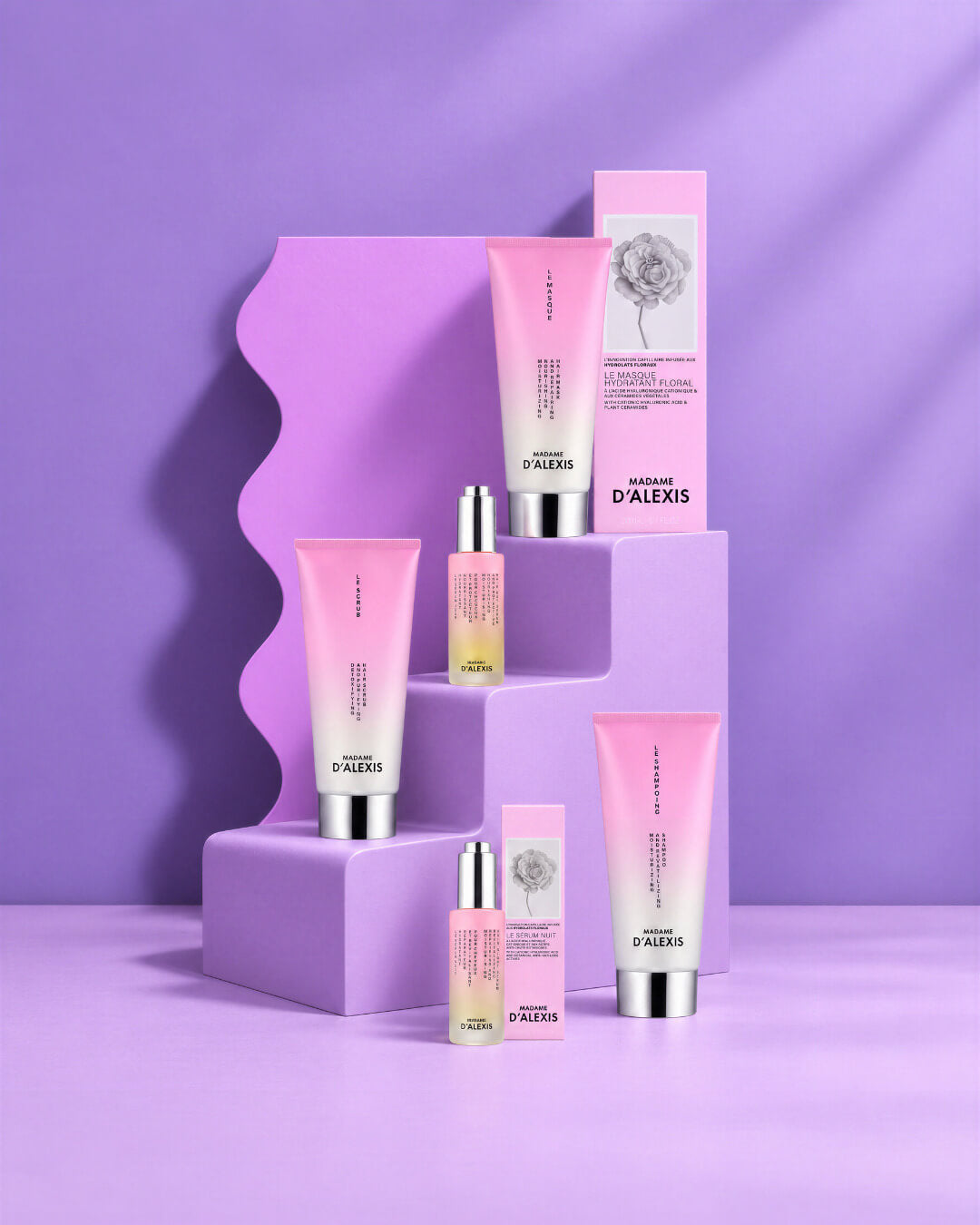
The brand’s entire line is formulated without added water, using organic hydrosols as a base, and is made in France—in Brittany—without sulfates, silicones, or parabens. This is exactly what thick hair needs: genuine hydration without the buildup that weighs it down. Here are our products for thick hair, and what each one does.
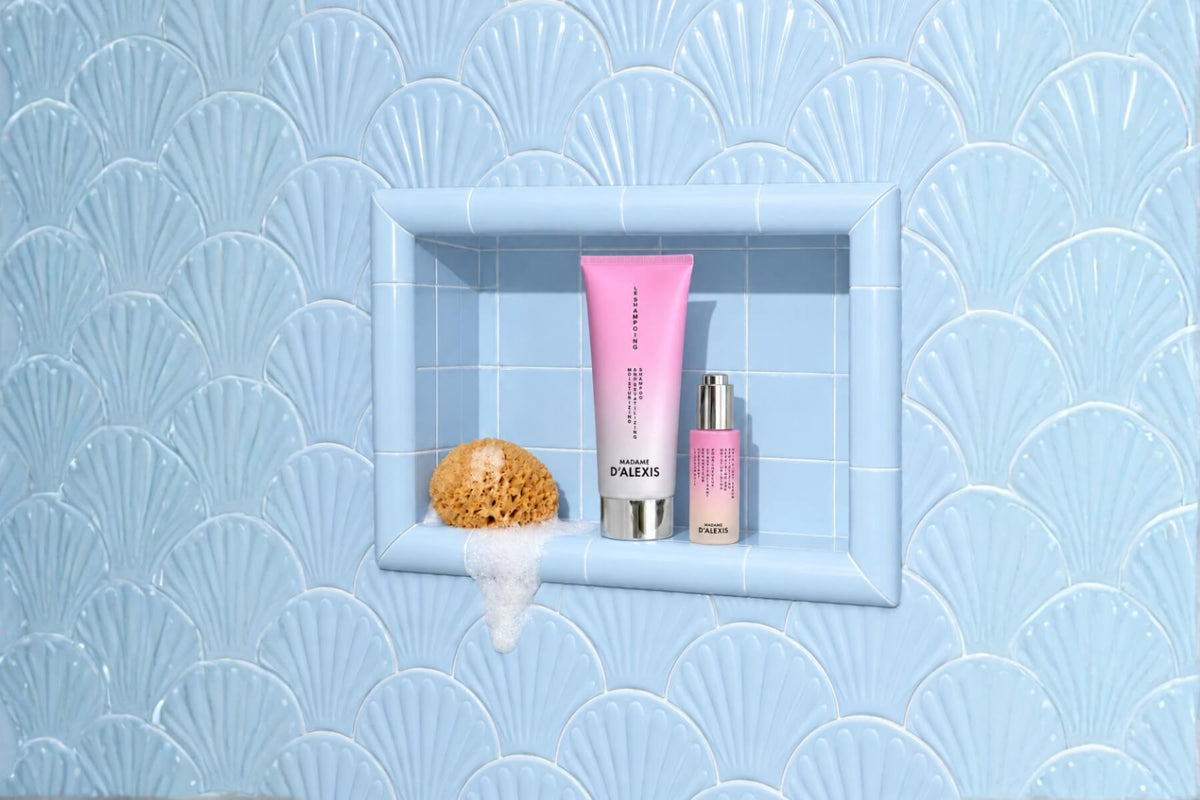
- This shampoo, 98% naturally derived, contains cationic hyaluronic acid, prebiotics, and plant-based keratin. It thoroughly cleanses the hair without weighing it down and moisturizes the lengths thanks to hydrosols. In the shower or bath, use it as a double shampoo on a thoroughly wet scalp, massage it in, then rinse very thoroughly. It can be used daily or alternated with the Scrub.
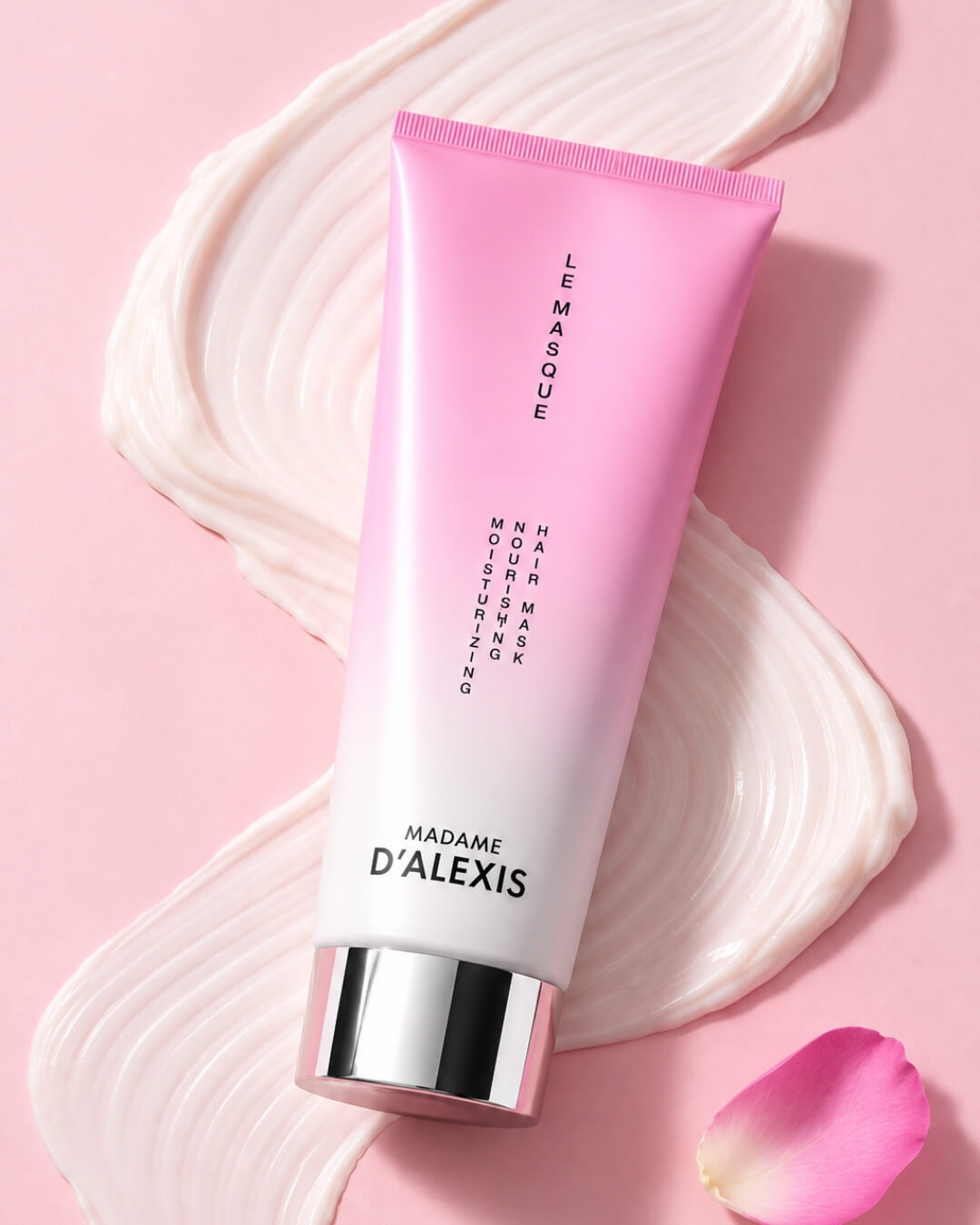
- The Mask, 97% naturally derived, with plant-based ceramides, cationic hyaluronic acid, orange blossom wax, and organic apricot and jojoba oils. It repairs, nourishes, and softens thick hair, making it easier to detangle. Leave on for two to five minutes to detangle, five to ten minutes as a standard treatment on towel-dried hair, twenty to thirty minutes for a deep treatment, or as an overnight treatment once a week for sensitized hair, and always rinse thoroughly.
- Le Scrub, 98% naturally derived, is an exfoliating shampoo with fleur de sel, organic coconut oil, and cationic hyaluronic acid. With its thick, rich texture, it removes accumulated residue from the scalp. Use it every 10 to 15 days in place of Le Shampoing, applying it twice in succession like a double shampoo. It is not recommended for sensitive scalps.
- The Day Serum, 99% naturally derived, is a dry oil formulated with organic jojoba and plant-based ceramides, featuring natural heat protectants effective up to 200 °C and antioxidants. It tames frizz and protects hair during blow-drying without weighing it down. One to three drops on the mid-lengths and ends are all you need.
- The Pink Wide-Tooth Detangling Comb, made of cellulose acetate. It glides through the hair strand by strand without pulling on the ends—a true daily anti-breakage routine.
To get started simply, the Hydration Routine combines the Shampoo and the Mask: the shampoo prepares the hair, and the mask nourishes it. If you’re looking for a gift, consider our gift sets as well: the beauty gift market offers a vast selection, and a gift set of carefully selected skincare products is always a welcome treat. Shipping terms are displayed at checkout, and our customer service team is available if you’d like to contact us before making your purchase. There’s no need to stockpile multiple shampoos and treatments for thick hair—it’s better to choose the right products.

The Shampoo

The Mask

The Day Serum

Moisturizing Routine

The Pink Wide-Tooth Detangling Comb
Thick, fine, or dense hair?
We'll ask you a few questions about your scalp and hair, and then we'll create a personalized routine for you using our five organic hydrosol treatments, formulated without added water.
Does this sound like you?
- You reply
- Discover your ritual
- You are adjusting your selection
If you're unsure about your hair type, a free hair analysis that takes about two minutes can help you distinguish between fine, thick, and dense hair, and choose the right routine from our five treatments.
Frequently Asked Questions
Why does my thick hair still feel heavy after shampooing?
Most of the time, product residue remains in the hair: a rinse that’s too short, a treatment applied too close to the roots, or a formula high in silicones. Try shampooing twice, rinse for longer, and apply the mask only to the mid-lengths and ends.
When should you use Le Scrub on a dense mass?
Use it every 10 to 15 days, instead of shampoo, during your wash, in two consecutive steps. It removes residue that builds up into a dense mass and weighs down the roots. Avoid using it if your scalp is sensitive or irritated.
What haircut should you choose if you have thick hair?
Before cutting your hair, ask an expert hairstylist for advice and aim for a cut that lightens the volume without sacrificing length: soft layers, ends thinned out sparingly, and a length that maintains the hair’s natural weight. A clean bob works well on voluminous hair, provided it’s shaped with scissors rather than over-thinned.
Do you need to use a hair mask for thick hair every time you wash it?
Not necessarily. For thick, dry hair, you can use the mask with every quick wash—two to five minutes to detangle. For well-hydrated hair, a standard five- to ten-minute treatment once or twice a week to nourish the lengths is sufficient. In any case, apply it to towel-dried hair and rinse thoroughly.
Do dietary supplements help your hair?
A dietary supplement is no substitute for a proper routine. If you're considering a dietary supplement, consult your doctor or pharmacist. When it comes to hair care, the essentials are gentle washing, regular nourishment of the hair shafts, and good scalp hygiene.
Does thick hair fall out less?
Hair diameter does not protect against seasonal or temporary hair loss. However, a thick head of hair makes slight hair loss less noticeable. If you notice unusual hair loss, take good care of your scalp and seek advice from a professional.
Conclusion
Thick hair simply requires that you stop treating it like fine hair: a shampoo that cleans without leaving residue, a longer rinse, careful detangling, and regular hydration that doesn’t weigh it down. As in Madame d’Alexis’s ritual journals, the secret to caring for thick hair lies not in the quantity of products, but in the precision of your techniques. The expert’s advice, to try starting with your next wash: use less product, but apply it more strategically.