Advice
Medium-Length Haircuts: Which Style to Choose and How to Care for It

You know that moment, sitting in the chair, when the stylist lifts a strand of hair, lets it slip through their fingers, and asks, “Should we keep it at collarbone length?” The mid-length cut comes down to that—that precise balance between the shoulder line and where the length begins, where the hair becomes lighter and starts to take on movement. A women’s medium-length haircut is a length that frames the face, can be styled in seconds in the morning, and can be tied back as the day goes on.
But medium-length hair is also the most demanding: it highlights the shape of your face, the thickness of your hair, and even the slightest split end. It’s not enough to just cut it straight across. You need to choose a style, then know how to style it properly between hair salon visits. Here’s how to decide on a style and how to maintain it.
What exactly is a medium-length haircut?
A mid-length cut isn't a single length; it's a family of cuts that all fall within the same length range. The ends fall between the chin and the upper back, most often at the collarbone. This is what sets it apart from a bob, which stays above the shoulders, and from long hair, which falls well down the back.
The simplest reference point is still the collarbone. A medium-length cut that falls there brushes against the shoulder bone when you turn your head, slips under a collar, and can be pulled up into a half-updo. Just above that, we’re talking about a long bob or a lob. Just below that, we’re getting into longer lengths, which require a different approach to care and styling.
This style has a unique feature: it showcases the cut. At this length, a layered cut becomes apparent, curtain bangs take shape, a shag gains volume, and a butterfly cut reveals its two layers. Mid-length hair is a canvas for expression, which is why it requires a real decision when cutting it—not just a simple touch-up.
Which medium-length haircut should you choose based on your face shape?
Face shape doesn't dictate a haircut; it points you in a direction. Three key features are enough to interpret it: the width of the forehead, the width of the cheekbones, and the line of the chin. From there, the medium-length cut becomes a tool for styling.
A round face: lengthen the contours
On a round face, a medium-length haircut works best when it creates vertical lines. A length that falls well below the jawline, layers that start low, and a slightly off-center parting elongate the face without weighing it down. Avoid a length that ends right at the chin—it emphasizes the width of the cheeks. A very open curtain bang that leaves the forehead exposed works better than a full fringe.
An oval face—almost any style works
An oval face suits just about any medium-length style, from a clean, long bob to the softest layered cut. It’s the most forgiving face shape, so it’s the one where you can focus on creating texture rather than correcting your features. The only rule: don’t disrupt the natural balance by adding volume directly to your cheekbones.
A square face: softening the angles
A square face calls for softness. Strands that frame the face, tapered curtain bangs, and layers that break up the jawline: anything that adds roundness works. Slightly tapered ends on the last few centimeters eliminate the boxy look, while a cut that’s too horizontal at the jawline makes an already prominent jawline appear even more angular.
Curtain bangs to restore balance
Curtain bangs, with their two sections that part on either side of the face, are a remarkable way to balance out medium-length hair. They elongate a round face, soften a square face, and frame an oval face. Ask for bangs that blend into the rest of your hair, not a bluntly cut curtain: the gradual transition into the side strands completely changes the look when styled.
Which medium-length haircut is best for your hair type?
Two strands of hair that are the same length do not produce the same result. The density, natural curl, and the way the hair dries influence the cut just as much as the shape of the face.
Fine hair: lightness without looking thin
On fine hair, a cut that’s too layered can make the hair look thin and reveal the transparency of the ends. A cleaner line, with very light thinning at the very ends, is enough to create movement. The long bob or lob remain safe choices, as long as you don’t pile on too many layers. Using hair care products designed for fine hair helps maintain hold without making the hair stiff.
Thick Hair: Managing Density
Thick hair, on the other hand, benefits from being thinned out. Well-placed thinning—on the inside of the strands rather than along the outer edge—removes weight without creating flyaways. A mid-length cut that’s layered toward the ends allows the hair to move freely, rather than falling like a solid curtain.
Curly Hair, Shape Cut
On curly hair, the cut is best viewed when dry, curl by curl, because the curls spring back as they dry. The shag and wolf cut flatter medium-length curly hair by using layers that create volume. A curtain bang on curly hair should be short and light, so that it blends with the curls rather than cutting through them.
Wavy Hair: Go with the Flow
Wavy hair requires a length that’s just heavy enough to hold the wave. A long layered cut with soft transitions allows the wave to shine. Cut it too short or layer it too high, and the wave turns into unruly volume that’s hard to tame with a blowout.
What mid-length haircuts are in style this season?
This season confirms what the mid-length trend promised: worn-in, textured cuts that embrace the hair's natural movement rather than smoothing it out at all costs.
The gradient—still in demand
Layered hair remains a safe bet at the salon because it suits all hair types and can be customized to your preferences. For a mid-length layered cut, the current trend is for an “invisible” look: seamless transitions, subtle differences in length, and movement that frames the face. Less of a “staircase” effect, more fluidity.
The long bob or lob
The long bob, or lob, ends just below the jawline or grazes the shoulder. It can be worn blunt for a graphic look, or slightly tapered for a softer look. It’s the most versatile medium-length cut, one that works just as well with a center part as it does with a voluminous blowout.
The Shag and the Wolf Cut
The shag features clean layers and a bold texture, making it ideal for wavy and curly hair. The wolf cut takes this concept a step further, with volume on top and longer lengths. Both styles require styling that highlights the texture, and regular touch-ups to maintain their shape.
The butterfly cut
The butterfly cut divides the hair into two layers: a layered, rounded top section and a long, flowing bottom section. The effect of movement is spectacular, but the cut requires a certain amount of hair density and regular touch-ups to keep the two layers well-defined.
The V-cut
The V-cut creates a pointed shape at the back, with layers that taper up toward the shoulders. It flatters straight or slightly wavy hair and elongates the silhouette—provided it’s well-maintained, since even the slightest damaged tip stands out immediately with this style.
How often should you trim medium-length hair?
A medium-length cut holds its shape for a few weeks, then the style starts to lose its shape: the ends splay out, the bangs get heavy, and the layers lose their definition. A visit to the salon every six to eight weeks will help keep the cut looking sharp without sacrificing length. If you let your hair grow out, two to three months is enough time to get the ends trimmed.
The real signs are visual and tactile: split ends that catch on things, a strand of hair that splits at the tip, or a rough texture under your fingers as you run your fingers through the strand. Trimming the ends at this point prevents the split from traveling up the hair shaft. And if your mid-lengths are already splitting, there are gentle solutions for split ends before you reach for the scissors.

How do you style a medium-length haircut between visits to the salon?
Between appointments, a haircut thrives on regular care. Well-maintained medium-length hair retains its shape, gains shine, and holds its style better.
Gentle cleaning
On a thoroughly wet scalp, shampoo twice: the first wash removes residue and dust, and the second allows the formula to take effect. Massage with your fingertips—without scrubbing—then rinse very thoroughly until the water runs clear. Gentle washing, even daily, is better than a weekly deep clean.
Hair care, from the mid-lengths to the ends
Apply the treatment where the hair is most damaged—that is, from the mid-lengths to the ends—never on the scalp. On towel-dried hair, distribute the product by pinching sections of hair, let it sit, then rinse thoroughly. A well-formulated treatment for long hair is applied the same way to mid-length hair, focusing on the last few centimeters.
Hair ends: A Daily Routine
On dry or slightly damp hair, one to three drops of dry oil are enough for the lengths and ends. Then, detangle with a wide-tooth comb, working from the ends toward the roots, strand by strand. Repeating this step prevents breakage and preserves the shape of the cut.
Heat styling—with care
Hair dryers and flat irons aren’t off-limits—they just require some preparation. Use moderate heat, direct the nozzle from the roots to the ends, keep the strand taut but never burn it, and apply a heat-protectant product before each pass. When it comes to protecting your hair from heat, it’s better to take preventive measures before styling than to try to repair the damage afterward.

What hair care products should you choose to maintain a medium-length hairstyle?
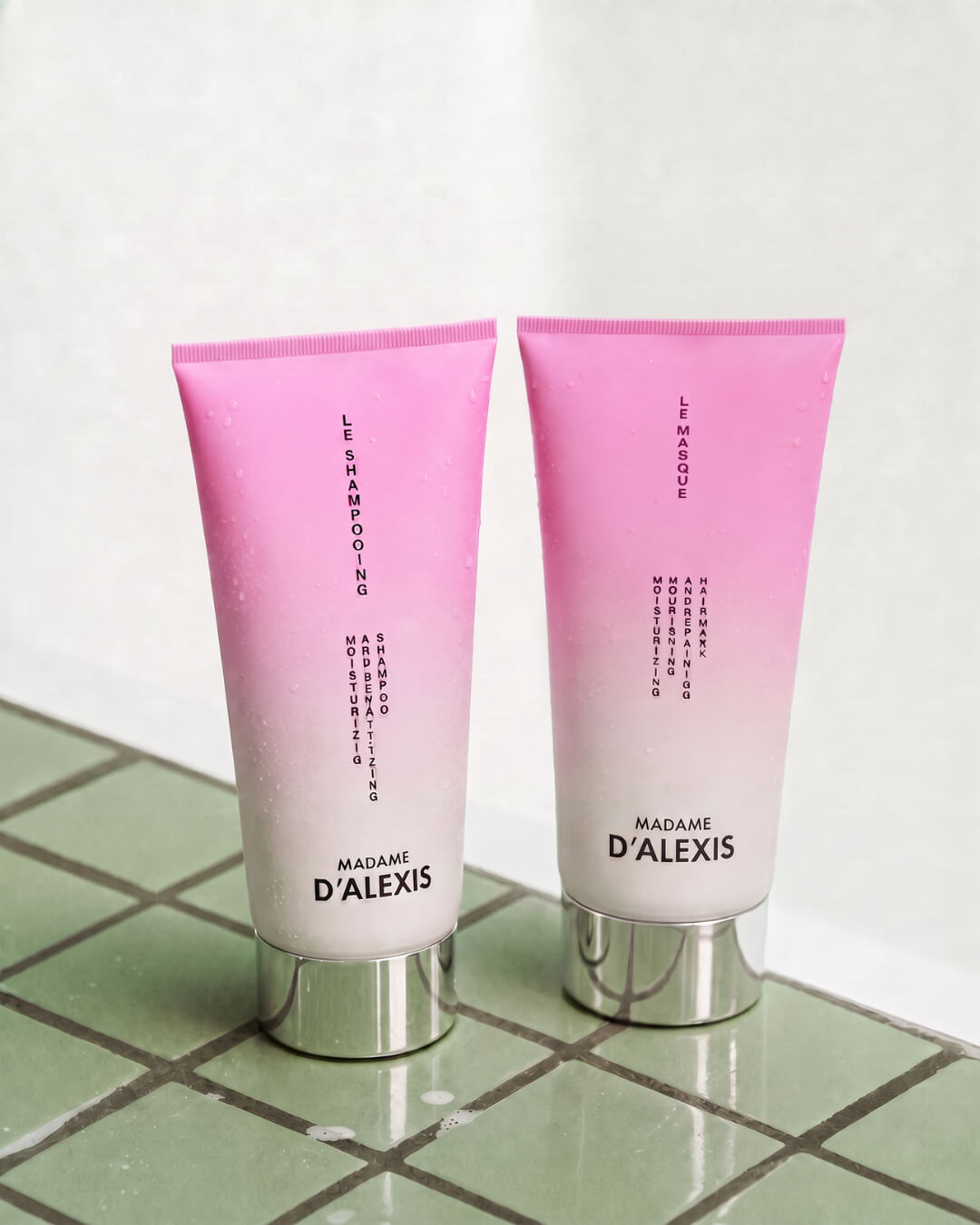
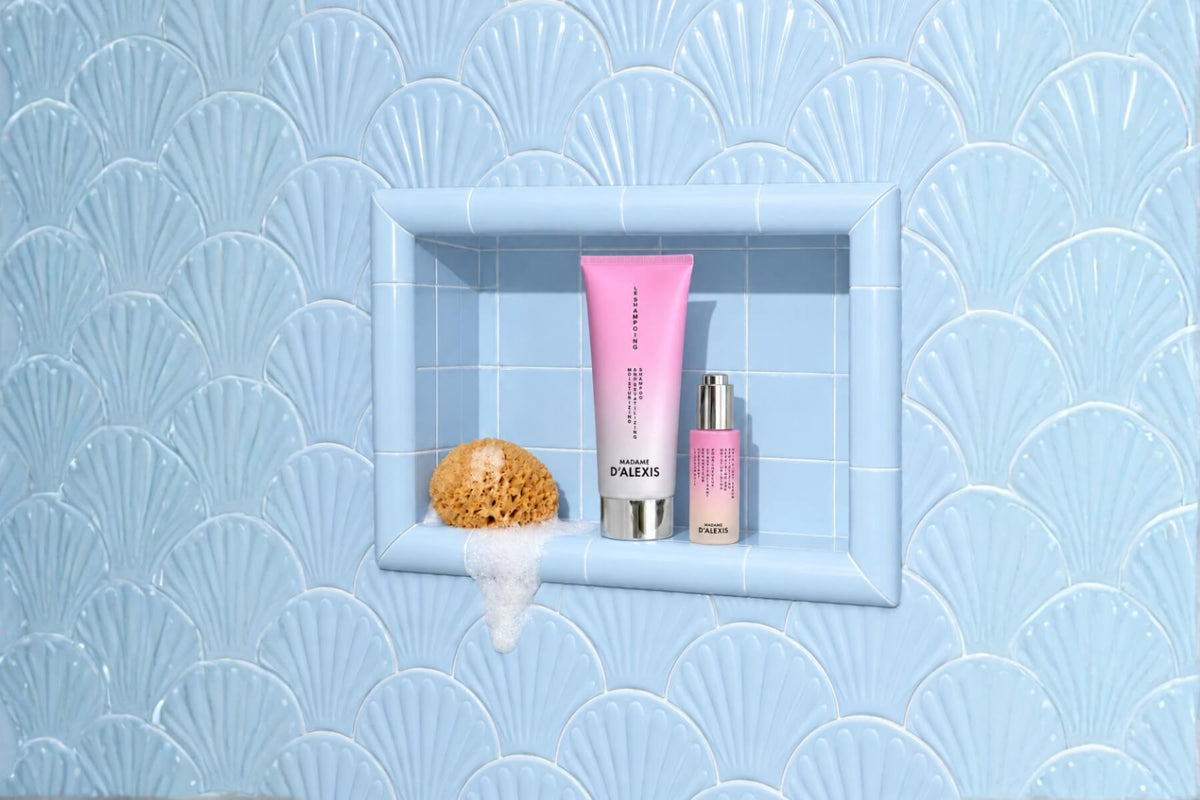
Mid-length hair requires few products, but the right ones. At Madame d'Alexis, every product is formulated without added water, using organic hydrosols as a base: Damask rose for hydration, soothing, and shine; German chamomile to soothe, brighten, and reduce dryness and breakage; and orange blossom to tone and energize the roots. These formulas are sulfate-free, silicone-free, and paraben-free; they’re made in France, in Brittany, and designed to treat hair just as you would treat your skin.
The Shampoo
Formulated with 98% naturally derived ingredients, it hydrates, soothes, and brightens thanks to cationic hyaluronic acid, prebiotics, and plant-based keratin. Wash the scalp twice with the shampoo on thoroughly wet hair, massage it in, and then rinse thoroughly to prepare the hair for treatment. It can be used daily.
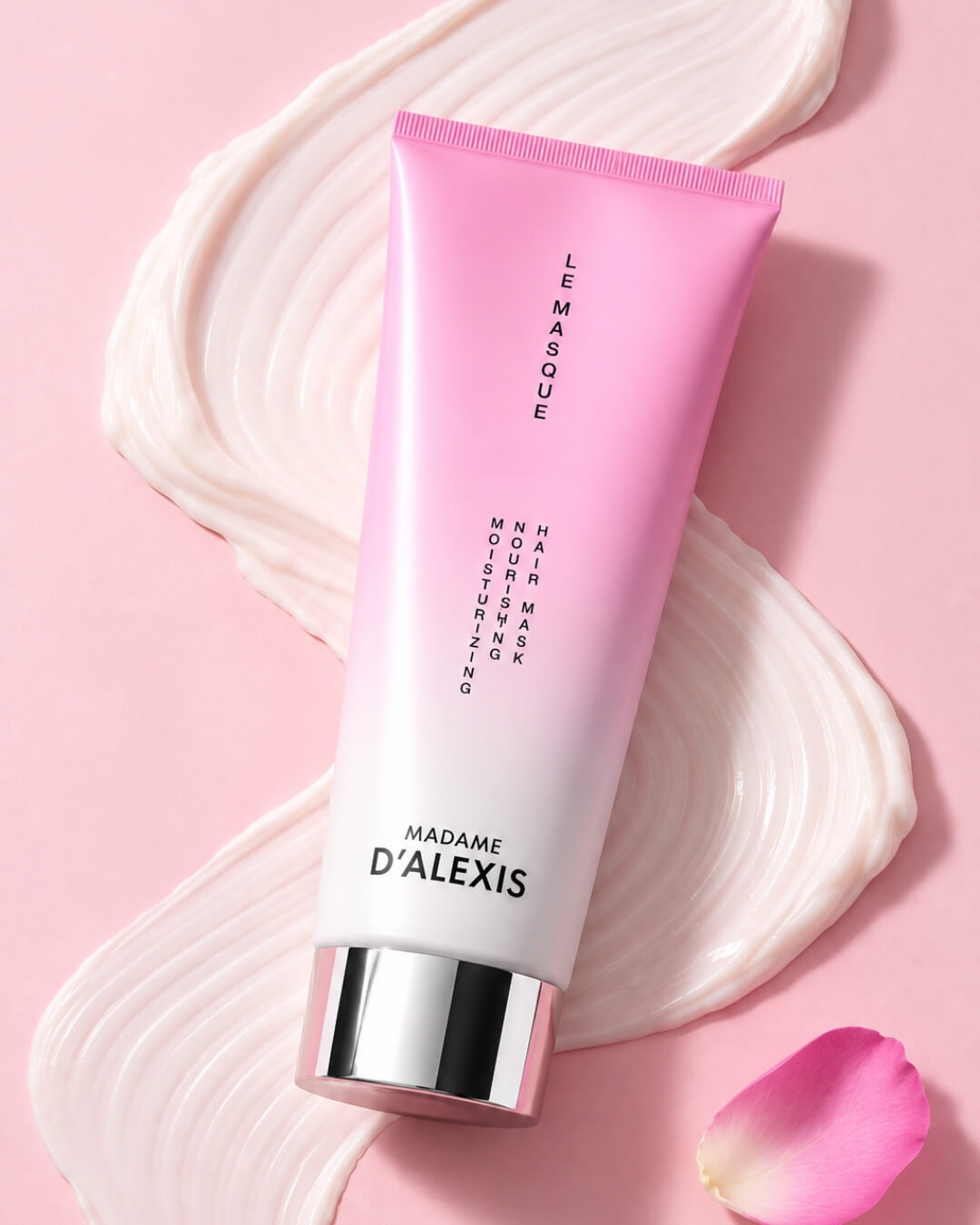
The Mask
Formulated with 97% naturally derived ingredients, it repairs, nourishes, and softens thanks to plant-based ceramides, cationic hyaluronic acid, orange blossom wax, and organic apricot and jojoba oils. Use for two to five minutes to detangle, five to ten minutes as a standard treatment on towel-dried hair, twenty to thirty minutes as a deep treatment, and once a week as an overnight treatment for sensitized hair. Always rinse thoroughly. To create a complete routine, browse our products for dry hair.
The Day Serum
A dry oil formulated with 99% naturally derived ingredients, made with organic jojoba, plant-based ceramides, natural heat protectants effective up to 200 °C, and antioxidants. Apply one to three drops to the mid-lengths and ends of dry or slightly damp hair—it won’t weigh your hair down. This step seals the cuticle and makes the ends shine.
The Night Serum
Formulated with 98% naturally derived ingredients, it combines probiotics and postbiotics, fermented extracts, natural active ingredients from oak, nettle, and licorice, and cationic hyaluronic acid. Apply one pipetteful in the evening, section by section, to the scalp, massaging it in without rinsing. Use three to five times a week as a treatment, then once or twice a week for maintenance, to support hair regrowth, growth, and density.
The Pink Wide-Tooth Detangling Comb
A wide-toothed cellulose acetate comb for detangling without breaking the hair, starting from the ends and working toward the roots. For mid-length hair, it replaces a fine-toothed brush and reduces tension on fragile ends.

The Shampoo

The Mask

The Day Serum

The Night Serum

The Pink Wide-Tooth Detangling Comb
How should you care for your medium-length haircut?
We'll ask you a few questions about your scalp and hair, and then we'll create a personalized routine for you using our five organic hydrosol treatments, formulated without added water.
Does this sound like you?
- You reply
- Discover your ritual
- You are adjusting your selection
Frequently Asked Questions About the Medium-Length Haircut
What medium-length haircut should you choose if you have a round face?
Opt for a length that falls below the jawline, layers that start low, and a slightly off-center part. Vertical lines elongate the face. Open curtain bangs work better than full bangs, which close off the forehead and make the cheeks look wider.
Does a layered cut damage medium-length hair?
No, as long as it's done right. Layering creates ends of varying lengths, which means more surface area is exposed, but it doesn't damage the hair shaft itself. On fine hair, overly dramatic layering mainly gives the impression of thinness. The cut should remain moderate.
Is a medium-length haircut suitable for fine hair?
Yes, as long as you avoid layered cuts. A clean line, a very slight tapering on the last few centimeters, and a long bob or lob provide structure. Volume is achieved through styling and hair care rather than with scissors.
Should you trim your split ends when you want to grow your hair out?
Yes, getting your ends trimmed regularly actually helps you grow your hair longer without breakage. Removing one or two centimeters of damaged hair prevents the split end from traveling up the strand and weakening it. You cut less, but you cut straight across.
In conclusion, a medium-length haircut that suits you
A medium-length haircut is neither a one-size-fits-all length nor a compromise. It’s a style you choose by considering your face shape, your hair type, and how you want to style it every day. A line right at the collarbone, a subtle layered cut, and curtain bangs that frame your face: these decisions are made in front of the mirror, with your hairstylist—not in a gallery of images.
Next, it’s all about the techniques. Wash gently without stripping the hair, nourish from mid-lengths to ends, protect before heat styling, and detangle gently. Products that require no added water, made with organic hydrosols and designed like a skincare routine, help your cut last longer and keep it looking radiant until your next appointment. And if you’re still unsure which direction to take, start with a hair analysis: understanding your hair better is the first step toward choosing the right cut.