Conseils
Stimulate hair growth naturally: the 30/60/90-day scalp protocol

Stimulate hair growth naturally: the essentials to remember
- Hair growth depends 80% on the condition of the scalp: a clogged, inflamed, or unbalanced scalp mechanically slows growth.
- The scalp microbiome plays a direct role in the hair cycle: an imbalance can trigger unexplained hair loss.
- The 3-step solution: exfoliate (free the follicles), rebalance (microbiome + sebum), activate (microcirculation + targeted active ingredients).
- The Repairing & Densifying Night Serum is the cornerstone of the protocol: probiotics, anti-hair loss active ingredients, fermented extracts, applied in the evening 3 to 5 times/week.
- Visible results: less hair loss in 3-4 weeks, baby hairs in 6-8 weeks, improved density in 3 months.
The best natural products to stimulate hair growth
Understanding the hair cycle to better target it
Before acting on growth, you must understand how hair works. Each hair fiber follows a precise life cycle, called the hair cycle, composed of three distinct phases.
- The anagen phase is the active growth phase. It lasts on average 3 years in men and up to 5 years in women. It is during this phase that the hair bulb is fully active and keratin is formed. Under normal conditions, about 85% of the hair is in the anagen phase.
- The catagen phase is a short transition period that lasts 2 to 3 weeks. Growth stops, and the root gradually detaches from the dermal papilla. Only 1% of hairs are in this phase at any given time.
- The telogen phase is the resting phase, which lasts about 3 months. The hair falls out to make way for a new cycle. A stressful event or a deficiency can precipitate a sudden transition into the telogen phase, leading to massive hair loss 3 months later.
Average growth rate
Hair grows on average 1 to 1.5 cm per month, or about 0.3 to 0.4 mm per day. This speed is genetically determined, but it can be optimized or slowed down depending on the condition of the scalp and diet.
Why the anagen phase shortens
Several factors shorten the growth phase and precipitate the cycle toward shedding:
- Chronic stress: it increases cortisol, disrupts the hair cycle and can trigger telogen effluvium.
- Nutritional deficiencies (iron, zinc, biotin): they deprive the follicles of the nutrients essential for keratin synthesis.
- Scalp inflammation: it weakens the roots and shortens the anagen phase.
- Poor blood circulation: the hair follicles are less well irrigated, therefore less well nourished.
- Unbalanced microbiome: a dirty scalp or one disrupted by aggressive products creates an environment unfavorable to growth.
The role of the microbiome in the hair cycle
This is the least known angle, and yet one of the most important. Recent studies suggest that certain bacteria in the scalp microbiome directly influence the life cycle of hair follicles: they can modulate the growth and resting phases, thus impacting hair density and vitality.
A microbial imbalance can manifest as unexplained hair loss.
The scalp: the real key to hair growth
We often treat the lengths, the ends, the shine. But growth itself happens at the scalp level. That is where it all begins.
The scalp microbiome: an ecosystem to preserve
The scalp houses a complex ecosystem of bacteria, fungi, and yeasts that coexist in balance. Among the main players: the bacteria Cutibacterium Acnes and Staphylococcus Epidermidis, as well as the yeasts Malassezia.
When this balance is preserved, the scalp is healthy, the skin barrier is intact, and the hair grows in good conditions. When it gets out of whack, the first signs are itching, irritation, dandruff — and in the long term, increased hair loss.
A balanced microbiome helps to:
- Maintain the scalp pH at an optimal level (around 5.5)
- Regulate sebum production
- Protect the hair follicles against pathogens
- Support the vitality of the roots and the shine of the lengths
Why aggressive shampoos destroy the microbiome
Shampoos containing sulfates (SLS, SLES) certainly clean effectively, but they indiscriminately eliminate both good and bad bacteria. Result: the microbiome becomes depleted, the pH gets out of whack, the scalp overcompensates by producing more sebum, and inflammation sets in.
A chronically irritated scalp = less active follicles = slowed growth.
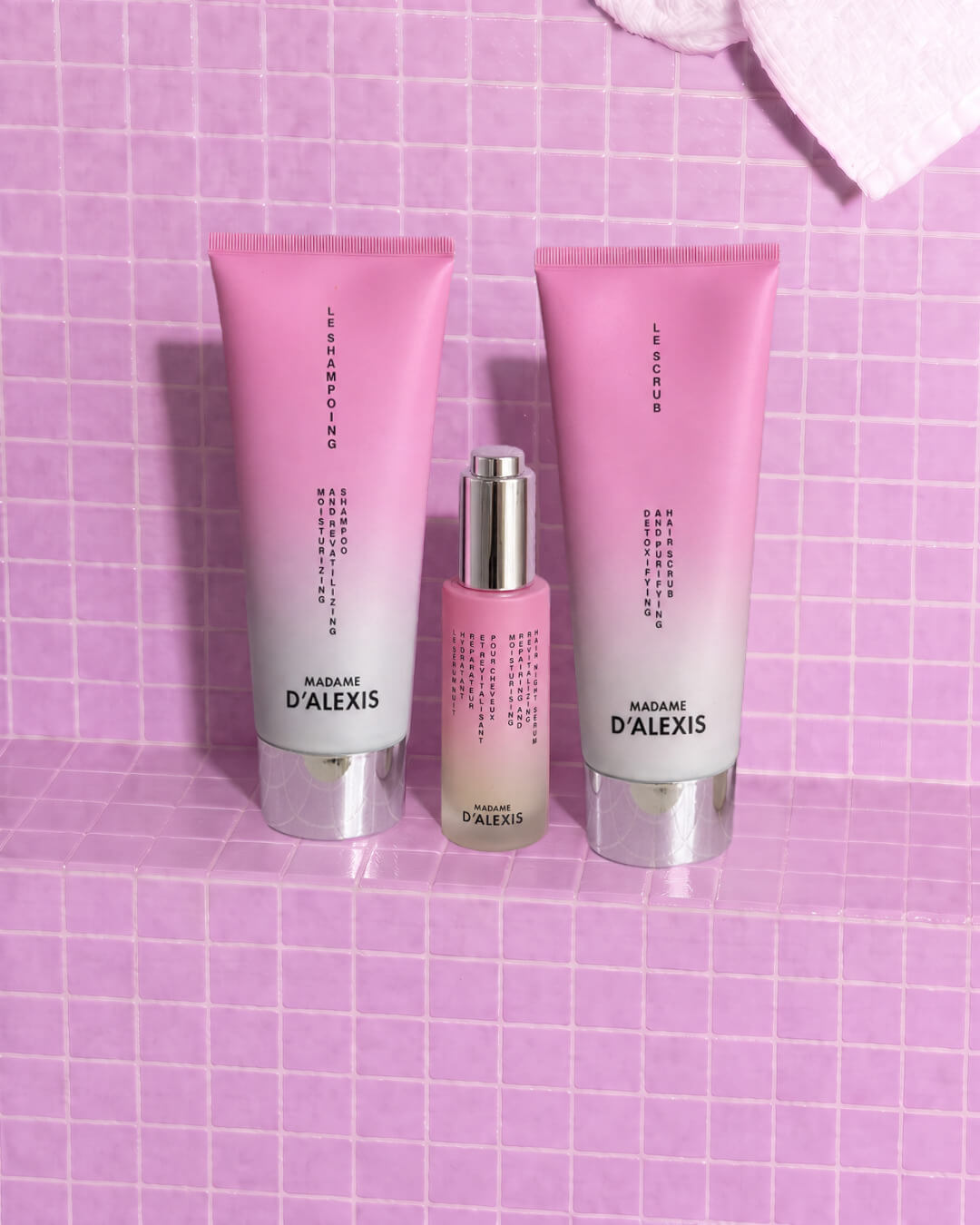
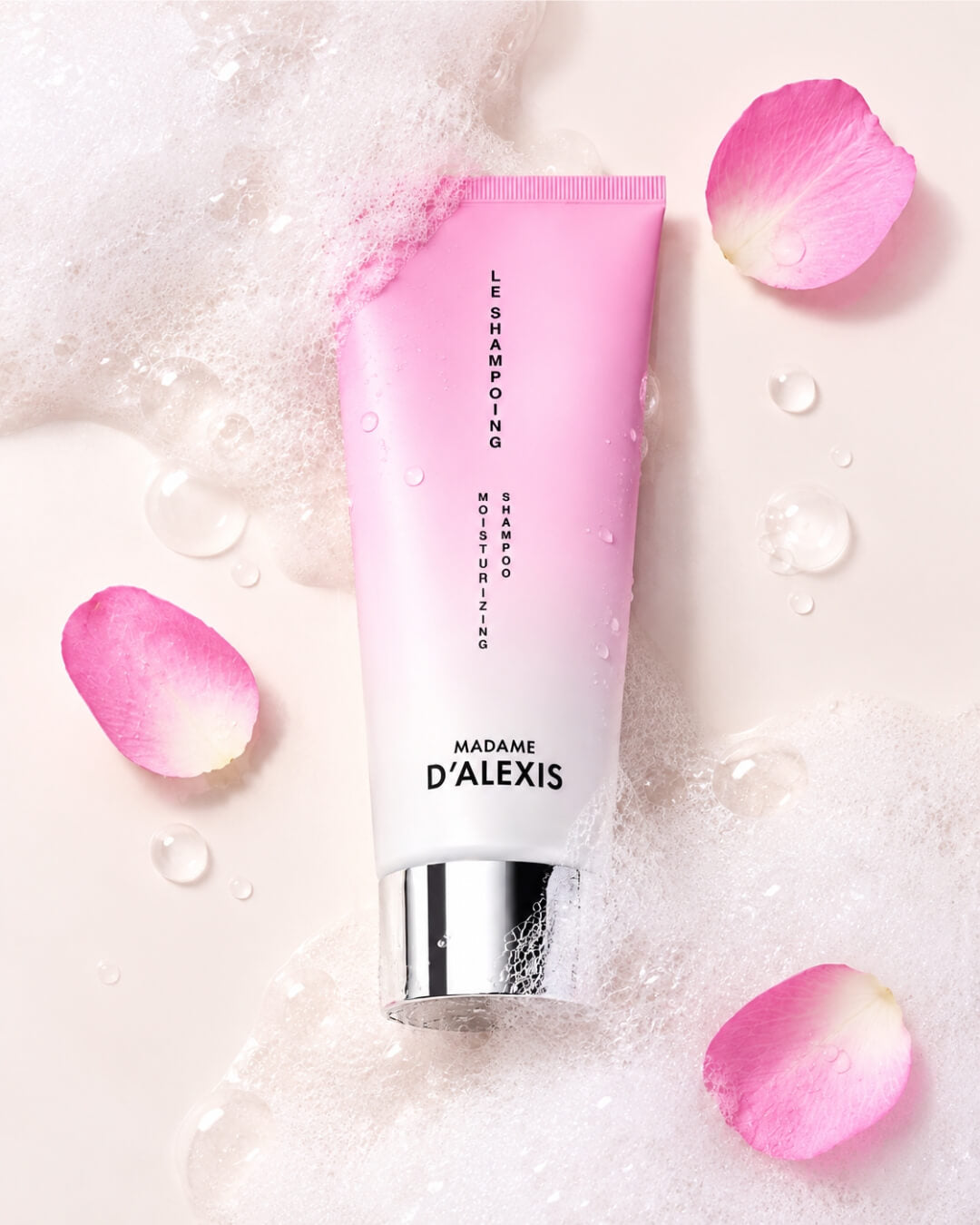
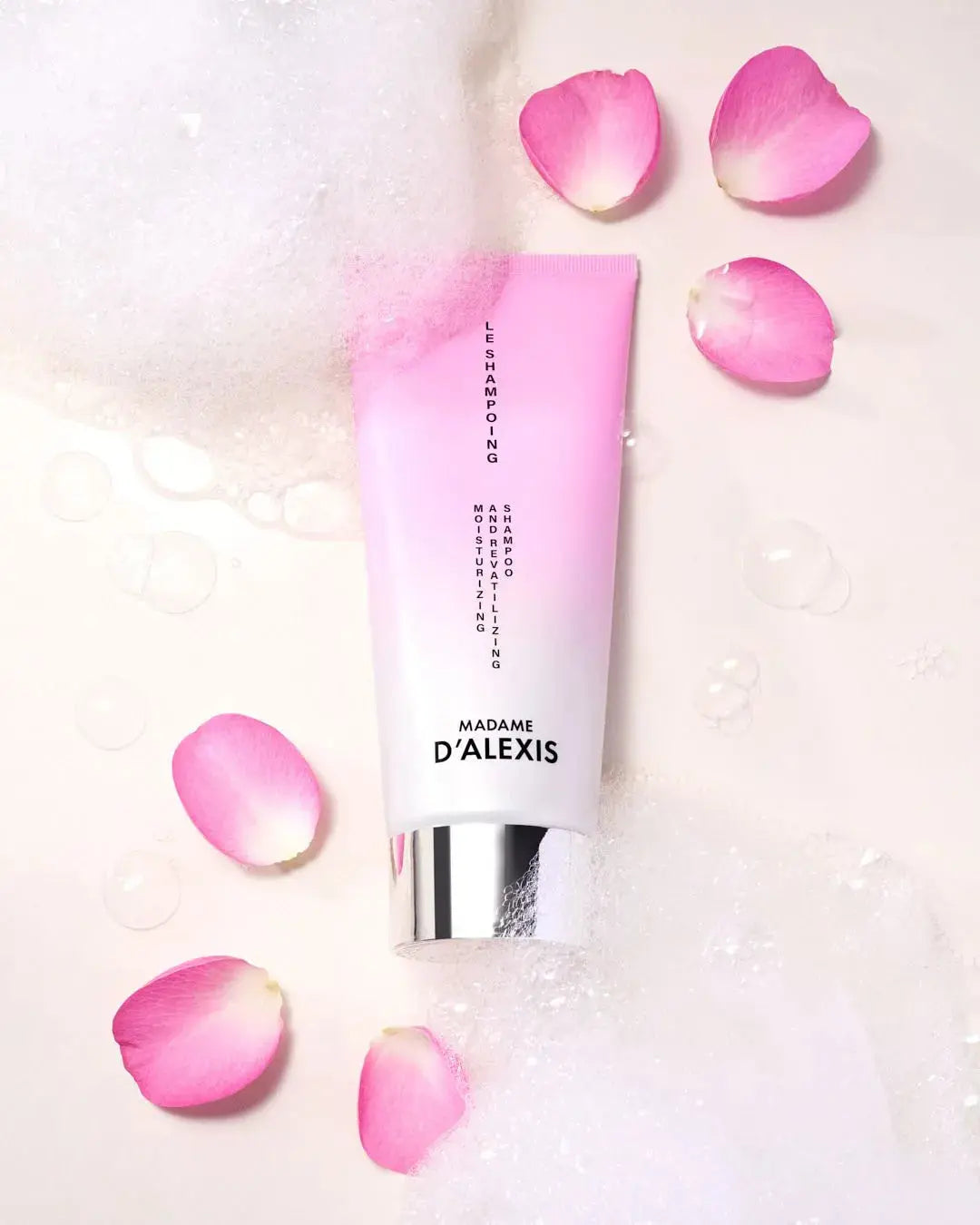
This is why Madame d'Alexis's Hydrating & Revitalizing Floral Shampoo was formulated without sulfates, with prebiotics to feed the good bacteria of the microbiome and plant-based keratin to strengthen the fiber from the wash.
Sebum: neither too much, nor too little
Sebum plays a natural lubricant role for the scalp and hair follicles. In excess, it clogs the follicles and slows growth. In shortage, the scalp dries out, irritates, and loses its ability to protect the roots.
The goal: a stable sebaceous balance, which we obtain by using gentle, suitable products, and by respecting the natural washing frequency of the scalp.
The role of Madame d'Alexis organic hydrolats
All Madame d'Alexis treatments are formulated without added water: water is replaced by active organic hydrolats, which bring direct benefits to the scalp.
- Organic matricaria: anti-inflammatory action, reduces sensitivities and scalp irritation.
- Organic orange blossom: toning, stimulates scalp regeneration and brings energy to the roots.
- Organic Damask rose: soothing, restores scalp suppleness, rich in protective antioxidants.
This "skincare applied to hair" approach places the scalp at the center of hair care, exactly as you would take care of the skin of the face.
What oils to stimulate hair growth?
Plant and essential oils are precious allies to stimulate hair growth. They act on several mechanisms: activation of microcirculation, nutrition of the follicles, regulation of sebum, strengthening of the fiber.
Here is a comparison of the 5 most effective oils for growth:
|
Oil |
Key active |
Growth benefit |
Mode of use |
|---|---|---|---|
|
Castor oil |
Ricinoleic acid |
Stimulates blood circulation, thickens the hair fiber |
Pre-shampoo mask 1x/week |
|
Mustard oil |
Natural sulfur, omega-3 |
Stimulates hair follicles, strengthens roots |
Mixed with a light plant oil |
|
Organic coconut oil |
Lauric acid |
Feeds the fiber deeply, reduces breakage |
Mask or daily length care |
Organic jojoba oil |
Close to natural sebum |
Regulates sebum, feeds the follicles |
Daily length serum |
|
Peppermint EO |
Menthol |
Activates scalp microcirculation |
Diluted in a plant oil, massage |
- Castor oil remains the reference for stimulating growth: its ricinoleic acid activates blood circulation at the root level and gradually thickens the hair fiber. To use as a pre-shampoo mask, once a week.
- Organic jojoba oil is ideal for daily use: its composition close to natural sebum regulates sebum production without weighing down. It feeds the hair follicles and promotes a healthy environment for growth. It is found in the Hydrating & Nourishing Day Serum and the Floral Mask by Madame d'Alexis.
- Organic coconut oil penetrates the hair fiber better than most other oils thanks to its lauric acid. It reduces breakage, which allows to keep the gained lengths. It is incorporated into the Floral Scrub for its nourishing and protective properties.
To go further on the choice of oils according to your hair type, consult our complete guide: what oil for hair.
5 essential treatments to stimulate hair growth
Here is the complete treatment protocol, step by step, to create the best possible conditions for hair growth.
Step 1 — Scalp scrub: free the hair follicles
The scrub is the foundational step. A scalp dirty with styling product residues, dead cells, and excess sebum mechanically obstructs the hair follicles and slows growth.
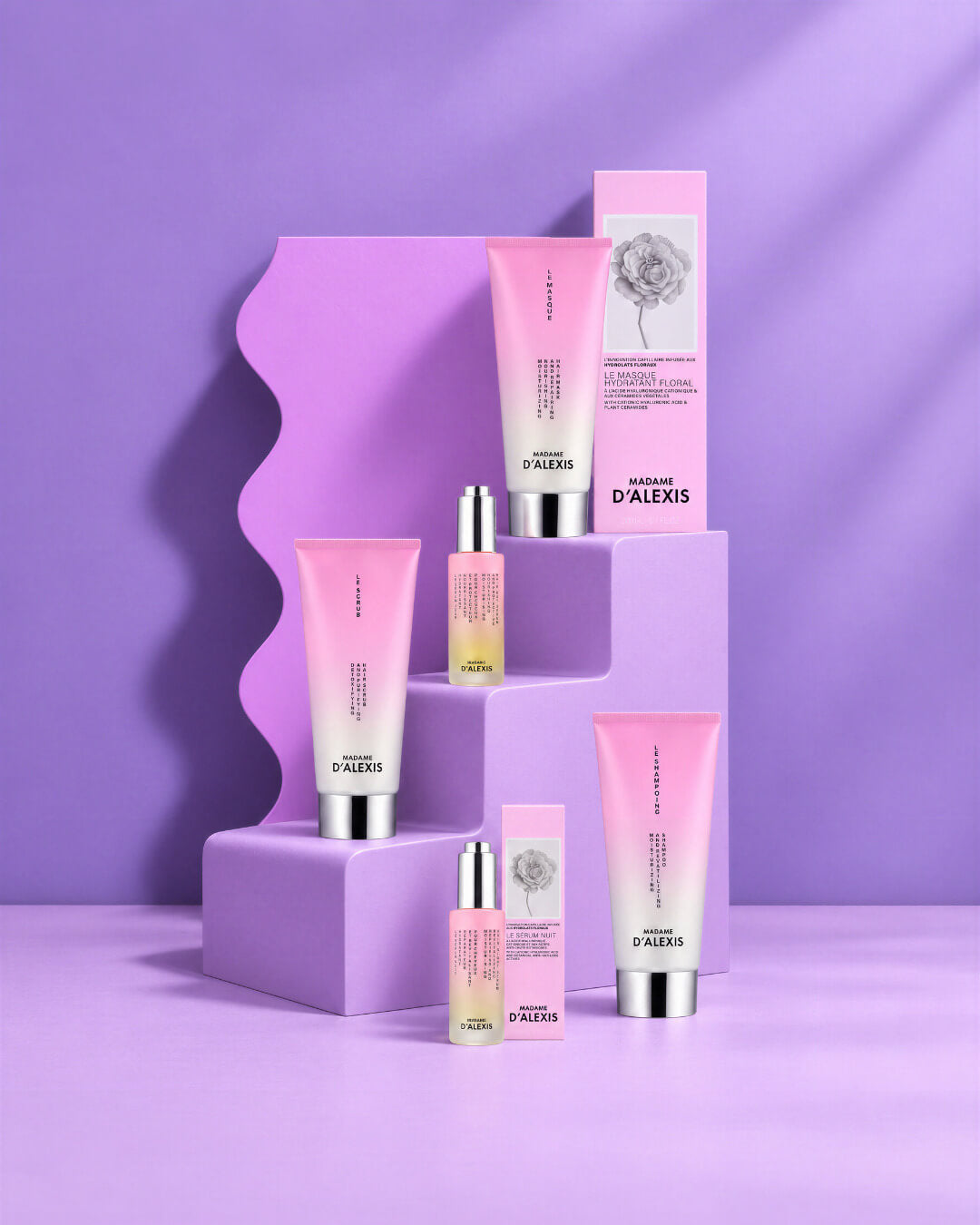
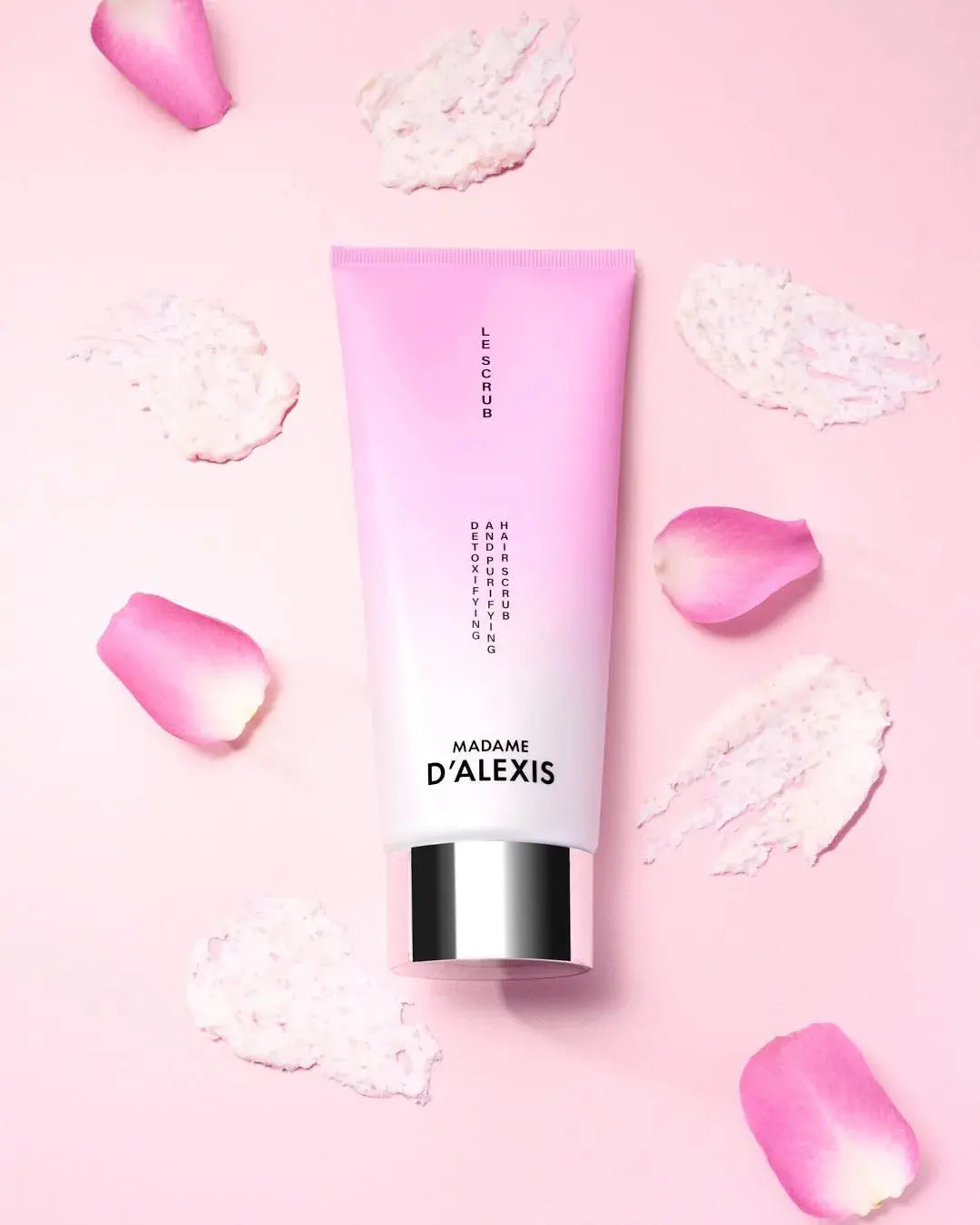
The Madame d'Alexis Floral Scrub is formulated for a complete scalp reset:
- Sea salt: gentle mechanical exfoliation, removes residues and dead cells without aggression
- Organic hydrolats (rose, chamomile, orange blossom): soothe, tone, rebalance the microbiome
- Cationic HA: strengthens the root, hydrates deeply
- Organic coconut oil: feeds the scalp during the treatment
- Essential orange blossom wax: protects and soothes
Formulated without added water, with 98% ingredients of natural origin, without sulfates or silicones. It replaces shampoo (2 applications) and ideally prepares the scalp to receive the Night Serum.
Recommended frequency: every 10 to 15 days.
To know everything about the benefits of hair exfoliation, read our dedicated article: scalp scrub.
Step 2 — Gentle shampoo: preserve the microbiome
After the scrub, or between two scrubs, the shampoo must clean without destroying. The Hydrating & Revitalizing Floral Shampoo is formulated with:
- Prebiotics: feed the good bacteria of the microbiome
- Plant-based keratin: strengthens the hair fiber from the wash
- Cationic HA: hydrates and strengthens the root
- Organic hydrolats: soothe and rebalance the scalp
Double shampoo recommended: the first shampoo cleans, the second activates the actives on the scalp.
To understand why the choice of shampoo is crucial, consult our article: sulfate-free shampoo.
Step 3 — Fiber nutrition: the Floral Mask
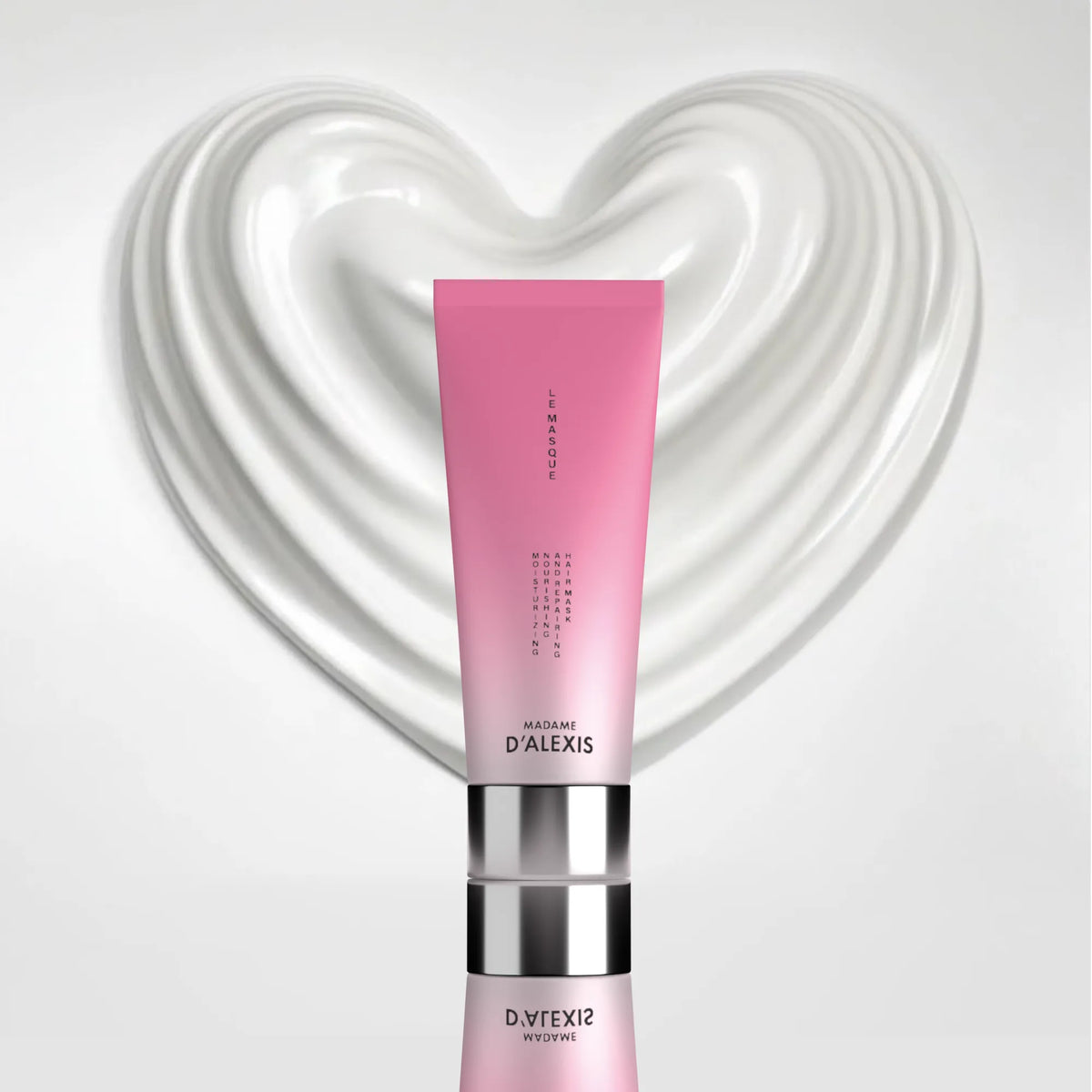
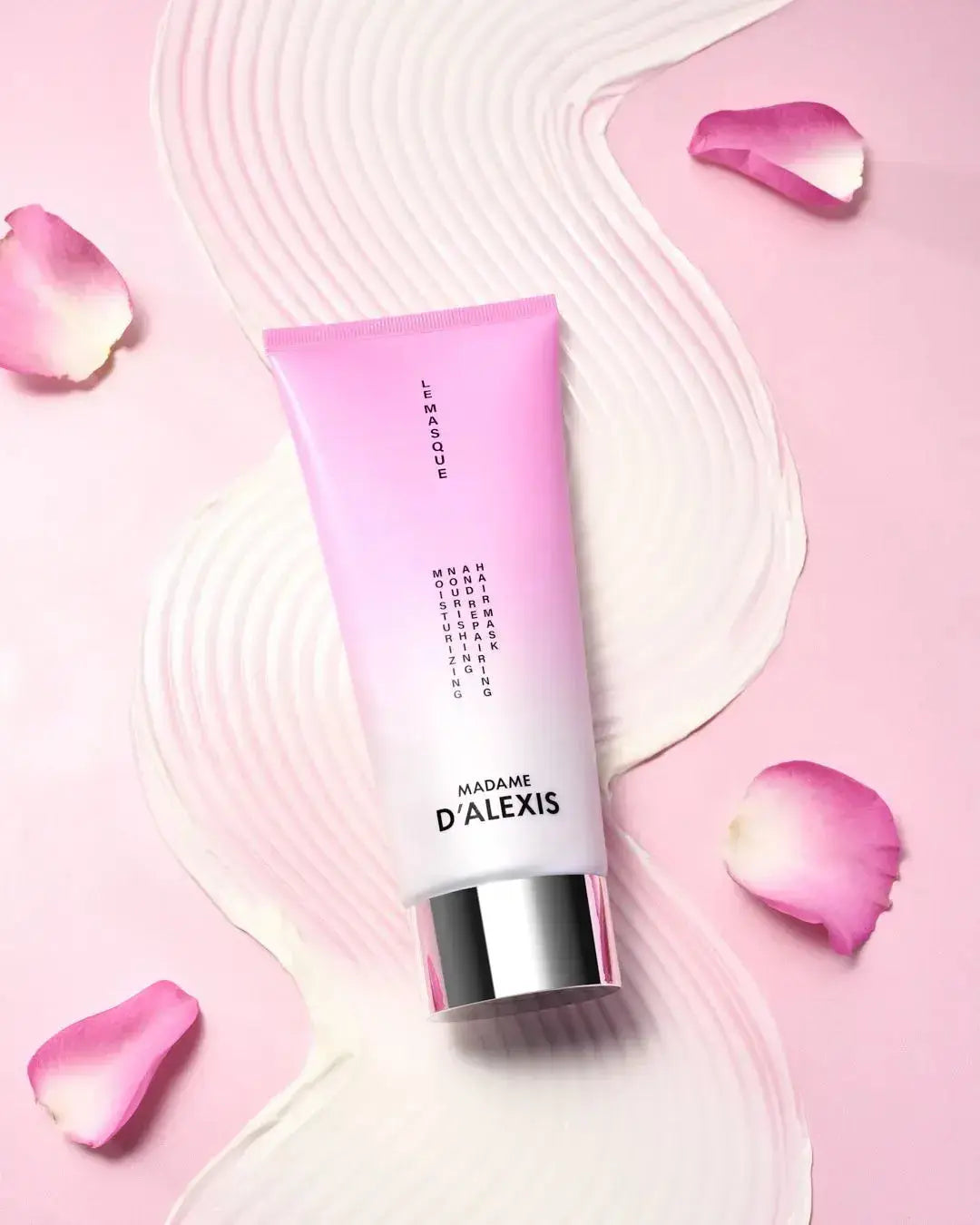
The hair fiber needs to be fed deeply to resist breakage and keep the gained lengths. The Hydrating & Nourishing Floral Mask brings:
- Plant ceramides: restore the structure of the fiber, close the scales
- Cationic HA: deep and lasting hydration
- Organic apricot and jojoba oils: intense nutrition, shine, suppleness
- Essential orange blossom wax: protection and lightness
Frequency: 1 to 2 times per week. Leave on for 5 minutes for an express treatment, or up to 30 minutes for intense nourishment.
To learn more about natural hair masks: natural hair mask.
Step 4 — Repairing & Thickening Night Serum: the cornerstone treatment
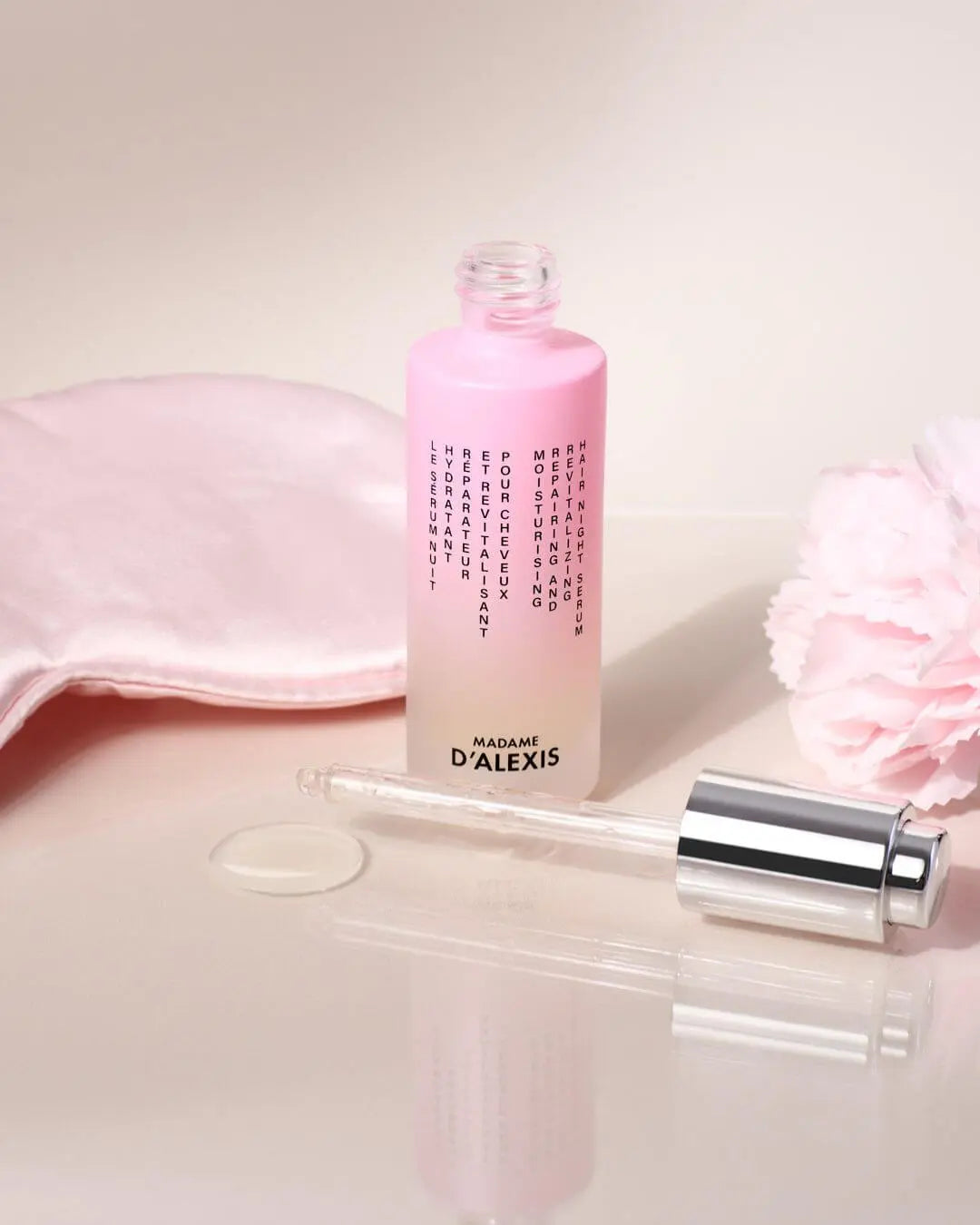
This is the star product of the protocol. The Madame d'Alexis Repairing & Thickening Night Serum is a concentrated nighttime treatment, formulated to work deeply overnight when the scalp is in regeneration mode.
Its key active ingredients:
- Probiotics & postbiotics: rebalance the scalp microbiome, reduce chronic inflammation, and create an optimal environment for hair growth.
- Fermented extracts: improve the cellular vitality of hair follicles and strengthen nighttime repair mechanisms.
- Natural anti-hair loss actives (oak, nettle, licorice): strengthen hair follicles, stimulate active growth, and improve hair density over time.
- Organic hydrosols: continuously hydrate, soothe, and rebalance the scalp.
- Cationic HA: strengthens the root and hydrates deeply, promoting the anchoring of the hair in its follicle.
Directions for use:
- Apply 1 dropper in the evening directly to the clean scalp, section by section
- Massage gently to activate microcirculation and promote the penetration of the active ingredients
- Do not rinse — leave on overnight
- As a treatment: 3 to 5 times per week for 3 months
- For maintenance: 1 to 2 times per week to maintain results
Ideal application: after the Floral Scrub, on a clean and slightly damp scalp.
Step 5 — Scalp massage: activate microcirculation
Massage is the essential complementary step. It amplifies the effectiveness of all applied treatments and directly activates blood microcirculation at the level of the hair follicles.
Massage protocol:
- Duration: 5 to 10 minutes, at least 3 times per week
- Technique: fingertips (never nails), gentle circular motions
- Pressure points: temples, nape of the neck, top of the head
- With or without oil: a few drops of diluted castor or jojoba oil
- Ideal: after applying the Night Serum to maximize the penetration of anti-hair loss actives
One study showed that a 4-minute daily massage for 24 weeks leads to a significant increase in hair thickness. Consistency is key: massaging once in a while has no measurable impact.
Which protocol should you choose according to your growth goal?
Before starting a growth treatment, you must identify the main obstacle: a clogged scalp, seasonal hair loss, breakage of the lengths, lack of density, or sebum imbalance. The right protocol depends on your priority goal.
| Goal | Priority | Recommended routine | Frequency | Key product |
|---|---|---|---|---|
| Slow growth | Activate microcirculation | Scalp massage + Night Serum | 3 to 5 evenings per week | Night Serum |
| Seasonal hair loss | Strengthen roots | Night Serum + diet rich in iron, zinc, and protein | 3-month treatment | Night Serum |
| Clogged scalp | Free the follicles | Floral Scrub + Gentle Shampoo | Every 10 to 15 days | Floral Scrub |
| Brittle hair | Preserve lengths | Floral Mask + Day Serum on the ends | 1 to 2 times per week | Floral Mask |
| Oily roots | Rebalance sebum | Floral Shampoo + occasional Floral Scrub | 2 to 3 washes/week | Floral Shampoo |
| Sensitive scalp | Soothe before stimulating | Gentle shampoo + Night Serum with a light massage | 2 to 3 evenings per week | Night Serum |
| Density goal | Revitalize the scalp | Night Serum + regular massage + complete routine | 8 to 12 weeks | Night Serum |
Key takeaways: to gain visible length, it is not enough to stimulate the roots. You must also prevent breakage along the lengths. A complete growth routine combines scalp care, massage, fiber nourishment, and protection of the ends.
30/60/90-Day Protocol to Stimulate Growth
Here is the complete protocol, week by week, to achieve visible and lasting results.
|
Phase |
Goal |
Key actions |
Expected results |
|---|---|---|---|
|
Month 1 — Reset |
Rebalance the scalp |
Floral Scrub Day 1 + Day 15, Floral Shampoo, Night Serum 3x/week |
Less irritated scalp, less hair loss, improved comfort |
|
Month 2 — Activation |
Stimulate circulation and follicles |
5-minute daily massage, Night Serum 5x/week, Mask 2x/week |
Visible baby hairs, accelerated growth, improved density |
|
Month 3 — Consolidation |
Strengthen and maintain |
Complete routine + optimized diet |
+1 to 1.5 cm/month, reinforced density, restored shine |
Month 1 — Scalp Reset (Weeks 1 to 4)
Week 1
- Day 1: Floral Scrub (replaces shampoo, 2 applications). Apply the Night Serum in the evening.
- Days 2-3: Floral Shampoo + Floral Mask (5 min). Night Serum in the evening.
- Days 4-7: Night Serum 3 evenings out of 4. Massage the scalp for 5 minutes, 3 times a week.
Week 2
- Continue the Floral Shampoo 2 times a week.
- Night Serum 3x/week, always in the evening on a clean scalp.
- Massage the scalp 3x/week, 5 min.
Week 3
- Floral Scrub (Day 15 since the first scrub).
- Floral Mask 1x a week, 10-15 min.
- Night Serum 3x/week.
Week 4
- Assessment: the scalp is less irritated, itching has decreased, hair loss is less significant.
- Continue the routine: Floral Shampoo + Night Serum 3x/week + Mask 1x/week.
Month 2 — Growth Activation (Weeks 5 to 8)
This is the acceleration phase. The scalp is rebalanced, the follicles are freed. We intensify the treatments.
Weeks 5-6
- Floral Scrub at the beginning of week 5.
- Night Serum 5x/week (switching to intensive treatment mode).
- Daily scalp massage, 5 min, ideally after the Night Serum.
- Floral Mask 2x/week, 15-20 min.
Weeks 7-8
- Continue the pace: Night Serum 5x/week, daily massage.
- Floral Scrub in week 7.
- Observe the first baby hairs at the temples and nape: a sign that the follicles are reactivating.
Month 3 — Consolidation and Maintenance (Weeks 9 to 12)
The results are visible. The goal is to consolidate the gains and establish the routine for the long term.
Weeks 9-12
- Complete routine maintained: Floral Scrub every 10-15 days, Floral Shampoo, Mask 2x/week, Night Serum 5x/week.
- Incorporate dietary adjustments (see dedicated section).
- Daily scalp massage or 5x/week.
- At the end of month 3: +1 to 1.5 cm of length gained, reinforced density, restored shine, stabilized hair loss.
After 3 months: switch to maintenance mode. Night Serum 1 to 2x/week, Floral Scrub every 15 days, Mask 1x/week.
7 natural tips to make hair grow faster
In addition to the treatment protocol, these daily habits make a real difference in growth speed and length retention.
1. Daily scalp massage
5 minutes a day, fingertips, circular motions. This is the simplest and most effective tip to activate blood microcirculation and oxygenate the hair follicles. Do it in the evening after the Night Serum.
2. Diet rich in protein, zinc, iron, and biotin
Keratin is a protein: without a sufficient supply of amino acids, the hair fiber weakens. Incorporate eggs, fish, legumes, nuts, and seeds into your daily diet.
3. Final rinse with cold water
Cold water tightens the scales of the hair fiber, adds shine, and stimulates blood circulation at the scalp level. A simple 30-second rinse with cool water at the end of your shower is enough.
4. Silk pillowcase
Nighttime friction on a cotton pillowcase creates micro-damage to the hair fiber and promotes breakage. A silk or satin pillowcase considerably reduces this friction and preserves the gained lengths.
5. Limit excessive heat
High-temperature hair dryers, flat irons, and curling irons weaken the keratin and make the fiber porous and brittle. Dry on low heat or air dry. If you use heated tools, the Hydrating & Nourishing Day Serum contains heat-protective actives that protect the fiber.
6. Cut the ends regularly
Split ends do not slow down growth, but they travel up the hair fiber and cause breakage. The result: your lengths stagnate despite normal growth. A light trim every 2 to 3 months is enough to maintain a healthy hair fiber.
7. Manage stress
Chronic stress is one of the most powerful factors in hair loss. It pushes hair into the telogen phase and shortens the anagen phase. Yoga, meditation, deep breathing, sufficient sleep: these practices have a direct and measurable impact on hair health.
How to massage the scalp to stimulate growth?
Scalp massage is one of the few hair care practices whose effectiveness is supported by scientific data. One study showed that a 4-minute daily massage for 24 weeks leads to a measurable increase in hair thickness.
Another study conducted on 327 people suffering from androgenetic alopecia revealed that 69% of participants saw an improvement after a regular massage routine.
Detailed massage protocol
Duration and frequency:
- At least 5 minutes per session
- 3 to 5 times a week for measurable results
- Daily during the activation phase (month 2 of the protocol)
Technique:
- Place your 10 fingers on the scalp, using only your fingertips (not your nails)
- Apply light to medium pressure — never painful
- Perform gentle circular movements, slightly moving the skin of the skull
- Start at the nape of the neck, move up toward the top of the head, then to the temples
- Finish with gentle strokes from the nape of the neck toward the forehead
Pressure points to work:
- Temples: an area that is often tense and rich in blood vessels
- Nape of the neck: the entry point of circulation to the scalp
- Top of the head: the central area, to be worked on last
With or without oil:
- Without oil: dry massage for pure microcirculation stimulation
- With oil: a few drops of castor oil or jojoba oil diluted in a light oil, to nourish the follicles at the same time
- Ideal: after applying the Night Repairing & Densifying Serum to maximize the penetration of anti-hair loss active ingredients
Benefits of regular massage:
- Stimulates blood circulation and oxygenates the hair follicles
- Promotes the penetration of active ingredients from applied treatments
- Reduces scalp tension related to stress
- Helps regulate sebum production
- Gradually improves the thickness of the hair fiber
What foods help promote hair growth?
Hair growth is also determined by what you eat. Nutritional deficiencies shorten the anagen phase and precipitate hair loss. A balanced and targeted diet is the essential foundation of any effective regrowth protocol.
The key nutrients for hair growth
Proteins — the foundation of keratin
Keratin, the main protein in hair, is synthesized from sulfur-containing amino acids (cysteine, methionine). Without sufficient protein intake, the fiber weakens and growth slows down.
Sources: eggs, fish, lean meat, legumes (lentils, chickpeas), nuts.
Iron — the oxygen of the follicles
Iron is a component of hemoglobin, which transports oxygen to the hair follicles. Iron deficiency is one of the main causes of hair loss, especially in women. It pushes more follicles into the resting phase.
Sources: lentils, spinach, red meat, black pudding, seafood.
Zinc — sebum and growth regulator
Zinc is involved in the synthesis of the proteins that make up hair, especially keratin. It also regulates sebum production. A deficiency manifests as thinning hair and loss of vitality.
Sources: pumpkin seeds, cashews, oysters, sesame seeds, wheat germ.
Biotin (vitamin B7) — essential to the growth cycle
Biotin is fundamental for keratin production. It strengthens the fiber, improves elasticity, and prevents breakage. A deficiency, although rare, causes significant weakening and can lead to hair loss.
Sources: eggs, almonds, mushrooms, salmon, sweet potato.
Omega-3 — scalp nutrition
Omega-3 fatty acids nourish the scalp from within, reduce inflammation, and contribute to the shine of the fiber.
Sources: salmon, sardines, walnuts, flaxseeds, chia seeds.
B vitamins (B5, B6, B12) — support of the hair cycle
B vitamins are necessary for the renewal of hair follicle cells and the construction of keratin. Vitamin B12 promotes the oxygenation of the follicles. Vitamin B6 is involved in the production of amino acids present in keratin.
Sources: whole grains, avocado, eggs, poultry, leafy green vegetables.
Summary table of diet and hair growth
|
Nutrient |
Key foods |
Role in growth |
|---|---|---|
|
Proteins |
Eggs, fish, legumes |
Keratin base, fiber structure |
|
Iron |
Lentils, spinach, red meat |
Oxygenates the hair follicles |
|
Zinc |
Pumpkin seeds, cashews |
Keratin synthesis, sebum regulation |
|
Biotin (B7) |
Eggs, almonds, salmon |
Keratin production, breakage prevention |
|
Omega-3 |
Salmon, walnuts, flaxseeds |
Scalp nutrition, anti-inflammatory |
|
B vitamins |
Whole grains, avocado, eggs |
Cell renewal, anagen phase |
Supplements: when to use them?
Supplements (iron, zinc, biotin) are useful in case of a proven deficiency, confirmed by a blood test. They do not replace a balanced diet, but can speed up the correction of a deficiency. The optimal duration of a course is 3 months.
How to cut hair to promote growth?
It is one of the most widespread hair myths: cutting hair makes it grow faster. The reality is more nuanced.
Myth vs reality
Cutting hair does not make it grow faster. Growth is determined at the hair follicle level, in the scalp. Cutting the ends has no effect on this dynamic.
However, cutting regularly prevents breakage which gives the impression that hair is stagnating. Split ends travel up the fiber and create breaks. The result: even if hair grows normally, it seems not to advance.
Recommended frequency
- Fine or fragile hair: every 6 to 8 weeks
- Thick or resistant hair: every 2 to 3 months
- Curly or coily hair: every 3 to 4 months (the curl retraction hides part of the length gained)
Technique to preserve length
- Use only professional scissors — kitchen or office scissors crush the fiber and create new split ends
- Cut on dry hair to visualize split ends
- Cut only the damaged ends (5 mm to 1 cm maximum)
- Avoid cuts that are too frequent, which slow down the progression of lengths
The importance of fiber health
Retaining the lengths gained requires a healthy and resistant hair fiber. The Floral Mask and Madame d'Alexis Day Serum strengthen the structure of the fiber, reduce porosity, and prevent breakage — essential conditions for growth to translate into visible length.
For advice on straw-like and brittle hair: straw-like hair.
5 mistakes that slow down hair growth
Even with the best treatments, certain habits silently sabotage hair growth. Here are the 5 most common mistakes.
Mistake 1 — Un-exfoliated scalp
Styling product residues, dead cells, and excess sebum accumulate around the hair follicles and clog them. Without regular exfoliation, the active ingredients of treatments do not penetrate properly and growth is mechanically slowed. Solution: Floral Scrub every 10-15 days.
Mistake 2 — Aggressive shampoos (sulfates)
Sulfates destroy the scalp microbiome, disrupt the pH, and trigger chronic inflammation. A chronically irritated scalp = less active follicles. Solution: switch to a sulfate-free shampoo formulated with prebiotics.
Mistake 3 — Water too hot
Hot water dilates the blood vessels of the scalp, then contracts them abruptly during rinsing. It weakens the roots, dries out the scalp, and disrupts the microbiome. Wash at lukewarm temperature and finish with a cold water rinse.
Mistake 4 — Unrinsed styling product residues
Gels, mousses, hairsprays, and sprays accumulate on the scalp and clog the hair follicles. Regular exfoliation is essential to remove these residues and maintain a healthy scalp.
Mistake 5 — Uncompensated deficiencies
Iron, zinc, and biotin deficiencies shorten the anagen phase and precipitate hair loss. They are often silent. A simple blood test allows them to be detected. If you observe significant hair loss for no apparent reason, consult a doctor before multiplying treatments.
To go further on the causes of blocked growth: hair that no longer grows.
FAQ — Stimulate hair growth naturally
How many cm does hair grow per month on average?
Hair grows on average 1 to 1.5 cm per month, or about 12 to 18 cm per year. This speed varies according to genetics, diet, scalp condition, and seasons. It tends to decrease with age.
Can we really speed up growth naturally?
Yes, by optimizing the conditions of the scalp. We cannot exceed genetic potential, but we can remove the obstacles that slow down growth: dirty scalp, unbalanced microbiome, poor circulation, deficiencies. By acting on these factors, we allow the hair to express its full growth potential.
Does scalp exfoliation really make hair grow?
Indirectly, yes. Exfoliation frees clogged hair follicles, activates microcirculation through gentle friction, and optimizes the absorption of the active ingredients of subsequent treatments (especially the Night Serum). It is the indispensable preparatory step for any effective regrowth protocol.
Which oil is most effective for stimulating growth?
The optimal combo: castor oil (stimulates blood circulation and thickens the fiber) + jojoba oil (regulates sebum and nourishes the follicles). Castor oil is used as a pre-shampoo mask, jojoba oil as a daily serum on the lengths.
Is scalp massage really effective for growth?
Yes. One study showed that a 4-minute daily massage for 24 weeks leads to a significant increase in hair thickness. Effectiveness relies on regularity: massaging once in a while has no measurable impact. The ideal is 5 minutes a day, after applying the Night Serum.
How long before seeing results with Madame d'Alexis Night Serum?
- 3 to 4 weeks: less hair loss, more comfortable scalp
- 6 to 8 weeks: visible baby hairs at the temples and nape
- 3 months: improved density, gained length, restored shine
Results vary according to the initial condition of the scalp and the regularity of application.
Is growth different according to hair type?
The growth speed is similar for all hair types. However, curly and coily hair seems to grow slower: the curl retraction "hides" part of the length actually gained. The fiber is also more fragile at the bend points, which promotes breakage and gives an impression of stagnation.
What difference between a regrowth course and a maintenance routine?
- Regrowth course (3 months): Night Serum 3 to 5x/week, Floral Scrub every 10-15 days, Mask 2x/week. Objective: rebalance, activate, densify.
- Maintenance routine: Night Serum 1 to 2x/week, Floral Scrub every 15 days, Mask 1x/week. Objective: maintain the results obtained.
Useful Sources
- Inserm — Biology of the Hair Follicle
- French Society of Dermatology — Alopecia and Hair Loss
- Koyama T. et al. (2016) — Standardized scalp massage results in increased hair thickness
- English RS et al. (2019) — Self-assessments of standardized scalp massages for androgenic alopecia
- Rushton DH (2002) — Nutritional factors and hair loss, Clinical and Experimental Dermatology