Conseils
Scalp health: the new pillar of hair care
The scalp is skin, and scalp health determines the health of your hair. Warning signs, 5 key steps and habits for a simple and sustainable scalp health routine.

Scalp health: the new pillar of hair care
Scalp health - that is, the health of the scalp - is establishing itself as the new pillar of hair care. For a long time, everything focused on the hair fiber: length, shine, ends. But the scalp is not just a support. It is skin, with a skin barrier, a surface pH, a balance, and a microbiome. And like all skin, it needs care.
Taking care of your scalp means applying the same principles to your head as you do to your face: cleansing without stripping, exfoliating, hydrating, nourishing, and protecting. A scalp care approach that does not replace hair fiber care - it makes it possible.
In this guide: why scalp health is essential, how to spot a scalp in decline, how to improve scalp health daily, and the habits that make a scalp health routine sustainable.
In short- The scalp is skin: skin barrier, balance, microbiome.
- The scalp is where hair is formed: its condition affects the quality of the fiber.
- A healthy scalp is built through repeated actions, not through a single product.
- Five steps structure the routine: cleansing, exfoliating, nourishing, protecting, and the evening step.
- Habits matter as much as products: hygiene, diet, massage, and what to avoid.
- Some habits damage the scalp without immediate visible signs.
Why is scalp health important?
We judge hair by what we see: length, shine, apparent density. But everything that sticks out from the skin was first formed beneath it. The scalp is not an inert support: it is where hair is formed, in a very specific skin environment - a surface pH, a hydrolipidic film, a microbiome, blood circulation.
An area apart, more exposed to congestion
Not all skin behaves the same way. The scalp stands out for two traits: its density of sebaceous glands is higher than that of the face, and it remains covered at all times. More sebum produced, a surface established in a confined environment: less air, less light, more friction. This combination explains why the scalp becomes congested faster than the skin of the face. Where the cheek is aired out, the scalp lives under cover; sebum, product residues, and dead cells accumulate there, and the risk of occlusion increases. Hence the importance of gentle but regular cleansing, and of formulas that allow the skin to breathe rather than trapping it.
In video: why your scalp is suffocating
The scalp is essential: the foundation before the fiber
Importance of scalp: the role of scalp health lies in an obvious fact we often forget. The fiber inherits the conditions in which it is formed. A comfortable foundation, with an intact skin barrier and evenly distributed sebum without excess, gives hair good conditions at the root. Skin that itches, pulls, retains residues, or produces excess sebum does not work under the same conditions: this is then reflected in the quality of the fiber at the root, its hold, and the visual appearance of density.
This is summarized by English-language publications with the formula scalp condition impacts hair growth: the condition of the scalp affects what the hair becomes. A literature review published on PMC brings together studies documenting this link between the condition of the scalp skin and the quality of the fiber. The authors remain cautious about the mechanisms involved, but the association is sufficiently documented to justify a care approach focused on the foundation rather than on length alone.
Scalp and hair health: a single subject
Talking about healthy hair growth without talking about the skin that hosts it makes no sense. For brands working on this approach, scalp and hair health form a whole: the scalp first, the fiber next, because the latter depends on the former. The challenge is not just aesthetic. A soothed scalp means a daily life without itching, without pulling, and without that burning skin sensation - a comfort that changes how we wash, how we style, and how we look at our hair.
The scalp is skin, not just a base
The scalp has the same architecture as the rest of the face: a stratum corneum, a hydrolipidic film, a slightly acidic pH, and a balanced flora. Its particularity lies in its density of sebaceous glands and the hair covering that covers it: more sebum, less light, more friction.
This skin works continuously. Its scalp skin barrier limits water loss and filters external aggressions. In the laboratory, it is evaluated via transepidermal water loss, stratum corneum hydration, and surface pH - three indicators that vary depending on the area measured, the time of day, and the last wash (see the scientific review on the scalp stratum corneum, Turner et al., 2012).
Concretely, a well-functioning scalp is a comfortable scalp: no pulling, no itching, evenly distributed sebum without excess. It is also the condition of a fiber that develops in good conditions at the root. To understand each layer of this skin and its role, our complete scalp guide details the anatomy of the area and its real needs.
Signs of a scalp in decline
The scalp does not make noise. It sends discreet signals, often blamed on fatigue or a bad shampoo. Here is what should alert you:
- Pulling or a pulling sensation, as if the skin lacked suppleness.
- Occasional itching, at the end of the day or in the heat.
- Tingling or a burning sensation when applying a product.
- Roots that lack hold and hair that falls flat quickly.
- Hair that gets greasy again in a few hours, or conversely, a sensation of dryness and stiffness.
- A diffuse discomfort that cannot be linked to a specific cause.
Unhealthy scalp: the signals not to ignore
An unhealthy scalp never announces itself spectacularly. Its warning signs are modest: itching, irritation, flaking, a sensation of discomfort that always returns at the same time of day. The right reading is not to wait for it to pass, but to identify what changed: an occlusive product, a poorly rinsed wash, a tight hairstyle, a synthetic textile, very hard water.
None of these signs is a disease in itself. They reflect an imbalance: a weakened barrier, an excess or lack of sebum, an accumulation of residues. In case of lesions, pain, or symptoms that persist despite gentle and regular actions, consulting a dermatologist is mandatory: some situations require a medical diagnosis, not a routine adjustment.
Dry, oily, or sensitive scalp: three different imbalances
Dry scalp (dry scalp) pulls, lightly itches, and gives an impression of stiffness. Sebum is lacking, the skin barrier lets water escape. It is not a "dirty" foundation: it is a foundation to nourish and especially not to strip.
Oily scalp (oily scalp) produces excess sebum (excess sebum). Sebum production is reactive: the more we strip, the more it goes out of control. The right action is to wash regularly with a gentle cleanser, rather than spacing out washes. On this foundation, prolonged excess sebum is sometimes accompanied by a sensation of reduced visual density and hair thinning - another reason not to let the skin become congested.
Sensitive scalp (sensitive scalp) tingles, burns, or reddens without an obvious cause. It reacts to fragrance, aggressive surfactants, and repeated product changes. It requires few actives, introduced one by one, and a lot of patience.
In all cases, discomfort is a signal, not a fatality.
How to improve scalp health?
Improving scalp health (improve scalp health) does not require stacking products. It requires a clear scalp care routine: products chosen for your scalp type, gentle cleansers, a nourishing phase, and an environment that does not contradict the skin. Four levers are enough, and they combine.
Adapting products to your scalp type
There is no universal formula. A scalp care product designed for an oily scalp has no place on a dry foundation, and vice versa. Another common trap: confusing scalp type and hair type. Fine hair and thick hair are not washed with the same frequency, but the choice of cleanser is first based on the skin. A dry scalp tolerates a gentle and spaced wash; an oily scalp prefers a regular wash with a light cleanser; a sensitive scalp requires a short formula, without strong fragrance; a balanced foundation is satisfied with a simple base, maintained over time.
Choosing gentle cleansers
We start with gentle cleansers: formulas without aggressive sulfates, with a pH compatible with the skin, rich in hydrosols rather than water. The basic cleanser does most of the work; everything else is occasional.
A clarifying shampoo (clarifying shampoo) comes in when the foundation is congested: layered styling products, mineral residue, a sensation of hair that "sticks" despite washing. It dissolves what the classic shampoo leaves behind, once or twice a month depending on needs.
An exfoliating shampoo (exfoliating shampoo) goes further: it combines cleansing with a mechanical exfoliation to detach embedded deposits and accumulated dead cells. It replaces a wash, never the entire routine, and spacing it out - every ten to fifteen days is more than enough.
In both cases, the rule remains the same: a gentle cleanser daily, a deeper cleansing from time to time, never the reverse.
Nourishing with an oil or serum
Cleansing is only half the action. After washing, the skin needs what we took from it to be returned. A nourishing oil (nourishing scalp oil) is applied as a mask before shampooing, on dry skin: it works for twenty minutes then is rinsed out. Organic coconut oil, very stable and well tolerated, is a good starting point for a dry foundation; on an oily foundation, it is reserved for the lengths.
For skin that needs actives, a leave-in serum is applied with a dropper, part by part, on the scalp and not on the hair. The Madame d'Alexis Night Serum, applied three to five times a week as a treatment, illustrates this format: prebiotics and postbiotics, fermented extracts, oak, nettle, and licorice extracts. The principle: chosen actives, applied in the right place, without an occlusive film.
Should you oil your scalp?
The question comes back constantly and deserves a clear answer: oil is not a universal action. It is suitable for a dry or sensitized foundation, never for an oily or congested foundation, where it worsens occlusion. Some approaches advise against oiling the scalp in principle; we take the opposite position, but always subject to the foundation condition.
On dry skin, oil is used as a mask before shampooing: applied to dry hair, it works for about twenty minutes, then is rinsed out. On an oily foundation, the same action produces the opposite effect: it adds a film to already excessive sebum. Abundant sebum does not need to be nourished, it needs to be regulated.
The two formats must not be confused. The oil mask is rinsed: nothing remains after shampooing. The leave-in serum, on the other hand, remains on the skin: it is applied with a dropper, part by part, in a small quantity, on the scalp and not on the length.
There remains the choice of oil. Organic coconut oil is stable and well tolerated on a dry foundation; on an oily foundation, it is reserved for the lengths, where it nourishes the fiber without weighing down the root.
The right question is therefore not "should I oil my scalp?" but "what foundation do I have?". A dry foundation gains comfort; an oily foundation loses its balance.
Creating a favorable environment
A healthy scalp environment is first an environment that lets the skin breathe. Maintaining a healthy scalp depends on details: a clean pillowcase and caps, hairstyles that do not pull the skin, drying at a moderate temperature, a long rinse after each wash, tools (combs, brushes) cleaned regularly. Nothing spectacular - but it is what decides whether a mess of residues settles in or not between treatments.
The 5 steps of a scalp health routine
Cleansing without stripping
Washing is the action that matters most, and the one that does the most damage when done poorly. A shampoo that is too detergent dissolves the hydrolipidic film, leaves the skin dry, then triggers a compensatory sebum production.
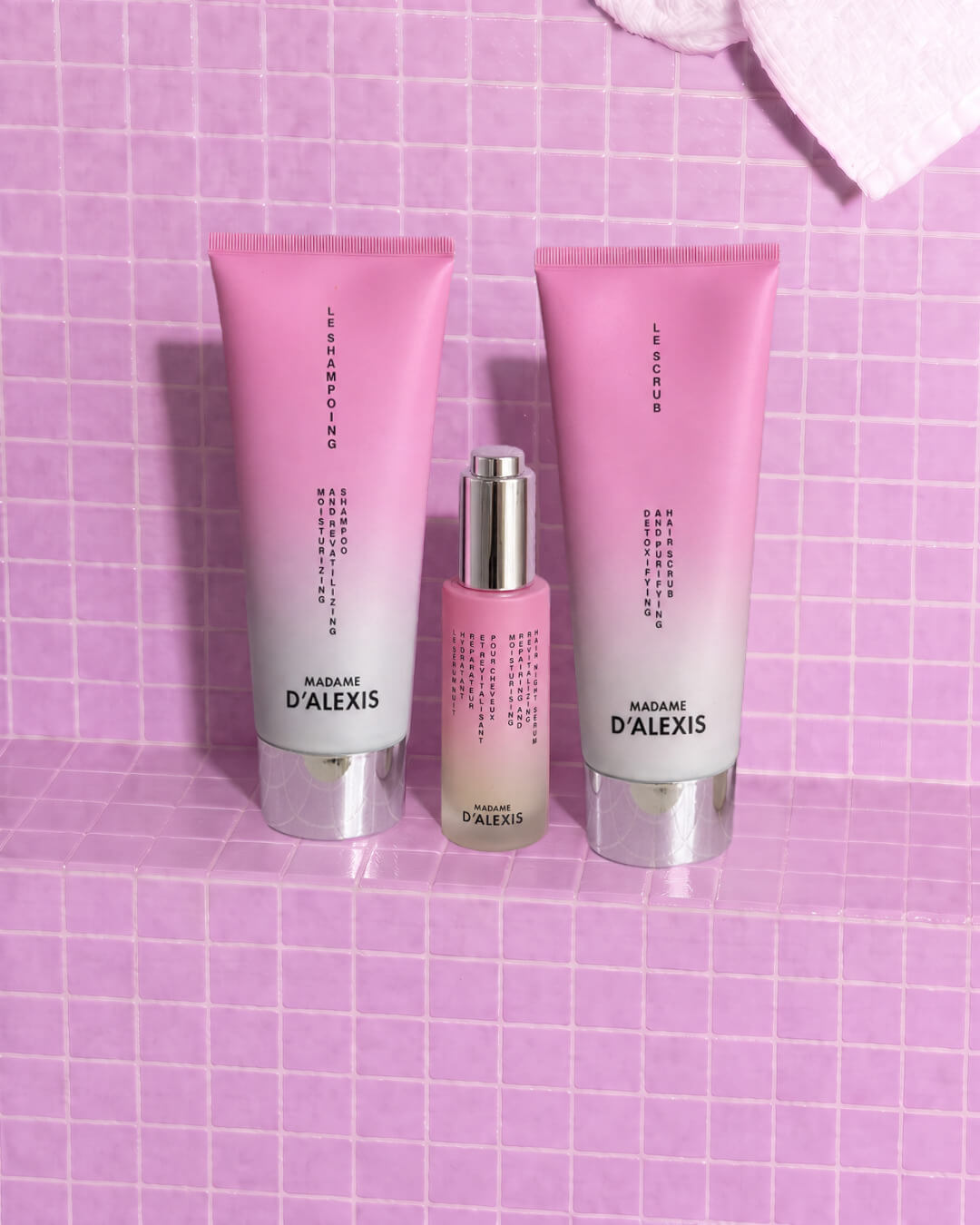
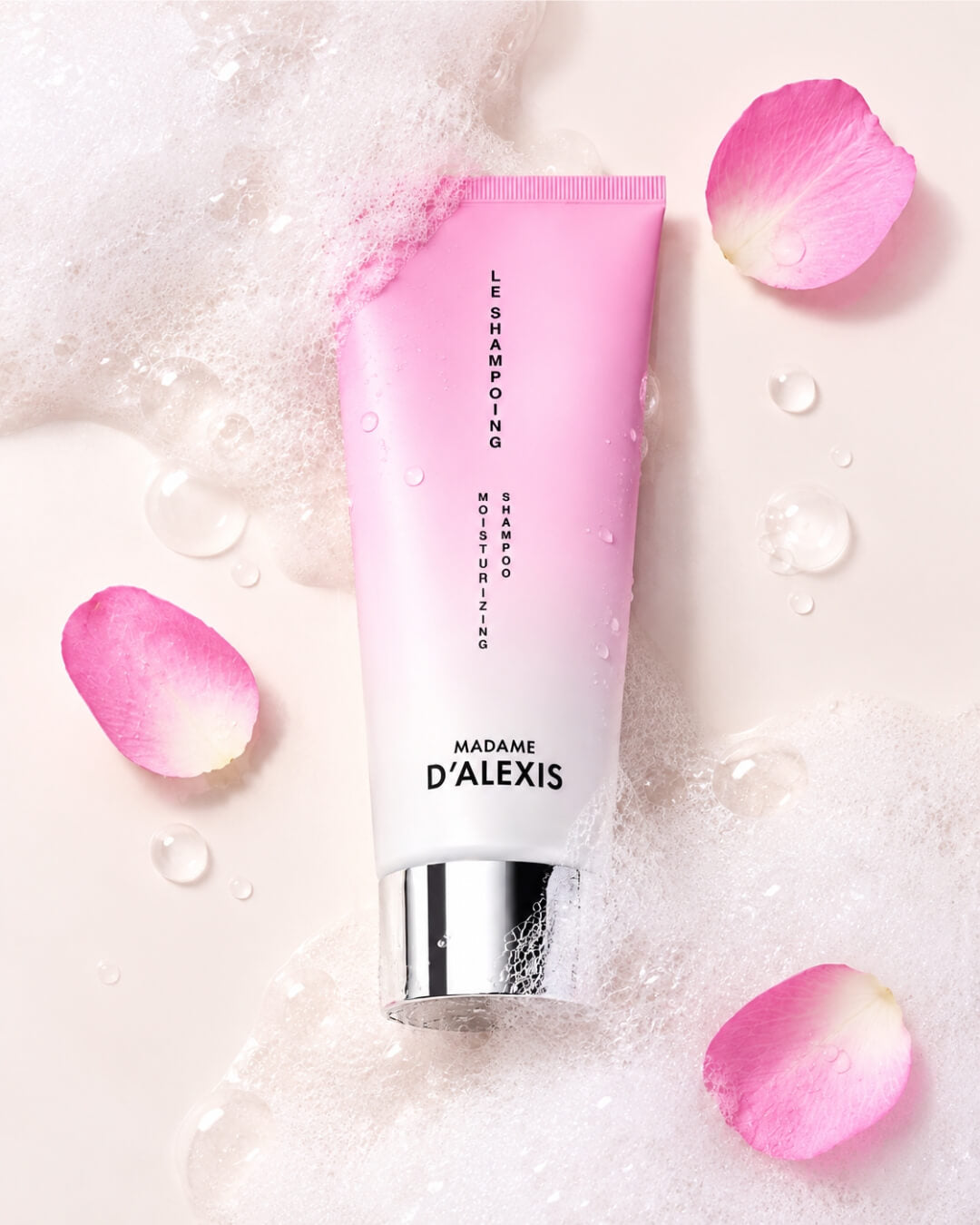
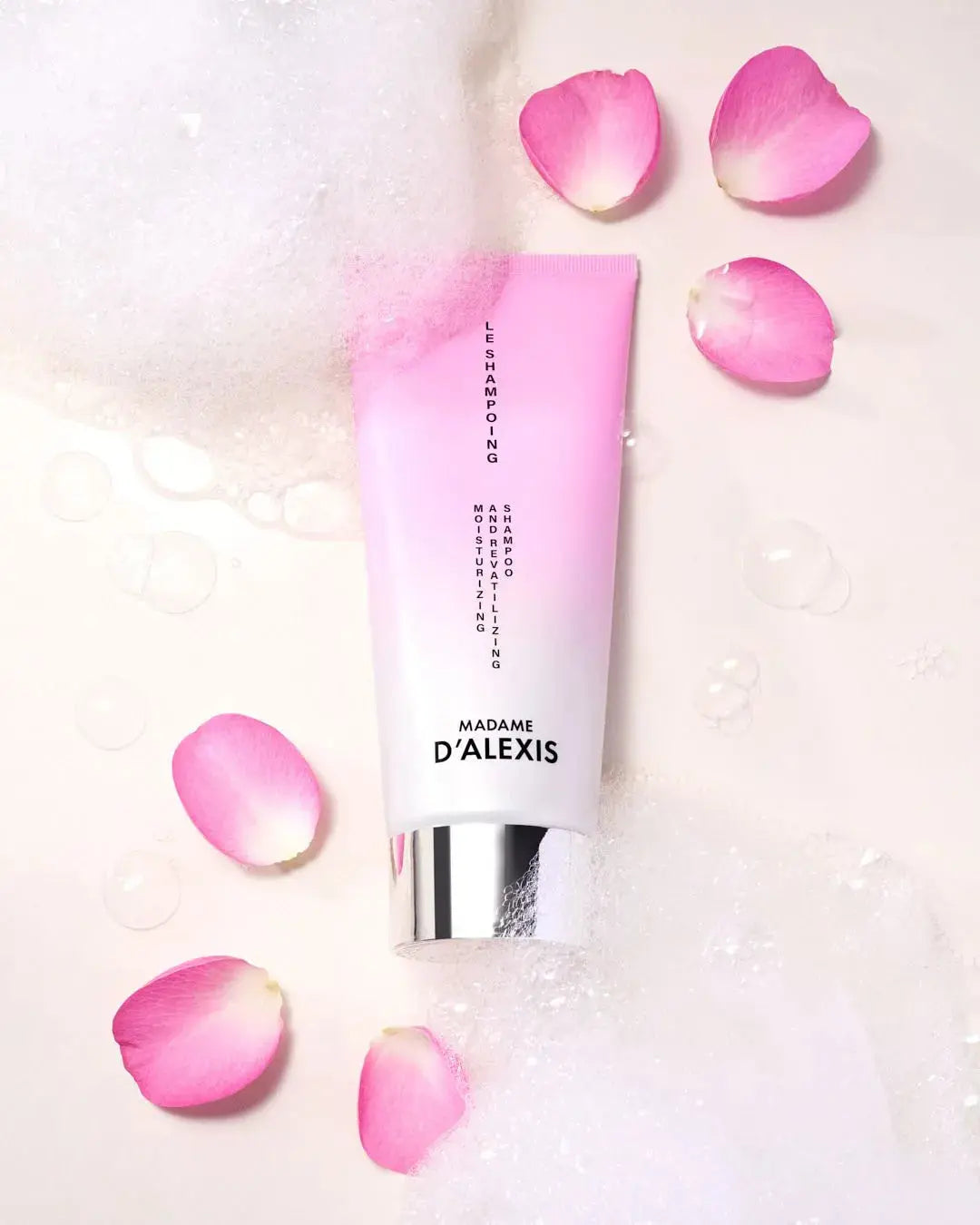
Our shampoo without added water (200 ml, €35) illustrates another path. Its aqueous phase is made of organic hydrosols of Damask rose, chamomile, and orange blossom: water is not added, it is replaced by active hydrosols. The formula shows 98% natural origin, an acidic pH compatible with the cuticle, without sulfates, silicones, parabens, PEG, or mineral oils, and a 100% natural fragrance. It combines cationic hyaluronic acid, prebiotics, and plant keratin (wheat, corn, soy). Made in Brittany. The action: massage with the fingertips on the scalp rather than on the length, then rinse abundantly.
Exfoliating regularly
A shampoo cleanses the surface; it does not detach embedded residues or accumulated dead cells. Hence the benefit of a scalp scrub every 10 to 15 days.
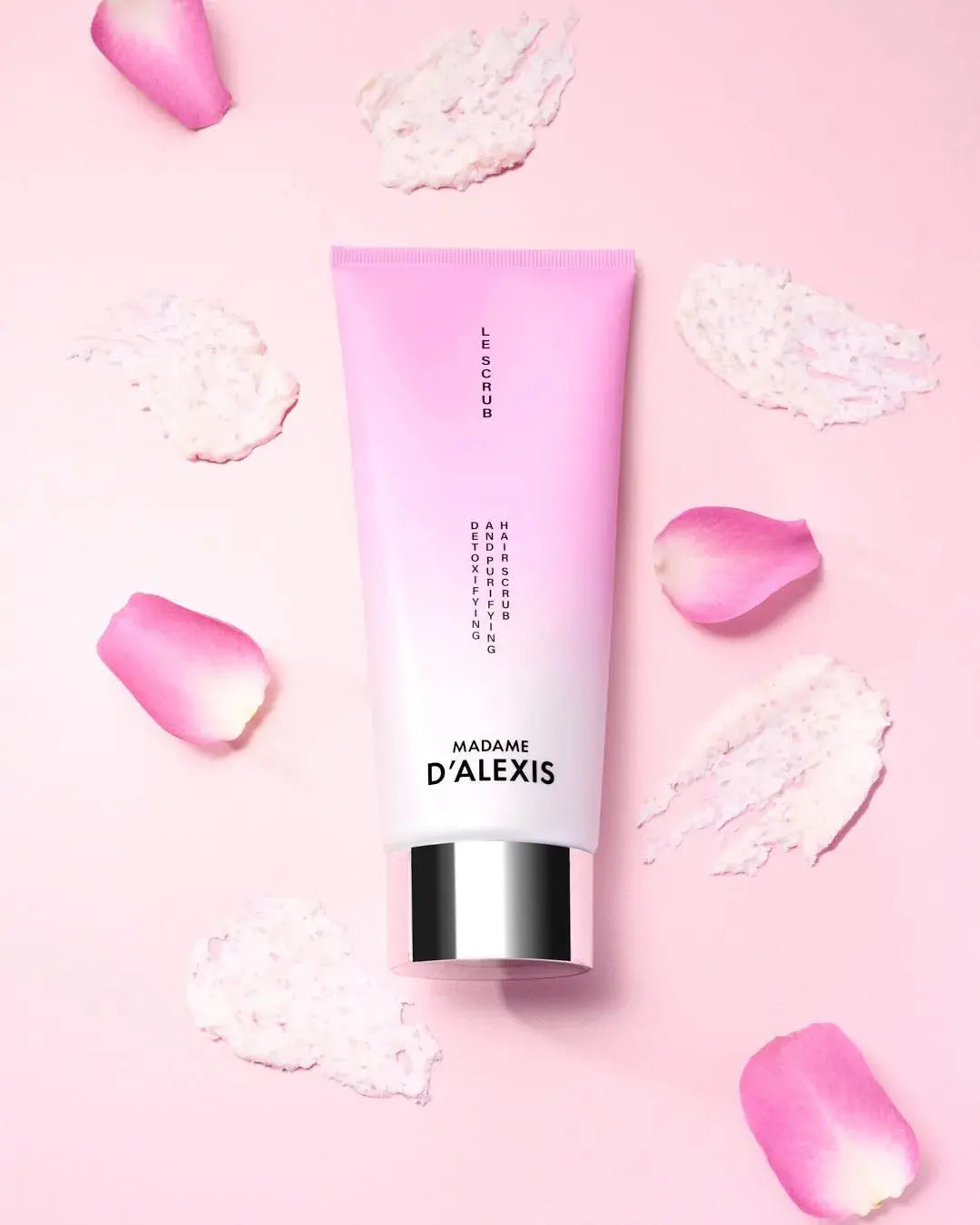
The Madame d'Alexis Scrub (€39, 98% natural origin, without added water) is two-in-one: scrub and exfoliating shampoo. It is used in two applications that replace shampoo. The formula combines sea salt, organic coconut oil, essential orange blossom wax, organic hydrosols (rose, chamomile, orange blossom), and cationic hyaluronic acid. Two passes, a careful rinse, and a scalp that starts over on a clean base.
In video: how to properly exfoliate your scalp
Nourishing and hydrating
Cleansing is good; restoring what we took away is better. After washing, the skin needs water and lipids. This is where a leave-in scalp care comes in, which hydrates and soothes.
Our exfoliation and hydration routine details the complete sequence, from the scrub to the nourishing phase, with the frequencies adapted to each scalp type.
Protecting
The scalp suffers daily invisible aggressions: dryer heat, friction from brushing, tension from tight hairstyles, prolonged contact with synthetic textiles (helmets, caps, pillowcases). Protecting does not mean stacking products: it is limiting these constraints and avoiding occlusive formulas that suffocate the skin instead of letting it breathe.
The evening step
Night is the ideal time for scalp care, because nothing comes to disturb it. Our night scalp care - Night Serum, €35, 98% natural origin, without added water - is applied with a dropper, part by part, directly on the skin. We massage, we do not rinse.
The formula combines organic hydrosols, cationic hyaluronic acid, probiotics and postbiotics, fermented extracts, as well as oak, nettle and licorice extracts. For a treatment course: 3 to 5 times a week. For maintenance: 1 to 2 times a week. Wash normally the next day.
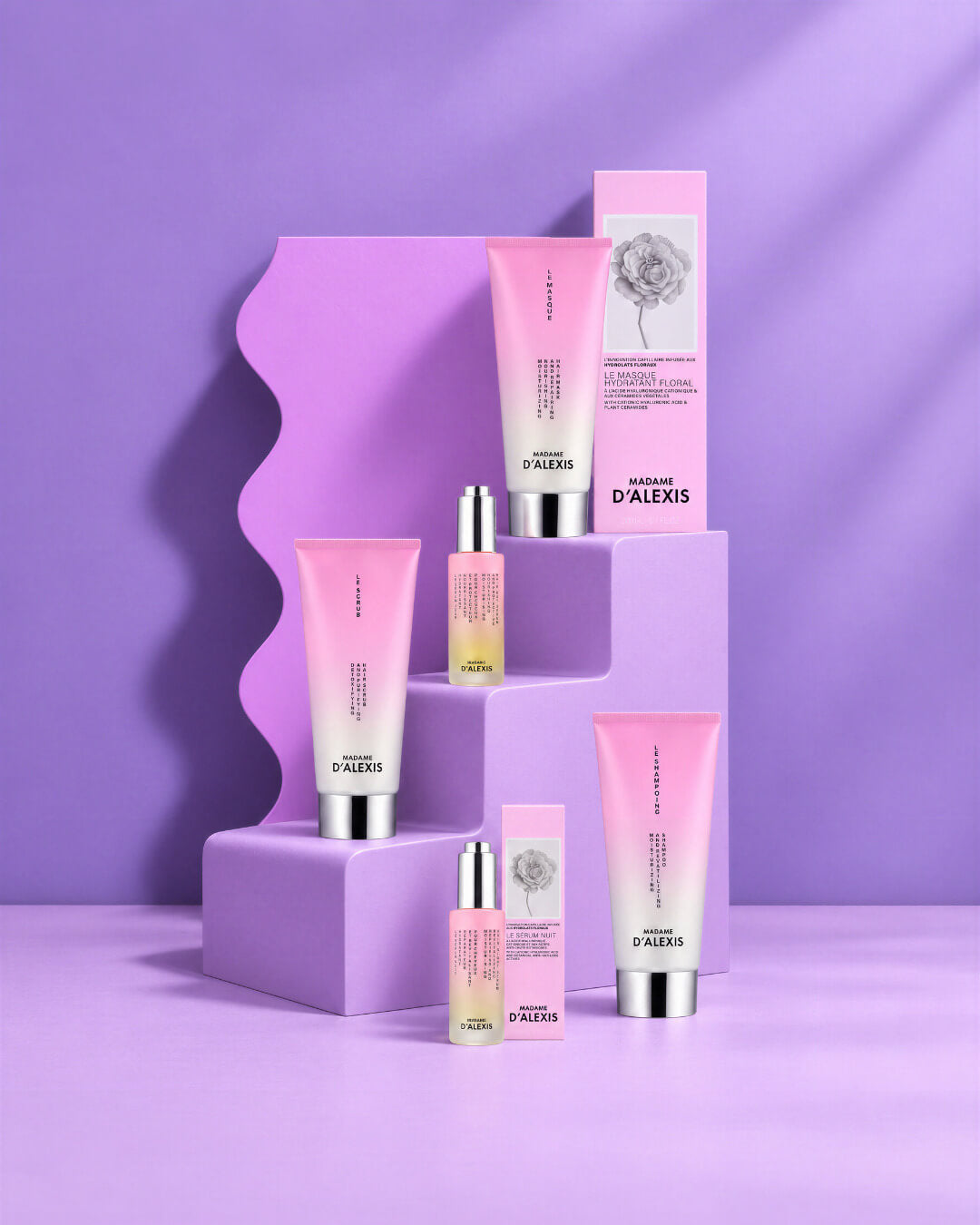
The 3 products in the scalp health routine
The Shampoo
- 98% of natural origin
- No added water, no sulfates or silicones
- Depending on your scalp, usually 2 to 3 times a week
- 200 ml
The Scrub
- 98% of natural origin
- Every 10 to 15 days
- Two applications, replaces shampoo that day
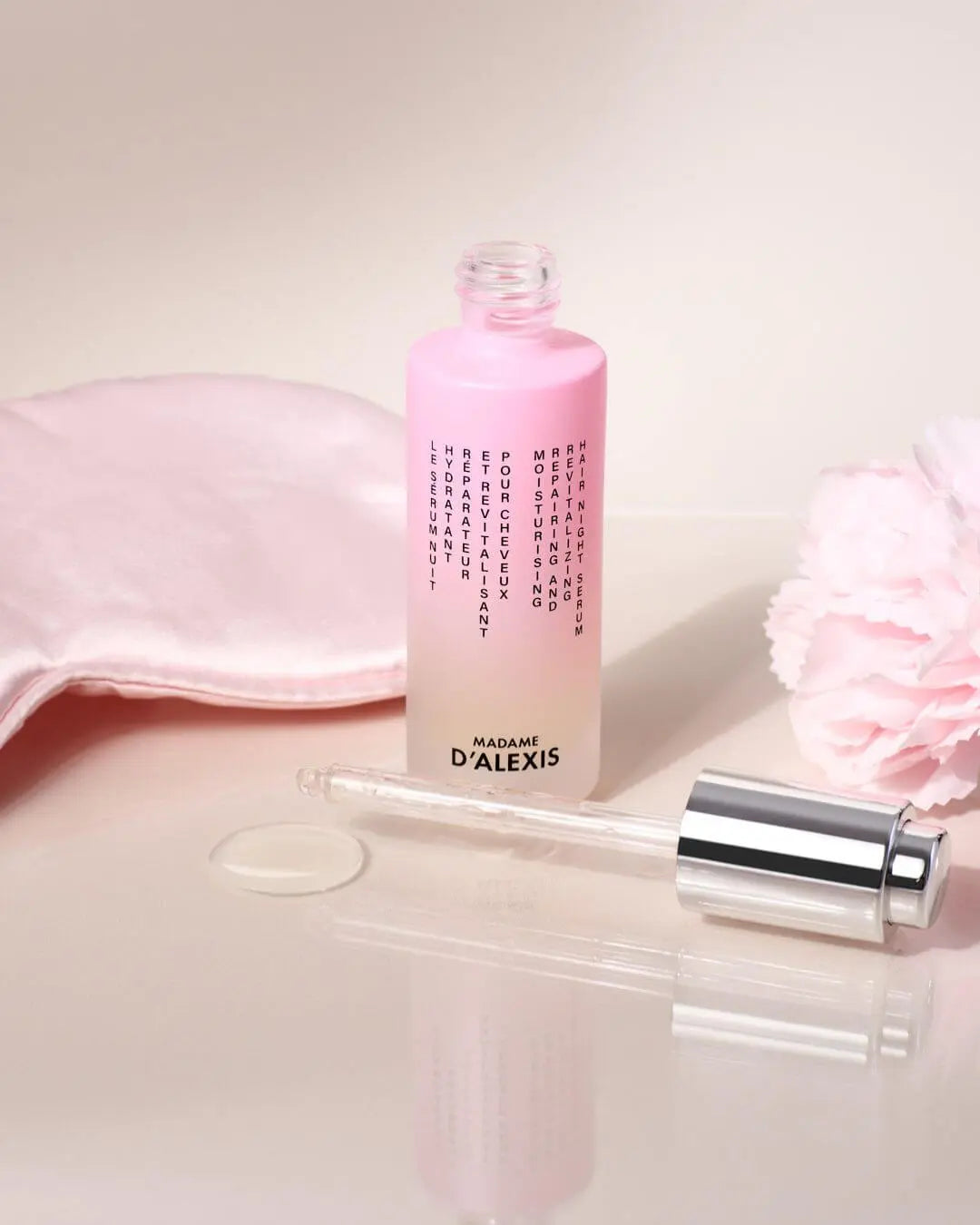
The Night Serum
- 98% of natural origin
- Section by section, on the scalp
- 3 to 5 times a week for a treatment course
What damages the scalp without us seeing it
The scalp is an area we rarely see and touch a lot. Most damage is gradual, without immediate warning signs.
- The accumulation of residue: styling products, hairspray, mousse and absorbent powders build up between washes and form a film on the skin.
- Occlusive products: insoluble silicones, mineral oils and film-forming agents trap the skin rather than letting it breathe.
- Heat: hair dryer set too hot, flat iron used too close to the roots, hot water.
- Friction: vigorous brushing on wet hair, rubbing with a towel back and forth, repeated tight hairstyles.
- Tap water (hard water): water with high mineral content and chlorine leaves a deposit and alters the surface pH, which partly explains why hair feels "sticky" after washing. Studies remain cautious about the extent of the effects on the hair fiber (research published on PMC), but the sensation of a film and stiffness is very real. A shower filter (water filter) or softener (softener) limits this mineral intake. And to understand why water also matters in formulas, see our article on water in hair care.
- Pollution and external aggressors: fine particles, dust and smoke settle on the skin and the fiber, where they promote oxidation. Research on the impact of air pollution on the skin documents this oxidative stress, even if its daily extent remains debated. Added to this are UV (ultraviolet) rays and environmental variations - air conditioning, heating, dry ambient air - which weigh on the skin barrier. Regular cleansing and thorough rinsing prevent these deposits from settling in.
Dermatologists also emphasize a simple principle: adapt the frequency of washing to the nature of your scalp, massage gently, rinse thoroughly and be gentle with wet hair (daily tips from the American Academy of Dermatology). Nothing exotic - just consistency, one step at a time.
What habits are best for a healthy scalp?
A product does not make a routine: healthy habits make the difference. Scalp health depends on a modest, consistent daily routine, and on a few scalp care tips that we systematically forget because they are not visible.
The hygiene steps that matter
Scalp hygiene is based on a simple principle: you wash the skin, not the hair. Massage the shampoo into the scalp with your fingertips, never on the lengths, then rinse thoroughly. Regular washing is not the enemy: research published on PMC compares several washing frequencies and concludes that regular washing is well tolerated, with good results on several scalp and fiber parameters. In other words, there is no need to "hold out" for five days as a matter of principle: wash your hair according to what your skin needs, even if that means washing every two days if sebum returns quickly.
One point of caution, however: wet hair is fragile. A wet hair strand stretches and breaks more easily. Detangle it with your fingers or a wide-tooth comb, without pulling, and reserve vigorous brushing for dry hair.
Diet and lifestyle
No single food transforms the scalp on its own, and be wary of promises of express transformation. The fact remains that a balanced diet - protein at every meal, vegetables, healthy fats, sufficient hydration - supports the skin as a whole. Omega-3s (oily fish, walnuts, flaxseeds) are among the lipids the skin mobilizes to maintain its protective film. A cosmetic product cannot compensate for an unbalanced diet: the two work together.
The rest comes down to lifestyle. Stress management is not a decorative wellness supplement: stress shows on the skin, makes you want to scratch, tighten hairstyles, and neglect washing. Regular sleep, breathing, daily walking: three levers with no spectacular effect, but which make a difference on the ground.
Massage, the most underestimated step
A scalp massage is a simple step that is rarely practiced. A few minutes with your fingertips, in circular motions, from the forehead to the nape of the neck, is enough to measurably increase local blood flow: a controlled study published on PMC monitored this parameter after a short massage, with an effect that lasts for several minutes. Blood circulation is not a promise, it is a state to be maintained.
Massage also helps distribute sebum, relax tight skin and identify what we cannot see: an itchy area, a tight patch, uneven skin texture. Five minutes, twice a week, before or during washing.
What is best to avoid
- Heat: hair dryer set too hot, flat iron used close to the roots, hot water. Heat weakens the skin and dries out the fiber.
- The sun: prolonged exposure dries out and irritates the scalp, especially on a defined parting. A hat and shade remain the best reflexes.
- Buildup and residue: styling products, hairspray, absorbent powders, but also hard water and chlorine eventually form a film. From time to time, a deeper cleanse is necessary.
- Dead skin left in place: it builds up between washes and gives that sensation of skin that cannot breathe.
- Vigorous brushing and combing (brush, comb): detangle from the ends toward the roots, without pulling, and ban vigorous brushing on wet hair.
- Occlusive cosmetic ingredients: insoluble silicones, mineral oils, film-forming agents. Reading the ingredient list is part of the care - a product that traps the skin is never a good idea.
Prolonged moisture, an underestimated factor
We rarely think about how long the scalp spends damp. Towel-dried hair then left in a bun, a cap placed on still-wet hair, air-drying that takes forever on sensitive skin: all situations that promote prolonged moisture. Yet a damp, warm, enclosed environment creates a favorable environment for skin imbalance. The right step remains simple: blot without rubbing, let air dry without trapping, and avoid sleeping with wet hair. It is not about banning air-drying, but about not letting the skin macerate under fabric.
Building your scalp health routine
A scalp health routine does not need to be long: it needs to be clear. Three questions are enough - how often, in what order, with what?
1. Define the washing frequency. A scalp that gets oily quickly tolerates frequent washing; a dry scalp or curly hair prefers more spaced-out washes. Adjust by observing your skin, never by applying a calendar found elsewhere.
2. Maintain a simple weekly base.
| Step | Product | Frequency |
|---|---|---|
| Cleanse | The Shampoo | depending on your scalp (usually 2 to 3 times a week) |
| Exfoliate | The Scrub | every 10 to 15 days |
| Nourish in the evening | The Night Serum | 3 to 5 times a week for a treatment course, then 1 to 2 times for maintenance |
3. Respect the order of steps. Skin care comes before fiber care: exfoliation or washing, then scalp nourishment, then length care. Reversing the order is like treating the ends before the roots.
4. Stay consistent rather than intense. A gentle step repeated every week is better than a complete protocol applied twice a year. This is the whole logic of a well-thought-out scalp care ritual.
FAQ
What is scalp health?
Scalp health is scalp health treated as a care routine in its own right. The principle: consider this area as skin, with its skin barrier, its balance and its microbiome. This includes gentle cleansing, exfoliation, hydration, protection and steps adapted to its nature.
How do I know if my scalp is healthy?
A healthy scalp does not feel tight, itchy or tingly. Sebum is evenly distributed without excess, the skin remains supple, the roots hold. Conversely, repeated itching, a burning sensation or hair that quickly loses volume signal an imbalance, to be corrected by returning to gentler and more regular steps.
How often should I do a scalp treatment?
It all depends on the step. A gentle shampoo is used according to the nature of your scalp, usually two to three times a week. Exfoliation is done every ten to fifteen days. Leave-in treatments, like serums, are applied three to five times a week for a treatment course, then once to twice a week for maintenance.
Can scalp health replace fiber care?
No, it complements it. The scalp prepares the ground; the fiber requires its own care on the lengths and ends. A complete routine therefore combines both steps: taking care of your scalp at the roots, then treating the fiber along the hair.
How can I improve my scalp health daily?
Start with a gentle cleanser adapted to your scalp type, massaging the skin and not the lengths, then rinse thoroughly. Add a leave-in serum three to five times a week, a scrub every ten to fifteen days and a few minutes of massage. Habits - clean tools, clean textiles, limited heat - complete the setup.
Why is scalp health important for hair?
Because hair forms in the scalp and inherits its conditions. A comfortable environment, with an intact barrier and evenly distributed sebum, offers better conditions for the fiber that forms there. Irritated, dry or congested skin then shows on the quality of the fiber at the roots and on the visual appearance of density.
What are the signs of an unhealthy scalp?
A scalp that itches, feels tight or tingly sends a signal. Added to this is often diffuse flaking, a burning sensation after applying a product, hair that gets oily again in a few hours and discomfort that always returns at the same time. In case of lesions or persistent symptoms, consult a dermatologist.
Sources
American Academy of Dermatology - Everyday scalp care
Health.com - How To Take Care of Your Scalp and Why It Matters
Turner et al., "Stratum corneum dysfunction in dandruff", International Journal of Cosmetic Science, 2012 - Wiley Online Library
Review of the state of the scalp and the quality of the fiber - PMC / NCBI
Shampoo washing frequency and scalp and fiber parameters - PMC / NCBI
Effect of scalp massage on local blood flow - PMC / NCBI
Effects of hard water on the hair fiber - PMC / NCBI
Impact of air pollution on the skin - PMC / NCBI