Conseils
Hard water and hair: why it causes damage and how to protect yourself
Limescale leaves a mineral film on the hair fiber and scalp: dull lengths, dryness, products that no longer penetrate. Filter, water softener, acidic rinse, and formulas with no added water: four practical solutions to restore shine.

Hard water and hair: why it damages it and how to protect yourself
Is your hair dull, rough, and difficult to detangle? Do your masks seem to slide off without penetrating, and is your color visibly fading? Before changing your entire routine, ask yourself one simple question: what water do you rinse your hair with? The "hard water hair" diagnosis is one of the most useful, and one of the most frequently overlooked. Wash after wash, hard water leaves an invisible mineral film on the hair fiber and the scalp. The result: hair that looks dirty even though it is perfectly clean, and carefully applied treatments that don't "take."
- Limescale doesn't come from your bottles: it comes from the water that rinses your hair, every time you wash it.
- It leaves a mineral film that prevents treatments from penetrating and makes the fiber rougher.
- Three truly useful solutions: a resin shower filter, a water softener, an acidic final rinse.
- Before making any purchase, check your water hardness, expressed in French degrees (°f).
- A formula without added water does not introduce tap water into the product: it concentrates its active ingredients around organic hydrosols.
Limescale is not a formula ingredient: it is a household problem. It depends on your water supply, your showerhead, and the water temperature. It cannot therefore be solved solely by choosing the right shampoo. It must first be understood, then treated at home, with a few targeted steps and sometimes some equipment.
In this article, we look at what limescale really does to the hair and the scalp, how to tell if your water is affected, and then the solutions that work - shower filter, water softener, acidic final rinse, and choice of formulas.
What is hard water, and why does it damage hair?
Water is said to be hard - or "hard water" - when it contains a high amount of dissolved calcium (Ca²⁺) and magnesium (Mg²⁺) ions. Water picks up these minerals as it passes through limestone, chalk, or gypsum. This load is measured as total hardness, expressed in French degrees (°f or °TH): 1 °f corresponds to 10 mg/L of calcium carbonate equivalent (definition of water hardness).
The guidelines used by water suppliers in France:
| Hardness (TH) | Classification |
|---|---|
| less than 8 °f | very soft water |
| 8 to 15 °f | soft water |
| 15 to 30 °f | moderately hard water |
| 30 to 40 °f | hard water |
| more than 40 °f | very hard water |
This water remains perfectly drinkable: calcium and magnesium are minerals that are useful to the body. The problem is therefore not a health issue, but a cosmetic one. When exposed to heat and the surfactants found in shampoos and soaps, these ions precipitate into insoluble salts. These are exactly the white deposits you find on the shower wall, on the showerhead, or at the bottom of the kettle. Except that on the hair, this deposit is invisible to the naked eye.
Two factors worsen the phenomenon: temperature, because the hotter the water, the faster the precipitation; and repetition, because each wash adds a thin layer on top of the previous one. It is not a matter of cleanliness - you can wash your hair every two days, and the deposit will still accumulate.
Under these conditions, it is difficult to separate hard water, rough hair, and disappointing treatments: the three often occur together.
How does hard water affect hair?
The impact of water on hair is not visible after the next shower: it builds up over time. Water rich in calcium and magnesium, heated and exposed to the surfactants in a treatment, leaves a mineral presence on the fiber after every wash. The effects of limescale accumulate, and one element always returns: repetition is what makes the difference.
A weakened and more brittle fiber
Mineral deposits settle between the scales of the cuticle and slightly lift them. The surface becomes uneven, the scales rub against each other, and flexibility decreases. This is how the hair fiber eventually becomes weakened: hair becomes brittle when brushed, and the lengths wear out faster.
Hair dryness that builds up
The mineral film slows down moisture exchange. The fiber absorbs less water and retains it poorly: this loss of hydration is visible on the lengths, which become dry. Hair dryness then becomes permanent and resists even the most nourishing masks.
A visible loss of shine
A smooth cuticle reflects light; a loaded cuticle diffuses it. Hence an immediate loss of shine and dull hair, even when perfectly clean. On curly, colored, or bleached hair, the difference is striking.
An irritated scalp
On the skin, mineral salts mix with sebum and treatment residues. The resulting film raises the surface pH, and an irritated scalp manifests as tightness, diffuse itching, and a sensation of skin that cannot breathe.
What are the effects of hard water on hair?
Hard water - also known as hard water - is not poor-quality water: it is simply abundant in calcium and magnesium. Its effects depend on the chemical composition of your water supply, not on hygiene. When the mineral concentration is high, mineral deposits are visible on the fiber as well as on the scalp, which becomes sensitive.
The composition of water is not limited to these two minerals: depending on the pipes, traces of copper can also be found, a metal whose presence can accumulate on the hair and contribute to its wear (water copper and hair wear).
This is where the weakening of the fiber comes into play. Many people wonder if limescale causes hair loss: the answer is nuanced. Limescale is not a cause of hair loss, but it weakens the fiber and clogs the scalp. On the other hand, it makes detangling difficult, and this pulling of the hair, repeated with every brushing, pulls on the fiber and promotes breakage. The link between limescale and hair therefore lies mainly in the action, rather than the root.
What limescale really does to hair
A healthy hair strand is covered by a cuticle made of flat, aligned scales that reflect light and protect the fiber. Mineral deposits settle between these scales and change its entire behavior.
A film that prevents treatments from penetrating
As they accumulate, calcium and magnesium salts form a continuous film on the surface of the hair. This film acts as a barrier: oils, masks, and serums remain on the surface instead of distributing themselves throughout the fiber. The hair becomes dry under its coating, while appearing heavy or slightly greasy to the touch.
This barrier also slows down moisture exchange: the hair absorbs water less effectively during treatment and loses it less regularly afterward. It is this imbalance that gives the sensation of hair that "no longer reacts," even after a generous mask.
Before piling on active ingredients, it is therefore worth looking into water in hair care - its function, its quality, and its role in the penetration of formulas. This is often where the real blockage lies.
A rougher and more brittle fiber
Loaded with minerals, the cuticle scales lift slightly and rub against each other. The surface becomes uneven: the hair catches, tangles, breaks more easily when brushed, and under repeated tension.
Available studies go in the same direction, even if they are based on small groups. A study conducted on 20 volunteers found more magnesium deposits on hair washed with hard water, with no significant difference in calcium (electron microscopy study on water hardness). Another observed a rougher surface and more pronounced deposits after exposure to hard water, with no noticeable change in elasticity. Finally, laboratory work shows that calcium and magnesium mainly penetrate the layers of the cuticle and can stiffen the fiber (study on the absorption of metals from water hardness). In other words: hard water does not "eat away" at the fiber, it changes its feel, flexibility, and ease of styling.
A color that fades faster
The shine of a hair strand depends on the smoothness of its surface: a smooth cuticle reflects light like a mirror, while a loaded, uneven cuticle diffuses it. This is why hair affected by limescale appears dull, even when perfectly clean, and why highlights are less visible.
On colored or bleached hair, the effect is accentuated. The coloring process opens the cuticle: the deposits from bath water settle deeper and more easily. The color appears duller, the highlights fade faster, and detangling becomes laborious.
What limescale does to the scalp
The scalp is not spared. At every shower, mineral salts settle on the skin, where they mix with sebum and treatment residues. This accumulation gradually forms a film that is difficult to rinse off completely, especially if the water is hot and the rinsing is quick.
The scalp works well in a slightly acidic environment, around pH 4.5 to 5.5. However, hard water and the accompanying limescale soap residue tend to raise this surface pH. This imbalance is noticeable: tightness after the shower, diffuse itching, a sensation of a scalp that "itches" or cannot breathe, and roots that get greasy quickly while the lengths remain dry.
Another practical consequence: limescale residues trap treatments and make them less effective where they should act, that is, in contact with the skin. Putting the scalp back at the center of the routine - what is known today as scalp health - therefore begins with a truly thorough rinse, with water that is less loaded with minerals.
When deposits have settled, a scalp scrub performed every 10 to 15 days helps remove residues and start from a clean base. Applied gently, it should be worked in with the fingertips, without rubbing the lengths.
How does hard water affect the skin?
Hair and skin share the same shower and the same water: the hair system and the epidermis are exposed to the same minerals. On the skin, the salts settle and mix with sebum and soap residue. This film interferes with exchange and disrupts the hydrolipidic film, this natural barrier that retains water in the skin. The result is quickly noticeable: skin dryness, tightness after the shower, surface dehydration, and sometimes skin irritation on reactive skin.
Research supports this: after washing in hard water, more surfactant residues remain on the skin than after washing in softened water, with a more pronounced water loss (hard water, surfactant residues, and skin irritation). Let's be cautious: these observations describe a possible worsening of discomfort; they do not establish that limescale triggers a skin problem. The impact on the skin therefore boils down to a drier and more reactive environment.
The observation extends to the body: arms, legs, and back suffer the same deposit. Water treatment, a filtering showerhead, or a simple rinse with softened water often brings a clear improvement in comfort for both hair and skin - and this is also what makes a hair routine gentler.
How to tell if your water is hard?
The clues are often right before your eyes. In the bathroom, look for white traces on the faucets, showerhead, or shower screen; soap that does not lather well, regardless of the amount used; a towel that becomes rough over time; a kettle or water heater that develops limescale quickly; skin that feels tight right after the shower.
On the hair side, the signs also accumulate: dry and rough lengths despite a nourishing treatment, dull hair that "does not catch the light," roots that get greasy quickly, difficulty detangling immediately after washing, and a color that appears duller after a few weeks.
Some areas of France are more affected than others. Water is often harder in sedimentary basins: the Paris Basin, Île-de-France, the North, Champagne, and parts of the East and Southeast. Conversely, granite or schist regions such as Brittany, the Massif Central, or the Vosges benefit from softer water. These are only trends: the reality plays out from town to town, sometimes even neighborhood by neighborhood.
To find out your situation, there are three simple options: the TH figure often appears on your water bill or on your water supplier's website; an interactive map of water hardness in France, town by town, is available as open data from drinking water sanitary controls (water hardness map by town); and test strips allow for a quick measurement at home, including before and after a filtration system.
What signs indicate that water is damaging hair?
Signs of damage rarely appear alone. They reinforce each other until they become the norm: dull hair that no longer catches the light, increasing difficulty styling - the comb catches, knots return by the end of the day -, rough lengths despite having been treated, and a dull-looking color. In some people, these clues eventually point to damaged hair, even though the routine has not changed.
The scalp sends its own signals: tightness after the shower, diffuse itching, and weak hair that breaks for no apparent reason.
The most telling sign remains the accumulation of limescale: white traces on the showerhead, a dull film on the fiber, and excessive dryness that returns a few days after treatment. When several of these clues coexist, it is often the water's limescale that needs to be questioned: an occasional clarifying shampoo and a hair diagnosis allow you to distinguish between product buildup and water that is too loaded.
The solutions that really work
The shower filter
A shower filter has the advantage of being accessible, without construction work. But not all technologies are equal, and that is where disappointments occur. According to a dermatologist's summary on the subject, ion-exchange resin is the technology that directly acts on hardness: it replaces some of the calcium and magnesium with sodium. Vitamin C, activated carbon, or KDF alloy cartridges mainly filter chlorine, odors, and certain impurities - useful, but with no noticeable effect on limescale (shower filters and hard water: what dermatology says).
Many models sold as "anti-limescale" do not change the hardness: in this case, a hair shower filter will not provide anything more than a chlorine filter. In practice, a resin shower cartridge has a limited volume and becomes saturated: plan for regular replacement, more frequent in very hard water areas. The right approach is to measure your TH before installation and then again after a few uses. If the figure does not change, the filter does not affect hardness, and you should not expect anything else.
The issue of tap water and hair therefore cannot always be solved at the showerhead - but a filter can provide real comfort against chlorine, which is often irritating to sensitive scalps.
The water softener
A water softener treats the entire household plumbing system. Through ion exchange, it removes some of the calcium and magnesium from the water supplied to the home, including the shower. A water softener for hair therefore works at the source, on all the water used, rather than at a single point of use. This is the installation that makes the most significant difference: a water softener makes rinsing more effective, makes treatments easier to distribute, and significantly reduces deposits on surfaces and hair fibers.
Two precautions are worth knowing. First, a setting that is too low produces very soft water, which sometimes does not rinse out treatment residue properly and leaves a slippery sensation: it is better to adjust gradually. Next, magnetic or electronic devices, which are easier to install, do not remove minerals from the water: their effect on deposits remains variable according to sources, and they do not replace an ion exchanger.
Final acidic rinse
Hair swells when in contact with water, and this swelling is more pronounced when the environment is alkaline. A slightly acidic rinse at the end of washing temporarily lowers the surface pH, limits swelling, and partially closes the cuticle: the fiber appears smoother and more luminous (influence of shampoo pH on hair).
The tradition of rinsing with diluted vinegar - one tablespoon in a liter of cold water, on the lengths - comes from this. Keep in mind: this step does not permanently dissolve established deposits, it acts on the pH and the feel. It should never be used undiluted, and it should be avoided on sensitive or damaged scalps. A treatment formulated at an acidic pH, with a controlled dosage, remains more consistent and more predictable than a homemade mixture.
Adapting your formulas
Much research focuses on anti-limescale shampoo. Caution is advised: a shampoo remains in contact with the fiber for one to two minutes, it cannot dissolve months of deposits. On the other hand, it can prevent adding more and facilitate rinsing.
Some useful criteria: an acidic pH, compatible with the cuticle; gentle surfactants such as glucosides, which form fewer insoluble salts; the absence of silicones and film-forming polymers, which retain residue; and the presence of chelating active ingredients such as citric acid, which help loosen minerals. A shampoo without added water, whose aqueous phase is composed of hydrosols, fits into this logic.
The technique matters as much as the formula: lukewarm rather than scalding water, a long and thorough rinse, a towel that pats instead of rubbing.
How to protect your hair from hard water?
Protecting your hair from hard water does not require installing a factory in the bathroom. One principle remains essential: protecting your hair means above all limiting what deposits on it. Before discovering the techniques that matter, remember the four-step method, which can be used in any hair routine, and which can also be adapted for the whole family.
Conducting your hair diagnosis
Before any purchase, identify your situation: the TH of your town, a test strip, or simply comparing the feel after rinsing with tap water and then with spring water. This hair diagnosis avoids treating a problem that does not exist. If doubt persists, a professional diagnosis in a salon can help you decide.
Adopting a thorough final rinse
The final rinse is the most useful moment of the shower. Choose lukewarm water, prolong the rinse to remove residue, then finish with an acidic water rinse: one tablespoon of apple cider vinegar - or a pinch of citric acid - in a liter of cold water, on the lengths. This rinsing method lowers the surface pH and closes the cuticle, restoring a softer feel. Avoid on sensitive or damaged scalps, and never use undiluted.
Protecting the lipid barrier with a vegetable oil
Applied in a thin layer before showering, a vegetable oil plays the role of a lipid barrier: it coats the surface of the fiber and limits the fixation of salts. After washing, a few drops on towel-dried hair nourish the cuticle and facilitate detangling, which reduces pulling. A simple tip: choose a fluid oil and do not overdose, at the risk of weighing hair down.
Practical daily tips
Some practical tips complete the picture: pat dry with a towel rather than rubbing, detangle with a wide-tooth comb, space out scalding washes and prefer a gentle shampoo, without silicones or film-forming polymers, to avoid accumulating deposits. In the hair care aisle, look for an acidic pH and glucosides-type surfactants, and keep a clarifying shampoo to start from a clean base from time to time.
Why a formula without added water makes a difference
In a classic treatment, the majority ingredient in the list is water - often purified water that serves as a solvent and represents the majority of the volume. At Madame d'Alexis, this choice is reversed: the aqueous phase is entirely replaced by organic active hydrosols of Damask rose, chamomile, and orange blossom. Each drop of the formula therefore brings something to the fiber, instead of diluting the active ingredients.
Let's be honest about the scope: limescale comes from the rinse water, not the product. A treatment without added water does not dissolve already present deposits, and it replaces neither a shower filter nor a softener. What it brings is different: it does not add any tap water, does not leave any additional film likely to retain minerals, and concentrates its active ingredients in a useful volume.
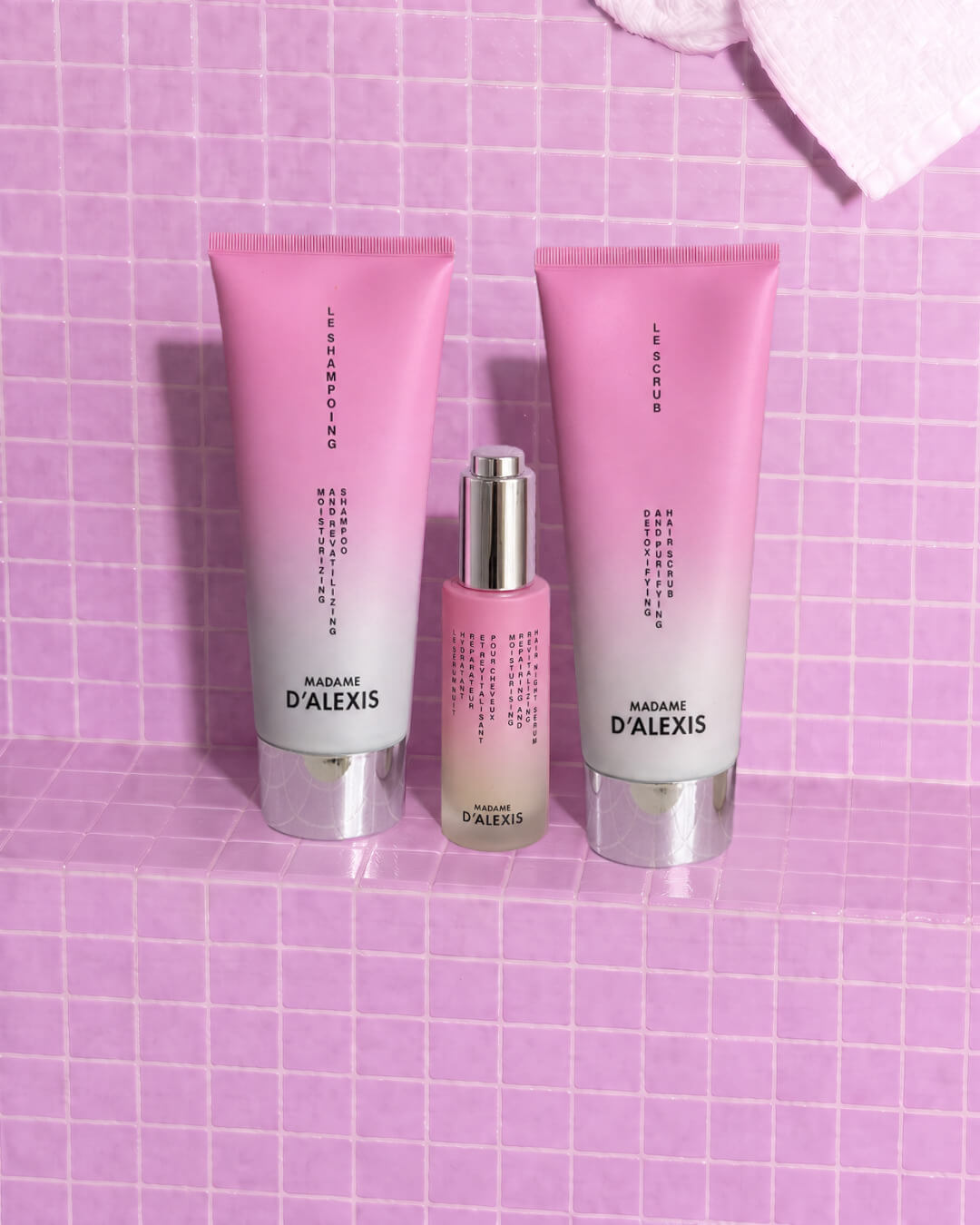
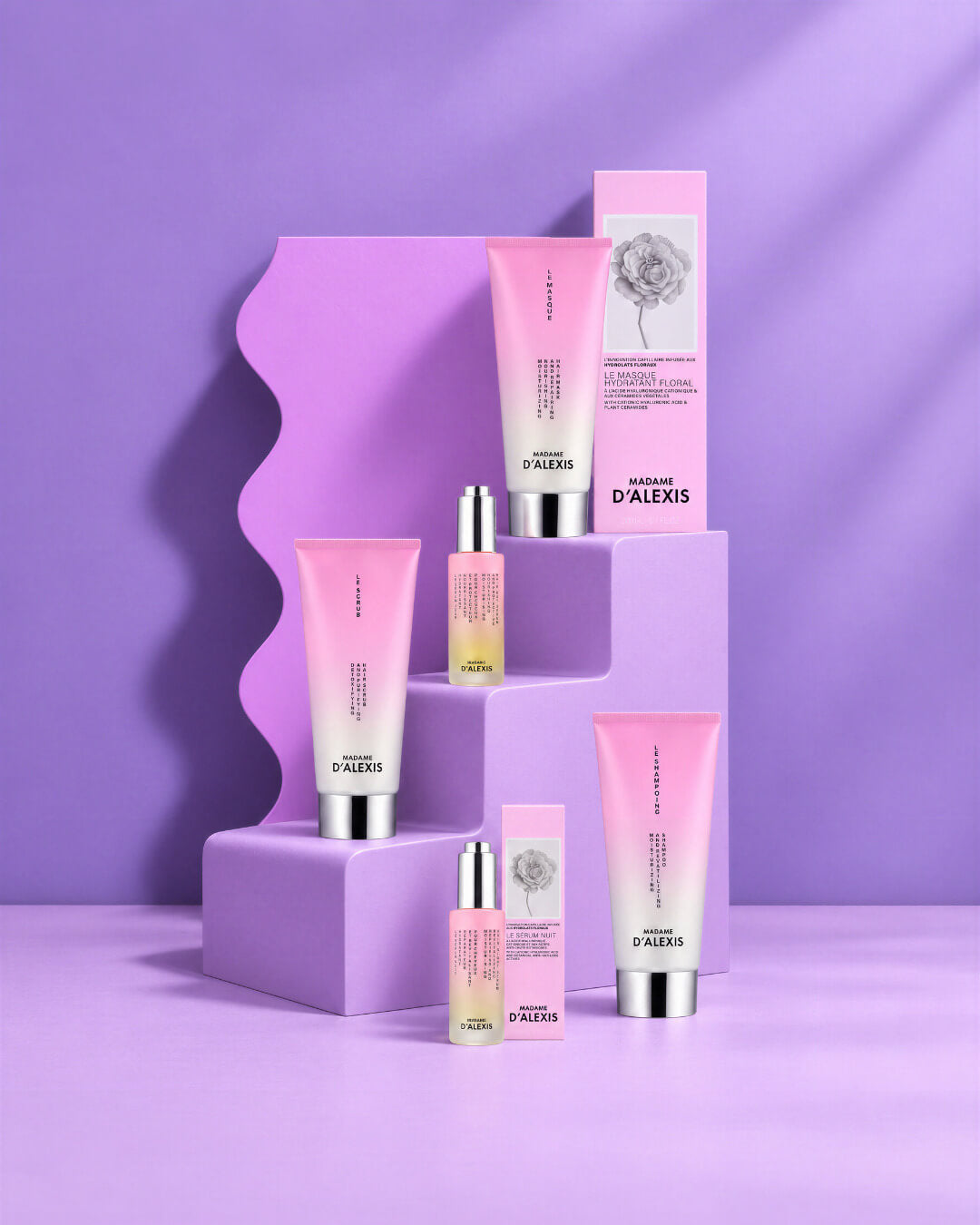
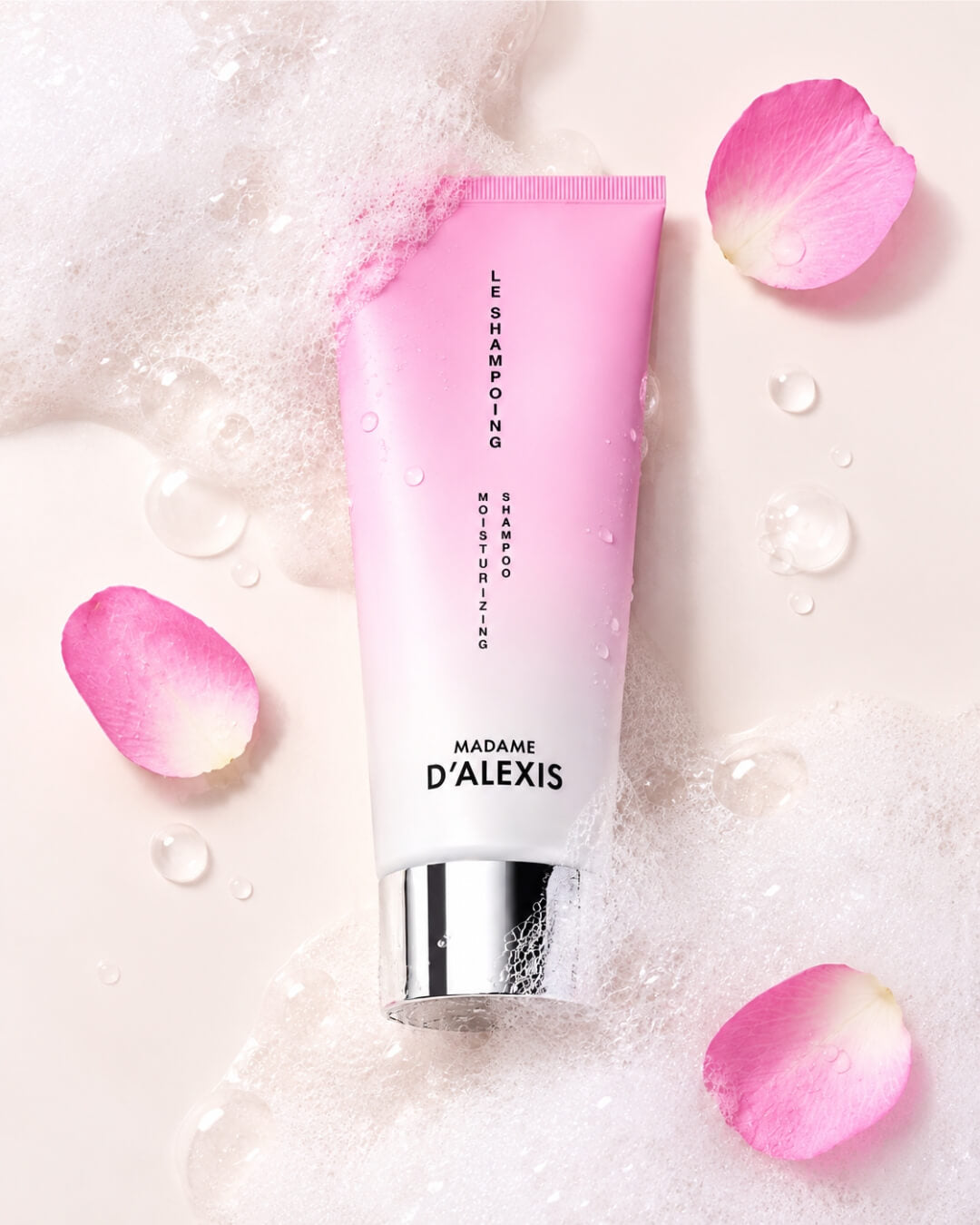
The organic hydrosol shampoo by Madame d'Alexis illustrates this approach. 200 ml, €35, 98% natural origin, without added water, without sulfates, silicones, parabens, PEG or mineral oils, with a 100% natural fragrance and made in Brittany. Its aqueous phase - organic hydrosols rather than water - supports an acidic pH compatible with the cuticle, which limits the swelling of the fiber during washing. As for active ingredients: cationic hyaluronic acid, prebiotics, and plant-based keratin from wheat, corn, and soy.
The Night Serum, €35 and 98% natural origin, without added water, completes the ritual: cationic hyaluronic acid, probiotics and postbiotics, fermented extracts, oak, nettle, and licorice extracts. Applied to dry or slightly damp scalp, it is not rinsed: it is therefore never exposed to hard water.
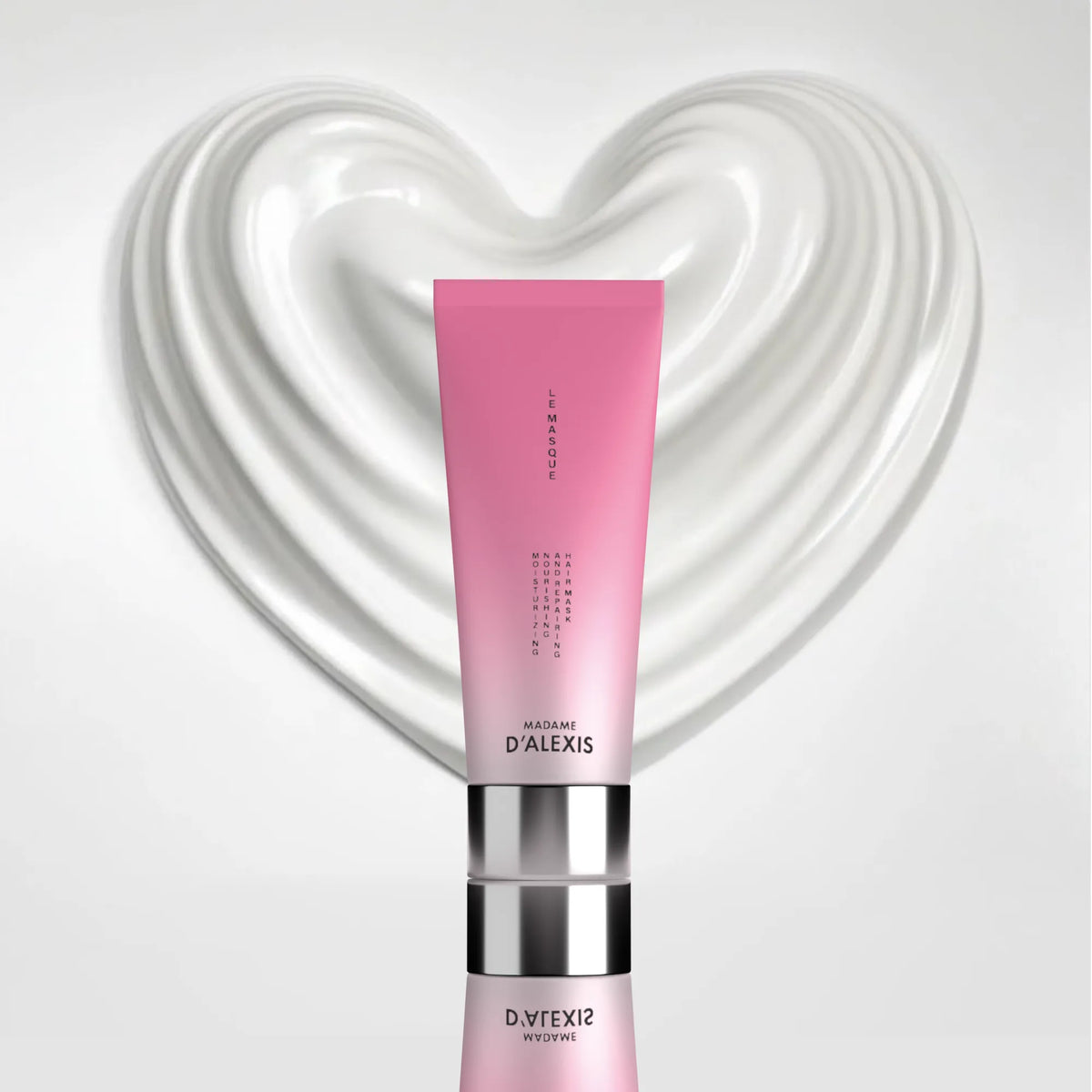
Madame d'Alexis treatments for hard water
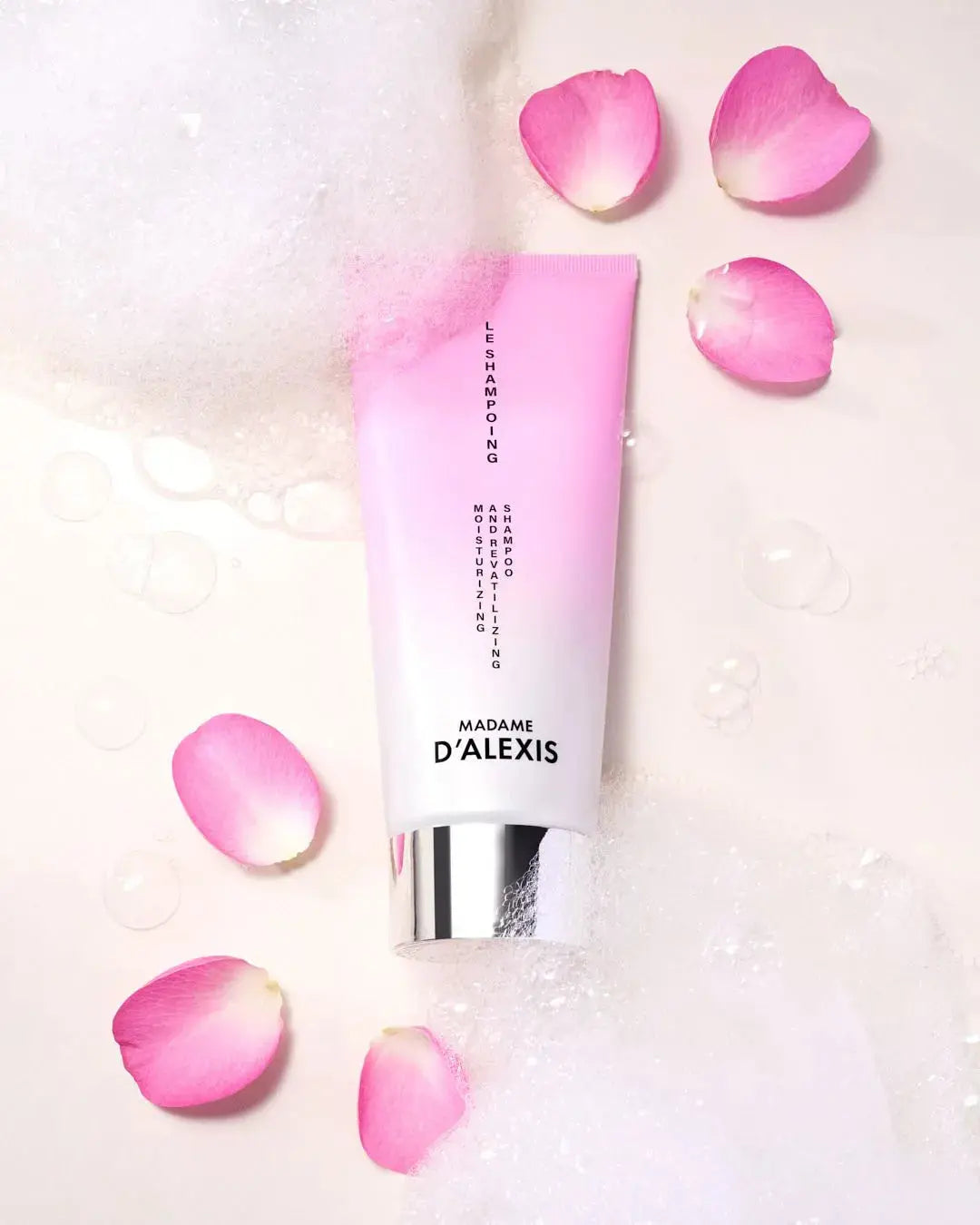
The Shampoo
- 98% natural origin
- Without added water, without sulfates or silicones
- Depending on the scalp, often 2 to 3 times a week
- 200 ml
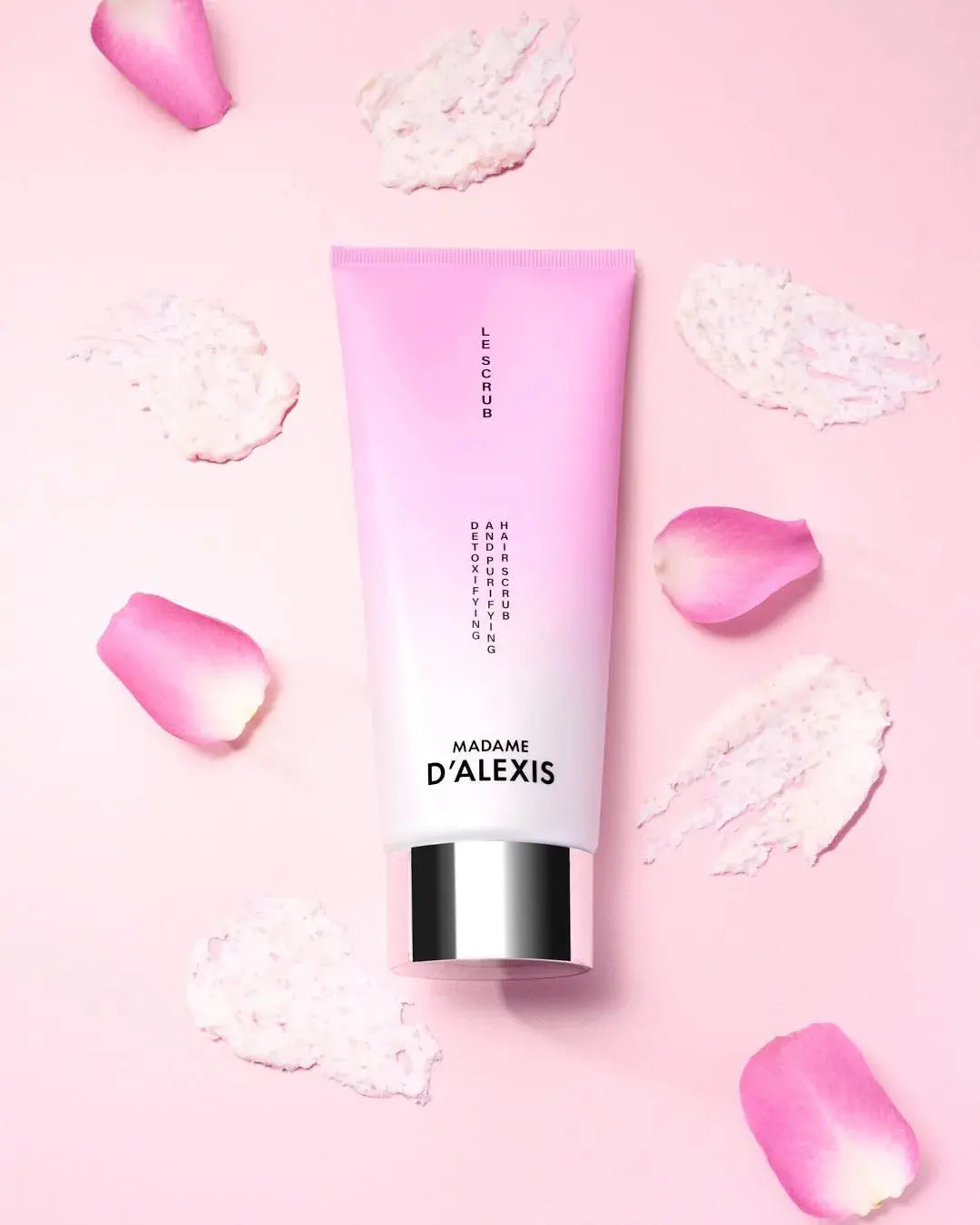
The Scrub
- 98% natural origin
- Every 10 to 15 days
- Two applications, replaces shampoo that day
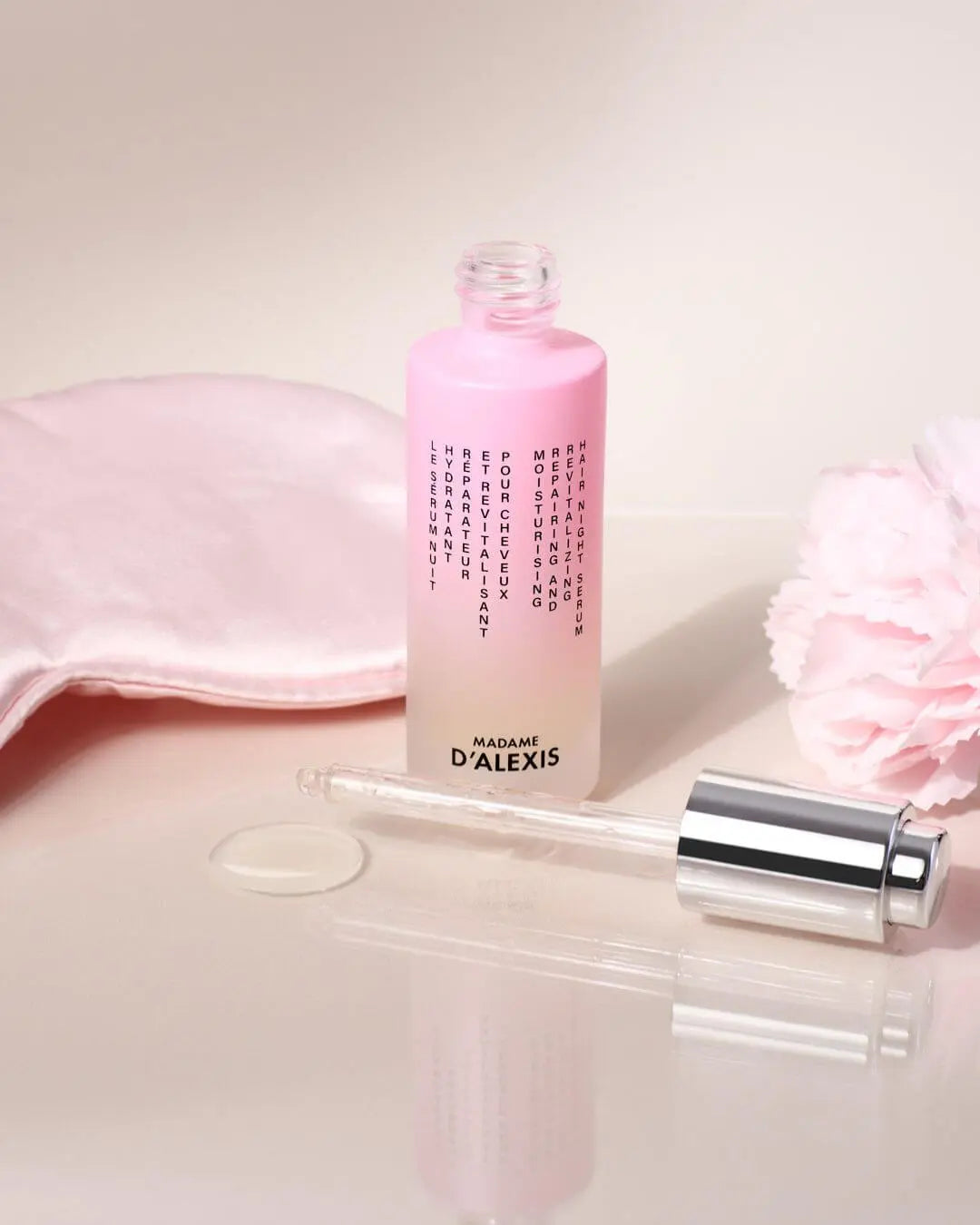
The Night Serum
- 98% natural origin
- Section by section, on the scalp
- 3 to 5 times a week as a treatment
In summary
Four solutions to fight limescale, from the most comprehensive to the most supplementary - knowing that one method does not replace the other.
- Installing a softener: water softening acts on the entire household system. It is an investment, but it is the most comprehensive control, for the whole family.
- The filtered shower head: no construction work and practical. It only truly acts on hardness if it contains an ion-exchanging resin; otherwise, it mainly limits chlorine.
- Rinsing with acidic water: immediate and inexpensive, effective on pH and feel. It does not dissolve established deposits.
- An adapted formula: a shampoo without added water, whose aqueous phase is made of hydrosols, does not add tap water and concentrates its active ingredients. A method supplement, not a water treatment.
The most realistic control often combines two levers: treating the water when possible, and taking care of the daily rinse.
FAQ
How do I know if my hair suffers from limescale?
After washing, your hair remains rough, dull, and difficult to detangle although it is clean, and your lengths dry poorly. Do the rinse test: redo your last rinse with bottled spring water. If the feel becomes significantly softer and detangling easier, your water is probably the cause.
Is the shower filter really effective?
It all depends on the technology. An ion-exchanging resin cartridge replaces some of the calcium and magnesium with sodium: that is the one that truly acts on hardness. Activated carbons and vitamin C cartridges mainly act on chlorine and impurities. Measure your TH before and after to check.
How to remove limescale from hair?
Limescale does not go away with a simple shampoo. Useful levers: a final acidic rinse that lowers the surface pH, a gentle shampoo with a thorough and prolonged rinse, an occasional scalp scrub, and above all, less hard water at the source. Consistency matters more than intensity.
What shampoo to choose when you have hard water?
Look for an acidic pH, gentle surfactants such as glucosides, and the absence of silicones or film-forming polymers. Formulas containing citric acid or a chelating agent help loosen minerals. A shampoo without added water, with an hydrosol aqueous phase, fits fully into this category.
Does hard water make hair fall out?
No. Limescale does not attack the hair root: it weakens the fiber and clogs the scalp, which makes hair more brittle, rougher, and less shiny. An unusual, sudden, or lasting hair loss is not related to your water: it deserves a dermatological opinion.
Does hard water make hair dry?
Yes, it worsens dryness. The mineral film deposited at each wash slows down moisture exchange: the fiber absorbs less water and retains it poorly, hence dried lengths and a lasting loss of hydration. Hair dryness can have other causes, but hard water is often one, underestimated.
How to fight hard water at home?
Three levers according to your budget. The most complete: installing a softener, which treats the entire household system. The simplest: a filtered shower head with ion-exchanging resin. The most immediate: an acidic water rinse at the end of washing, with diluted apple cider vinegar or citric acid, with gentle formulas that retain fewer residues.
Does hard water also damage the skin?
It can increase discomfort. Like on hair, mineral salts deposit on the skin and mix with soap residue, which disrupts the hydrolipidic film and promotes skin dryness and tightness after the shower. Softened water often brings real comfort, for the skin and hair.
Sources
Interactive map of water hardness in France, town by town - data from the sanitary control of drinking water (SISE-Eaux).
Effects of hard water on hair - study on 20 volunteers
Changes in hair treated with hard water: electron microscopy study
Absorption of metals from hard water by the hair fiber
Does shampoo pH influence hair?
Shower filter and hard water: dermatologist summary
Definition and measurement of water hardness
Hard water, surfactant residues and skin irritation - controlled study on 80 participants.