Advice
Hyaluronic Acid for Hair: Everything You Need to Know About This Moisturizing Ingredient
Hyaluronic acid, the star ingredient in skincare, is also a treasure for hair. Thanks to its exceptional moisturizing power, it plumps up the hair fiber, tames frizz, and prevents breakage. Ideal for dry, curly, or damaged hair, it restores suppleness and shine. Discover why this ingredient has become a staple in luxury hair care and how to incorporate it into your routine.


Hyaluronic Acid for Hair: Benefits, Uses, Risks, and a Complete Routine
Hyaluronic acid helps retain moisture in the hair shaft, smooth the cuticle, reduce roughness, and promote scalp comfort. At Madame d’Alexis, we take it a step further with a cationic version, designed to adhere better to the hair.
The 20/80 Rule to Remember
- Hyaluronic acid for hair hydrates the hair shaft, tames frizz, and improves suppleness.
- It is suitable for dry, curly, fine, colored, or damaged hair, as long as the formula remains lightweight.
- There are no known risks associated with conventional cosmetic use, but a skin test is still recommended.
- The cationic version of Madame d’Alexis adheres better to the hair fiber than standard hyaluronic acid.
- The best results come from a comprehensive routine: gentle cleansing, deep conditioning, and a balanced scalp.
Madame d’Alexis skincare products containing hyaluronic acid
To turn this information into a practical routine, here are the products in the line that incorporate cationic hyaluronic acid in a complementary approach: cleanse, exfoliate, treat overnight, and nourish the hair shaft.
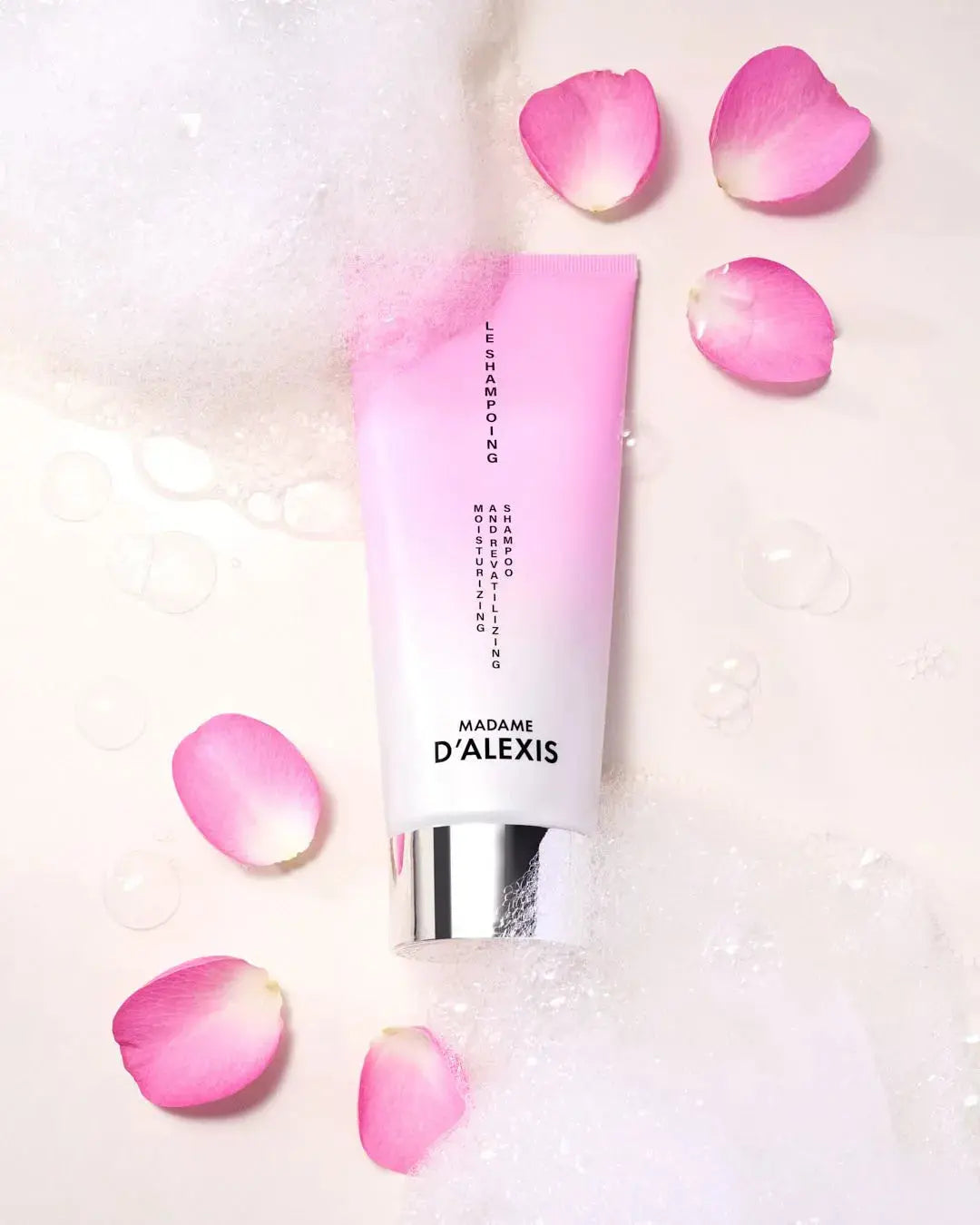
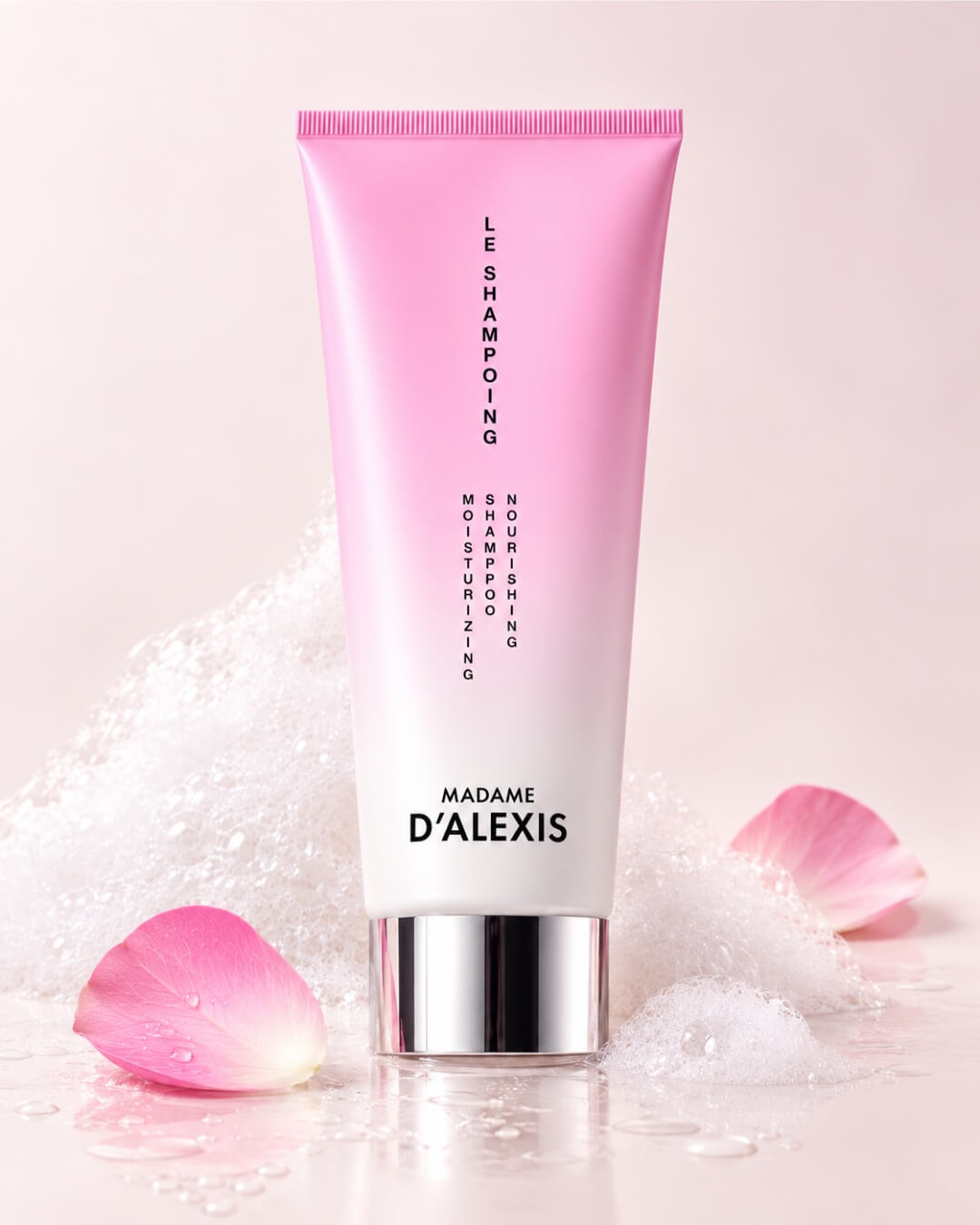
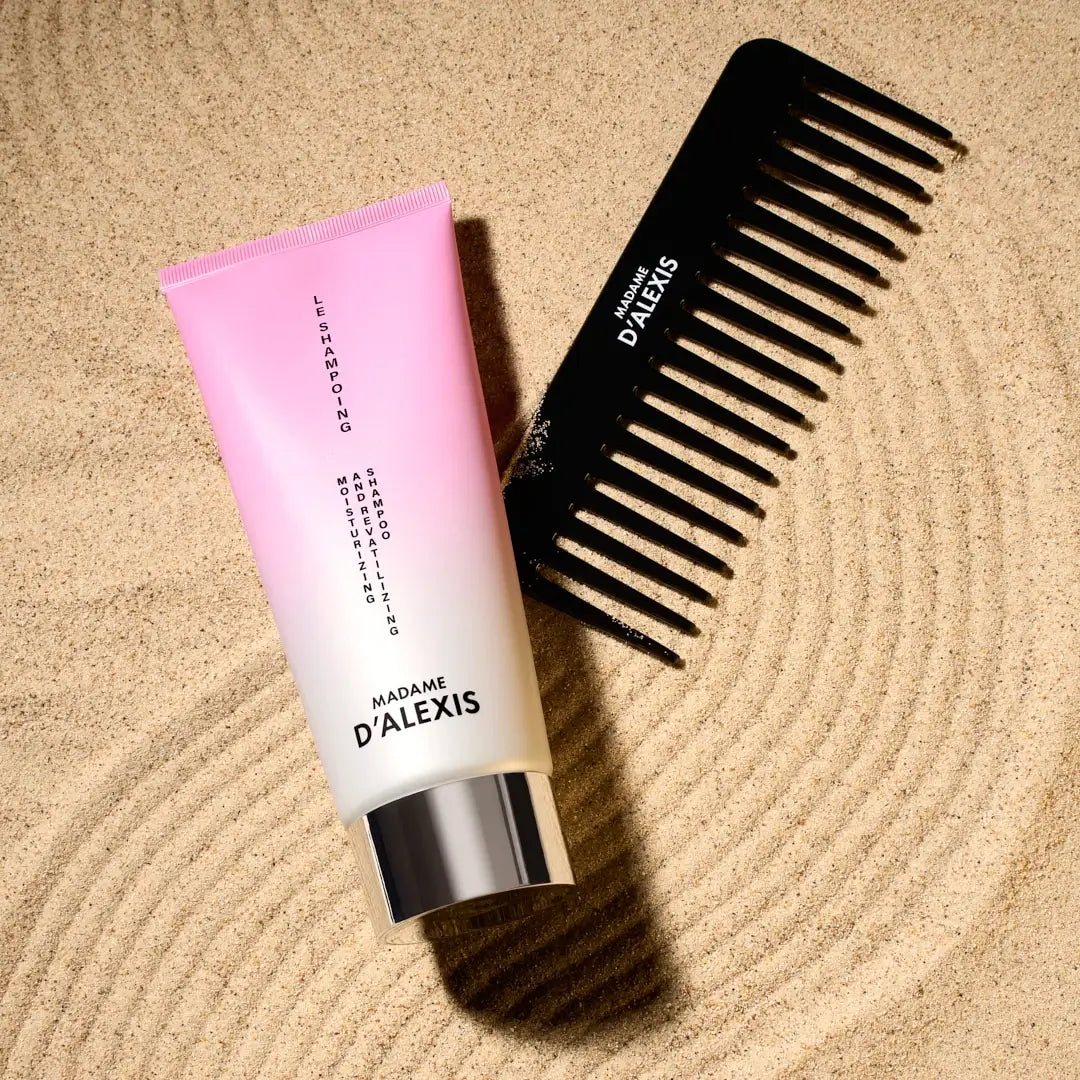
The Shampoo - Organic Hydrolats and Hyaluronic Acid
Sulfate-free · Cationic HA · Organic hydrosols
- Cleans without stripping
- Helps smooth the hair cuticle right from the first wash
- Ideal for dry, dull, or sensitized hair
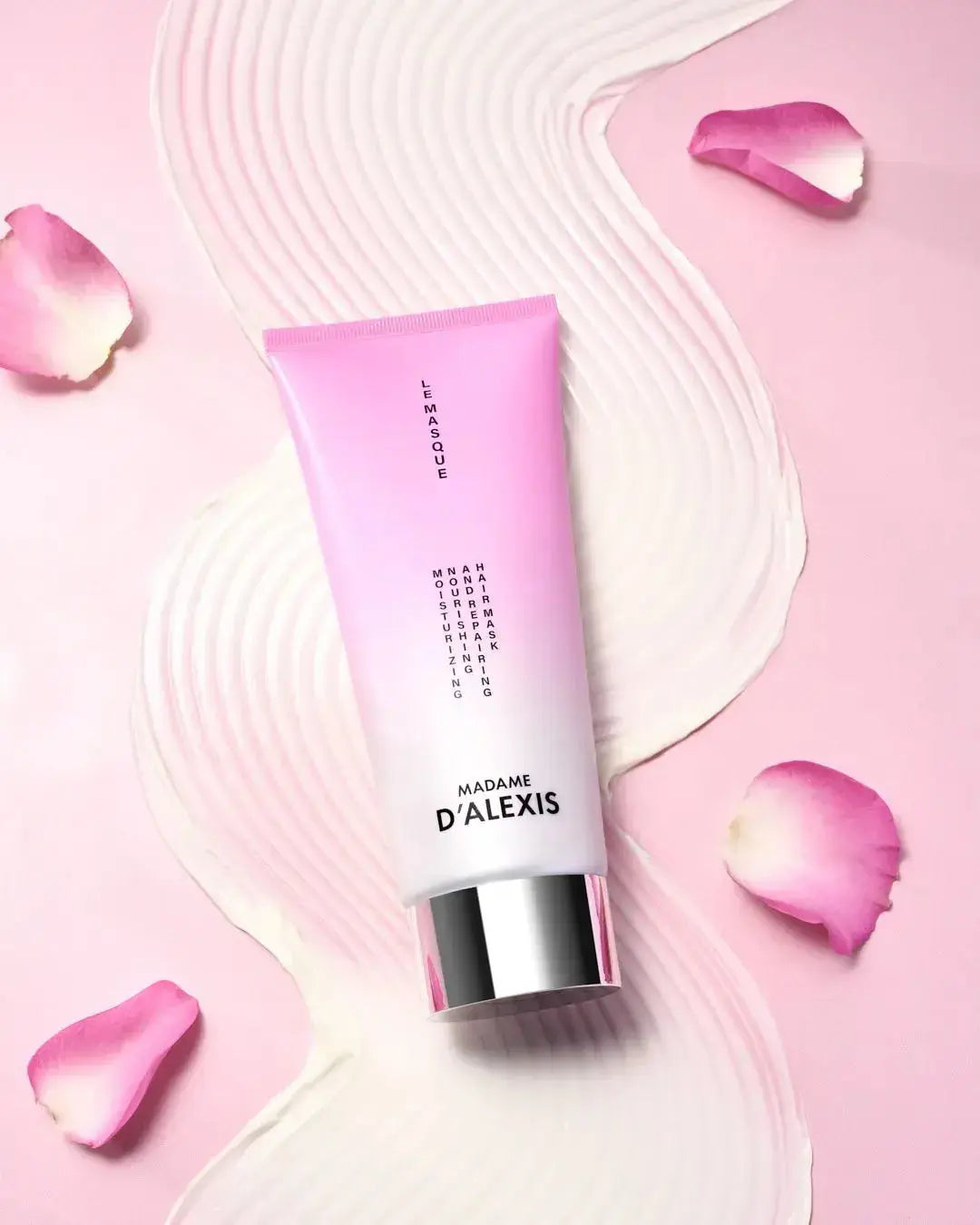
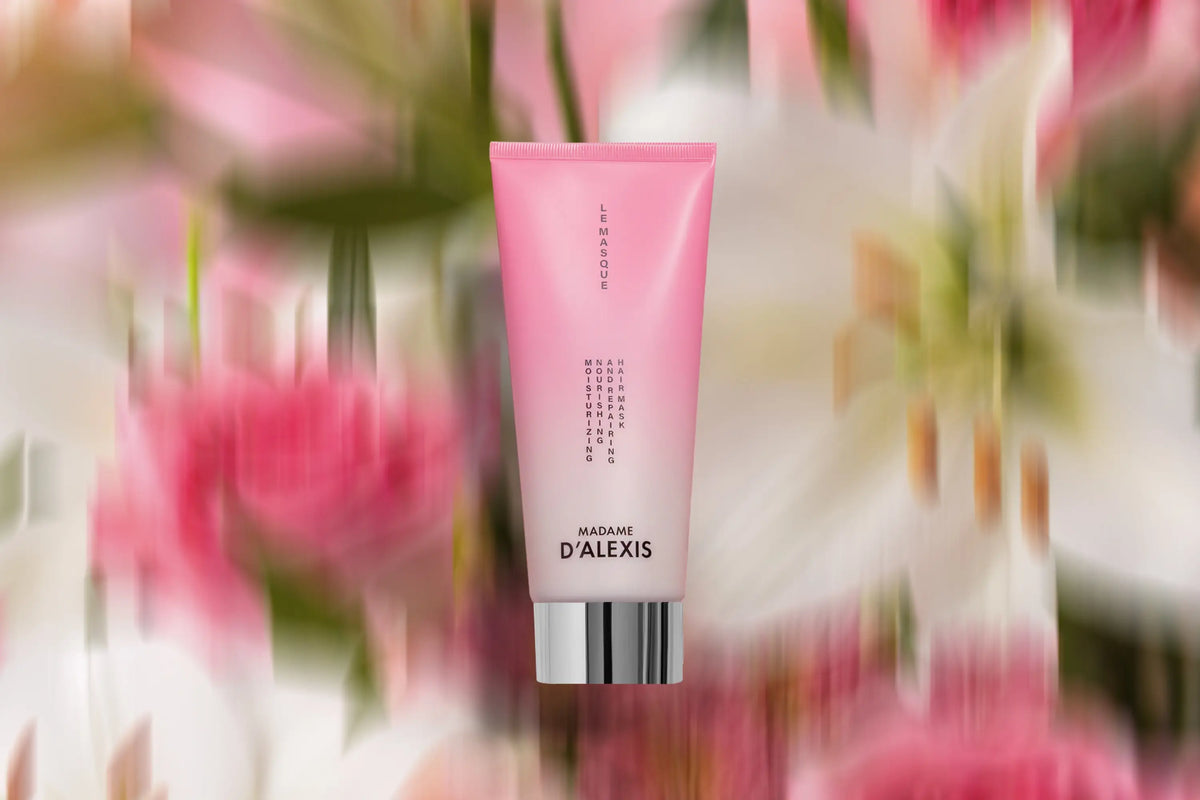
The Mask - Deep hydration with organic floral waters
Plant-derived ceramides · Cationic hyaluronic acid · Nutrition
- Restores volume to dehydrated hair
- Helps reduce breakage
- Provides softness, flexibility, and shine
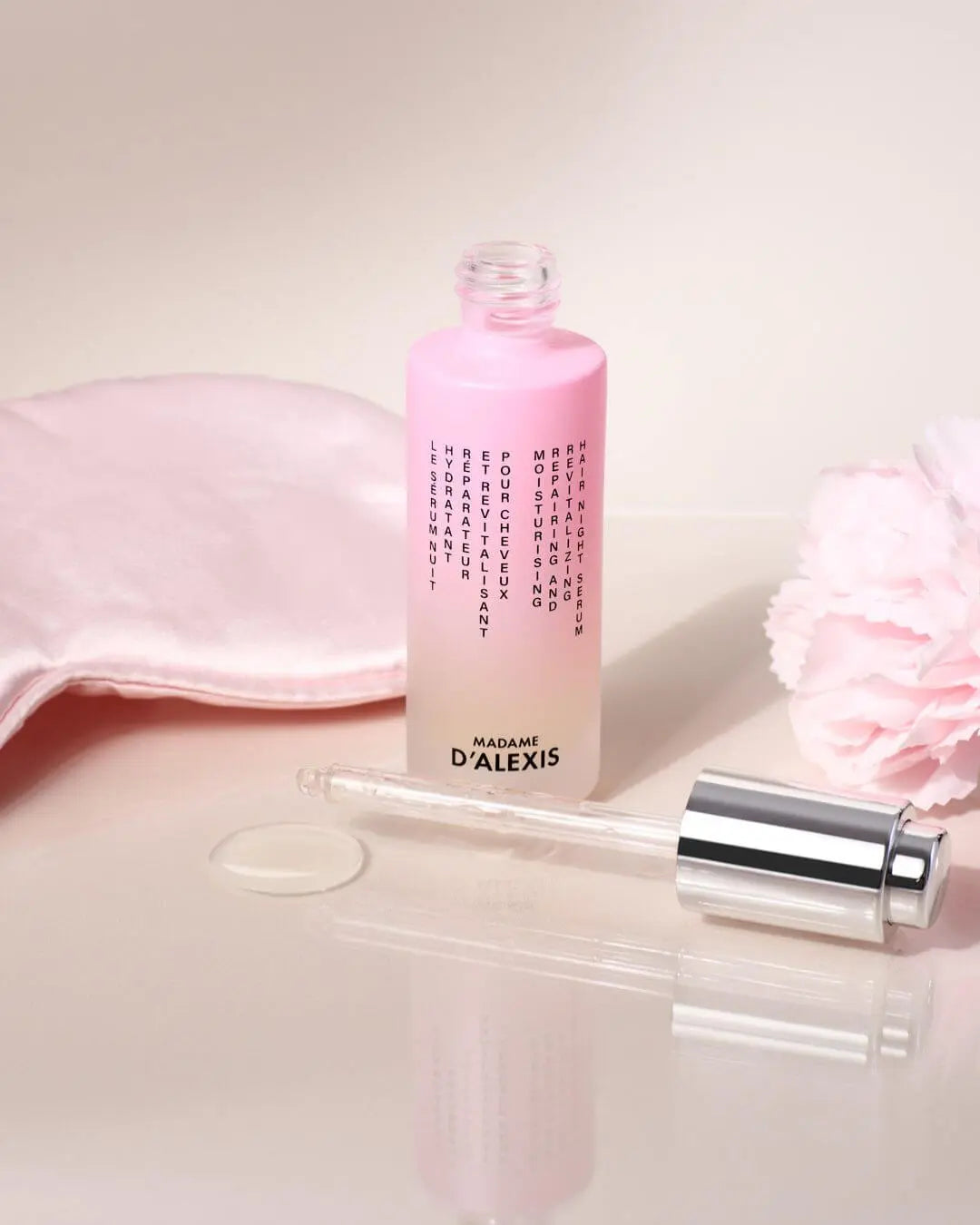
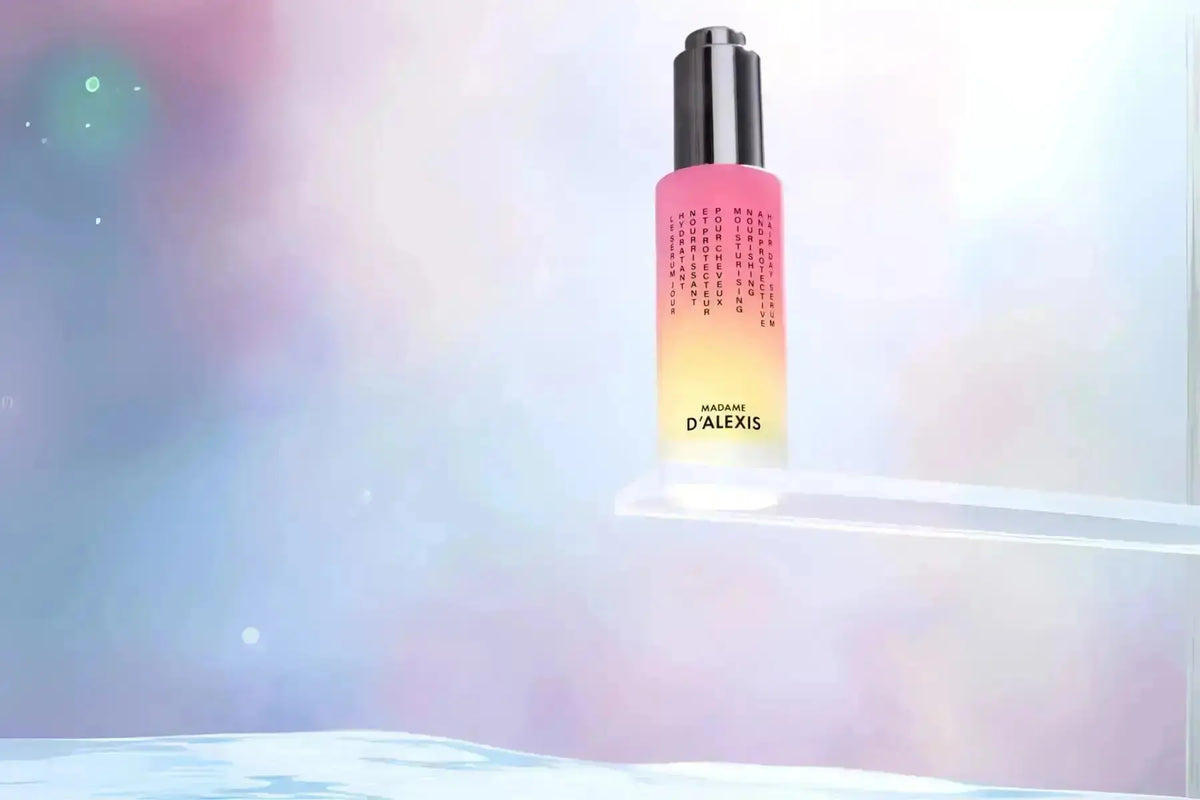
Anti-Hair Loss & Thickening Night Serum with Probiotics
Scalp · probiotics · cationic HA
- Strand-by-Strand Night Treatment
- Helps soothe the scalp
- High-intensity routine 3 to 5 evenings a week
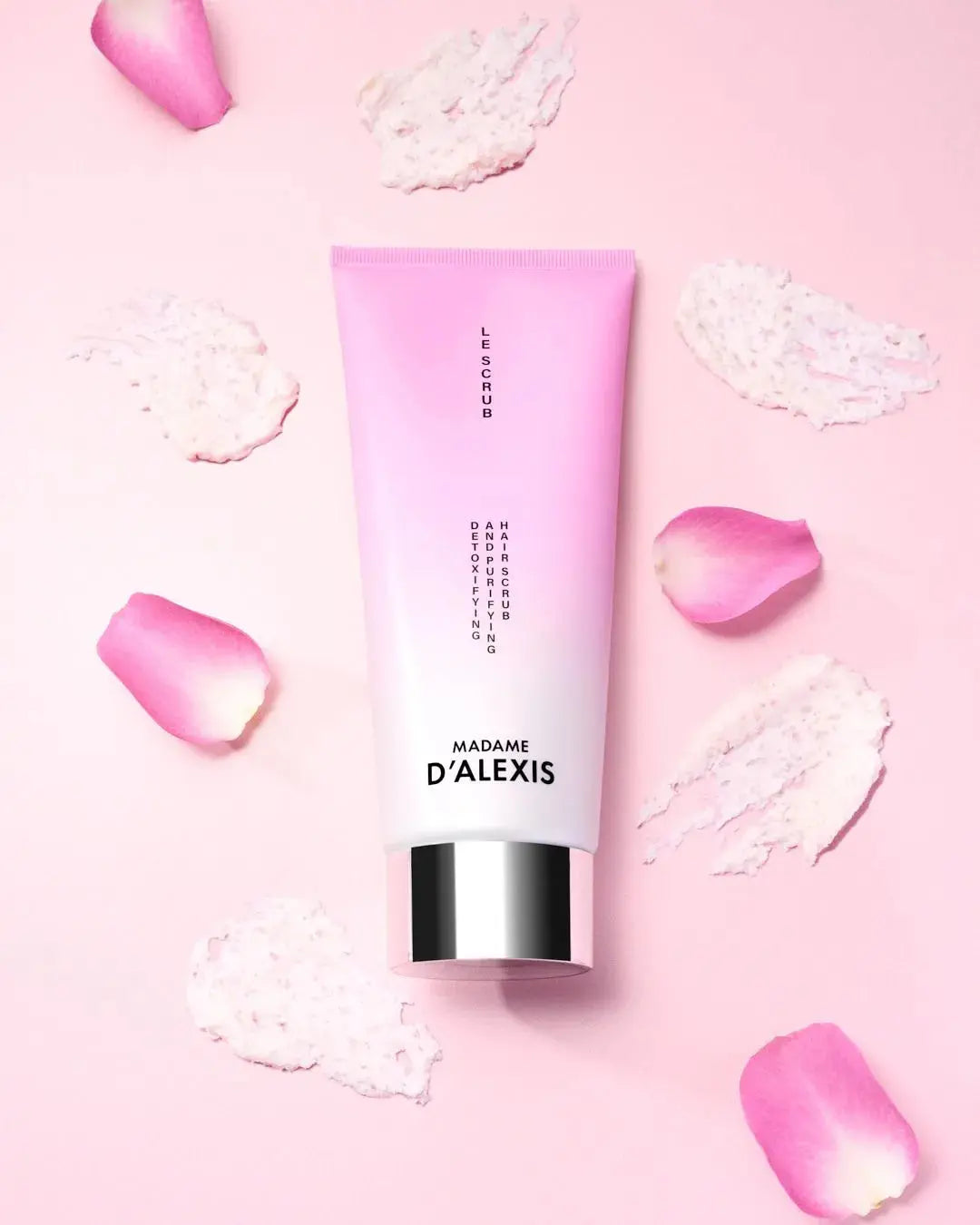
The Scrub - Exfoliating scalp shampoo with organic floral waters
Fleur de sel · organic hydrosols · cationic HA
- Exfoliates without stripping the skin
- Prepares the scalp for treatment
- Lighter, cleaner roots
What is hyaluronic acid, and how does it affect the hair shaft?
Hyaluronic acid is a molecule that occurs naturally in the body, particularly in the skin, connective tissues, and scalp. What makes it unique is that it acts like a hydrating sponge, capable of retaining a very large amount of water.
It helps the hair retain moisture, reducing dryness, roughness, and dullness.
Hair that is better hydrated becomes more flexible, easier to style, and less prone to breakage.
By visually smoothing the cuticle, it enhances light reflection and shine.
On the skin, hyaluronic acid primarily helps maintain hydration and elasticity. On the hair, it acts more as a moisturizing and protective barrier, while leaving the hair feeling softer, more supple, and more manageable.
Alexis's Cationic HA vs. Standard HA on the Market
This is a point that competitors rarely mention: not all hyaluronic acids behave the same way on the hair shaft.
Standard hyaluronic acid
- Moisturizes the skin's surface.
- May be partially removed during rinsing.
- Interesting, but not as effective for hair.
MDA Cationic Hyaluronic Acid
- Positive charge, better affinity with the hair shaft.
- Helps soothe sensitive areas.
- More effective moisturizing, smoothing, and protective benefits for hair care.
Damaged hair is naturally more negatively charged. A cationic compound—which is positively charged—has a greater affinity for the hair fiber. This is what makes it possible to create a more technically advanced treatment than simply adding a “moisturizing active ingredient” to a standard formula.
How does hyaluronic acid moisturize the hair and reduce breakage?
Dry hair becomes more porous, stiffer, and more brittle. Hyaluronic acid helps retain moisture in the hair shaft, which improves suppleness and reduces the straw-like texture.
| Visible problem | The Benefits of Hyaluronic Acid | Recommended routine |
|---|---|---|
| Frisottis | Helps smooth the cuticle and reduce water loss. | A lightweight serum or weekly mask. |
| Break | Improves the cosmetic elasticity of a weakened hair strand. | Face mask with ceramides and hyaluronic acid. |
| Dull hair | Creates a softer, brighter surface. | Mild shampoo + nourishing mask. |
| Scalp Discomfort | Helps maintain surface hydration and comfort. | Probiotic-Infused Anti-Hair Loss & Thickening Night Serum. |
The Mask - Deep hydration with organic floral waters
Plant-derived ceramides · Cationic hyaluronic acid · Nutrition
- Restores volume to dehydrated hair
- Helps reduce breakage
- Provides softness, flexibility, and shine
The Shampoo - Organic Hydrolats and Hyaluronic Acid
Sulfate-free · Cationic HA · Organic hydrosols
- Cleans without stripping
- Helps smooth the hair cuticle right from the first wash
- Ideal for dry, dull, or sensitized hair
What are the benefits for dry, curly, fine, colored, or damaged hair?
They lack moisture and suppleness. Hyaluronic acid helps restore a softer feel to the hair, especially when used in conjunction with treatments for dry hair.
Curls need light hydration. Hyaluronic acid helps reduce frizz and keep curls more supple, as a complement to curly hair care products.
It provides hydration without necessarily weighing the hair down, as long as you avoid greasy textures and don't use too much.
It helps improve the appearance of the hair after coloring, heat styling, or repeated blow-drying, especially when combined with ceramides for the hair shaft.
How do you apply hyaluronic acid to your hair? Serum, mask, or shampoo
Hyaluronic acid plays a different role depending on the texture of the product in which it is contained. It is the carrier that determines its proper use.
Ideal for infusing the active ingredient right from the wash, without weighing the hair down. The hyaluronic acid shampoo cleanses and nourishes the hair fiber from the very first step.
Perfect for dry, colored, or brittle hair. It provides deeper hydration.
Great for nighttime care, section by section, for uncomfortable or dehydrated scalps.
The Shampoo - Organic Hydrolats and Hyaluronic Acid
Sulfate-free · Cationic HA · Organic hydrosols
- Cleans without stripping
- Helps smooth the hair cuticle right from the first wash
- Ideal for dry, dull, or sensitized hair
Anti-Hair Loss & Thickening Night Serum with Probiotics
Scalp · probiotics · cationic HA
- Strand-by-Strand Night Treatment
- Helps soothe the scalp
- High-intensity routine 3 to 5 evenings a week
The Mask - Deep hydration with organic floral waters
Plant-derived ceramides · Cationic hyaluronic acid · Nutrition
- Restores volume to dehydrated hair
- Helps reduce breakage
- Provides softness, flexibility, and shine
Hyaluronic Acid for the Scalp: What Effects Does It Have on Hair Roots and Growth?
A dehydrated scalp that feels tight or itchy creates a less comfortable environment for the hair roots. Hyaluronic acid can help hydrate and soothe the scalp’s surface, especially when combined with hydrosols and prebiotics.
To learn more about the scalp, check out our guide on itchy scalp and hair loss, as well as our article on the scalp microbiome.
Dangers and Myths About Hyaluronic Acid for Hair
No, not directly. It mainly improves the fiber's moisture content, comfort, and appearance.
When used in conventional cosmetics, there are no known specific risks for the majority of users.
False. A well-balanced, consistent application is better than using too much product.
Best practice: Perform a skin test 24 hours before first use, especially if you have a sensitive, eczema-prone, or highly reactive scalp. If you are undergoing medical treatment, experience unusual hair loss, or have persistent irritation, consult a healthcare professional.
Hyaluronic Acid for Hair: Before and After—What Results Can You Expect?
The expected result is not an artificial transformation, but a gradual improvement in the fiber's cosmetic quality.
| Before the routine | After several regular uses | Why |
|---|---|---|
| Coarse hair, straw-like texture | Softer feel, more supple fiber | Improved water retention and a smoothing effect on the surface. |
| Visible frizz | More manageable hair | Visibly smoother cuticles. |
| Dull lengths | Sharper Brilliance | A more uniform surface, resulting in better light reflection. |
| Scalp Discomfort | A sense of calm | Surface hydration, hydrosols, prebiotics, and gentle active ingredients. |
Which Madame d’Alexis products containing hyaluronic acid should I choose?
The ideal routine depends on your main need. The goal isn't to pile on products, but to choose the right step at the right time.
| Need | Recommended Care | Why |
|---|---|---|
| Dry or dull hair | The Mask - Deep hydration with organic floral waters | Plant-based ceramides + cationic hyaluronic acid to nourish and plump the hair shafts. |
| Gentle, regular washing | The Shampoo - Organic Hydrolats and Hyaluronic Acid | Cleans without sulfates and moisturizes with every wash. |
| Scalp Discomfort | Anti-Hair Loss & Thickening Night Serum with Probiotics | Apply at night, section by section; microbiome, hydration, and comfort. |
| Cluttered Roots | The Scrub - Exfoliating scalp shampoo with organic floral waters | Exfoliates, removes buildup, and prepares the scalp for active ingredients. |
The Mask - Deep hydration with organic floral waters
Plant-derived ceramides · Cationic hyaluronic acid · Nutrition
- Restores volume to dehydrated hair
- Helps reduce breakage
- Provides softness, flexibility, and shine
The Shampoo - Organic Hydrolats and Hyaluronic Acid
Sulfate-free · Cationic HA · Organic hydrosols
- Cleans without stripping
- Helps smooth the hair cuticle right from the first wash
- Ideal for dry, dull, or sensitized hair
Anti-Hair Loss & Thickening Night Serum with Probiotics
Scalp · probiotics · cationic HA
- Strand-by-Strand Night Treatment
- Helps soothe the scalp
- High-intensity routine 3 to 5 evenings a week
The Scrub - Exfoliating scalp shampoo with organic floral waters
Fleur de sel · organic hydrosols · cationic HA
- Exfoliates without stripping the skin
- Prepares the scalp for treatment
- Lighter, cleaner roots
Your Questions About Hyaluronic Acid for Hair
What is hyaluronic acid for hair, and what is it used for?
It is a moisturizing molecule capable of retaining a large amount of water. When applied to the hair, it helps maintain moisture, smooth the hair shaft, reduce frizz, and add suppleness and shine.
Is hyaluronic acid for hair dangerous?
When used in conventional cosmetics, it poses no known risks to most users. It is still best to perform a skin test before first use, especially if you have a sensitive or reactive scalp.
Does hyaluronic acid promote hair growth?
It doesn't directly promote hair growth like a hair loss treatment. Its main benefit is maintaining a healthy scalp and better-hydrated hair strands—two factors that contribute to healthier-looking hair.
Can hyaluronic acid be applied to the scalp?
Yes, when it is included in a formula designed for the scalp. It can help reduce feelings of dryness, tightness, or discomfort, without leaving a greasy residue when properly formulated.
Is hyaluronic acid suitable for curly hair?
Yes, curly hair often needs light hydration to minimize frizz and maintain supple curls. Hyaluronic acid helps lock in moisture without weighing down the natural shape of the curls.
What kind of before-and-after results can you expect from hyaluronic acid for hair?
You may notice that your hair is softer, more supple, shinier, and less coarse. Results depend on the initial condition of the hair and how regularly the product is used; they generally become apparent after several washes or over the course of several weeks.
What is the difference between cationic HA and standard HA?
Cationic hyaluronic acid has a stronger affinity for the hair fiber, which is naturally negatively charged. It therefore adheres better to the hair than standard HA, which rinses out more easily.
Which Madame d’Alexis treatment should I choose if I want hyaluronic acid?
The Shampoo, Mask, Scrub, and Night Serum contain cationic hyaluronic acid. The choice depends on your needs: gentle cleansing, deep conditioning, scalp exfoliation, or overnight root care.
Should you use a hyaluronic acid serum or a hyaluronic acid mask?
The mask is ideal for dry or damaged hair. The serum is better suited for targeted application, particularly on the scalp or as part of a nighttime routine.
Does hyaluronic acid weigh down fine hair?
Not if the formula is lightweight and well-balanced. For fine hair, opt for non-greasy textures and avoid applying too much product to the lengths.
Sources
- "Improving the Mechanical Properties of Damaged Hair Using Low Molecular Weight Hyaluronan," a study on the mechanical effects of HA on bleached hair.
- Healthline - Hyaluronic Acid for Hair: A Dermatological Overview of Benefits, Precautions, and Uses.
- Verywell Health - Hyaluronic Acid for Hair: What to Know, a layman's summary of hydration, safety, and the limitations of claims regarding hair growth.
- Madame d’Alexis floral hydrosols and hair care products: Understanding the active base with no added water.
Ready to turn moisturizing into a real hair care ritual?
Start with the simplest combination: a gentle hyaluronic acid shampoo for washing, followed by a mask or serum depending on your main need.
Discover Madame d’Alexis Skincare