


Vos cheveux paraissent gonflés, indisciplinés et manquent de définition ? Vous avez des frisottis importants même après avoir appliqué un soin ? Vous souffrez probablement de cheveux mousseux.
Les cheveux mousseux sont caractérisés par des écailles ouvertes et relevées. Contrairement aux cheveux secs et cassants (effet paille), les cheveux mousseux ont un problème de porosité : ils absorbent trop d'humidité et gonflent, créant cet aspect floue et indiscipliné.
La bonne nouvelle ? Avec la bonne routine et les bons produits naturels, vous pouvez dompter vos cheveux mousseux en seulement 7 jours. Découvrez comment ci-dessous.
Five essential steps to tame frizzy hair
- Opt for gentle cleansing: choose a moisturizing sulfate-free shampoo (ideally enriched with floral waters and hyaluronic acid) to cleanse without stripping the cuticle.
- Provide deep nourishment: apply a creamy mask rich in ceramides or, if you don't have any, a homemade mixture of yogurt, honey, and argan oil; leave on for at least twenty minutes to plump up the hair fiber.
- Sceller l’hydratation : quelques gouttes d’huile légère — pépins de raisin comme soin pour cheveux fins, argan pour épaisseur moyenne — fixent l’eau et lustrent instantanément la surface.
- Protect from heat and humidity: before blow-drying or straightening, apply a heat-protective serum; always finish with a blast of cool air to close the cuticles.
- Reduce daily friction: swap your cotton towel for a microfiber one, sleep on a silk pillowcase, and detangle your hair with a wide-tooth comb in the shower; this will reduce recurring frizz by 70%.

Understanding foaminess: causes, structure, and porosity
Why does my hair become frizzy? Humidity, static electricity, and friction.
If there is one hair problem that even the most prestigious salons dread, it is frizz, which betrays dehydrated hair. When the air is saturated with moisture, keratin expands; protein chains, thirsty for water, stretch and lift the cuticle. A summer storm is enough to transform smooth hair into an unruly cloud.
Add to this insufficient sebum production: deprived of its lipid film, the hair shaft dries out and absorbs every molecule of moisture in the environment. Finally, friction from vigorous brushing, rough towels, or cotton pillowcases creates static electricity, which further opens the cuticles. The result? Unruly volume and lackluster shine.
Les cheveux mousseux sont également souvent liés à des cheveux secs et cassants.
Role of water and humidity in opening hair cuticles
- Hygroscopy: the fiber absorbs up to 30% of its weight in water, swells, and becomes bristly.
- Osmotic pressure: the difference between internal and external humidity causes the cuticles to lift permanently.
Insufficient sebum production and dry hair
- Sebum: natural hydrolipidic barrier; when absent, it leaves the surface porous.
- Imbalance in washing: shampooing too frequently strips the hair fiber of this protection.
Mechanical damage (brushing, towel, pillow)
- Abrasive textile fibers: conventional cotton, terry cloth, wool.
- Invisible micro-damage: each friction cracks the keratin, amplifying the foamy phenomenon.
Capillary porosity and open cuticle: home diagnosis
Water glass test: low, medium, or high porosity
Dip a clean strand of hair into a glass of water at 20°C:
- It floats: low porosity, closed cuticle.
- It descends slowly: medium porosity.
- It flows quickly: high porosity, gaping scales.
Tactile analysis: rigidity, elasticity, sensitivity
- Coarse hair, straw-like sound under your fingers: damaged cuticle.
- Lack of elasticity: imminent risk of breakage.
Impact of coloring, straightening, and highlighting
Each alkaline process artificially opens the scale to deposit pigment or break disulfide bonds; repeated, it makes the cuticle permanently porous.
Frizz, frizz, and breakage: how fiber reacts to chemical damage
Sulfated surfactants (lauryl sulfate) and dryness
An anionic surfactant removes 80% of protective lipids in one wash; the fiber becomes hydrophilic, and therefore foamy.
Alcohol and hairspray: instant porosity
Alcohol dehydrates, aerosol lifts cuticles; the hold seems perfect, but the downside is hair that feels brittle to the touch.
Excessive heat: Brucke bulbs and microcracks
Above 200°C, the internal water boils, forming bubbles—known as Brucke bulbs—which crack the stem. This micro-explosion is visible to the naked eye as a cloud of irreversible frizz.
By mastering these mechanisms, you will lay the foundations for a luxurious routine that smooths, moisturizes, and provides long-lasting protection for the hair fiber.

Pourquoi les cheveux deviennent mousseux ?
Comprendre les causes de vos cheveux mousseux est essentiel pour les traiter efficacement. Voici les 5 principales raisons.
-
Porosité élevée (cause principale)
Vos cheveux ont une porosité élevée : les écailles sont largement ouvertes et laissent entrer et sortir l'humidité facilement. Résultat : vos cheveux gonflent au contact de l'humidité ambiante.
Causes de la porosité élevée :
- Dommages chimiques (colorations répétées, défrisages)
- Chaleur excessive (sèche-cheveux, lisseur sans protection)
- Manque de protéines dans la fibre
-
Humidité ambiante (facteur déclencheur)
L'humidité est l'ennemi numéro 1 des cheveux mousseux. Quand l'air est humide, vos cheveux absorbent l'eau et gonflent, créant des frisottis. C'est pourquoi vos cheveux mousseux s'aggravent :
- En été (chaleur + humidité)
- Près de la mer ou à la piscine
- Après une douche chaude
- Dans les salles de bain
-
Manque de protéines
Les protéines (kératine, collagène) renforcent la fibre et ferment les écailles. Sans protéines suffisantes, vos écailles restent ouvertes et absorbent l'humidité.
-
Mauvais produits capillaires
Certains produits contiennent des silicones ou des polymères qui étouffent la fibre et aggravent le mousseux. Les shampoings trop agressifs ouvrent aussi les écailles.
-
Manque de sébum naturel
Vos glandes sébacées ne produisent pas assez d'huile naturelle pour sceller les écailles. Sans cette barrière protectrice, l'humidité pénètre facilement.
Diagnostic : avez-vous vraiment des cheveux mousseux ?
Vérifiez ces signes :
- ✓ Cheveux gonflés et sans forme bien définie
- ✓ Frisottis importants, surtout en cas d'humidité
- ✓ Aspect floue et indiscipliné
- ✓ Cheveux qui gonflent après le lavage
- ✓ Manque de brillance et de définition
Si vous avez 3 ou plus de ces signes, vous avez bien des cheveux mousseux.
Develop a comprehensive and evolving routine to combat frizzy hair
Step 1: Gentle washing: choosing the right shampoo for porous hair
What is the best shampoo for porous hair?
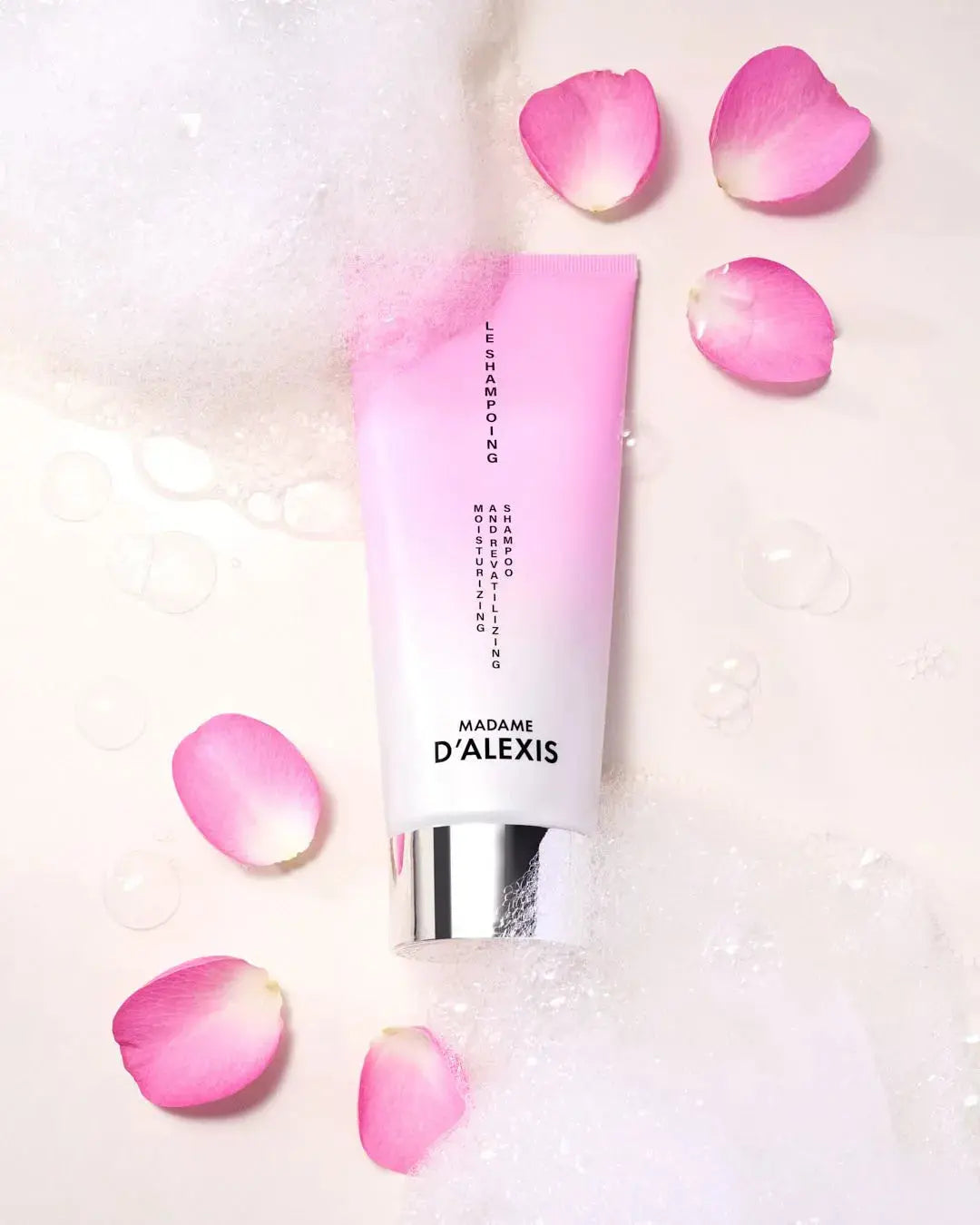
– Madame d’Alexis moisturizing and revitalizing shampoo
- 98% natural ingredients; organic rose, chamomile, and orange blossom hydrosols.
- Cationic hyaluronic acid: plumps up the fiber and locks in moisture.
- Plant-based keratin: fills micro-cracks and smooths the cuticle.
– Homemade option: neutral cleansing base, add aloe vera gel and a dash of plant-based glycerin to retain moisture.
– Pre-poo: apply warm coconut oil fifteen minutes before washing; coconut, rich in lauric acid, penetrates the cortex and limits the detergent effect.
Personal insight: I discovered rose massage during a consultation at the Park Hyatt Tokyo; since then, I always rub three drops of hydrosol onto my neck before shampooing: the lather is silkier and my scalp remains calm.
Step 2: Deep nourishment and hydration for the hair
Masque réparateur, après-shampoing et « squish to condish »
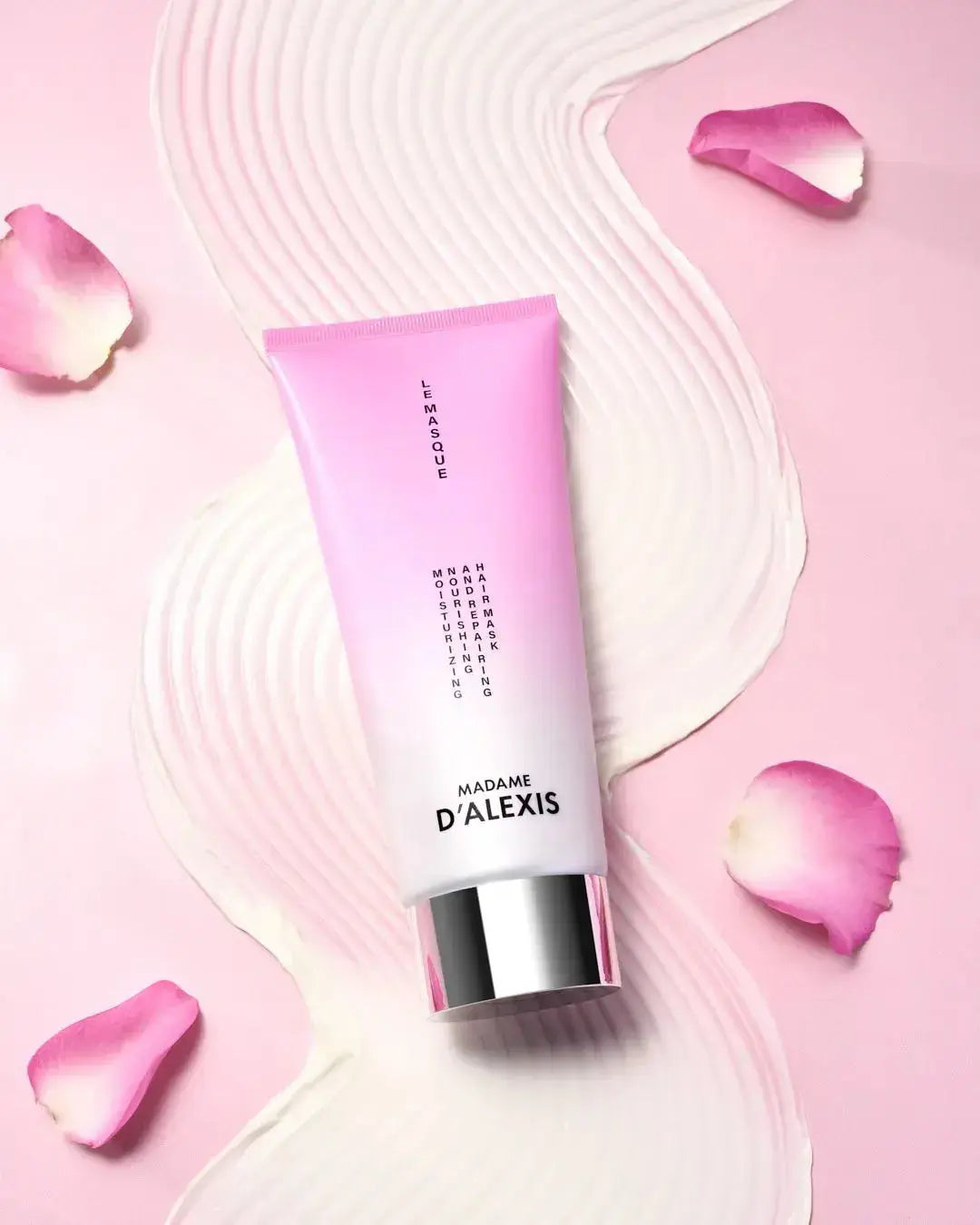
- Madame d'Alexis mask: plant ceramides, orange blossom wax, high molecular weight hyaluronic acid. Apply from lengths to ends, pressing gently to help the hair fiber absorb the product.
- Quick recipe: Greek yogurt, raw honey, virgin argan oil. The lactic proteins saturate the hair shaft with water; the polyphenols in honey seal in shine.
- Processing time: 20 minutes under a heated cap for salon-quality results. Overnight (baggy method) if the cuticle is very open; rinse with lukewarm water when you wake up.
Step 3: Seal and protect the hair
Serums, light oils, and targeted leave-in treatments
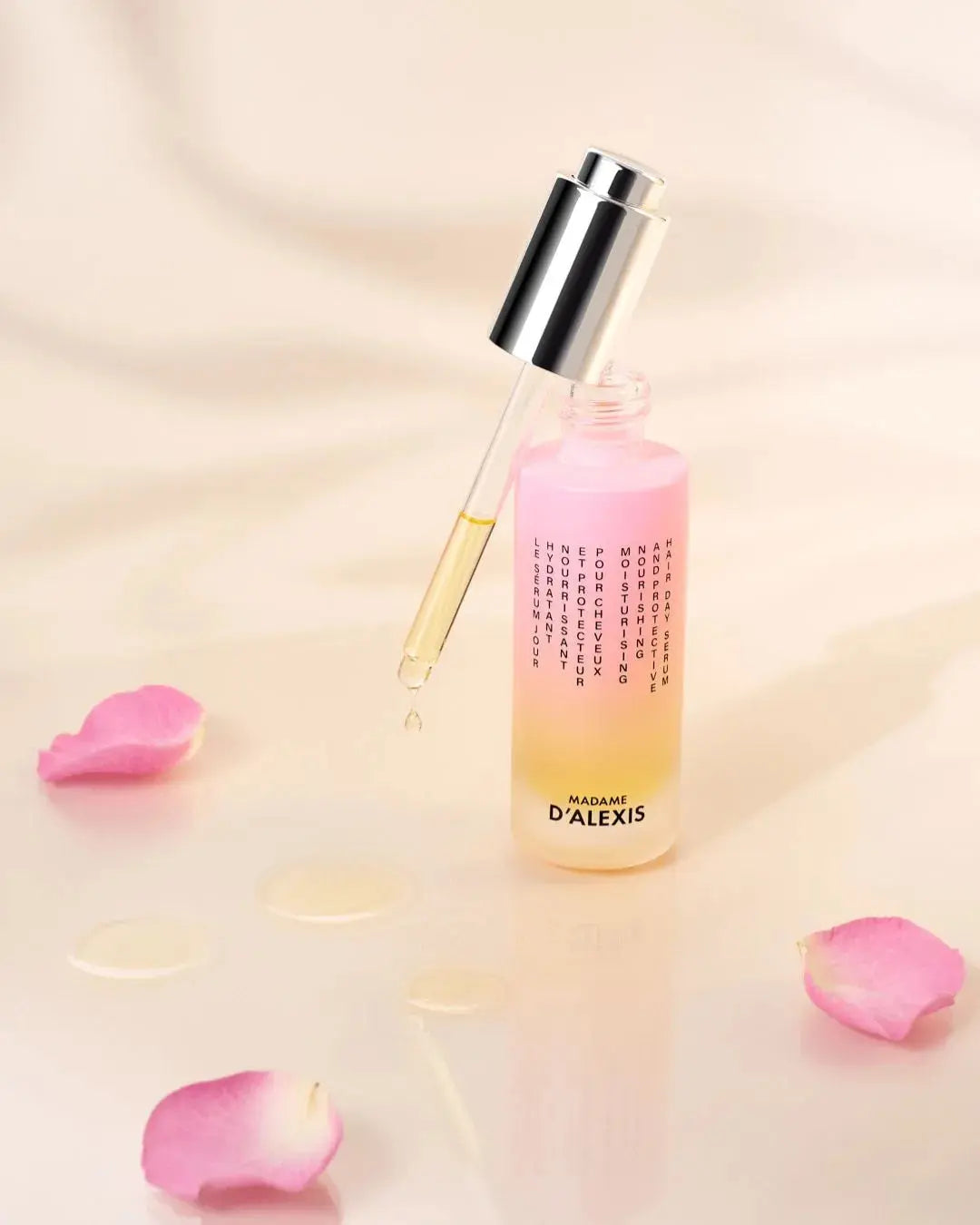
- Madame d'Alexis Day Serum: blend of precious oils and ceramides, immediate anti-frizz effect, heat protection up to 200°C.
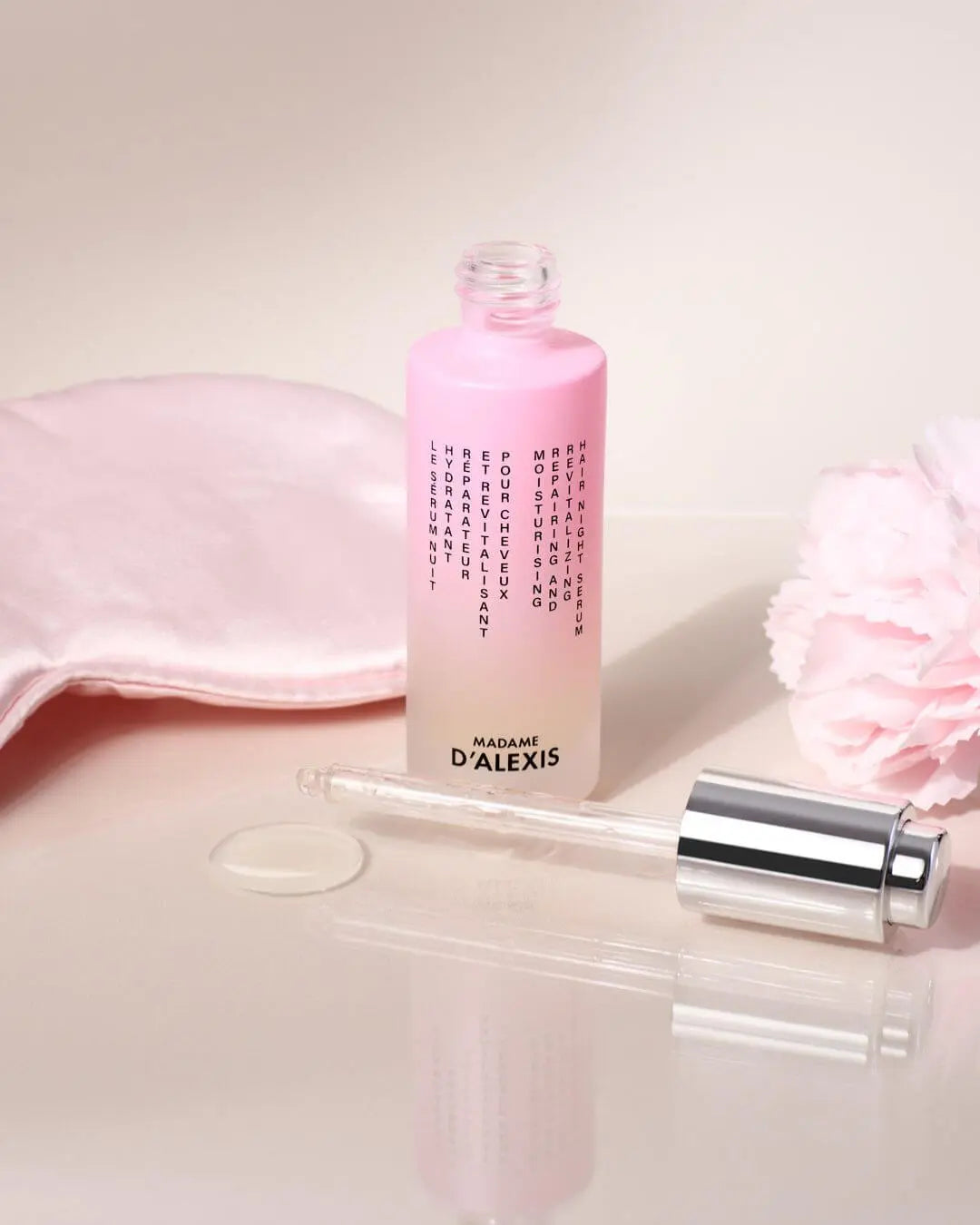
- Madame d'Alexis Night Serum: probiotics and low molecular weight hyaluronic acid; it strengthens the scalp's microbiome while you sleep.
- LOC or LOG methods depending on texture: Liquid (hydrosol) – Oil (dry jojobaoil ) – Cream (light cream) for thick hair. Liquid – Oil – Aloe gel for fine hair in need of hold.
Step 4: Detox and stimulation of the scalp
Targeted scrub and homemade exfoliator
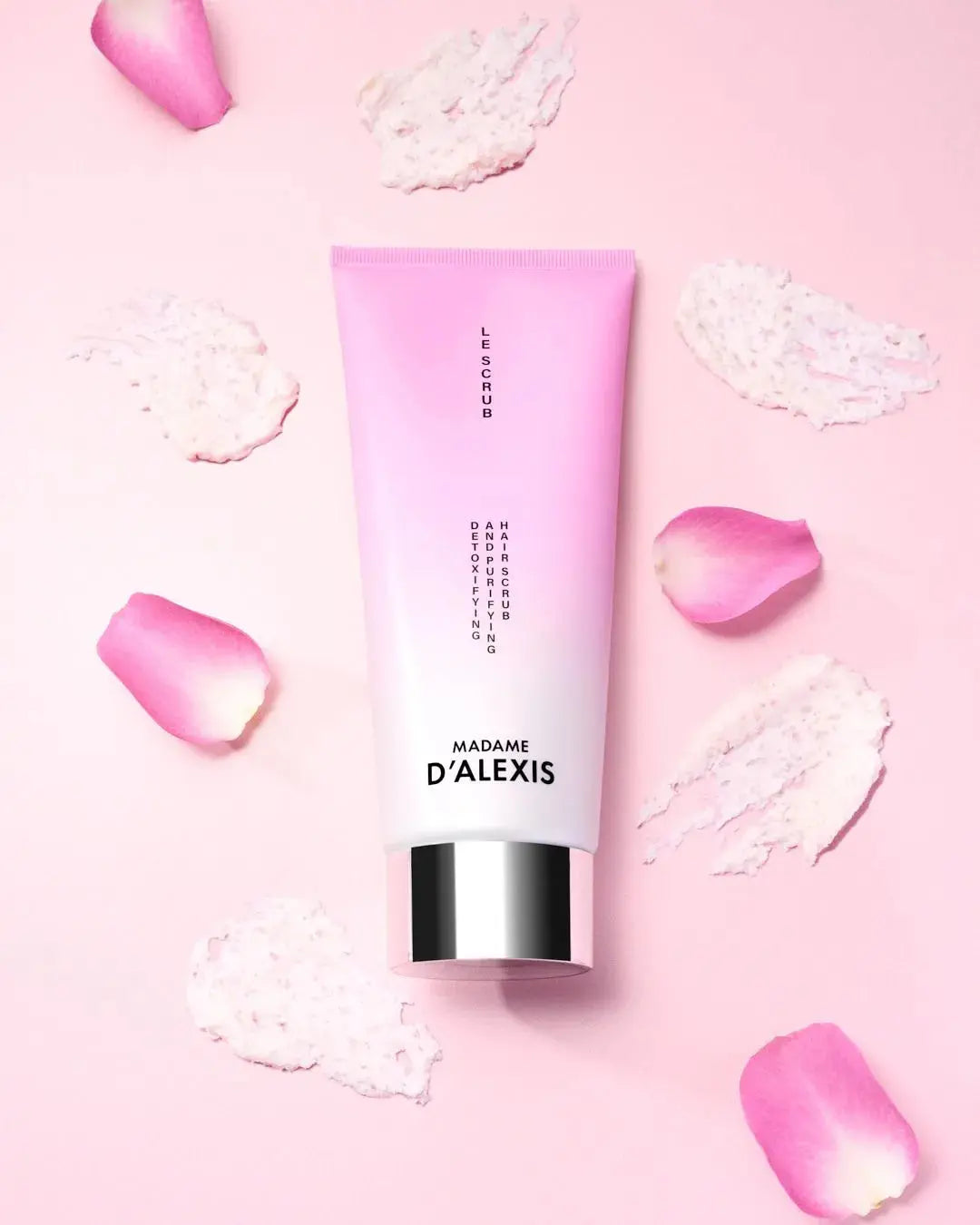
- Madame d'Alexis scrub: Breton fleur de sel, rose hydrosols, and orange blossom wax. Use once every two weeks; the grains melt, microvascular circulation is boosted, and the roots breathe.
- Brown sugar + olive oil scrub: a delicious alternative, ideal before a steam bath.
- Why purify? A healthy scalp optimizes light refraction along the length of the hair; shine appears to double, and the hair gains volume and body.
Science dictates that each ritual should end with a rinse at 18°C: this simple step closes the cuticle, locks in moisture, and promises frizz-free, supple, and shiny hair.
What are the best products for frizzy hair?
Madame d'Alexis essentials for taming frizzy hair
Natural remedies and daily habits to reduce frizz and flyaways
Vegetable oils suited to every level of porosity
Hair fiber, like haute couture fabric, does not absorb all oils with the same intensity. First identify your porosity, then choose the precious texture that will seal in moisture and tame frizzy hair.
- Low porosity: a few drops of grape seed or jojoba oil glide over the surface without weighing it down; their ultra-light film limits the absorption of external moisture.
- Medium porosity: opt for argan or avocado; these elixirs balance nutrition and hydration, just as a tailor-made cardigan hugs the figure.
- High porosity: coconut and castor oil, rich in C12-C18 fatty acids, penetrate deeply and seal open cuticles. Massage strand by strand, leave on for twenty minutes under a satin cap, then rinse gently.
A little personal anecdote: during a stay in Essaouira, I watched net weavers coat their hair with argan oil before facing the salty wind; not a single strand frizzed despite the sea spray. Clear proof of the effectiveness of this Moroccan treasure.
Hydrosols, aloe vera, apple cider vinegar: acidic rinses to close the cuticle
A slightly acidic pH (4.5–5) instantly closes the cuticles, reflects light, and leaves hair shiny. After shampooing:
- Spray a mist of rose hydrosol onto damp hair.
- Pour a spoonful of apple cider vinegar into 500 ml of cold water, pour it over the lengths of your hair, then wring it out without rinsing.
- Finish with pure aloe vera gel; its polysaccharides create an ideal moisturizing and anti-static barrier.
Microfiber towel, silk pillowcase, boar bristle brush: reduce friction
The battle against frizz also takes place outside the bathroom. Choose high-quality accessories; they protect the cuticle like a lining protects a luxury trench coat.
- Microfiber: absorbs excess water without rubbing or swelling the fiber.
- Silk: reduces static electricity by 43% during the night, according to tests carried out by a laboratory in Ticino.
- Boar bristles: distribute sebum from root to tip, replacing drying sprays with a natural hairspray.
Low-temperature diffusion, plopping, air drying 75%: limit heating
- Diffusion at a maximum temperature of 60°C: warm air sculpts curls without damaging keratin.
- Plopping: wrap your hair in a jersey T-shirt; frizz is trapped under the fabric, and definition is enhanced.
- Open air 75% + cold finish: allow moisture to evaporate naturally, finish with a blast of cold air to seal the cuticle.
These simple steps transform your hair care routine into a true beauty ritual, where every detail contributes to smooth, silky hair that is completely free of frizz.

Common mistakes to avoid with frizzy hair
Even the most exquisite routines can be sabotaged if a few missteps persist. Frizzy hair reacts to the slightest deviation; eliminate these habits and you will give it a second lease on life.
- Shampoos that lather too much, harsh sulfates: lauryl sulfate removes 80% of the hydrolipidic film from the first rinse; the bare fiber swells at the slightest hint of moisture.
- Brushing dry hair with a cotton towel: each stroke creates invisible micro-tears. Opt for microfiber towels and detangle your hair in the shower with your fingers coated in conditioner.
- Straightening irons above 180°C without protective spray: keratin reaches its melting point, Brucke bubbles burst in the cortex, and breakage becomes inevitable.
- Chronic dehydration: skipping leave-in treatments allows evaporation to dry out your hair for eight hours. A milky veil rich in hyaluronic acid preserves 30% more moisture.
- Overuse of hairspray, alcohol-based gel, silicone mousse: alcohol dehydrates the hair, while non-volatile silicones build up and suffocate the cuticle. Hair looks shiny one evening, dull a week later.
Personal note: during the last fashion week, I saw a hairdresser remove a layer of silicone residue with an acid detox before applying any hairspray. The model, amazed, regained a shine she thought was lost; proof that luxury sometimes starts with a simple clean.
Routine anti cheveux mousseux (7 jours) : dompter vos cheveux naturellement
Voici la routine complète pour dompter vos cheveux mousseux en seulement 7 jours.
Jour 1-2 : Nettoyage doux et masque protéiné
Mild shampoo (sulfate-free)
- Utilisez un shampoing doux et naturel qui ne dessèche pas
- Évitez les shampoings trop agressifs qui ouvrent les écailles
- Massez délicatement sans frotter
Masque protéiné (30 minutes)
- Appliquez un masque riche en protéines (kératine, collagène)
- Les protéines scellent les écailles et réduisent le mousseux
- Enroulez dans une serviette chaude
- Résultat : cheveux plus lisses et disciplinés immédiatement
Jour 3-4 : Sérums et huiles légères
Sérum anti-frisottis (quotidien)
- Appliquez sur cheveux humides après le shampoing
- Scelle l'hydratation et crée une barrière contre l'humidité
- Résultat immédiat : cheveux plus lisses et brillants
Huile légère (2-3 fois par semaine)
- Utilisez une huile légère (jojoba, argan) plutôt qu'une huile lourde
- Appliquez sur les pointes et les longueurs
- Scelle les écailles et réduit les frisottis
Jour 5-7 : Routine complète
Shampoing doux + masque protéiné + sérum + huile légère
- Répétez la routine des jours 1-4
- Vos cheveux devraient être visiblement plus lisses et disciplinés
- Continuez cette routine 2-3 fois par semaine pour maintenir les résultats
Anti-frizz hairstyles and accessories
Protective hairstyles: braids, twists, low buns
Mechanical protection is your best friend when it comes to frizzy hair. A side braid or a low bun wrapped around itself limits exposure to moisture and prevents friction against the collar of your coat.
Vanilla extracts lock in moisture while creating a refined wave for the next day; a light application of Madame d'Alexis serum before styling is all it takes to seal the deal.
Boar bristle brush vs. wide-tooth comb: when to choose one or the other
- Boar bristles: ideal for straight or wavy hair with low porosity. The scales remain closed; the brush distributes sebum like a natural gloss and smooths frizz without damaging the hair fiber.
- Wide-tooth comb: essential for curls and thick strands. Used on wet hair coated with conditioner, it detangles without breaking the spiral structure.
Tip: every evening, slide the brush, bristles facing down, between the mesh of a silk net. It will not collect dust or moisture, and your next brushing session will remain a masterful gesture, worthy of the backstage of a haute couture fashion show.

What are the differences between frizzy hair and frizz?
Two phenomena, frequent confusion
- Frizzy hair: the entire hair fiber swells; the cuticle remains open, moisture evaporates, and volume becomes diffuse. The problem is structural; it occurs even in dry weather and requires a deep repair routine.
- Frizzy hair: unruly strands that stick up, creating a hazy halo. The core of the hair fiber may remain healthy; moisture or static electricity is enough to lift a few cuticles. A one-time smoothing treatment or a drop of serum is often enough to tame them.
Why the distinction matters
- Adapt your response: frizzy hair requires a nourishing mask, sealing serum, and regular trims, while simple frizz can be tamed with an anti-humidity spray.
- Understanding duration: frizz is episodic; the frizzy effect sets in and worsens without targeted treatment.
Les meilleures huiles et sérums pour cheveux mousseux
Huile de jojoba (★★★★★ - 95% d'efficacité)
Similaire au sébum naturel, elle régule la production d'huile et scelle les écailles. Légère et pénétrante, idéale pour tous les types de cheveux mousseux.
- Utilisation : sérum quotidien ou bain d'huile
- Fréquence : quotidienne ou 2-3 fois par semaine
- Résultat : cheveux lisses et disciplinés en 2-3 jours
Découvrez notre guide complet sur l'huile de jojoba et la pousse des cheveux pour plus de détails.
Huile d'argan (★★★★ - 88% d'efficacité)
Riche en acides gras et vitamine E. Scelle les écailles et réduit les frisottis. Moins lourde que l'huile de coco.
- Utilisation : sérum ou bain d'huile léger
- Fréquence : 2-3 fois par semaine
- Résultat : cheveux plus lisses en 1 semaine
Huile de coco (★★★ - 75% d'efficacité)
Protéine naturelle qui scelle les écailles. Attention : peut être trop lourde pour cheveux fins ou très mousseux.
- Utilisation : masque maison ou Madame d'Alexis 1 fois par semaine
- Fréquence : 1 fois par semaine maximum
- Résultat : cheveux plus doux en 1 semaine
Protéines de soie (★★★★★ - 98% d'efficacité)
Les protéines de soie sont les plus efficaces pour sceller les écailles et réduire les frisottis. Elles renforcent aussi la fibre.
- Utilisation : masque ou sérum
- Fréquence : 2-3 fois par semaine
- Résultat : cheveux lisses et disciplinés en 2-3 jours
Les 5 erreurs qui aggravent les cheveux mousseux
-
Utiliser un sèche-cheveux trop chaud
La chaleur ouvre les écailles et aggrave le mousseux. Si vous utilisez un sèche-cheveux :
- Utilisez une température basse ou tiède
- Appliquez un spray protecteur thermique avant
- Séchez dans le sens des écailles (du haut vers le bas)
-
Brossage agressif
Brosser vos cheveux mouillés ouvre les écailles et crée des frisottis. Utilisez plutôt :
- Une brosse en poils de sanglier (naturelle)
- Un peigne à dents larges
- Brossez délicatement sur cheveux secs ou légèrement humides
-
Utiliser des produits chimiques agressifs
Les shampoings avec sulfates, les silicones et les polymères aggravent le mousseux. Préférez :
- Shampoings naturels sans sulfates
- Produits sans silicones
- Huiles naturelles plutôt que sérums chimiques
-
Négliger les protéines
Sans protéines, vos écailles restent ouvertes. Utilisez régulièrement :
- Masques protéinés (2-3 fois par semaine)
- Sérums avec protéines de soie
- Huiles riches en protéines
-
Exposer vos cheveux à l'humidité sans protection
L'humidité est l'ennemi des cheveux mousseux. Avant de sortir :
- Appliquez un sérum anti-frisottis
- Utilisez une huile légère
- Envisagez un spray protecteur anti-humidité
Conseils pratiques pour dompter les cheveux mousseux au quotidien
Utilisez une brosse en poils de sanglier
La brosse en poils de sanglier est la meilleure solution naturelle pour les cheveux mousseux. Elle :
- Lisse les écailles dans le sens naturel
- Distribue le sébum naturel sur toute la longueur
- Réduit les frisottis sans agresser la fibre
- Donne de la brillance et de la définition
Appliquez un sérum anti-frisottis avant de sortir
Si vous sortez dans un environnement humide (plage, piscine, salle de bain), appliquez toujours :
- Un sérum anti-frisottis
- Une huile légère
- Un spray protecteur
Évitez les douches trop chaudes
L'eau chaude ouvre les écailles. Préférez :
- Des douches tièdes ou froides
- Un rinçage final à l'eau froide pour sceller les écailles
- Un vinaigre blanc dilué en dernier rinçage (ferme les écailles)
Dormez sur une taie d'oreiller en soie
Le coton crée des frottements qui ouvrent les écailles. La soie :
- Réduit les frottements
- Préserve l'hydratation
- Réduit les frisottis pendant la nuit
Protégez vos cheveux avant la piscine ou la plage
Le chlore et le sel assèchent les cheveux et aggravent le mousseux. Avant d'aller à la piscine :
- Appliquez une huile protectrice
- Portez un bonnet de bain
- Rincez immédiatement après avec de l'eau douce
Frequently asked questions – quick answers to the problem "What to do about frizzy hair?"
Why is my hair foamy right after showering?
When the cuticle, dilated by hot water, remains open during drying, the residual moisture evaporates too quickly; the fiber shrinks, swells, and then stands on end.
Two simple steps are all it takes: finish your shower with a 20°C spray to close the pores, then gently pat dry with a microfiber towel. I always add three drops of rose hydrosol, a reminder of a Balinese spa, to acidify the surface and prevent swelling.
What light oil is suitable for fine, frizzy hair?
Fine hair requires an almost imperceptible texture; opt for:
- Grape seeds: omega-6 fatty acids, non-occlusive film.
- Jojoba: similar in composition to human sebum, regulates without weighing down the skin.
Warm half a pipette between your palms, press onto damp lengths; the oil seals in moisture without altering volume.
How to use a protective serum before using a hair straightener?
A high-precision serum must combine film-forming agents and heat-protective active ingredients. Proceed as follows:
- On towel-dried hair, distribute a pea-sized amount of Madame d'Alexis Day Serum per section.
- Dry to 70% in the open air; the fiber absorbs the treatment better.
- Set the iron to a maximum temperature of 170°C; the ceramide + hyaluronic acid barrier limits the formation of Brucke bubbles, which are responsible for breakage.
Tip: spray a mist of hydrosol immediately after straightening; this will boost shine without making the hair feel stiff.
What signs of high hair porosity should I be aware of?
- Hair that sinks in less than thirty seconds during the glass of water test.
- Rough texture, straw-like sound when crumpled between two fingers.
- Quick drying in the open air but constant feeling of thirst.
- Color that washes out after the second shower: the cuticle allows pigments to escape as quickly as moisture.
- Given these signs, opt for masks rich in ceramides and systematic acid rinsing.
Can you color hair that is already porous without making frizz worse?
Yes, provided that a sensible luxury strategy is implemented:
- Before: one-week treatment with plant-based keratin to fill in the gaps.
- During: use ten-volume oxidants, which are less aggressive, and request the addition of Plex to bond the disulfide bridges.
- After: seal in the color at the salon with Alexis' Madame Mask; the cuticle, saturated with hyaluronic acid, retains the color and prevents frizz.
How to get rid of frizzy hair?
To truly get rid of frizzy hair, target the cause: dehydration. Start by washing your hair with a mild shampoo enriched with hyaluronic acid. Follow with a moisturizing mask, then seal in the moisture with a light oil. Finish with an anti-humidity styling product. This hair care routine reduces frizz and prevents hair from becoming dull or unmanageable.
What care is needed for frizzy hair?
The best treatments for frizzy hair are as follows:
- Gentle sulfate-free shampoo to preserve the lipid film.
- Vegetable oil (jojoba or grapeseed) to smooth the cuticle.
- Nourishing mask rich in ceramides, applied for twenty minutes.
- Heat-protective hair serum to be applied before blow-drying.
- Silicone-free moisturizing products, including a glycerin-based leave-in treatment.
- Finish with aloe styling gel to tame unruly strands.
How to tame frizzy hair?
Taming frizzy hair requires precision: work on slightly damp hair, apply a smoothing cream, and dry with warm air to achieve smooth hair without breaking the fiber. A V-shaped haircut closes the ends and limits volume. For textured hair, opt for the curly routine: leave-in conditioner, gel, then low-temperature diffusion. A boar bristle brush is sufficient for fine hair; for curly hair, opt for a wide-tooth comb.
How can you avoid frizzy hair?
Pour éviter les cheveux mousseux (ou les cheveux gras), instaurez une barrière protectrice contre l’humidité :
- Dry to 75% with a microfiber towel, never on wet hair dripping with water.
- Apply a heat protection spray that protects the hair fiber.
- Maintain daily hydration; dry hair swells at the first sign of clouds.
How to moisturize frizzy hair?
To moisturize frizzy hair, alternate between:
- Warmcoconut oil bath before shampooing.
- Purealoe vera gel after showering to retain moisture.
- Hyaluronic acid serum on damp hair.
-
Weekly mask rich in omega 9.
Continuous moisturizing care prevents breakage of damaged hair and strengthens fragile hair.
What mistakes should be avoided for frizzy hair?
The most commonmistake that leads tofrizzy hair is using shampoo that lathers too much and strips the hair. Add to that the friction of an abrasive towel, a hot hair dryer, vigorous brushing, excessive washing, and chemicals that reveal every bit of damage, and you have the perfect recipe for frizz. Eliminate these practices, and the hair fiber will smooth itself out.
Cheveux mousseux : combien de temps pour voir des résultats ?
Avec une bonne routine, vous verrez des résultats en 2-3 jours. Une amélioration complète prend généralement 7 jours. Les solutions rapides (masque protéiné, sérum) donnent des résultats visibles immédiatement.
Cheveux mousseux : huile ou masque ?
Les deux ! Les masques protéinés scellent les écailles (résultat rapide), et les huiles créent une barrière contre l'humidité (résultat durable). Alternez : masque 2-3 fois par semaine, huile quotidienne.
Cheveux mousseux : faut-il les couper ?
Pas nécessairement. Si vos cheveux ne sont pas trop endommagés, une bonne routine peut les dompter. Coupez seulement les pointes très abîmées. Associez la coupe à une routine anti-mousseux pour éviter que le problème ne revienne.
Cheveux mousseux : comment les sécher sans sèche-cheveux ?
Laissez sécher à l'air libre, c'est le mieux. Si vous devez utiliser un sèche-cheveux :
- Utilisez une température basse
- Appliquez un spray protecteur thermique
- Séchez dans le sens des écailles (haut vers bas)
Cheveux mousseux vs cheveux bouclés : quelle différence ?
Les cheveux bouclés ont une forme naturelle définie. Les cheveux mousseux sont gonflés et sans forme. Si vous avez des cheveux bouclés mousseux, utilisez une routine spécifique pour boucles avec protéines et sérums anti-frisottis.

