Advice
Hydrosols vs. Water: What's the Difference for Your Hair?
Discover why hydrolats are replacing water in hair care and how they naturally enhance your hair.

Hydrosols, Floral Waters, and Hair: Why Replace Inert Water in Hair Care Products?
Hydrosols aren't just a botanical touch in a formula. They transform the product's water-based foundation into a beneficial active ingredient that's gentler on the scalp, more sensorial, and better suited to a natural hair care routine.
- A hydrosol is the aromatic water produced by distilling a plant—such as a flower, leaf, bark, or root.
- A floral water is a hydrosol obtained exclusively from flowers, such as rose, chamomile, or cornflower.
- In hair care, regular water is used primarily as a solvent. Hydrosols add an active, plant-based, and sensory dimension.
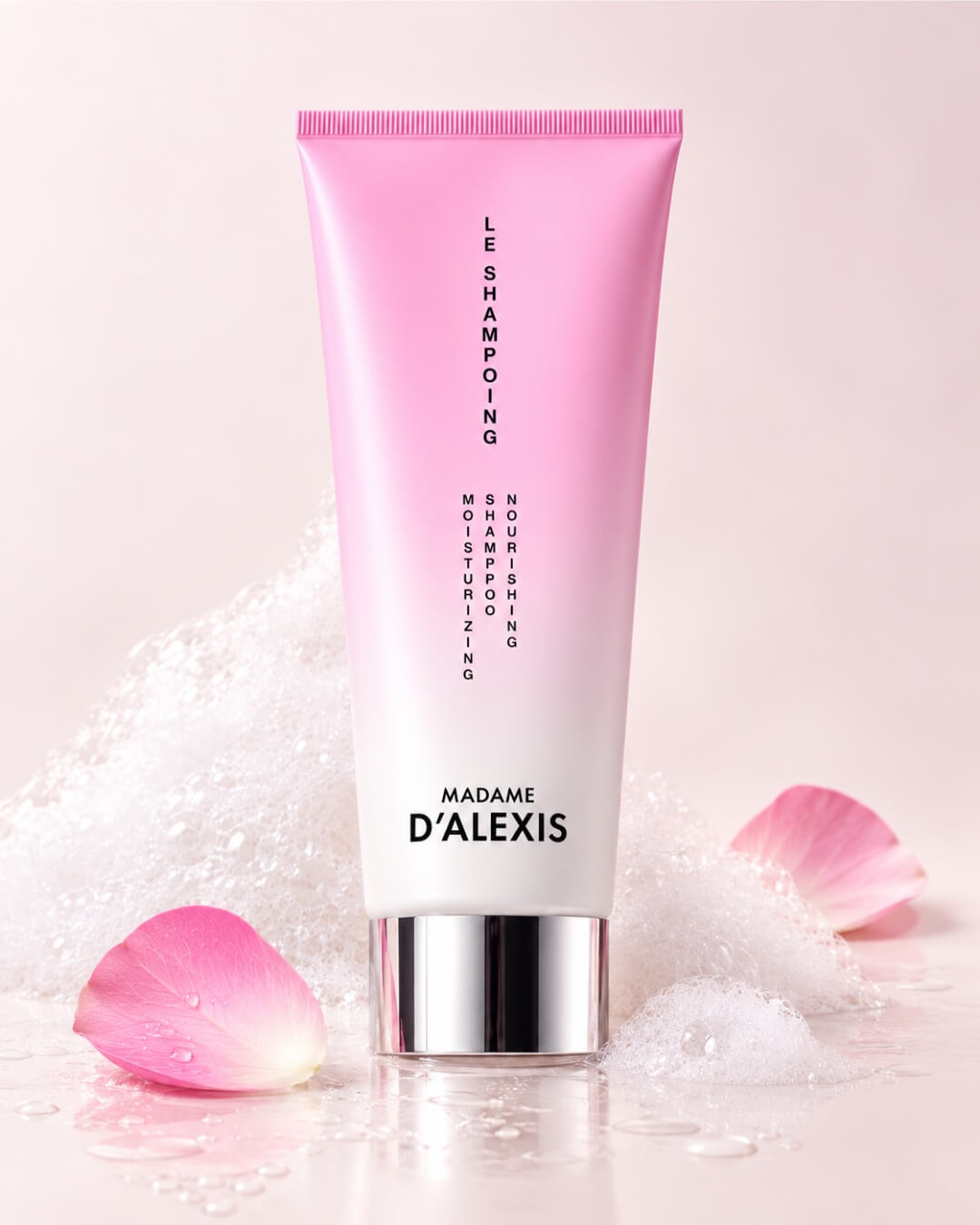
- Madame d’Alexis uses organic hydrosol bases in several of its skincare products, including the Shampoo, the Mask, the Night Serum, and the Scrub.
The same manufacturing process, but with essential nuances
If we were to tell the story of hydrosols and floral waters, it would be a tale of botanical alchemy. These elixirs are obtained through steam distillation, an ancient process that has been used for centuries in aromatherapy and botanical medicine.
Plants
The plants are placed in a still: flowers, leaves, bark, or roots, depending on the type of hydrosol being produced.
Steam
The steam passes through the plant material and captures the water-soluble active ingredients.
Condensation
The mixture cools and separates into essential oil and an aromatic aqueous phase.
Hydrosol
The resulting hydrosol is gentler than an essential oil and suitable for gentle hair care.
Hydrosol or floral water: What's the difference?
| Term | Definition | Example | Hair Care |
|---|---|---|---|
| Hydrosol | Aromatic water obtained by distilling a whole plant or a part of a plant. | Rosemary, lavender, and rockrose hydrosols. | Can target the scalp, shine, cleansing, or comfort. |
| Floral water | Hydrosol made exclusively from flowers. | Rose, chamomile, and cornflower floral water. | Often sought after for its softness, radiance, and soothing properties. |
This distinction is important when choosing a natural hair care product: each hydrosol has a specific effect depending on the plant from which it is distilled, unlike water, which is simply a solvent.

Water in hair products: a neutral ingredient
Water is a ubiquitous ingredient in hair care formulations. However, in a formulation, it primarily acts as a carrier: it helps mix, stabilize, and distribute the active ingredients, but does not in and of itself provide any botanical benefits to the hair fiber.
Support
Water serves as a vehicle for blending the active ingredients and giving the skincare product a usable texture.
Dilution
In many traditional recipes, it makes up a significant portion of the ingredients.
Neutrality
It does not nourish, does not condition, and does not provide any plant-based active ingredients on its own.
Replacing water with a floral hydrosol in a hair care product transforms a simple carrier in the formula into an active and sensorial base.
Why replace water with hydrosols in hair care products?
In the demanding world of premium hair care, every ingredient must serve a purpose. Replacinginert water in hair care products with a hydrosol gives the aqueous base real practical value.
- An enhanced sensory experience: hydrosols impart a subtle botanical note that is more refined than a simple aqueous base.
- Targeted action tailored to your needs: Damask rose for radiance, chamomile for soothing, and orange blossom for softness.
- A more consistent formula: the product isn’t just packed with active ingredients—it’s infused with them right down to its base.
- Gentler on the scalp: hydrosols are ideal for gentle hair care routines, especially for sensitive scalps.
Simply put: choosing a hair care product formulated with hydrosols means opting for a more sophisticated, more targeted cosmetic that better addresses the hair’s actual needs.
How are hydrolats distilled?
Hydrosols are the result of expertise that brings nature and science together. Every drop is the result of a meticulous process designed to capture the plant’s gentle, watery, and aromatic essence.
| Step | What's Going On | What you get |
|---|---|---|
| Choosing Plants | The most interesting plant parts are selected. | A raw material rich in aromatic compounds. |
| Water vapor | The steam passes through the plant and carries away the volatile and water-soluble molecules. | A blend of steam and plant compounds. |
| Cooling | The steam condenses and separates naturally. | A concentrated essential oil and a gentle hydrosol. |

What are the benefits of hydrosols for hair?
Unlike regular water, hydrosols are plant-based waters produced through distillation. Their benefits lie in their gentleness, lightness, and ability to address various needs of the hair shaft and scalp.
Light Moisturizing
They leave your skin feeling fresh and supple, without feeling greasy or heavy.
Soothed scalp
Rose, chamomile, and orange blossom are used in scalp care routines.
Natural shine
Whether used as a treatment or as a base ingredient in a formula, they help create a softer, more luminous finish.
Which hydrosol is best for which need?
| Hydrosol | Primary need | Recommended routine |
|---|---|---|
| Damask rose | Radiance, softness, sensory experience. | Perfect for a rose-scented shampoo or a shine-boosting routine. |
| Chamomile | Soothing, gentle, light-colored hair. | Useful as part of a routine for sensitive scalps. |
| Orange blossom | Comfort, natural fragrance, softness. | Useful in treatments that do not require added water. |
| Rosemary | Toned scalp, roots. | Use as part of a targeted scalp care routine. |
Madame d’Alexis Skincare: Where Hydrosols Meet Business and Beauty
Hydrosols are at the heart of several Madame d’Alexis hair care products. The fact sheets below are intentionally concise: they include only the information needed to understand the product’s role in a natural hair care routine.
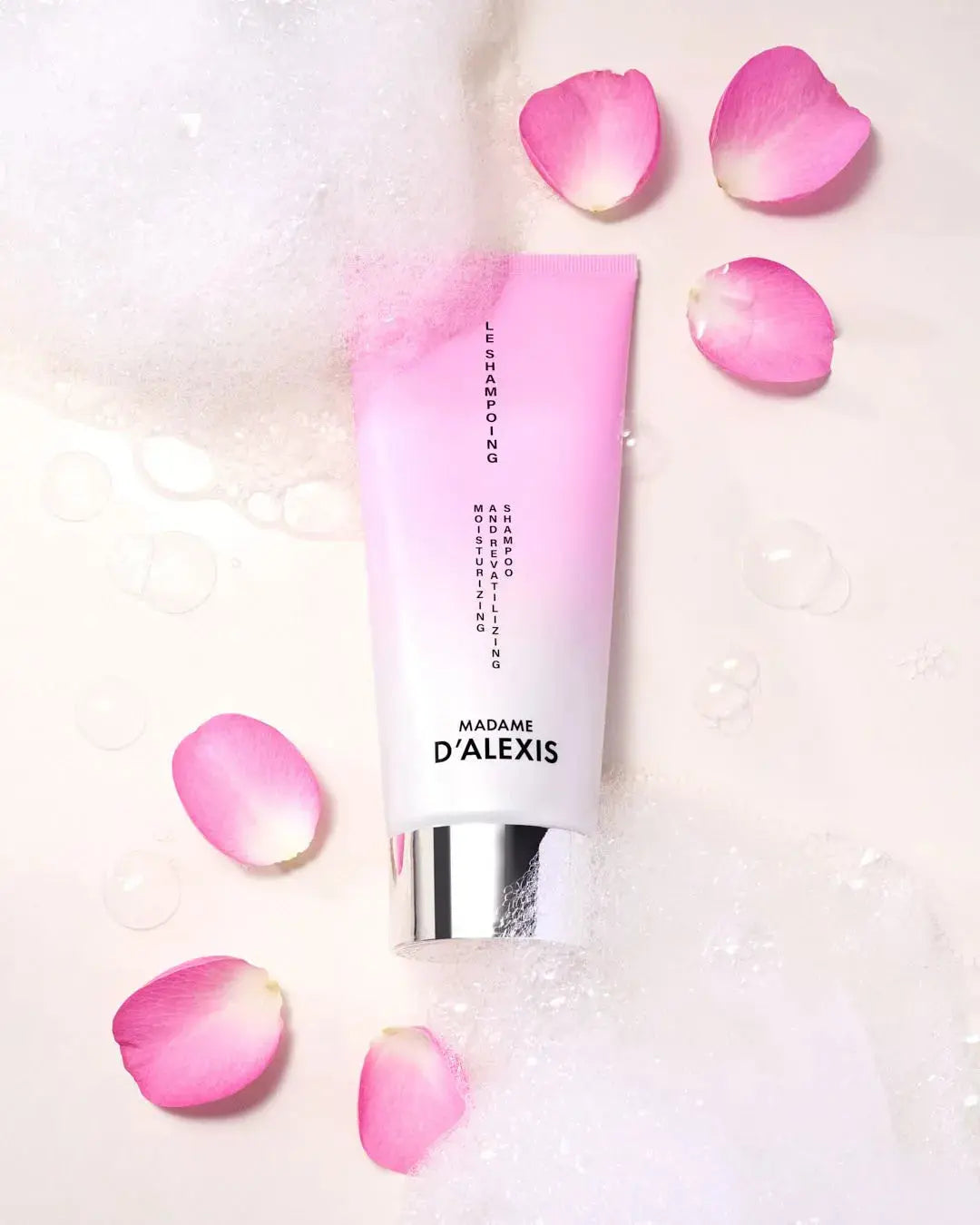
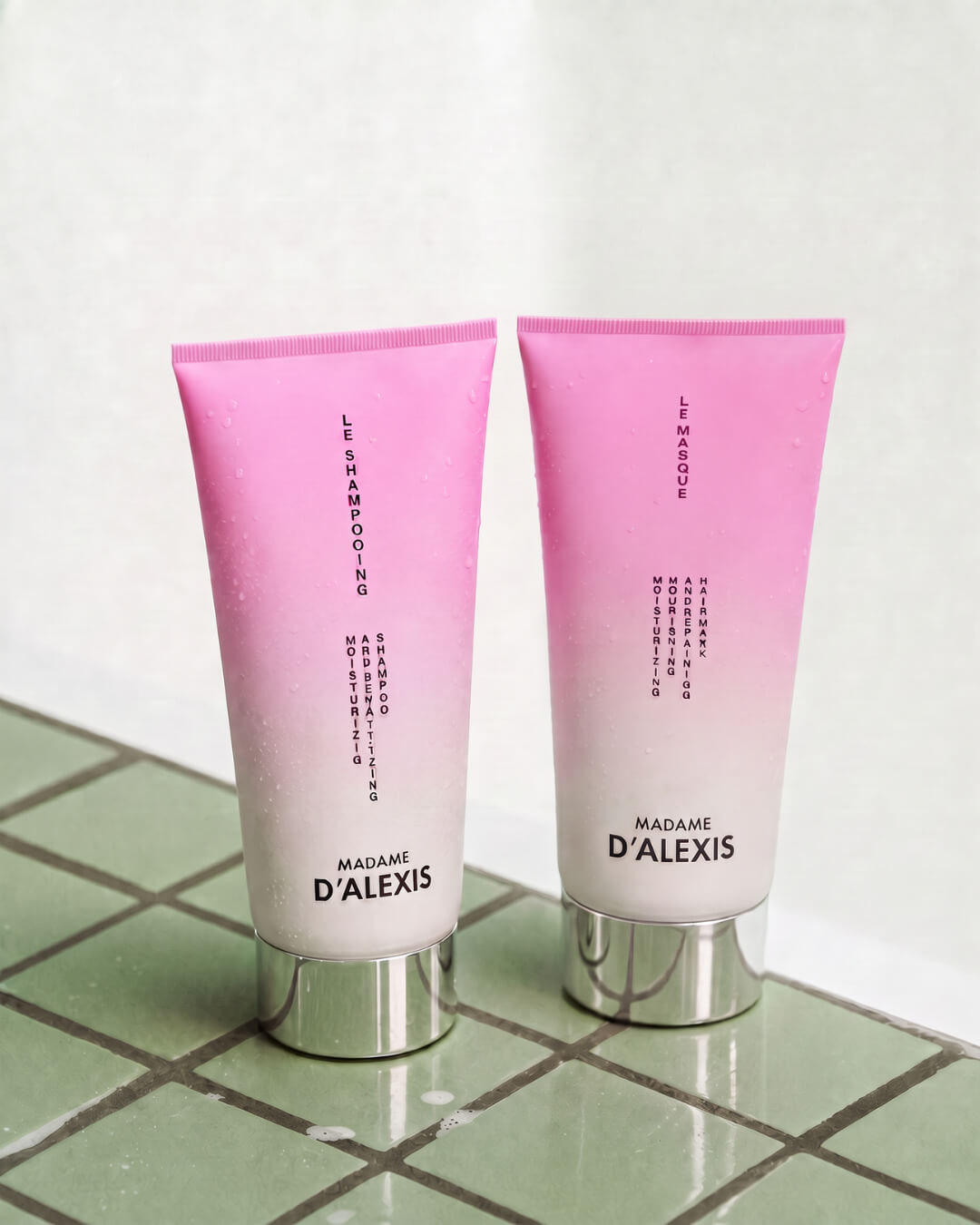
The Shampoo
- Organic hydrosol base, no added water
- Hyaluronic acid and plant-based keratin
- Cleanses without stripping the scalp
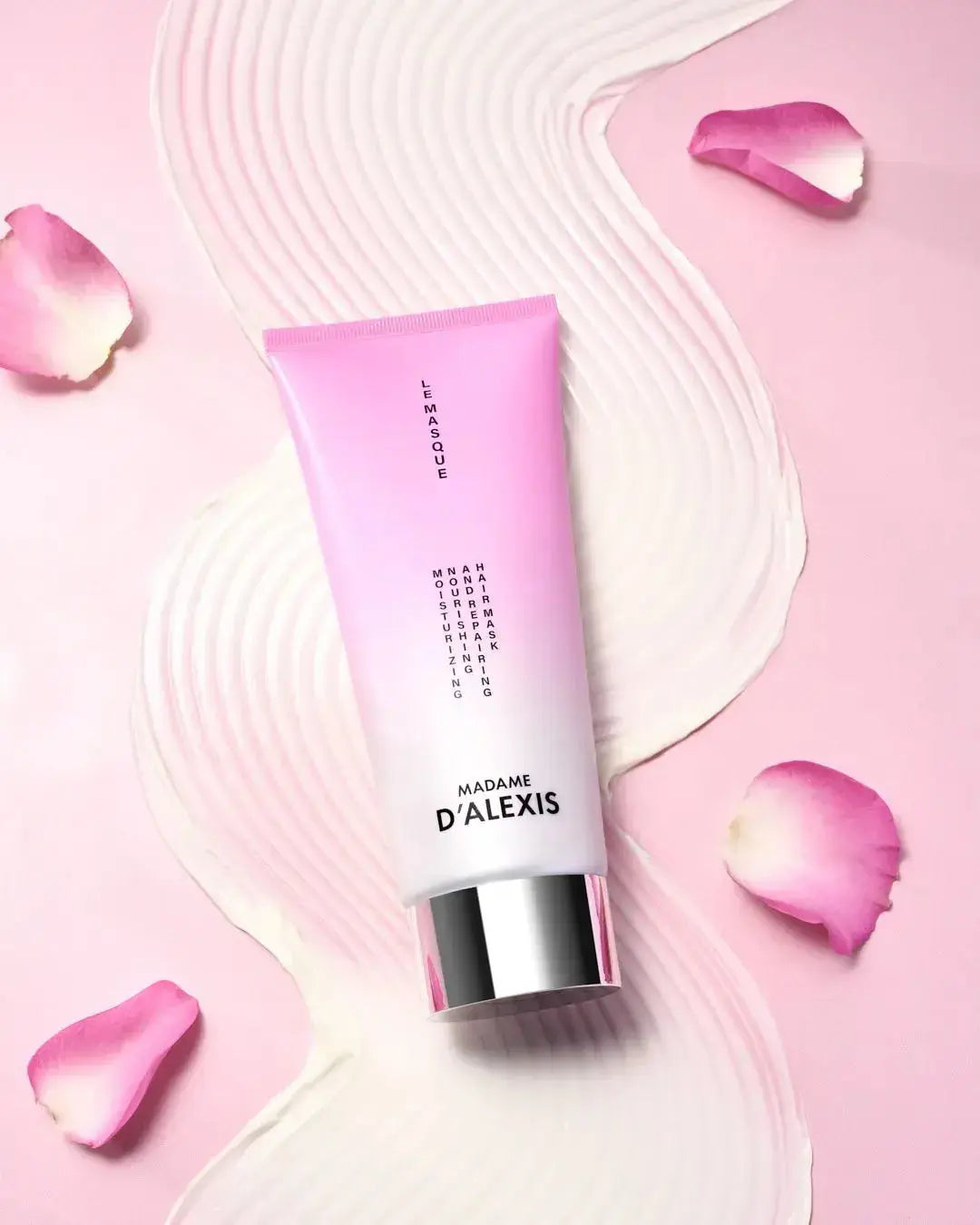
The Mask
- For lengths and ends only
- Helps smooth and nourish the hair shaft
- Ideal for dry or sensitized hair
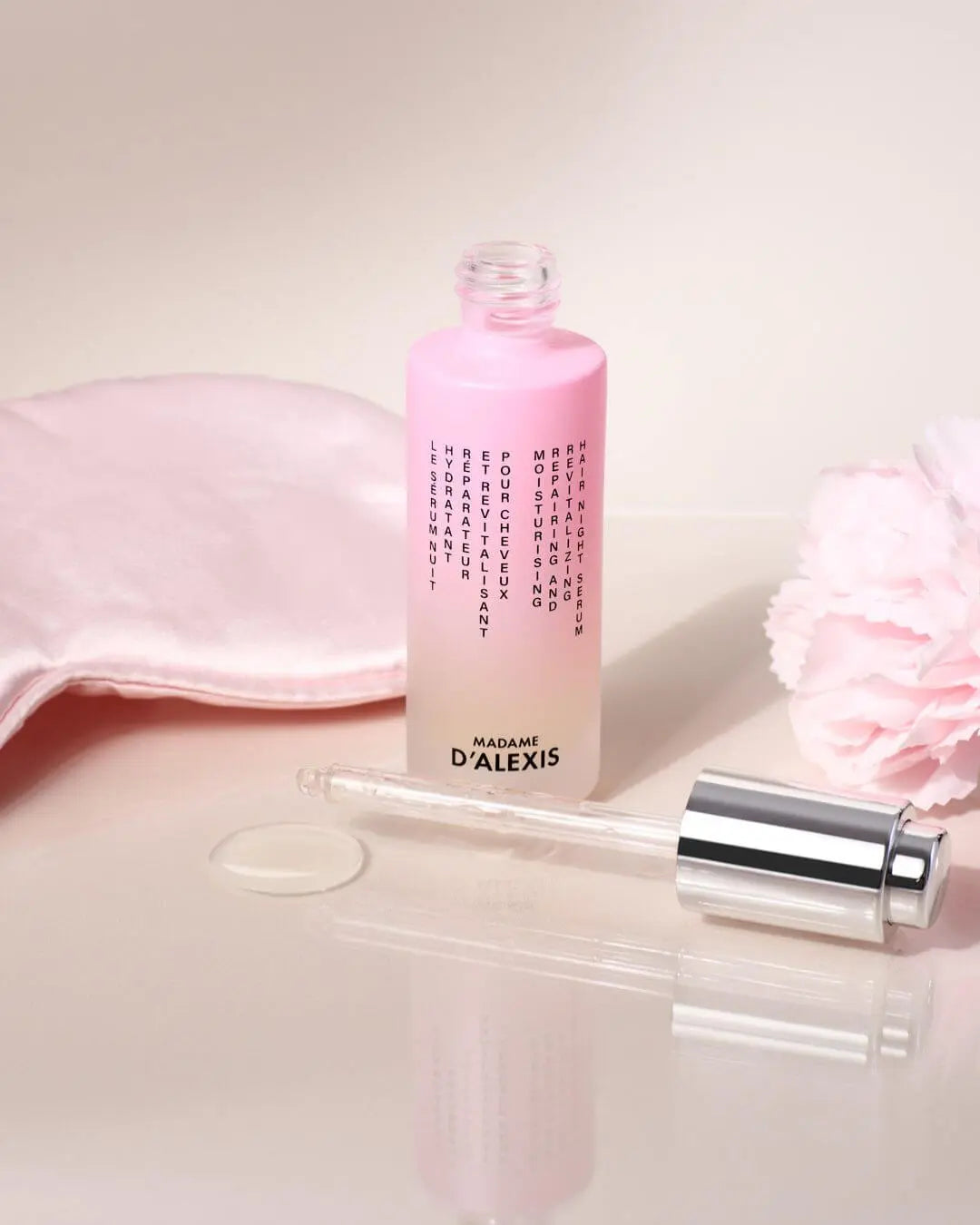
The Night Serum
- Apply to the scalp in the evening
- Probiotics and postbiotics
- Roots, density, nighttime comfort
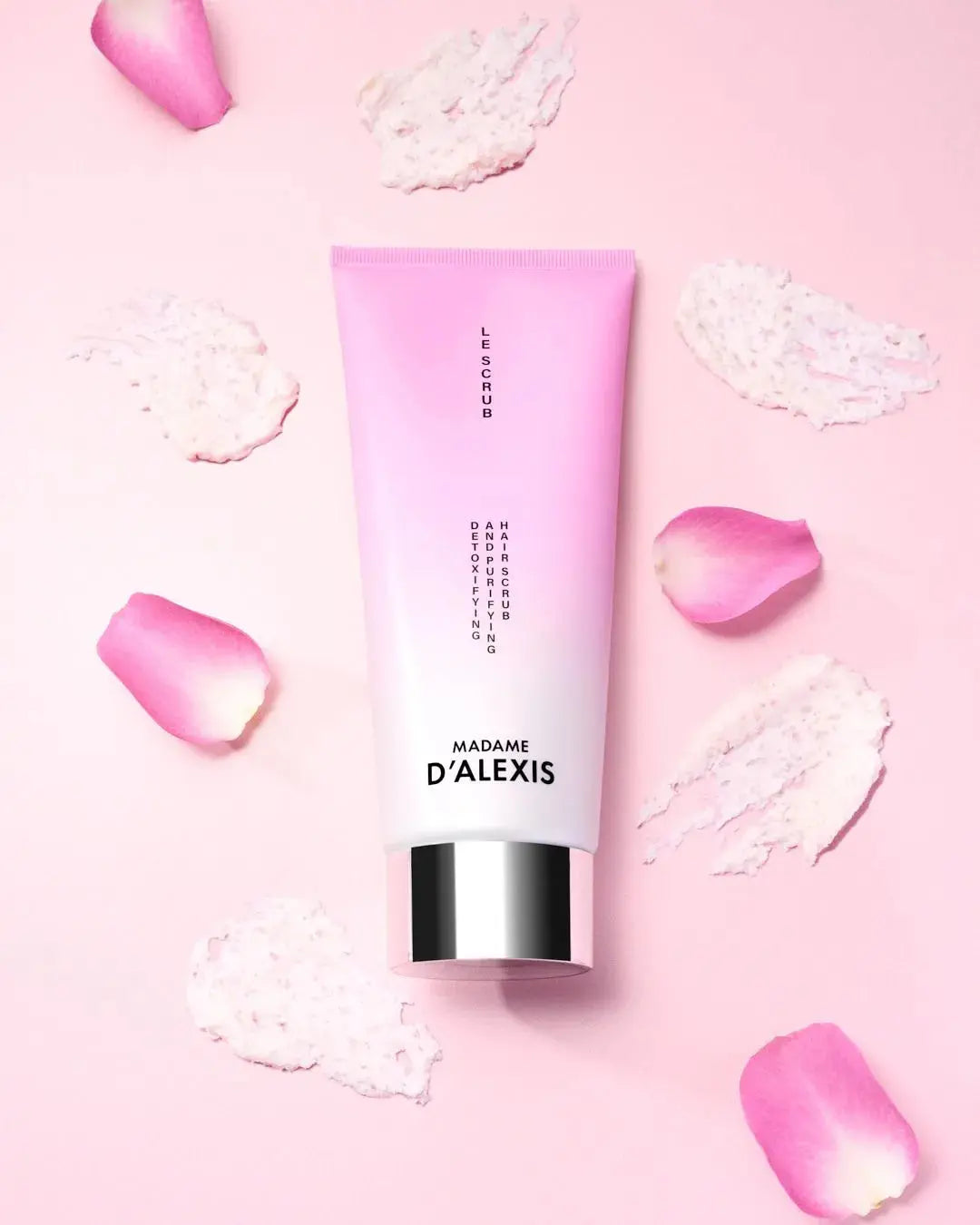
The Scrub
- Every 10 to 15 days
- Replaces shampoo on that day
- Removes residue and buildup
How can you use hydrosols in a hair care routine?
Hydrosols can be used on their own, as a light mist, as a rinse, or in homemade formulations. But their most beneficial use is in a hair care formula that’s already balanced: a treatment designed with hydrosols, moisturizing active ingredients, lipids, gentle cleansing agents, and a suitable texture.
Dry hair
Opt for a routine for dry hair that includes hydrosols: a gentle shampoo, a mask for the lengths, and a protective finishing treatment.
Sensitive scalp
Opt for gentle, sulfate-free, silicone-free products and a routine designed for an irritated scalp.
Dull lengths
Combine hydrosols with active ingredients such ashyaluronic acid for hair to help smooth and add shine to the hair shaft.
Silicone-Free Routine
Hydrosols fit perfectly into a transition toward natural alternatives to silicone.
Should I use hydrosols instead of hair care products?
Yes, when the formula is well-balanced. A hydrosol alone isn’t enough, but it provides a more active and sensorial base than an inert water. The real benefit comes from the combination of hydrosols, moisturizing actives, plant lipids, ceramides, prebiotics, or probiotics, depending on the product.
- For washing: Choose a gentle, sulfate-free shampoo enriched with hydrosols.
- For long hair: Choose a mask rich in ceramides, hyaluronic acid, and organic hydrosols.
- For the scalp: Use a targeted, lightweight, non-greasy nighttime serum containing hydrosols and probiotics.
- For buildup: Use a gentle scalp scrub occasionally, but avoid overuse.
Madame d’Alexis has chosen formulas inspired by hair care: fewer fillers, more beneficial active ingredients, and a focus on organic hydrosols.
FAQ: Hydrosols, Floral Waters, and Hair
What is the difference between hydrosol and floral water?
A hydrosol can be derived from various parts of a plant: flowers, leaves, roots, and bark. A floral water is a hydrosol obtained exclusively from flowers.
Do hydrosols really moisturize the hair?
Above all, they provide light hydration, a refreshing sensation, and water-soluble plant compounds. For long-lasting hydration, they should be combined with complementary active ingredients such as hyaluronic acid, ceramides, or plant oils.
Why is water less effective in hair care products?
Regular water is used primarily as a base for the formula. It helps mix and stabilize the ingredients, but it does not provide any botanical active ingredients on its own.
Which Madame d’Alexis product should you choose to enjoy the benefits of hydrosols?
Shampoo is the most obvious choice for a hair care routine. The Mask targets dry ends, the Night Serum targets the scalp and roots, and the Scrub refreshes the scalp every 10 to 15 days.
Can hydrosols be used on a sensitive scalp?
Yes, as long as you choose a gentle formula that is free of irritating alcohol and suitable for the scalp. If you experience a burning sensation, a rash, a reaction, or persistent itching, it is best to seek medical advice.