Advice
Meilleur masque cheveux naturel : quel soin choisir selon son type ?
Looking for the best hair mask? Discover our comprehensive guide to natural and organic masks suitable for all hair types. Homemade recipes, effective ingredients, application tips, and a selection of products for dry, damaged, curly, and colored hair.

Best Hair Mask: A Complete Guide to Choosing the Right Natural Treatment
Are you looking for the best hair mask ? A good hair mask should be suited to your hair type (dry, damaged, oily, curly) and contain natural ingredients such as shea butter, organic hydrosols, and plant-based oils.
But before making a choice, one question comes to mind: Does your hair need nourishment, hydration, or repair? These three needs cannot be addressed with the same ingredients: and confusing the two is the first mistake that explains why a mask “doesn’t do anything.”
Awell-formulatedhomemade hair mask can rival the best store-bought treatments: avocado, honey, clay, organic hydrosols—the most effective natural ingredients are often already in your kitchen. Apply it 1 to 2 times a week for 20–30 minutes for visible results as early as the third application.

What is the best hair mask?
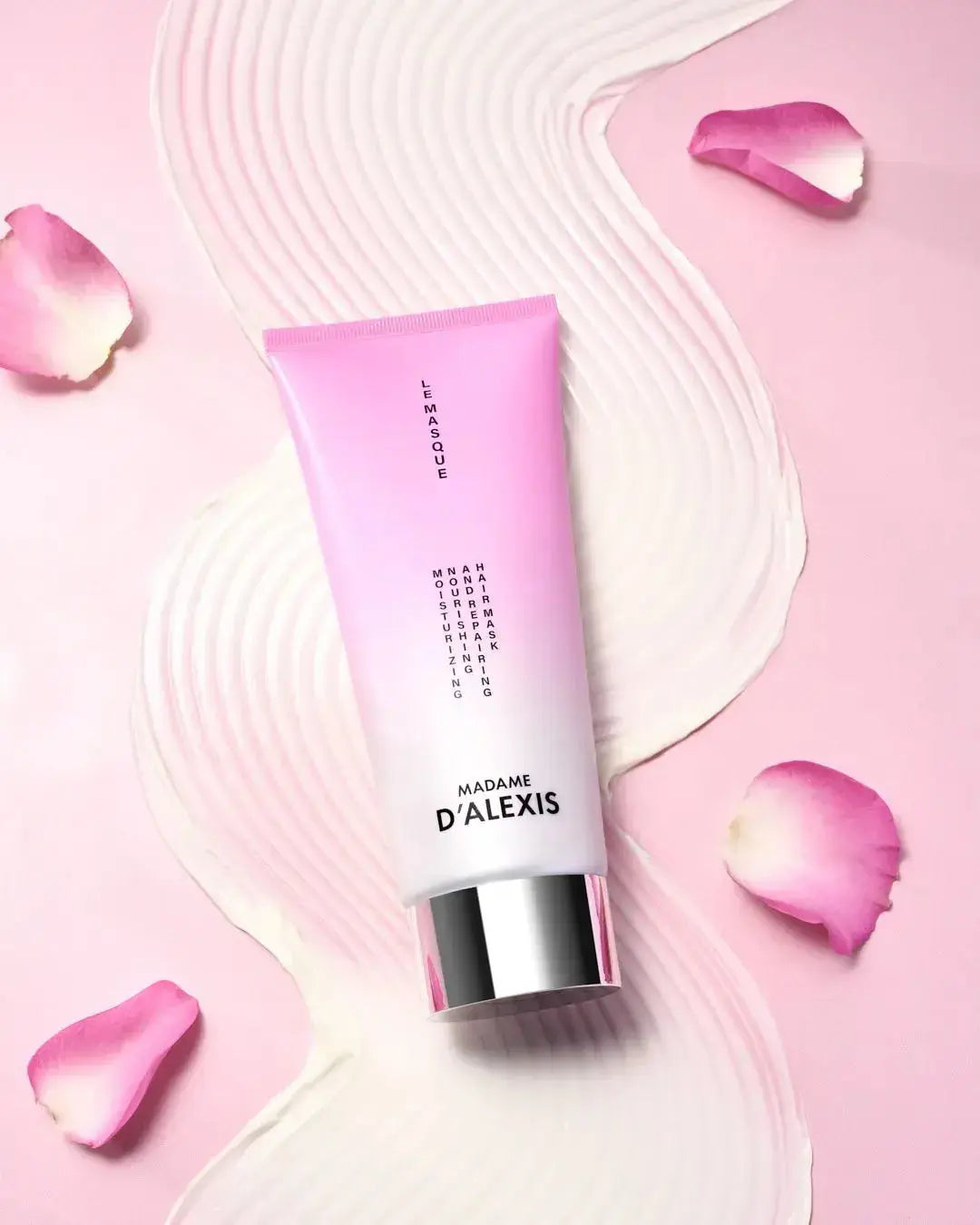
The Hydrolat Mask
97% naturally derived · Plant-based ceramides · Premium oils
- Nourishes and softens dry, dull, or damaged hair
- Helps strengthen hair strands with plant-based ceramides
- Ideal as a natural weekly hair mask after shampooing
Understanding your hair needs
There's nosuch thing as a"best"hair mask for everyone—it all depends on your hair type and your specific concerns. Before making a choice, determine your hair profile:
- Dry and damaged hair: Needs intense nourishment and deep hydration
- Oily hair: Needs lightness and sebum rebalancing
- Curly or frizzy hair: Needs moisture and definition
- Colored hair: Needs protection and shine
- Sensitive scalp: Needs soothing and gentleness
Hair Porosity: The Overlooked Factor When Choosing a Hair Mask
Porosity determines the hair's ability to absorb and retain active ingredients.
- Low porosity(straight, shiny hair): Choose lightweight masks made with hydrosols; avoid heavy oils
- Average porosity: all masks are suitable
- High porosity(bleached, curly, or damaged hair): masks rich in butters and oils, left on for a long time under heat
Quick test: Dip a clean strand of hair into a glass of water. If it sinks quickly → high porosity. If it floats → low porosity.
What makes a good hair mask?
An effective hair mask must:
✅Contain natural ingredients: Organic hydrosols, shea butter, plant-based oils
✅Be suited to your hair type: No one-size-fits-all solution
✅Have a creamy texture: Easy to apply and rinse out
✅Deliver visible results: Softness, shine, repair after 2-3 applications
✅Be gentle on your scalp: No harsh ingredients
How to choose a mask for damaged hair?
Identify the signs of damaged hair
Before choosing yourrepair mask, check if you have:
| Sign | Description |
|---|---|
| Split ends | Frayed and brittle ends |
| Lack of shine | Dull, lifeless hair |
| Extreme drought | Coarse texture and difficult to style |
| Frequent breakage | Hair that breaks easily |
| Significant frizz | Unruly and puffy hair |
Selection criteria for a repairing mask
1. Key ingredients to look for:
The shea butter hair mask is the ideal solution for dry or damaged hair. Applied regularly, it nourishes the scalp, eliminates dandruff, and repairs hair fibers along the entire length.
- Shea butter: Deeply nourishes and repairs
- Organic hydrosols: Hydrosols have several beneficial properties for hair. Just as they have various effects on the skin, they also act on the scalp to resolve certain problems, or simply to moisturize or perfume the hair.
- Vegetable oils: Coconut, castor, argan for nutrition
- Honey: Natural hydration and soothing properties
2. Frequency of application:
We recommend pampering your hair with a hair treatment at least twice a month and ideally once a week (no more!) to get the most out of these homemade hair masks.
3. Exposure time:
Leave on for at least20 to 30 minutes(or overnight for very damaged hair) under a warm towel for better penetration.
Which moisturizing masks are best for dry hair?
Why dry hair needs hydration
Hair masks are rich in moisturizing ingredients such as oils, butters, and proteins. They help maintain hair hydration, which is essential for preventing dryness, split ends, and brittle hair.
The best natural moisturizing masks
Moisturizing mask made with organic hydrosols
Deep hydration, intense nourishment, stimulation of growth, anti-dandruff properties... Hydrosols have the power to meet all your hair's needs, whatever its type.
Hydrolats recommended for hydration:
| Hydrosol | Profits | Hair type |
|---|---|---|
| Lavender | Soothes the scalp, relieves itching and irritation. Lavender hydrosol is also ideal for dry and damaged hair. | Dry, sensitive |
| Rosemary | A real stimulant for hair growth, rosemary hydrosol also regulates sebum production in the scalp and helps reduce dandruff. | All types |
| Rose | Rose hydrosol has moisturizing and revitalizing properties for hair, and leaves a pleasant floral scent. | Dry, dull |
The Hydrolat Mask
97% naturally derived · Plant-based ceramides · Premium oils
- Nourishes and softens dry, dull, or damaged hair
- Helps strengthen hair strands with plant-based ceramides
- Ideal as a natural weekly hair mask after shampooing
Moisturizing mask with avocado and shea butter
Dry hair needs deep hydration to restore its softness and prevent breakage. A moisturizing mask made with coconut oil is ideal for this purpose. Coconut oil, rich in fatty acids, penetrates deep into the hair fiber. It nourishes and strengthens the hair from within.
Ingredients:
- 1 ripe avocado, mashed
- 2 tablespoons of shea butter (melted)
- 1 tablespoon olive oil
- 1 tablespoon of honey
Instructions for use:
- Mix all ingredients until smooth.
- Apply to damp hair, from roots to ends.
- Leave on for 30 minutes under a warm towel.
- Rinse thoroughly and shampoo.
Best Hair Mask for Highlighted and Colored Hair: Repairs Without Dulling
Highlighted and colored hair share the same problem: the cuticle is open. Chemical treatments break the keratin bonds and leave the hair strand porous, brittle, and dull.
A suitable mask should close the cuticle to lock in moisture and provide proteins to rebuild the hair fiber from the inside out.
Ingredients to look for: plant-based keratin (reconstruction), plant-based ceramides (cuticle sealing), hyaluronic acid (long-lasting hydration), organic Damask rose hydrosols (radiance and softness).
| Type | Priority need | Key Ingredients | Frequency |
|---|---|---|---|
| Highlights | Reconstruction + Sealing | Keratin, ceramides | 1-2 times per week |
| Colored hair | Color Protection + Shine | Hydrosols, hyaluronic acid | Once a week |
| Bleached hair | Intense hydration | Shea butter, proteins | twice a week |
Best Hair Growth Mask: What Really Works
A hair mask doesn't directly promote hair growth—that happens at the hair follicle. But a well-formulated mask creates the optimal conditions for healthy growth by restoring the skin barrier, reducing inflammation, and minimizing breakage along the hair shaft.
Apply to the scalp and hair, once a week, massaging for 3 minutes to stimulate microcirculation.
What ingredients are needed for an effective hair mask?
Essential natural ingredients
1️⃣Organic shea butter
Shea butter contains a range of vitamins and fatty acids that can penetrate deep into the hair shaft for maximum hydration, repair split ends, and smooth frizz. Applying a hair mask containing this natural product will help stimulate blood circulation in the scalp, soothe dryness or irritation, and even add shine to your mane.
2️⃣Organic hydrosols as a base ingredient
You should choose an organic hydrosol that is preservative-free, concentrated, and microfiltered.
Hydrosols are rich in nutrients (vitamins and minerals). They also complement vegetable oils perfectly, enhancing their effects.
3️⃣Vegetable oils
| Oil | Properties | Suitable hair |
|---|---|---|
| Coconut oil | Nourishes, smooths, reduces frizz | Dry, curly |
| Olive oil | Rich in vitamin E, treats dryness | Very dry, damaged |
| Castor oil | Strengthens, stimulates growth | Fine, brittle |
| Argan oil | Nourishes without weighing down | All types |
4️⃣Natural honey
Honey is a powerful humectant that attracts and retains moisture within the hair fiber to combat dehydration. It softens the hair and leaves it feeling smooth and supple. Its antibacterial and soothing properties combat dandruff and relieve discomfort.
5️⃣Plain yogurt
If you have oily hair or hair lacking volume, replace the oil with plain yogurt, which is rich in fatty acids and vitamins and has proven moisturizing properties.
6️⃣Aloe vera
Aloe Vera is known for its moisturizing and soothing properties. It is ideal for calming irritated scalps and moisturizing hair without weighing it down. Use Aloe Vera gel as a base for your masks for a light and refreshing treatment.
How to make a homemade hair mask?
Benefits of homemade masks
Natural and healthy ingredients: they are made with natural and healthy ingredients such as oils, fruits, vegetables, and herbs. These ingredients deeply nourish and moisturize the hair without damaging it.
5 Easy and Effective Recipes
🥄 Recipe 1: Classic nourishing mask (dry hair)
Mix plain yogurt with 1 tablespoon of honey. Add 1 tablespoon of your favorite vegetable oil or 1 tablespoon of aloe vera gel if your hair gets greasy quickly. Add 3 drops of ylang-ylang essential oil to give your hair shine and luster. Once the mask has been applied to your hair, leave it on for 30 minutes, then rinse with a mild shampoo.
🍌 Recipe 2: Banana mask (for fine and brittle hair)
To promote hair growth, bananas are your best ally. Their many vitamins and minerals help reduce hair loss and boost growth. They also make hair shiny and soft. To make your homemade hair mask: Start by thoroughly mashing two ripe bananas until there are no visible lumps.
Complete ingredients:
- 2 ripe bananas, mashed
- 1 tablespoon of honey
- 1 tablespoon olive oil
Application:30minutes under a warm towel
🥑 Recipe 3: Intensive repair mask (for very damaged hair)
Mix 1 avocado, 2 tablespoons of olive oil, 2 tablespoons of honey, and one egg yolk. Whisk everything together until you get a smooth, runny mixture. Apply it to damp hair, cover your hair with plastic wrap, and leave it on for at least 30 minutes.
Homemade Anti-Dandruff Mask: Clay + Rosemary Hydrosol
Dandruff is a sign of an imbalance in the scalp's microbiome. White clay absorbs excess sebum, while rosemary hydrosol regulates sebum production and soothes itching.
- 2 tablespoons of white clay
- 3 tablespoons of organic rosemary hydrosol
- 1 tablespoon of aloe vera gel. Application time: 15–20 min. Frequency: Once a week at most.
🍯 Recipe 5: Intensive Repair Mask (for very damaged hair)
Apple cider vinegar closes the cuticles and neutralizes the lime scale in tap water—the number one enemy of shine. Honey locks in moisture.
- 2 tablespoons of apple cider vinegar
- 1 tablespoon of honey
- 200 ml of lukewarm water (for the final rinse; not to be used as a leave-in mask) Directions: Use as the final rinse after shampooing.
Practical tips for making a successful homemade mask
✅Use high-quality ingredients: Choose organic products whenever possible
✅Follow the instructions carefully: The right proportions are important for effectiveness
✅Apply to damp hair: This helps the product penetrate
✅Focus on the lengths and ends: This is where the hair needs it most
✅Use a warm towel: Heat opens the cuticles and improves absorption
✅Rinse thoroughly: Avoid oily residue
✅Shampoo afterwards: With a gentle, natural product
⚠️Essential oils: Important precautions: Never apply undiluted to the scalp. Not recommended for pregnant or breastfeeding women, children under 6 years of age, the elderly, or people with chronic medical conditions. Always dilute to a maximum of 1–2% in a carrier oil.
Which masks are best for curly or wavy hair?
Specific characteristics of curly hair
Curly hair requires more maintenance than straight hair. Its spiral structure and sebum production, which occurs in the scalp but has difficulty reaching the ends, make it more brittle and dry.
That's why it's important to use a hair mask at least once a week to moisturize and repair your hair.
Moisturizing mask for defined curls
For curly hair, it's essential to provide moisture and definition to the curls. Here's a fairly simple and very effective recipe for a homemade hair mask: Mash the banana in a bowl until it's smooth and lump-free.
Add the yogurt, coconut oil (or sweet almond oil), honey, and aloe vera gel to the banana mixture.
Mix well until you obtain a smooth consistency. Apply the mask to your hair, distributing it evenly along the lengths and ends, paying particular attention to areas where the curls are drier and more damaged.
Anti-frizz mask for dry curly hair
The homemade honey mask is very easy to apply and intensely moisturizes dry curly hair, promoting deep and lasting hydration. It leaves no sticky residue and provides softness, suppleness, and shine.
Ingredients:
- 1 plain plant-based yogurt
- 1 fruit compote (apple, pear, or banana)
- 1 tablespoon of honey
The Hydrolat Mask
97% naturally derived · Plant-based ceramides · Premium oils
- Nourishes and softens dry, dull, or damaged hair
- Helps strengthen hair strands with plant-based ceramides
- Ideal as a natural weekly hair mask after shampooing
What are the benefits of hair masks?
Proven benefits of natural masks
| Profit | Description | Visible results |
|---|---|---|
| Deep hydration | Restores lost moisture | 2-3 applications |
| Tip repair | Close damaged scales | 1-2 weeks |
| Restored brilliance | Smooths the fiber and reflects light | Immediate |
| Increased softness | Softens and smoothes | After 1 application |
| Reinforced force | Reduces breakage and shedding | 3-4 weeks |
| Soothed scalp | Soothes irritation and itching | 1-2 applications |
| Color preserved | Protects colored hair | Continuous |
Why choose a natural mask?
Homemade hair care products have become increasingly popular in recent years, and for good reason! Natural and effective, they compete with commercial hair products that are often full of harsh chemicals and expensive.
Comparison: Natural masks vs. conventional masks
| Criterion | Natural masks | Conventional masks |
|---|---|---|
| Ingredients | Natural, organic, recognizable | Chemical, synthetic |
| Effectiveness | Proven, progressive | Quick but temporary |
| Cost | Economical (DIY) | Expensive |
| Side effect | None | Possible irritations |
| Environment | Respectful | Pollutant |
| Customization | Total | Limited |
How to use a hair mask effectively?
Steps for optimal application
Step 1: Preparation (5 min)
- Shampoo your hair with a mild product.
- Squeeze gently (hair should be damp, not wet).
- Detangle with a wide-tooth comb
Step 2: Application (10 min)
- Apply the mask from roots to ends.
- Focus on the lengths and ends
- Gently massage the scalp (2-3 minutes).
- Use a comb to distribute evenly.
Step 3: Installation (20-30 min)
- Wrap your hair in a warm towel.
- Or put on a shower cap to create warmth.
- Heat opens the scales and improves penetration.
Step 4: Rinsing (5 min)
- Rinse thoroughly with warm water.
- Then rinse with cold water to close the scales.
- Shampoo lightly if necessary.
Step 5: Finishing touches
- Apply a light conditioner (optional)
- Allow to dry naturally or with a hair dryer.
Recommended frequency
We recommend pampering your hair with a hair treatment at least twice a month and ideally once a week (no more!) to get the most out of these homemade hair masks.
Mistakes to avoid
❌Leaving it on for too long: Risk of drying out
❌Applying the mask to dry hair: Less effective
❌Using too much product: Difficult to rinse out
❌Neglecting the scalp: Can become oily
❌Rinsing with hot water: Opens the cuticles and dries out the hair
❌Using a harsh shampoo afterwards: Undoes the benefits
FAQ – Frequently asked questions
What is the difference between a mask and a conditioner?
Conditioner: Lighttreatment, quick application (1-2 min), daily use, superficial effect
Mask: Intensivetreatment, long application (20-30 min), 1-2 times/week, deep penetration
Can you use a hair mask every day?
No, this may weigh down your hair and suffocate it.Once or twice a weekisideal to reap the benefits without overloading the hair fiber.
Which mask for colored hair?
Colored hair needs a mask that preserves its shine while moisturizing the hair shaft, which has been weakened by the pigments. Two non-negotiable criteria: it must be sulfate-free—since sulfates accelerate color fading—and free of occlusive silicones, which dull the color over time.
Key ingredients to look for: organic Damask rose hydrosols, for radiance and softness; cationic hyaluronic acid, for hydration without weighing the skin down; and plant-based ceramides, to seal the cuticle and lock in color.
Frequency: Once a week is sufficient if the shampoo is sulfate-free. For heavily colored or bleached hair: twice a week for the first 3 weeks, then once a week for maintenance.
Best Moisturizing Mask for Colored Hair: Our Criteria
A moisturizing mask for color-treated hair must perform two functions: close the cuticle opened by the coloring process to lock in moisture, and deliver moisturizing ingredients that do not interfere with the pigment.
Madame d'Alexis's Hydrosol Mask meets both of these criteria: plant-based ceramides to seal the cuticle, organic Damask rose hydrosols for hydration and radiance, and no sulfates or silicones. The result: color is preserved, hair is softened, and shine is restored starting with the second application.
Are natural masks really effective?
Yes, provided that:
- Choose high-quality ingredients (preferably organic)
- Observe the setting times (minimum 20 min).
- Be consistent (1-2 times/week for 3-4 weeks)
- Adapt to your hair type
How long should you wear a mask?
Minimum 20 minutesforbasic effectiveness
30 minutesforstandard care
1 hour to overnightforvery dry or damaged hair
Can you store a homemade mask?
Yes, a few days in the refrigerator (3-5 days maximum) in an airtight container. Masks containing egg or yogurt should be used quickly.
Which mask for oily hair?
Prioritize:
- Peppermint or rosemary hydrosols
- Plain yogurt (instead of oils)
- Aloe vera gel
- Reduced setting time (15-20 min)
How can I tell if my mask is working?
Signs of effectiveness after 2-3 applications:
✅ Softer hair to the touch
✅ Improved shine
✅ Easier detangling
✅ Less frizz
✅ Less brittle ends
How to choose a mask for damaged hair?
To choose the right mask for damaged hair, it is essential to opt for a mask formulated with repairing active ingredients. A good repairing mask should deeply nourish the hair fiber and restore its structure.
Choose ingredients such as:
- shea butter for intense nourishment,
- organic hydrosols for hydration,
- vegetable oils (argan, coconut, castor) for repair.
The ideal frequency is one to two applications per week, leaving the product on for at least 20 minutes to allow the active ingredients to penetrate deep into the hair.
What ingredients are needed for an effective hair mask?
The ingredients in a mask play a key role in the effectiveness of a hair mask. It is recommended to choose natural ingredients that are rich in nutrients and well tolerated by the scalp.
The essential ingredients are:
- shea butter to nourish and repair,
- organic hydrosols to moisturize and soothe,
- vegetable oils to strengthen the hair fiber,
- honey to retain moisture,
- Aloe vera to soothe sensitive scalps.
An effective hair mask depends above all on the quality of its ingredients and how well they suit your hair type.
How to make a homemade hair mask?
Making a homemade hair mask is a natural, economical, and customizable solution. To make a mask, simply combine simple ingredients that are suited to your hair type.
Example of easy mask recipes:
- avocado + honey + olive oil for dry hair,
- banana + yogurt + coconut oil for brittle hair,
- aloe vera + hydrosol + honey for dull hair.
Apply the mask to damp hair, leave on for 20 to 30 minutes under a warm towel, then rinse thoroughly before shampooing with a mild, natural shampoo.
Which masks are best for curly or wavy hair?
Masks for curly hair and masks for frizzy hair must meet specific needs: intense hydration, nourishment, and curl definition. Curly hair care products must compensate for the low distribution of sebum along the length of the hair.
The most suitable ingredients are:
- coconut oil or sweet almond oil,
- shea butter,
- honey,
- aloe vera.
These masks help reduce frizz, soften the hair fiber, and restore elasticity and shine to curls.
What are the benefits of hair masks?
The benefits of masks are visible from the very first applications when used regularly. Hair masks are essential hair care products for maintaining healthy hair.
They enable, in particular:
- deep hydration of the hair fiber,
- repairing damaged ends,
- greater shine,
- a reduction in breakage,
- a soothed scalp.
Used once or twice a week, hair masks provide long-lasting improvement to the texture and appearance of hair.
What kind of hair mask is best for highlighted hair?
Highlighted hair needs a reconstructive mask rich in plant-based keratin and ceramides to close the cuticle opened by bleaching. Avoid masks that are too heavy (such as pure coconut oil), as they can weigh down already fragile strands. Frequency: 1 to 2 times a week, 10–15 minutes under a warm towel.
Best Hair Growth Mask: What Really Works?
No hair mask directly promotes hair growth, but an active hair mask reduces breakage and scalp inflammation, resulting in visibly longer hair over 3 to 6 months. Effective active ingredients: prebiotics, plant-based keratin, organic hydrosols. Use once a week with a massage.
Advice