Advice
Moisturizing Shampoo: How to Choose a Formula That Really Moisturizes

You’ve probably recognized this before: hair that looks clean but still feels coarse, that puffs up at the first brush stroke, and whose ends seem to soak up the light. You wash it, rinse it, dry it—and that parched feeling returns before the very next day. The culprit is almost never the act of washing itself, but rather what we expect from it. A moisturizing shampoo doesn’t magically add water: it minimizes what the rinse removes and leaves active ingredients on the hair shaft that can retain moisture. That’s the key difference, and it’s what sets a comfortable wash apart from hair that stays supple over time.
In this guide, we'll take a look at what actually happens during the rinse cycle, how to read an ingredient list without being a chemist, and how to use a moisturizing shampoo to hydrate your hair without weighing it down.
In short
- A moisturizing shampoo gently cleanses and helps replenish moisture lost during washing; it is not a substitute for a nourishing treatment.
- The ingredients to look for are called humectants: glycerin, aloe vera, hyaluronic acid, and floral hydrosols.
- Technique is just as important as the formula: thoroughly wet the scalp, rinse thoroughly, and use lukewarm water.
- The best moisturizing shampoo is one that suits your scalp before it suits your hair.
What exactly is a moisturizing shampoo?
A moisturizing shampoo is a cleansing formula with a dual purpose: to cleanse the scalp of sebum, dust, and product residue, and then to restore to the hair shaft what contact with water and surfactants has stripped away. This is because even a gentle wash removes three things at once: excess oil, residue clinging to the cuticle scales, and some of the substances that naturally help the hair retain water. The hydrolipidic film that protects the hair’s surface becomes thinner, the cuticle scales lift, and the hair becomes permeable—thirsty for moisture but unable to retain it.
That’s exactly where the formula comes in. A moisturizing shampoo doesn’t leave a layer of water on the hair—it deposits molecules that can capture moisture from the air and lock it into the hair shaft, while preventing the loss of any remaining moisture. That’s why, after using a good moisturizing shampoo, your hair doesn’t feel wet—it feels supple: it regains its movement, bounce, and ability to reflect light instead of diffusing it.
A well-formulated moisturizing shampoo, therefore, doesn't need to be heavy. It needs to be precise: it should clean just enough, in the right areas, using surfactants that are gentle on the scalp.
Hydration or Nutrition: What's the Difference for Your Hair?
The confusion between hydration and nutrition explains why so many hair care routines go in circles. Hydration means providing water and helping the hair retain it: the active ingredients involved are humectants, such as glycerin, aloe vera, or hyaluronic acid. Nourishing the hair means providing lipids and proteins that rebuild the hair’s surface and fill in gaps in the hair’s structure: oils, ceramides, and plant-based keratin. Dehydrated hair lacks water, while dry hair lacks oils and often lacks structure. Both conditions can occur simultaneously, but they are not repaired in the same way.
In practical terms, dehydrated hair is stiff, brittle, dull, and sometimes frizzy, but it responds quickly to a moisturizing formula. Dry hair is more voluminous, more porous, and lighter; it soaks up rich treatments without ever looking greasy. If you apply a nourishing treatment to hair that is simply dehydrated, the result is often flat and greasy at the roots; if you only moisturize dry hair, it remains brittle despite the oils. To avoid mixing up these two approaches, take the time to understand the moisturizing and nourishing mistakes that most often ruin hair care routines.

How can you tell if a shampoo is truly moisturizing?
The INCI list reads like a recipe, from the most concentrated to the least concentrated. Three clues are enough to distinguish a truly moisturizing shampoo from one that merely lathers nicely.
Moisturizers at the top of the list
Look for glycerin, aloe barbadensis, sodium hyaluronate, or—even better—cationic forms ofhyaluronic acid: they bind to the hair, which is negatively charged, and lock in moisture where it’s needed, rather than being rinsed away. If these active ingredients appear after the fragrance and preservatives in the ingredient list, the promise of hydration is merely cosmetic. A truly hydrating shampoo lists its humectants high in the formula, and often uses a hydrosol rather than plain water.
Mild surfactants and a controlled pH
Mild surfactants cleanse without stripping the hair: coconut and sugar glucosides, isethionates, and amino acid derivatives. They don’t lather as profusely and require a bit more emulsification, but they preserve the hydrolipidic film and leave the scalp feeling comfortable. pH is just as important: when a shampoo’s pH is close to that of the skin, it respects the natural balance of the hair and scalp, keeping the cuticles flat and bringing out shine. A pH that’s too alkaline opens the cuticles and leaves the hair rough, even if the lather was rich.
No silicone film as the only promise
A shampoo that leaves hair smooth solely through the use of insoluble silicones does not moisturize it—it simply coats it. The hair feels good on the day you wash it, but then becomes dull again as the buildup accumulates. Moisturization, on the other hand, has a lasting effect because it works from within the hair shaft.
Floral hydrosols in hair care offer an elegant solution: they replace the water in formulas and provide the benefits inherent to the plant—such as the hydration and soothing properties of Damask rose—with a light texture that doesn’t weigh down the hair.
Sulfate-free or organic: What's the difference?
Sulfates are highly effective surfactants that produce a lot of lather and have strong degreasing properties. They thoroughly cleanse an oily scalp covered in residue, but they also strip away part of the hydrolipidic film and often leave the scalp feeling tight. A sulfate-free moisturizing shampoo relies on a more subtle lather and a longer washing process: you massage it in more thoroughly, rinse it out more thoroughly, and the scalp regains a more stable balance. Be careful, though—sulfate-free doesn’t automatically mean moisturizing. Some sulfate-free formulas are excellent at removing oil, while others simply cleanse.
The organic certification, for its part, guarantees the origin and cultivation methods of some of the ingredients, but not the presence of humectants. An organic moisturizing shampoo is worth considering if it combines a gentle cleansing base with hydrosols and humectants listed in the INCI. To help you compare cleansing bases with confidence, our article on ultra-gentle sulfate-free shampoo explains how each family of surfactants affects the rinsing process.
Which moisturizing shampoo should you choose based on your hair type?
There is no single “best” moisturizing shampoo: the best one is the one that suits your hair density, porosity, and the condition of your scalp. A shampoo for dehydrated hair isn’t necessarily the richest one, but rather the one whose cleansing base leaves the most room for hydration.
Dry hair
The focus is on gentleness and moisture retention, with formulas that combine humectants and a few lipids to restore the hair’s protective barrier. A shampoo for dry hair should be safe to use repeatedly without ever leaving the hair stiff.
Colored hair
Color fades with repeated exposure to water and harsh surfactants. A gentle, moisturizing shampoo with a balanced pH rinses out more quickly and causes less pigment to bleed, while preventing the straw-like texture that often follows hair coloring. Moisture is the key to maintaining color.
Fine hair
Fine hair absorbs little moisture but retains even less: it needs lightweight humectants, without heavy oils or butters. A lightweight, moisturizing shampoo—rinsed thoroughly—is often enough, even if that means applying the nourishing treatment only to the ends.
Curly hair
Curly hair is structurally more porous and therefore more prone to dryness. It requires generous and regular hydration without stripping the scalp. A sulfate-free moisturizing shampoo, used without rubbing the hair shaft, helps preserve the curl pattern and suppleness between washes.
Sensitive scalp
When the scalp feels tight or hot, the formula should be as simple as possible: very mild surfactants, soothing hydrosols such as Damask rose or German chamomile, and no sulfates, silicones, or parabens. Before randomly switching products, a hair assessment can help determine whether the issue stems from the scalp, the hair shafts, or the washing technique.
How do you use a moisturizing shampoo?
A well-designed formula loses most of its value if used incorrectly. Three adjustments are all it takes.
The frequency
Washing your hair two to three times a week is suitable for most dry or dehydrated hair; wash more often if your scalp gets oily quickly. Hydration comes from consistency, not the amount of product used: it’s better to wash gently and frequently than to wash vigorously and then have to make up for it with three treatments. With a very gentle formula, daily use is still possible.
The Double Shampoo
The first shampoo cleanses, the second conditions. On a thoroughly wet scalp, a first, low-lather application removes sebum and impurities. Rinse, then apply a second small amount, massaging it in with your fingertips: the lather is richer, it glides more smoothly through the hair, and the scalp is thoroughly cleansed. There’s no need to rub the lengths between your palms—the lather that runs down as you rinse is enough to clean them.
Rinsing and Temperature
Rinsing is the most underrated step. Rinse very thoroughly, for longer than you usually do, paying special attention to the nape of the neck, behind the ears, and the hairline. Lukewarm water—never scalding hot—keeps the cuticles flat and minimizes moisture loss from the hair shaft. The final rinse with cool water doesn’t add moisture but tightens the surface and adds shine.
What mistakes cause hair to become dry?
The habits that cause dryness are rarely obvious, which is what makes them so hard to break. Water that’s too hot opens the cuticles and accelerates water loss. Rinsing for too short a time leaves a film of surfactants that continues to dry out the hair even after the shower. Applying shampoo to tangled hair requires scrubbing, which breaks and lifts the cuticles. Using too much product requires a longer rinse—which people rarely take the time to do. Finally, failing to apply a protective treatment to the lengths allows the hair shaft to lose moisture throughout the day due to exposure to dry air, heating, or the sun.
Another common mistake: switching shampoos every time your hair breaks. A moisturizing formula takes a few weeks to show its effect on suppleness. And if your hair is very damaged, moisturizing alone won’t be enough: very dry and damaged hair requires fiber repair at the same time.

What hair care products should you choose to use with a moisturizing shampoo?
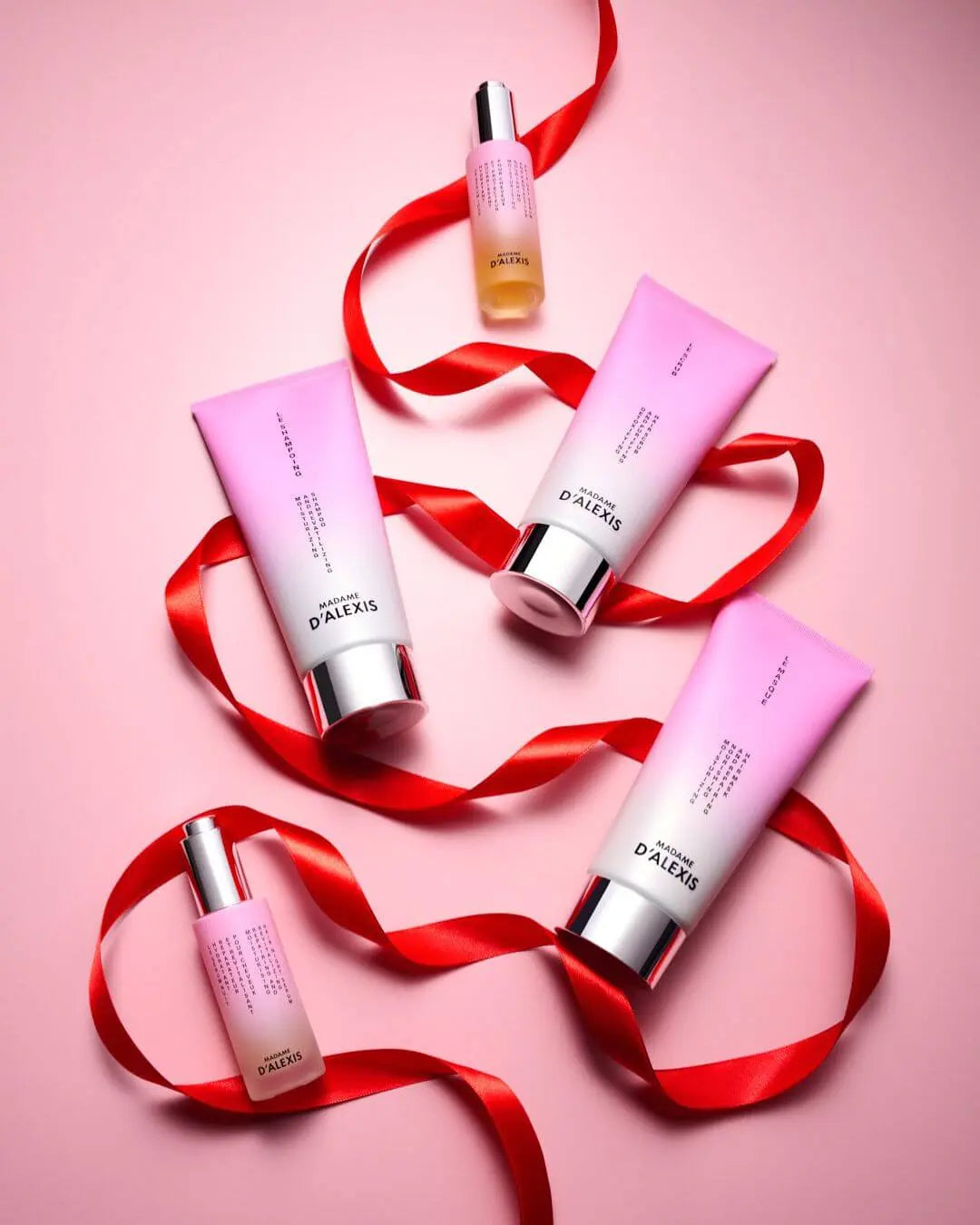
At Madame d'Alexis, hydration is approached as a skincare routine applied to the hair. The products are formulated without added water: water is replaced by organic hydrosols—Damask rose, German chamomile, and orange blossom—complemented by active ingredients derived from skincare, such as cationic hyaluronic acid, plant-based ceramides, prebiotics, and plant-based keratin. Sulfate-free, silicone-free, paraben-free, and made in France, in Brittany. Here’s what each product does to hydrate your hair.
- The Shampoo kicks off the routine. Formulated with 98% naturally derived ingredients, it hydrates, soothes, and adds shine thanks to cationic hyaluronic acid, prebiotics, and plant-based keratin. Apply it as a double wash to a thoroughly wet scalp, massage in, then rinse very thoroughly. Use it daily or alternate it with The Scrub.
- The Mask takes over on the lengths. Made with 97% naturally derived ingredients, it repairs, nourishes, and softens with plant-based ceramides, cationic hyaluronic acid, orange blossom wax, and organic apricot and jojoba oils. Leave it on for 5 to 10 minutes on towel-dried hair, or 20 to 30 minutes for a deep treatment, then rinse thoroughly. It’s the mask that completes the hydration process by providing nourishment—something the shampoo alone cannot do.
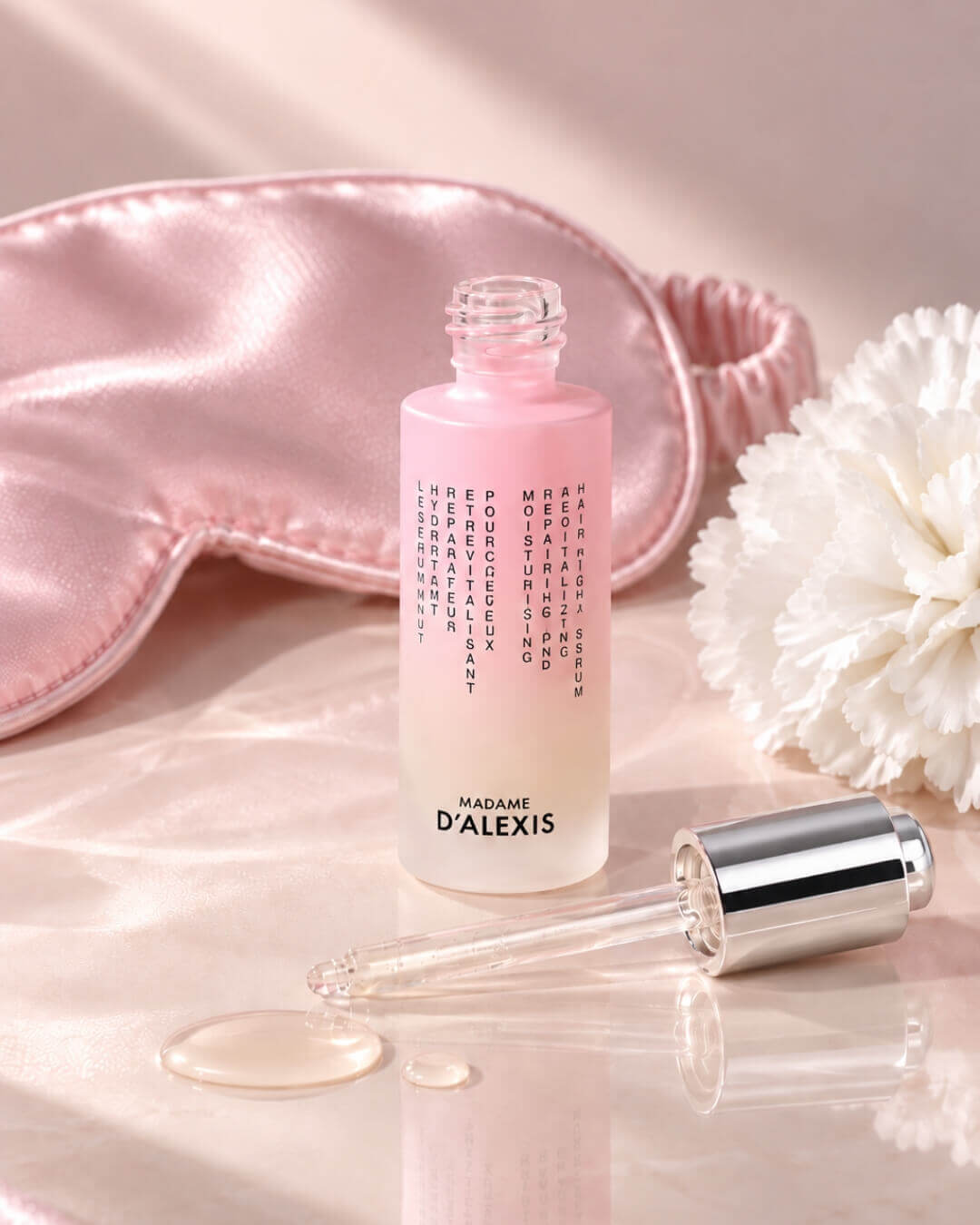
- Day Serum provides protection between washes. This dry oil, 99% naturally derived, contains organic jojoba, plant-based ceramides, and natural heat protectants (up to 200°C). Apply 1 to 3 drops to the mid-lengths and ends of dry or slightly damp hair. It softens and protects the hair shaft without weighing it down.
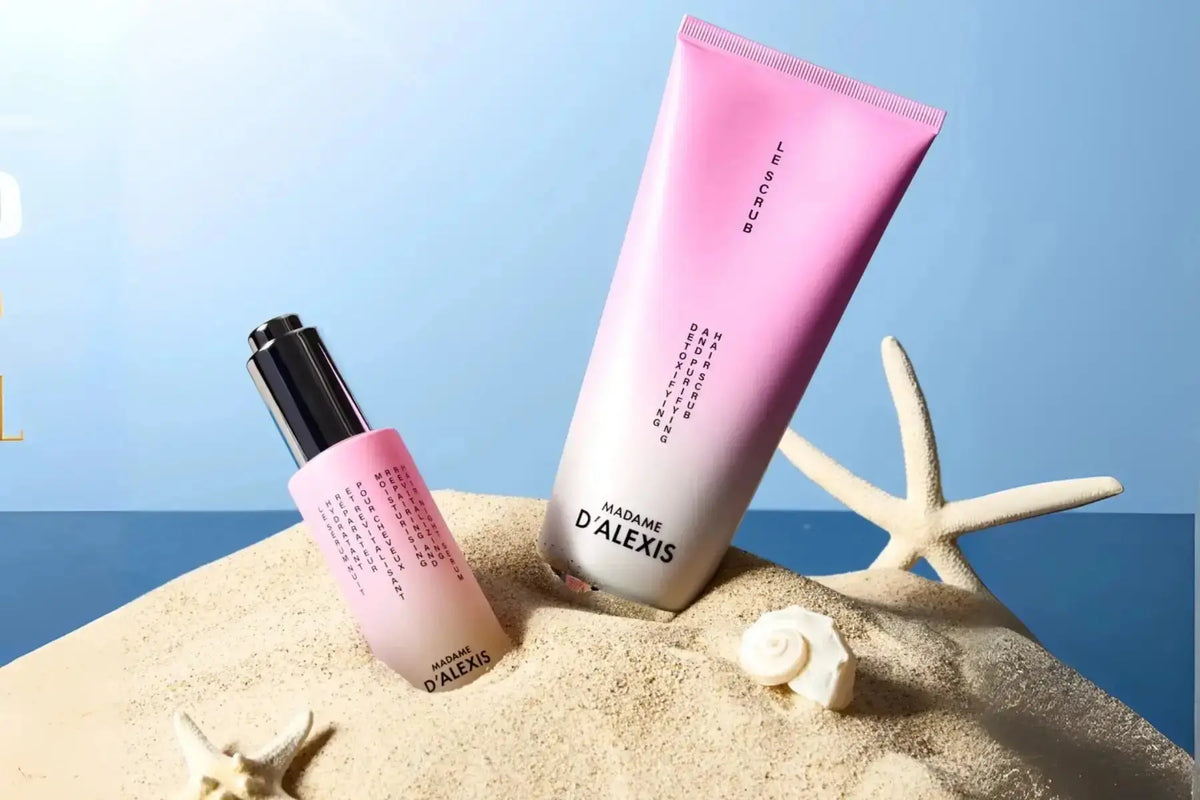
- The Scrub refreshes the scalp. This exfoliating shampoo with fleur de sel, hydrosols, organic coconut oil, and cationic hyaluronic acid is used every 10 to 15 days: on that day, it replaces The Shampoo, applied in two successive washes like a double shampoo, then rinsed out. It is suitable for sensitive scalps, which is precisely why it is used at this spaced-out interval. When the roots are free of residue, the subsequent hair care products can work more effectively.
To learn more about the formulas, browse our selection of products for dry hair.

The Shampoo

The Mask

The Day Serum

Which moisturizing shampoo is right for your hair?
We'll ask you a few questions about your scalp and hair, and then we'll create a personalized routine for you using our five organic hydrosol treatments, formulated without added water.
Does this sound like you?
- You reply
- Discover your ritual
- You are adjusting your selection
Frequently Asked Questions About Moisturizing Shampoo
Can you use a moisturizing shampoo every day?
Yes, if the formula is very gentle and your scalp can tolerate it, but it isn't necessary for most types of dry hair. Washing your hair every day prolongs the rinsing process and increases the number of times you have to wet and dry your hair. Washing it two to three times a week is often enough, with a simple rinse with lukewarm water in between.
Is a moisturizing shampoo enough for very dry hair?
No. Shampoo cleanses and prepares the hair; it does not replace a hair mask or a protective treatment for the lengths. For very dry hair, hydration must be supplemented with lipids and proteins; otherwise, the hair fiber will remain brittle even when properly moisturized.
Do you need to use conditioner after using a moisturizing shampoo?
This isn't necessary if you use the hair mask regularly and your hair remains supple. However, if your hair is hard to detangle or the ends get snagged, applying a detangling treatment to the lengths will prevent the hair shaft from breaking when you brush it.
Is a moisturizing shampoo suitable for colored hair?
Yes, as long as it's gentle and pH-balanced. The less harsh the formula, the less pigment is washed out. However, avoid using clarifying formulas on a daily basis if you want to preserve your color.
Can you use a moisturizing shampoo on an oily scalp?
Yes, by adjusting how often you wash your hair and focusing on massaging the scalp rather than the lengths. If your roots get oily again within twenty-four hours, alternate with a deeper-cleansing shampoo and reserve the moisturizing formula for the lengths and ends.
Conclusion
A moisturizing shampoo isn't a magic cure—it's simply a gentle cleanser. It cleanses without stripping away essential nutrients, deposits humectants that retain moisture, and leaves the scalp's hydrolipidic film intact. From there, everything becomes easier: the hair detangles effortlessly, the ends stop looking dull, and your hair regains that unmistakable suppleness.
So the right approach isn’t to look for the richest formula, but the most precise one: mild surfactants, a carefully controlled pH, specific hydrosols and humectants, and a patient application technique. Your scalp will quickly let you know if you’ve gotten it right.