Advice
Sunburn on the Hair: Symptoms, Treatments, and Prevention
Sunburn hair weakens both the fiber and the scalp. Discover symptoms, soothing care and sun prevention to keep your hair healthy and shiny.

Sunburn on Your Hair: Protect Your Scalp, Repair the Hair Shaft, and Prevent UV Damage
The sun doesn't just burn the skin on your face. It can affect your part, make your scalp more sensitive, dull your hair, and make the ends drier—especially in the summer, at the beach, or after repeated exposure.
- The scalp can actually get sunburned, especially along the part, on the top of the head, or in areas where hair is thinning.
- Hair doesn't burn like skin does, but UV rays damage the hair shaft, causing dryness, discoloration, loss of shine, and frizz.
- The most important step is physical protection: a hat, a scarf, a cap, shade, and sunscreen on exposed areas.
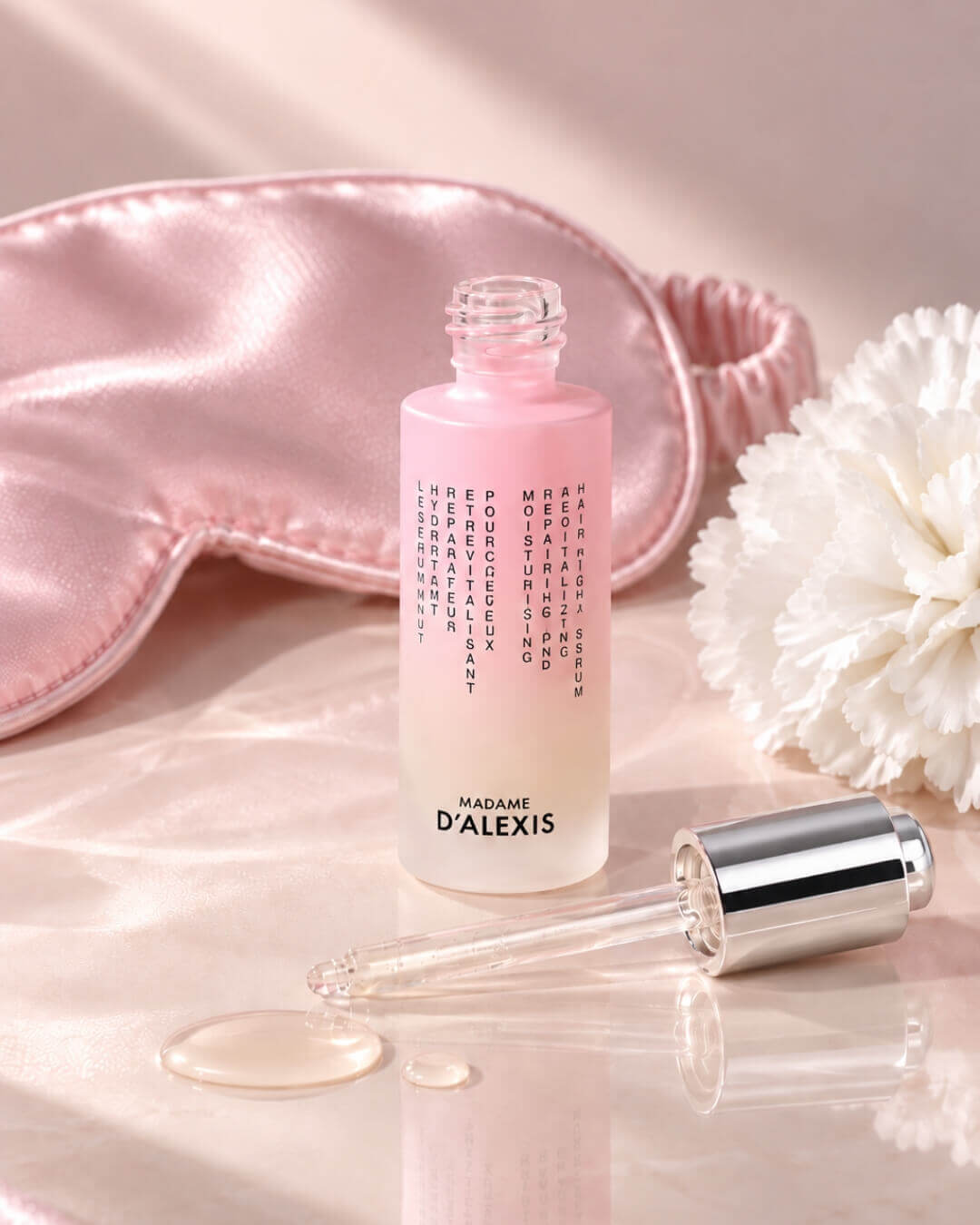
- The Day Serum is the essential skincare product to use before sun exposure: it offers heat protection, antioxidants, an anti-UV shield, anti-pollution benefits, and a dry oil finish.
- The Night Serum rounds out your evening routine: it targets the scalp, hair roots, and the microbiome overnight.
The Strategic Duo: Day Serum to Protect, Night Serum to Regenerate
When it comes to sun exposure, your routine should be simple: in the morning, protect the lengths of your hair from UV rays, oxidation, heat, and pollution; in the evening, support your scalp and roots during the nighttime recovery phase.
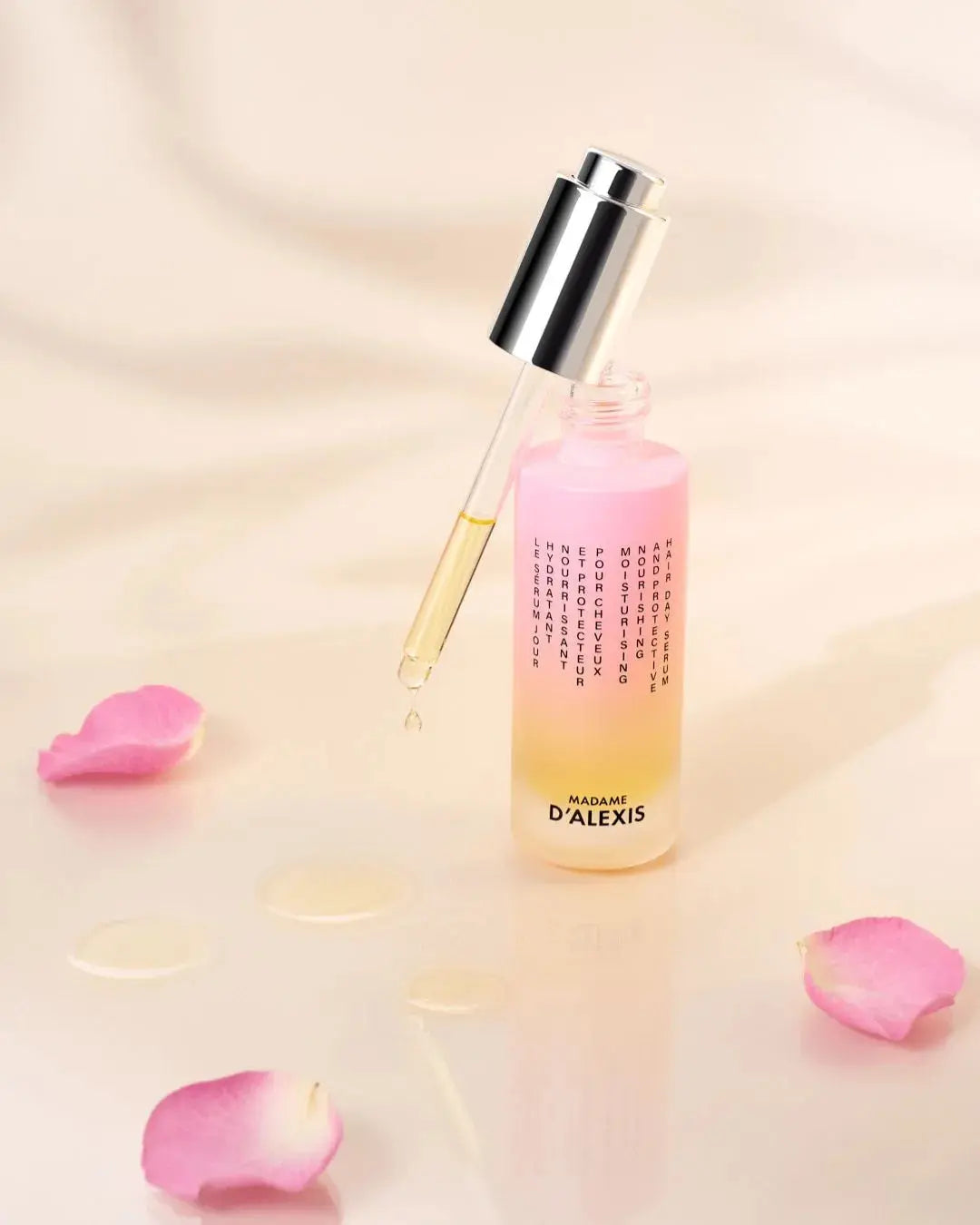
The Day Serum
- Protects hair from sun, heat, and pollution.
- Plant-derived ceramides and organic jojoba oil.
- Dry oil finish, applied only to the lengths and ends.
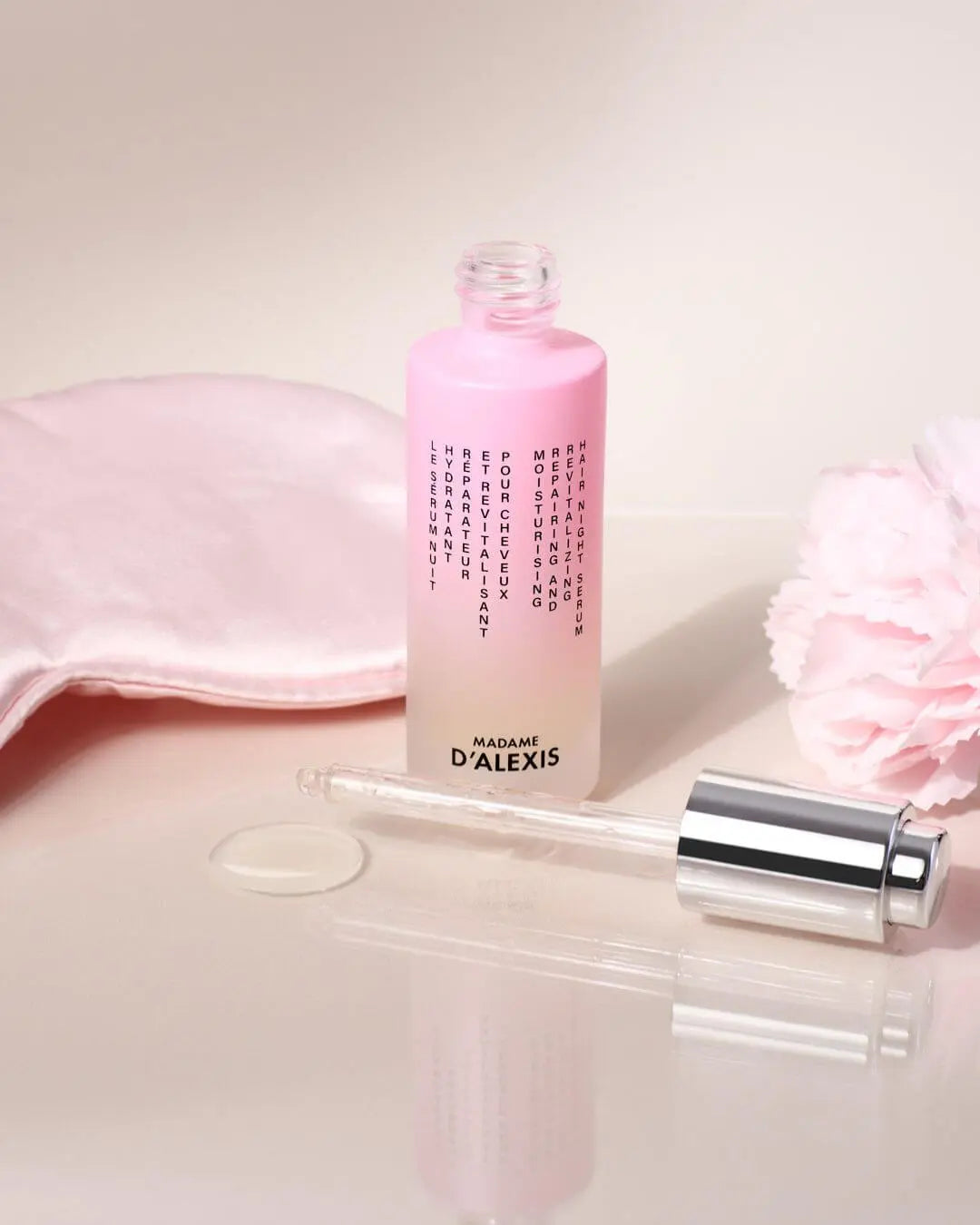
The Night Serum
- Apply in the evening, section by section, to the scalp.
- Supports the microbiome after sun exposure.
- Probiotics, postbiotics, and cationic hyaluronic acid.
| Moment | Serum | Area | Role in Relation to the Sun | Synergy |
|---|---|---|---|---|
| Morning | Day Serum | Lengths and tips | Protects the hair from UV rays, oxidation, heat, and pollution. | It acts as a daytime shield for the visible, exposed parts of the hair. |
| Before the beach, the sun, or blow-drying | Day Serum | Lengths and ends, never the scalp | Dry oil finish, anti-frizz, with heat protection up to 200°C. | It complements the scalp treatment by protecting the hair shaft, not the skin. |
| Evening | Night Serum | Scalp and Roots | Supports the scalp's nighttime recovery with organic hydrosols, probiotics, and postbiotics. | It takes over once the Day Serum has protected the hair lengths throughout the day. |
| Complete routine | Day Serum + Night Serum | Day: lengths. Night: scalp. | Protects hair during the day, supports the scalp at night. | We protect what is exposed, and then we support what is recovering. |
Important: The Day Serum protects the hair shaft, but does not replace sunscreen on the skin. On your part or any exposed scalp, wear a hat, a scarf, or use sunscreen suitable for your skin type.
Can you really get sunburned on your hair?
Strictly speaking, hair does not get sunburned like skin does, since it lacks blood vessels. However, the scalp is skin: it can become red, hot, and peeling, and may become painful after sun exposure.
The hair shaft, on the other hand, is subjected to a different kind of damage: UV rays, salt, chlorine, and heat make hair drier, duller, and more porous. This is the same underlying issue that leads to problems with dry and brittle hair.
Scalded scalp
Redness, a sensation of heat, pain when touched, peeling skin, and itching. This is a sunburn.
Sun-Damaged Hair
Rough strands, dull color, loss of shine, frizz, and dry ends. This is a gradual deterioration of the hair fiber.

The areas most at risk: the part, the top of the head, and fine or thinning hair
Sunburn of the scalp mainly affects areas where the skin is visible or has little protection from the hair.
The skate
Her skin is directly exposed to UV rays and burns easily, especially on vacation or after a day without a hat.
The top of the skull
This is the area most exposed to the sun when it is high in the sky, especially from late morning through the afternoon.
Fine or thinning hair
The lower the hair density, the less effectively the hair acts as a natural barrier. The Nighttime Scalp Serum can be incorporated into an evening routine designed to promote density and comfort.
Symptoms of a sunburn on the head
| Sign | What this indicates | A Useful Reflex |
|---|---|---|
| Redness and warmth | Inflammation of the scalp. | Immediate shade, a cool compress, and hydration. |
| Peeling skin | Peeling of the skin after a sunburn. | Very gentle shampoo; do not exfoliate while the skin is sensitive. |
| Tingling and pain | Irritated scalp, sometimes hypersensitive to brushing. | Avoid heat, blow-drying, and tight hairstyles. |
| Dull, coarse hair | Oxidized hair, rough cuticle. | Hair Mask for the Lengths, Day Serum for the Ends. |
Seek medical attention promptly if you experience blisters, severe pain, fever, malaise, an apparent infection, or repeated scalp burns.
How to treat sunburned hair and scalp?
1. Soothe your skin before you even think about styling your hair
- Keep your head in the shade and stop the exposure.
- Apply a cool compress—never an ice pack.
- Avoid hair dryers, flat irons, heated brushes, and tight hairstyles.
- Use an aloe vera gel or a soothing product suitable for your skin.
2. Clean without stripping
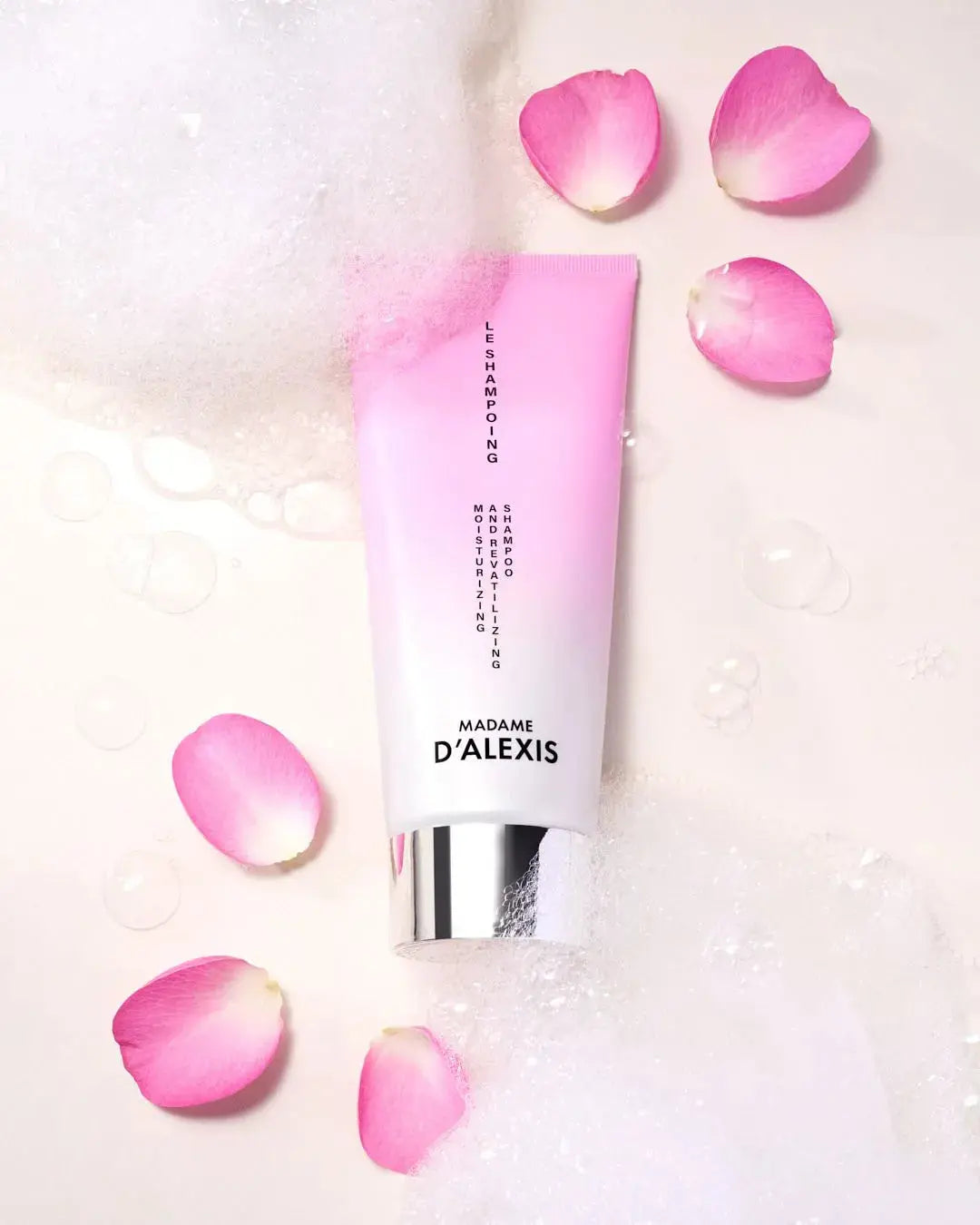
When the scalp is sensitive, you should wash it gently. A mild, sulfate-free shampoo is better than a harsh formula, especially if your scalp is flaky or feels tight.
3. Repair the exposed sections
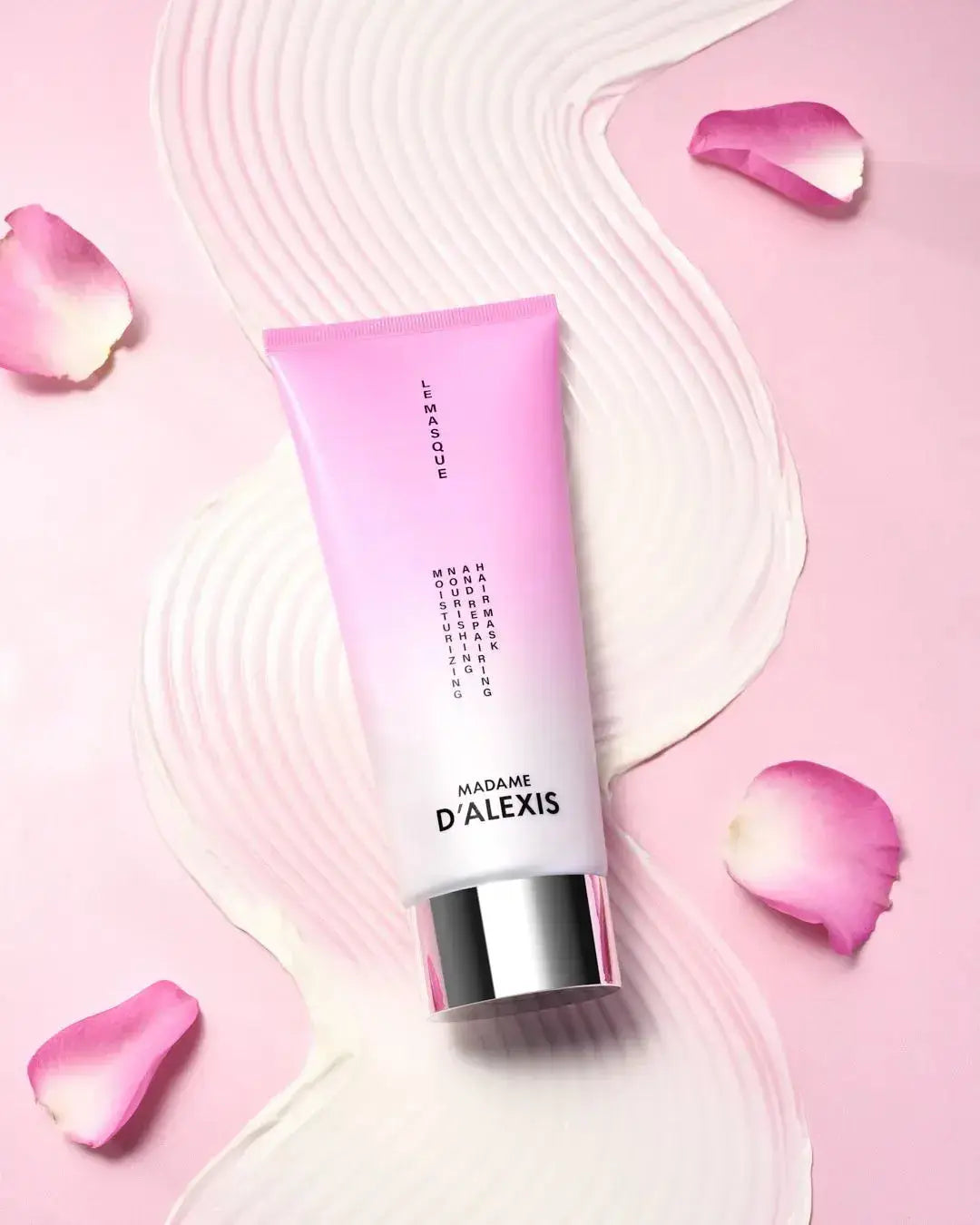
For the lengths of the hair, the goal is to provide hydration, lipids, and protection. The ceramide-enriched hydrating mask is applied to the lengths and ends to help restore softness and shine.
Alexis's Madame After-Sun Routine: Repair During the Day, Regenerate at Night
After sun exposure, don't overdo it. A good routine should be simple: gently wash your hair, moisturize the lengths, protect the hair shaft, and nourish the scalp in the evening.
In the morning or before going out
- Apply 1 to 3 drops of Day Serum to the mid-lengths and ends of your hair.
- Protect your scalp with a hat, a scarf, or appropriate sunscreen.
- Reapply physical sunscreen if swimming, in the wind, or during prolonged exposure.
The evening after the exhibition
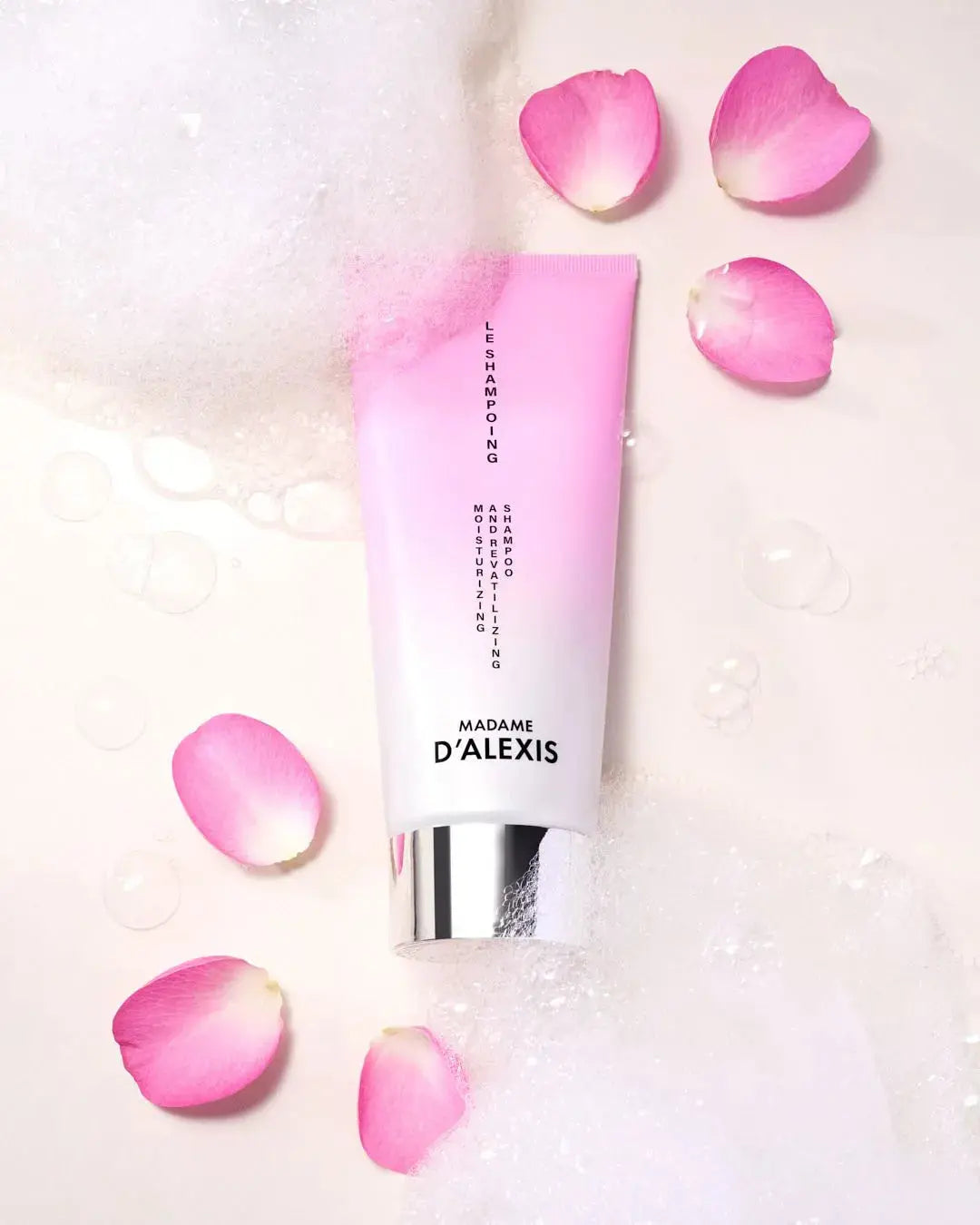
- Wash with the shampoo if there is salt, chlorine, sweat, or sunscreen.
- Apply the mask to the mid-lengths and ends if your hair is dry or coarse.
- Apply the Night Serum to the scalp, strand by strand, using a few drops; do not rinse.
Preventing Sunburn on Your Hair: The Best Steps to Take
- Wear headgear: a Panama hat, scarf, cap, or wide-brimmed hat remains the most reliable protection for the parting and the top of the head.
- Avoid peak hours: Limiting exposure during midday reduces fiber scorching and dryness.
- Protect the hair shaft: The Day Serum acts as a protective finishing treatment for the lengths, with antioxidants, ceramides, and organic jojoba oil.
- Don't forget about SPF for your scalp: along your part, use a sunscreen formulated for the skin. For more details, see our guide to hair sunscreen.
- Repair at night: Apply the Night Serum to the scalp—not to the lengths of the hair—to promote comfort and nighttime regeneration.

Sun, colored hair, curls: Who needs to be extra careful?
Colored, highlighted, curly, or very dry hair is less able to withstand prolonged exposure. Its cuticle is often more porous, which makes the hair shaft more sensitive to salt, chlorine, and UV rays.
Colored hair
UV rays can cause the color to fade. See the guide for colored and highlighted hair.
Curly hair
Curls dry faster in the sun. A routine for curly and wavy hair helps maintain definition and suppleness.
Dry hair
In the summer, opt for a routine for dry hair, including gentle washing, a hair mask, and a protective serum.
Why is the Day Serum so important in the summer?
The Day Serum is the most essential step in this summer routine, as it’s applied before your hair is exposed to environmental stressors such as the sun, pollution, heat, blow-drying, straightening, salt, or chlorine. Its dry oil texture nourishes without weighing hair down.
- UV and pollution protection: Natural antioxidants help limit fiber oxidation.
- Heat protection up to 200°C: useful if you're drying or styling your hair after a day at the beach.
- Anti-frizz finish: Ceramides help lock in moisture and smooth the hair cuticle. Check out our guide to preventing frizz.
- Lengths and ends: Apply only to these areas, avoiding the scalp.
Why is the Night Serum useful after sun exposure?
In the evening, the focus shifts: it’s no longer about protecting the hair strands, but about supporting the scalp. The Night Serum is formulated for the hair root, follicle, and microbiome. It’s the right choice when the scalp has been exposed, sensitized, dry, or uncomfortable.
- Apply a few drops, section by section, to a dry or slightly damp scalp.
- Gently massage with your fingertips to spread it evenly; do not rub if the skin is burned.
- Leave it on overnight without rinsing.
- As part of a treatment regimen, use 3 to 5 times a week, then 1 to 2 times a week for maintenance.
Hair sunburn FAQ
Is it possible to get sunburned hair?
Hair doesn't burn like skin, but the scalp can get a real sunburn. Hair, on the other hand, can become dry, dull, porous, and brittle when exposed to UV rays.
How can you protect your part from the sun?
The most reliable protection is still a hat. On a very exposed part of the scalp, you should also use sunscreen suitable for your skin type, and then protect the lengths of your hair with a product like Day Serum.
Does the Day Serum replace a scalp sunscreen?
No. The Day Serum protects and enhances the hair shaft with antioxidants, ceramides, organic jojoba oil, and heat protection. It does not replace SPF on the scalp.
What should I do if my scalp is flaking after sun exposure?
Avoid exfoliation, heat, and tight hairstyles. Wash very gently, moisturize, protect the area from the sun, and see a doctor if the pain is severe, if there are blisters, or if there are signs of infection.
What skincare products should you use in the evening after sun exposure?
On the lengths: apply a mask if your hair is dry, then finish with a few drops of Day Serum. On the scalp: apply Night Serum section by section, provided the skin isn’t burned to the point of being painful or damaged.
What hair care products should you choose for dry hair after sun exposure?
A gentle shampoo, a moisturizing mask for the mid-lengths, and then a protective serum for the ends. To choose the right products based on how dry your hair is, check out our guide to the best hair care products.