Advice
Organic Shampoo: The Complete Guide to Making the Right Choice (Certifications, Active Ingredients, Sizes)
Ecocert/COSMOS certifications, solid organic shampoo, dry organic shampoo, ingredients for oily hair: the complete guide to choosing a truly organic shampoo in 2026, without falling for greenwashing.


Organic Shampoo: The Complete Guide to Making the Right Choice
An organic shampoo is more than just a pretty green label. Labels, active ingredients, formats, water-based formulas, surfactants: here’s how to tell a truly natural product from a marketing gimmick.
It is not just about what the shampoo removes, such as sulfates or silicones, but what it puts in their place: plain water or beneficial botanical ingredients.
In short
An organic shampoo starts with a trusted certification: Cosmos Organic, Ecocert, or Cosmebio. Without a logo, the word "organic" remains just a marketing promise. However, certification is not everything: a good organic shampoo must also be gentle, transparent, suited to your scalp, and formulated with genuine active ingredients.
The logo helps distinguish a true formulation standard from simple natural marketing claims.
Quality depends mainly on the chosen cleansing agents and the position of active ingredients in the ingredient list.
A formula based on active organic floral waters offers more benefits than a neutral water-based formula.
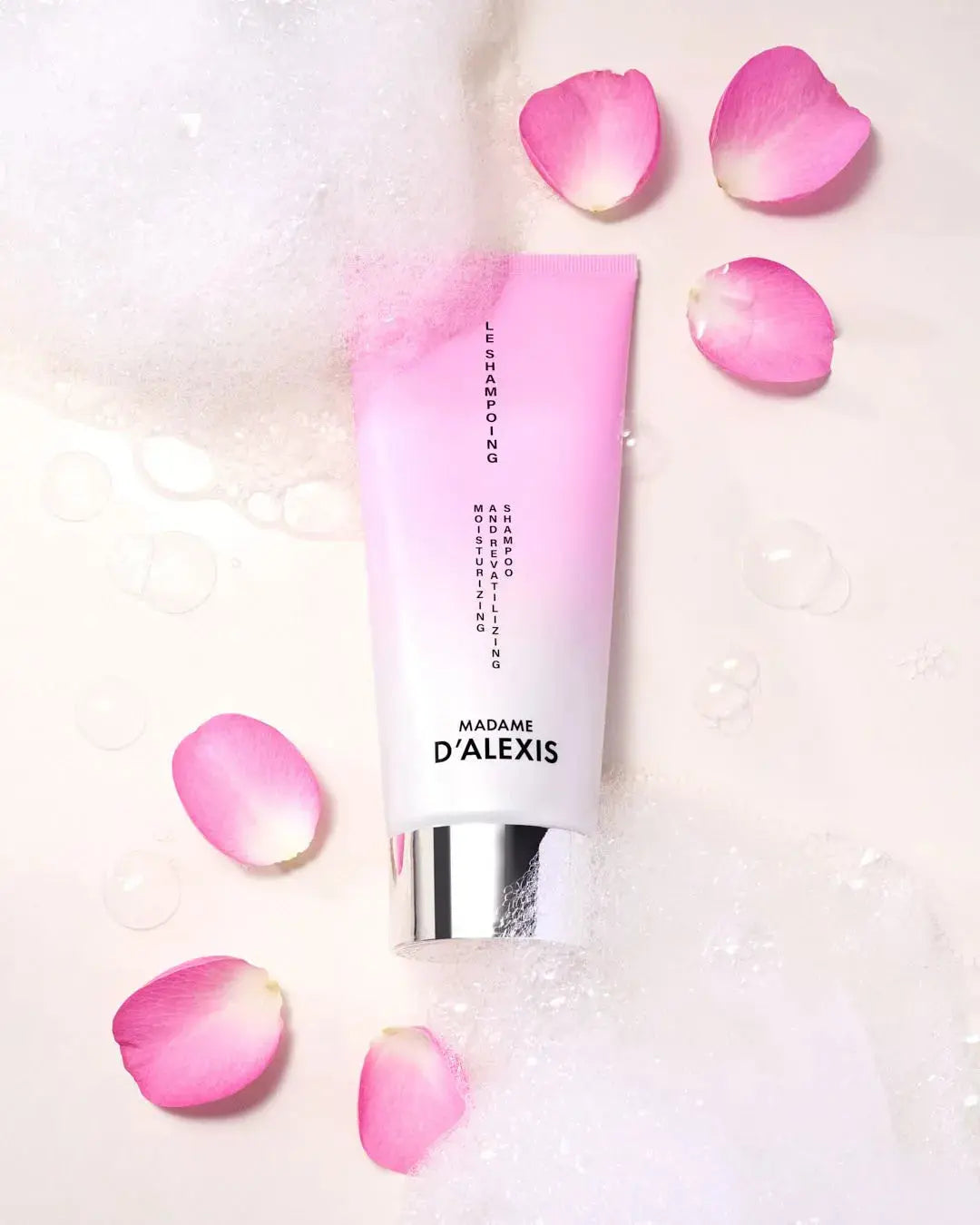
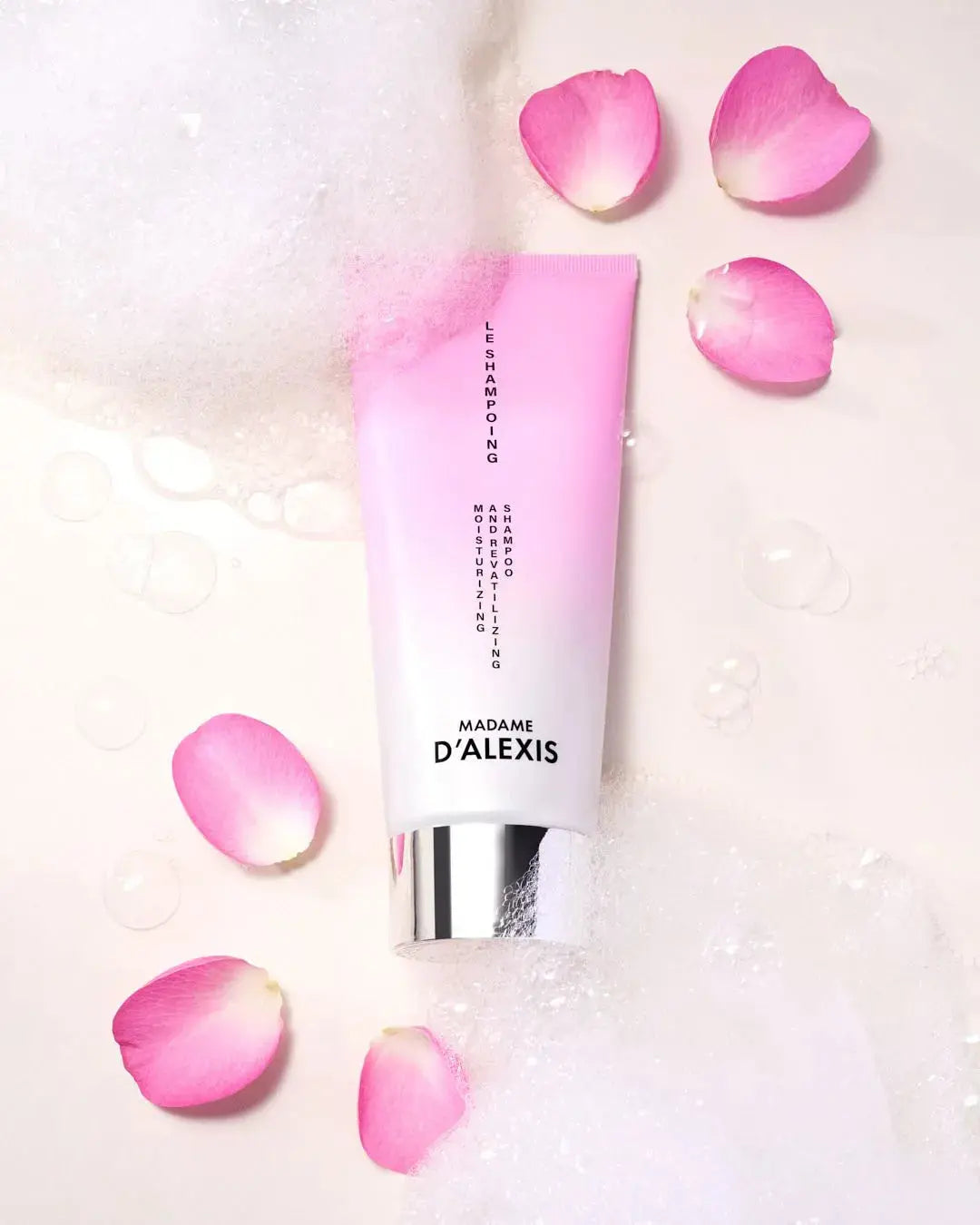
The Organic Floral Water Shampoo
Our strategic benchmark for "organic shampoo"
The Organic Floral Water Shampoo by Madame d'Alexis illustrates a rare approach: an organic floral water base instead of added water, combined with cationic hyaluronic acid, plant keratin, and prebiotics.
To learn more about gentle cleansing bases, also read the guide on sulfate-free shampoo.
What is a true organic shampoo? Ecocert/Cosmos labels versus marketing claims
The word "organic" on its own is not enough. In cosmetics, you need to look at the logos, the standard used, and the ingredient list (INCI). The COSMOS standard regulates natural and organic cosmetics, setting specific requirements for the percentage of naturally derived ingredients and organic ingredients in the overall formula.
For rinse-off products like shampoos, Ecocert requires at least 10% organic ingredients in the total formula, compared to 20% for other product types. This shows why you need to look beyond the simple word "organic."
| Criterion | Cosmos Organic | Cosmos Natural | What changes |
|---|---|---|---|
| Naturally derived ingredients | ≥ 95 % | ≥ 95 % | Standard shared by both certifications. |
| Organic content in the total product | ≥ 10% for a rinse-off product | No organic minimum | Only Organic guarantees a true proportion of ingredients from organic farming. |
| Silicones, parabens, harsh sulfates | Prohibited | Prohibited | The label eliminates the most problematic ingredients. |
| "Organic" claim | Allowed | No | A natural shampoo is not necessarily an organic shampoo. |
Organic shampoo versus sulfate-free organic shampoo: the real difference
A Cosmos-certified organic shampoo already excludes harsh sulfates like SLS and SLES. However, the reverse is not true: a "sulfate-free" shampoo can still be very conventional, containing silicones, synthetic fragrances, or very low concentrations of active ingredients.
It may cleanse more gently, but it does not guarantee an organic label, a high level of natural ingredients, or active ingredients placed high in the formula.
It follows a stricter standard, but must still be judged on its water base, cleansing agents, and useful active ingredients.
The most underestimated topic remains the water base. In most shampoos, even organic ones, water is the primary ingredient. It serves as a neutral solvent. Conversely, a formula based on active organic floral waters delivers care benefits right from the very first ingredient listed.
Organic solid shampoo: real benefits and limitations to know
Organic solid shampoo is popular for good reasons: less packaging, a compact size, a highly concentrated formula, and a shelf life that’s often longer than that of a traditional liquid shampoo. But the solid format isn’t automatically better for all scalps.
A solid bar concentrates more of its active ingredients and reduces the need for preservatives.
Sodium Coco-Sulfate is of natural origin, but it can still be irritating for sensitive scalps.
In hard water, insufficient rinsing quickly leaves behind a residue that weighs down the hair.
Why Madame d’Alexis does not offer a solid format
Madame d’Alexis does not sell solid shampoo, and this is a deliberate formulation choice. Organic floral waters are distilled flower waters, and incorporating them effectively requires a liquid format. Pressing them into a solid bar would force us to alter the formula's structure and diminish the value of this active base.
Organic dry shampoo: usage, active ingredients, and limitations
Organic dry shampoo is not a shampoo in the strict sense. It absorbs oil between washes, restores volume to the roots, and helps space out washes, but it does not actually cleanse the scalp.
Absorb excess oil without stripping the hair.
Leave on, massage, and then brush out to prevent buildup.
Beyond that, the scalp needs a real wash.
It extends the time between washes, but it does not replace shampoo.
Organic shampoo for oily hair: which active ingredients should you choose?
An organic shampoo for oily hair must regulate oil production without stripping the hair. The mistake is using a formula that is too harsh: the scalp reacts by producing even more oil. To better understand this issue, also read our article on the benefits of clarifying shampoo.
| Active | Role | Benefits for oily hair |
|---|---|---|
| Nettle | Astringent | Helps reduce excess oil. |
| Rosemary | Energizing | Supports a more balanced scalp. |
| Zinc PCA | Oil-balancing | Works on the scalp environment. |
| Green clay | Absorbent | Useful occasionally, but use with caution. |
| Prebiotics | Microbiome balance | Helps maintain scalp comfort. |
For damaged lengths, a straw-like hair repair routine can complement the approach without weighing down the roots.
Comparison table: organic market shampoos vs. Madame d'Alexis Shampoo
The certified organic shampoo market includes reputable brands. The difference is not about pitting "standard organic" against Madame d'Alexis, but rather looking at the formulation choice: neutral water versus active floral waters.
| Criterion | Centifolia | Mademoiselle Bio / Léa Nature | Shampoo Madame d'Alexis |
|---|---|---|---|
| Positioning | Mainstream certified organic | Accessible certified organic | Natural premium with no added water |
| Water base | Water as the primary ingredient | Water as the primary ingredient | Active Organic Floral Waters |
| Botanical actives | Aloe, plant proteins depending on the range | Varies by reference | Damask rose, chamomile, orange blossom |
| Active ingredients | Depending on formula | Depending on formula | Cationic hyaluronic acid, plant-based keratin, prebiotics |
| Silicones | Absent | Absent | Absent |
| Manufacturing | France | France | Brittany, batch-by-batch traceability |
| Formula breakdown | Reliable formula, traditional base | Reliable formula, traditional base | Concentrated active base, skincare-for-hair approach |
Recommended complete organic routine: how to incorporate organic shampoo
An organic shampoo does not work on its own. It is part of a cohesive routine: cleansing without stripping, preserving the scalp, protecting the lengths, and avoiding buildup that can alter results.
Detangle before washing
On dry or slightly damp hair, use a wide-tooth comb to minimize breakage in the shower.
Wash the scalp
Massage for 2 to 3 minutes with the pads of your fingers, focusing on the roots. The lengths are cleaned as the water rinses through.
Treat the lengths
After washing, apply a silicone-free treatment exclusively to the lengths to smooth the hair cuticle.
Dry gently
Pat dry with a soft towel and limit heat exposure. For protection, check out our guide on sun-damaged hair.
Washing frequency based on your hair type
| Hair type | Recommended frequency | Things to keep in mind |
|---|---|---|
| Greasy hair | Every 2 to 3 days | Gradually increase the time between washes to avoid an overproduction of oil. |
| Normal hair | 2 to 3 times a week | Adjust based on exercise, pollution, and the season. |
| Dry or colored hair | 1 to 2 times per week | Follow up with a moisturizing mask. |
| Sensitive scalp | Maximum twice a week | Lukewarm water, gentle formula, thorough rinsing. |
To better understand the oil-based active ingredients that can complement a natural routine without making the scalp greasy, see the guide which hair oil to choose.
FAQ - Organic Shampoo: Most Frequently Asked Questions
Is an organic shampoo necessarily sulfate-free?
Yes, when certified Cosmos Organic or Cosmos Natural, harsh sulfates like SLS and SLES are prohibited. However, a shampoo simply marketed as "organic" without certification does not offer this guarantee.
How do you know if an organic shampoo is truly effective?
Check the ingredient list. Useful active ingredients should appear quite high up, surfactants should be gentle, and the base formula should be consistent. A formula where water is the first ingredient may be fine, but it is often more diluted.
Is organic solid shampoo suitable for color-treated hair?
Yes, if the formula is gentle, free of harsh sulfates, and has a balanced pH. Above all, you should check the main surfactant and avoid formulas that leave a lot of residue in hard water.
Can organic dry shampoo replace a regular shampoo?
No. It absorbs sebum between washes, but it does not deeply cleanse the scalp. It should remain an occasional step.
What is the difference between Cosmos Organic and Ecocert?
Ecocert is a certifying body. Cosmos Organic is the standard, meaning the specifications. A product can therefore be certified by Ecocert according to the Cosmos Organic standard.
Why does my hair feel greasier after switching to an organic shampoo?
This is often a transition phase. The scalp, used to harsher cleansing agents, may produce more oil for 2 to 4 weeks. You need to stick to a regular routine and rinse thoroughly.