Advice
Postpartum Hair Loss: Understanding, Preventing, and Treating It Naturally
Hair Loss After Childbirth? Learn about the causes, how long telogen effluvium lasts, and a natural, sulfate-free hair care routine for pregnancy and the postpartum period.

Postpartum Hair Loss: Understanding, Preventing, and Treating It Naturally
A comprehensive guide to understanding hair changes during pregnancy, minimizing hair breakage after childbirth, and developing a gentle, natural, and targeted routine.
Key Facts About Postpartum Hair Loss
Postpartum hair loss is normal, temporary, and affects between one-third and one-half of women after childbirth. It has a medical name: telogen effluvium. Here are the key points:
Between 2 and 4 months after giving birth, rarely before.
The active shedding phase lasts an average of 2 to 3 months, sometimes up to 6 months.
Density generally returns to normal between 6 and 12 months after childbirth.
What to do: Avoid harsh ingredients (sulfates, silicones), opt for gentle, targeted active ingredients (plant-based keratin, prebiotics, organic hydrosols), and don't panic—your hair will grow back.
If your hair loss lasts longer than 6 months or is accompanied by other symptoms (severe fatigue, weight gain, brittle nails), see your doctor to rule out an iron deficiency or a thyroid disorder.
Alexis's "Madame" Routine, Designed for Pregnancy and the Postpartum Period
A short, gentle, and targeted routine: cleanse without stripping the hair, nourish the lengths, stimulate the scalp, and support postpartum hair regrowth.
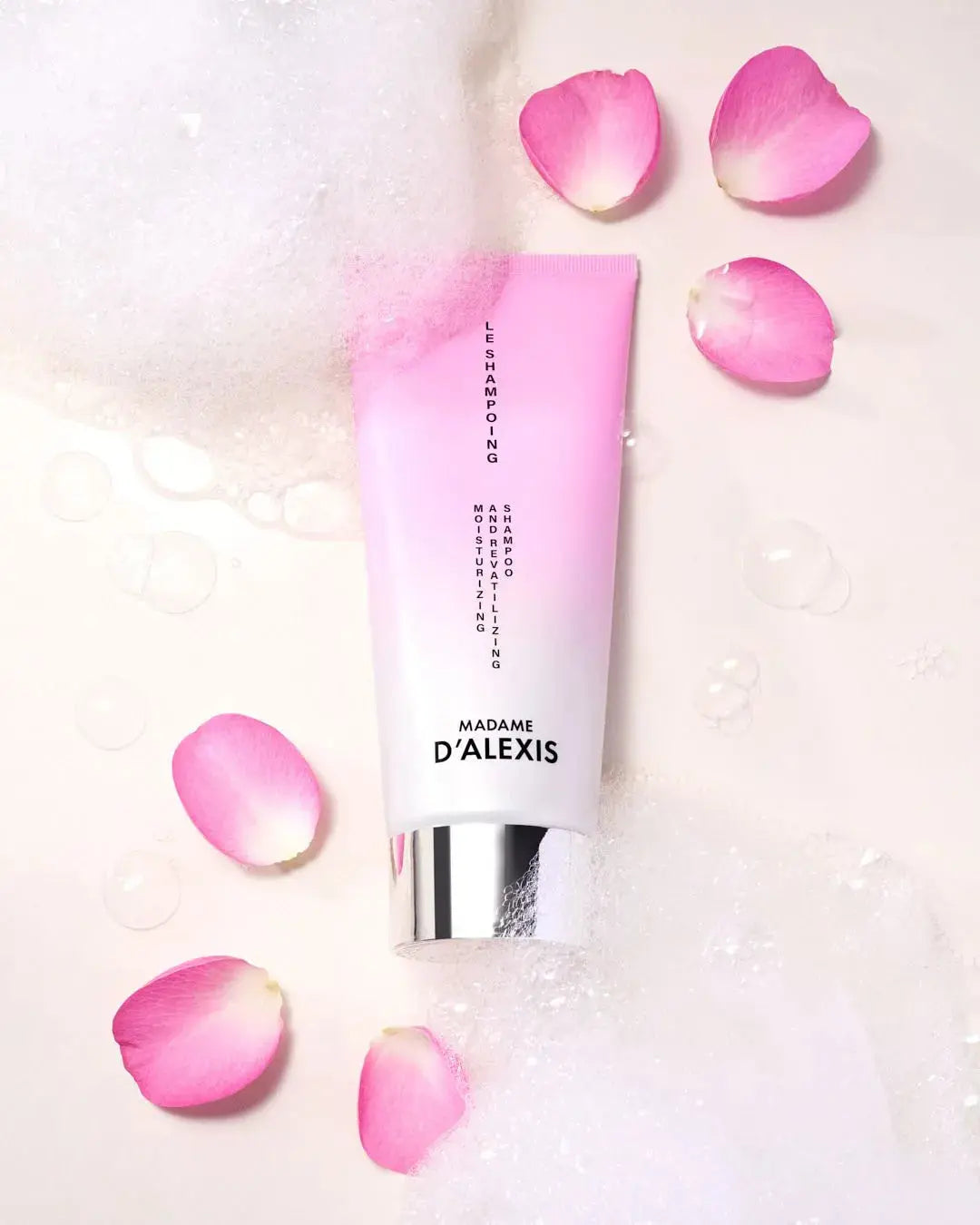
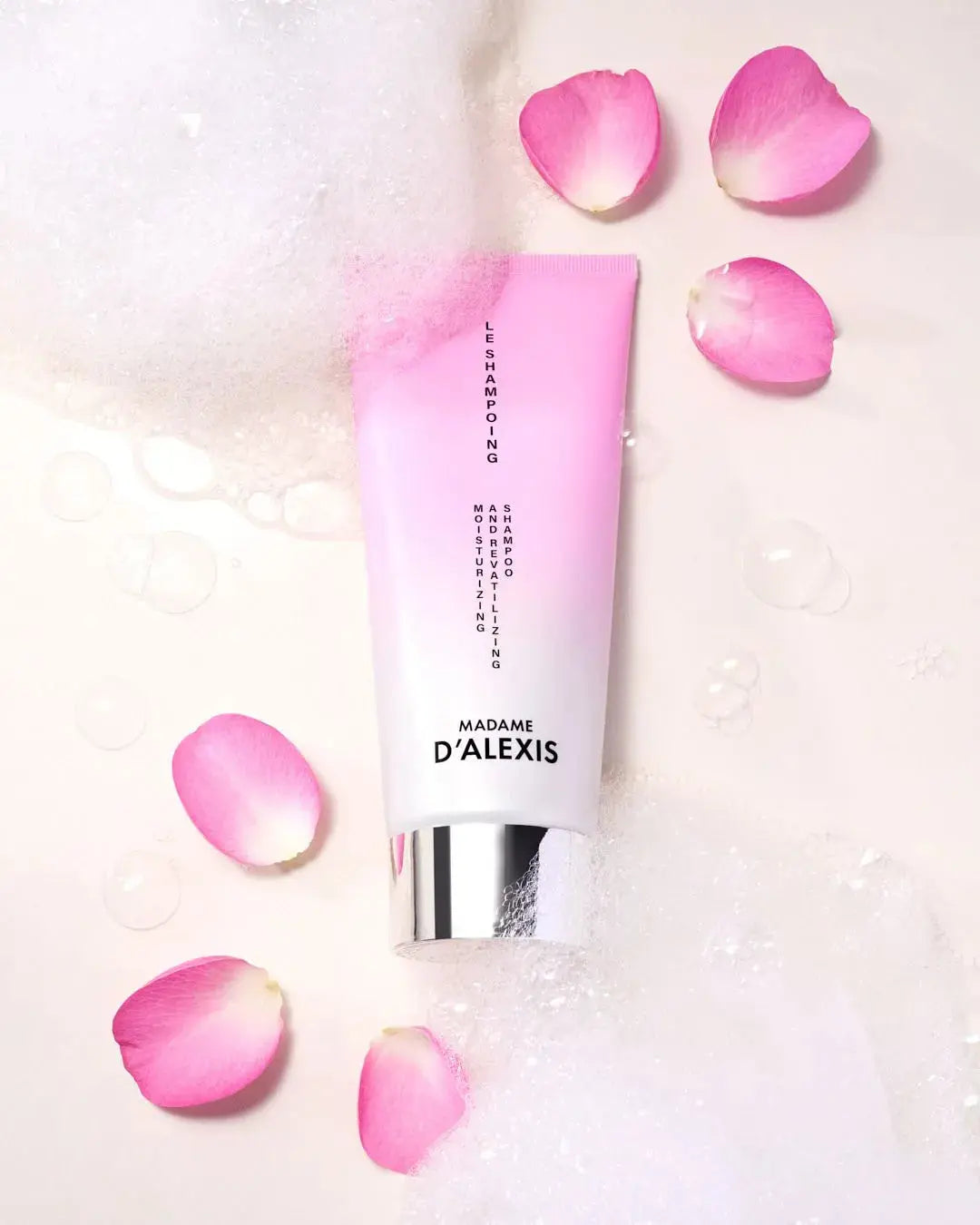
Hydrolat Shampoo
Sensitive scalp · oily roots · dry ends
- Ideal when the roots start to get oily again in the first trimester
- Cleans without sulfates, silicones, or harsh chemicals
- Organic, active hydrosols to soothe the sensitive scalp
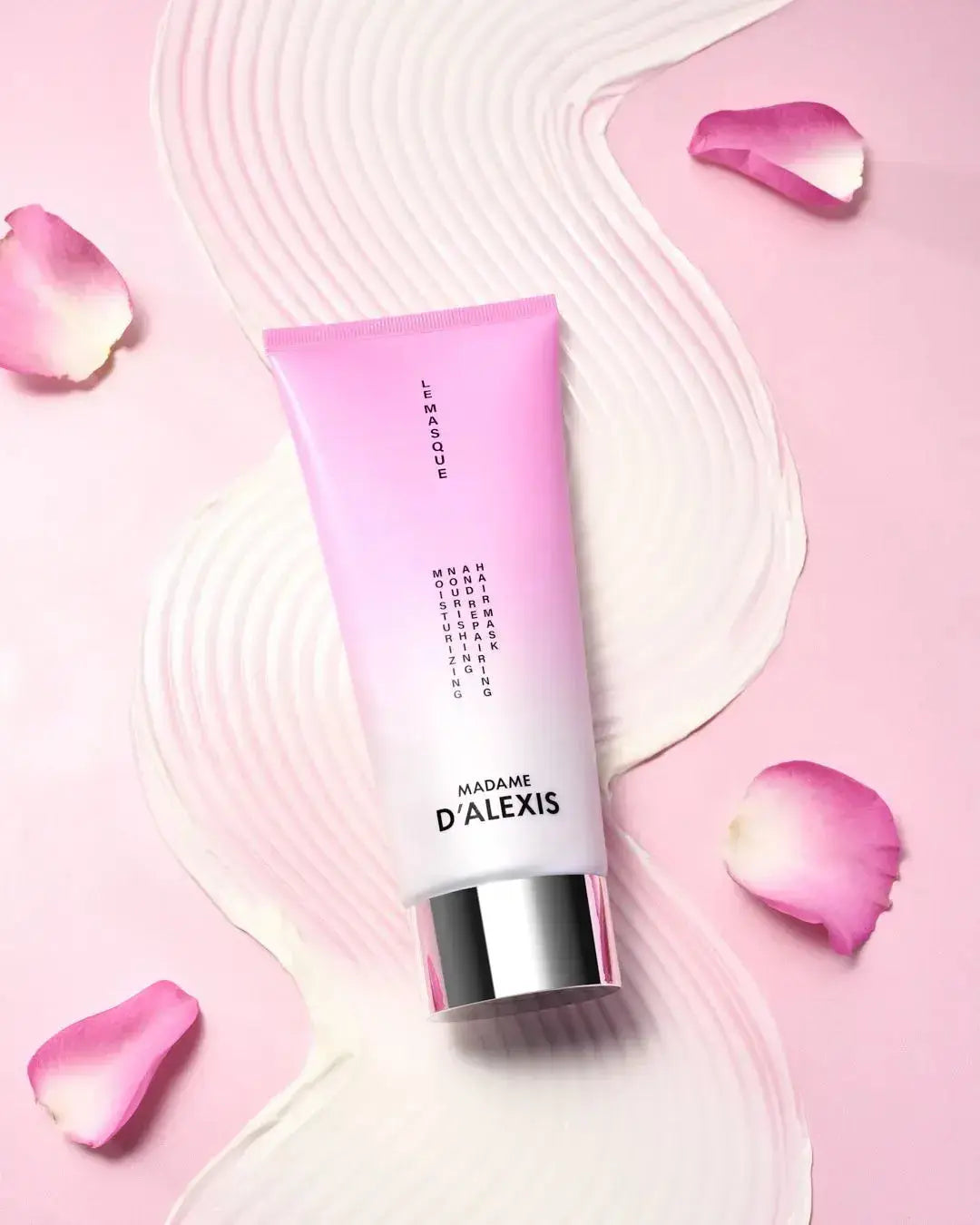
The Hydrolat Mask
Prevent breakage · soften · protect the fiber
- Use once a week on damaged hair
- Plant-based ceramides to strengthen the cuticle
- Moisturizes without occlusive silicones, even after childbirth
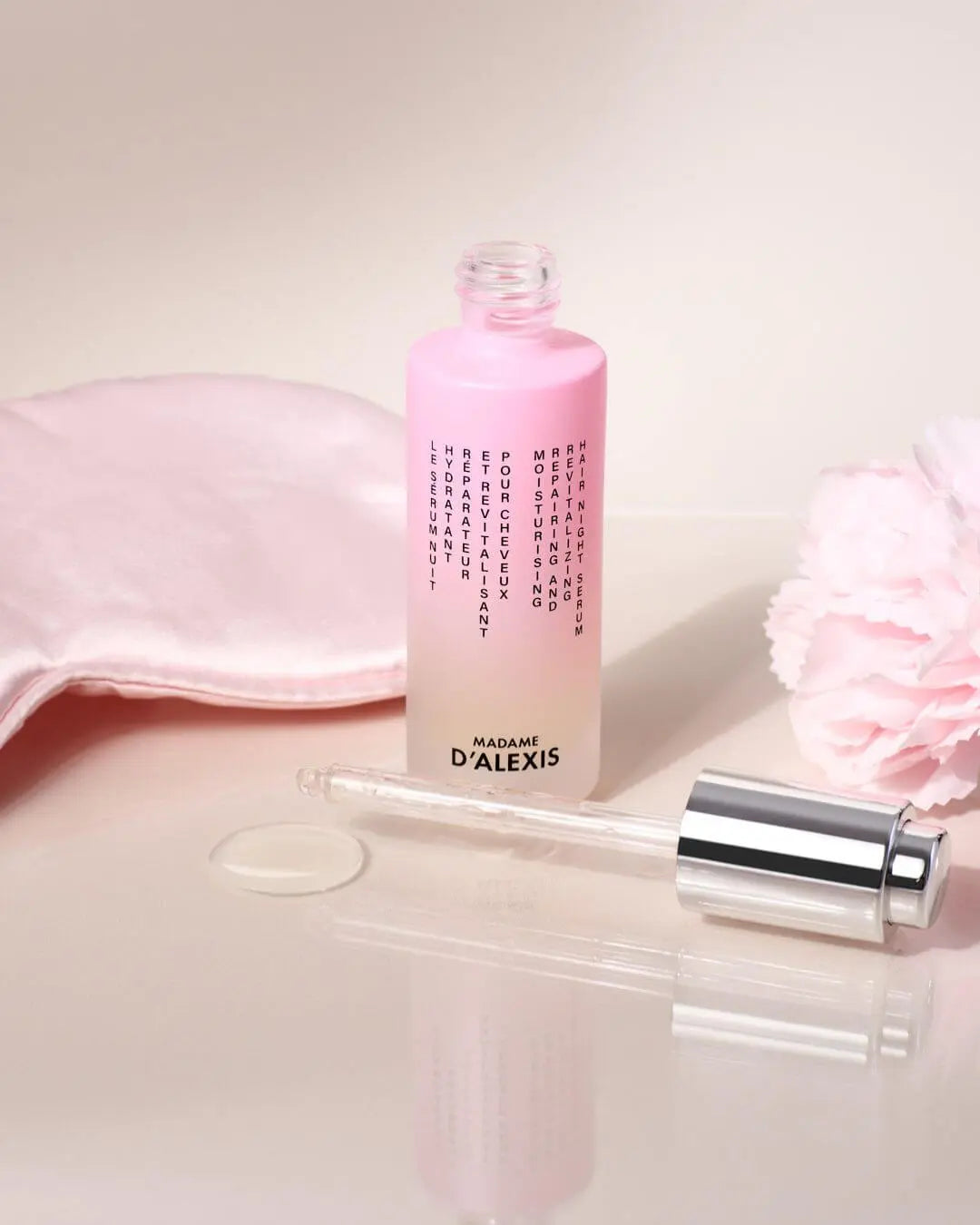
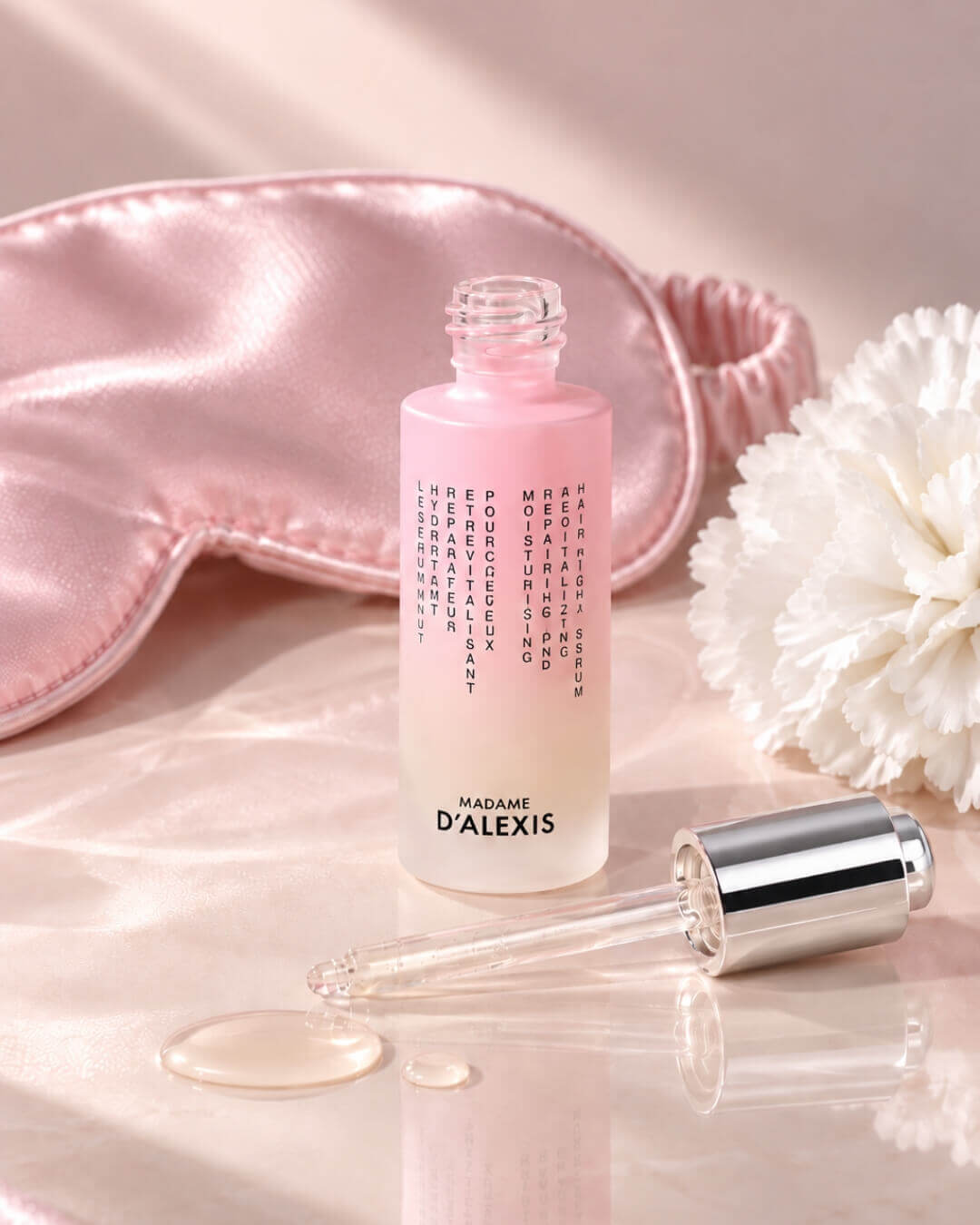
Night Serum with Hydrolats
Targeted Serum · Follicle · Scalp Microbiome
- Apply in the evening to areas of diffuse hair loss
- Helps with visible regrowth around the temples
- Leave-in formula for an 8- to 12-week treatment
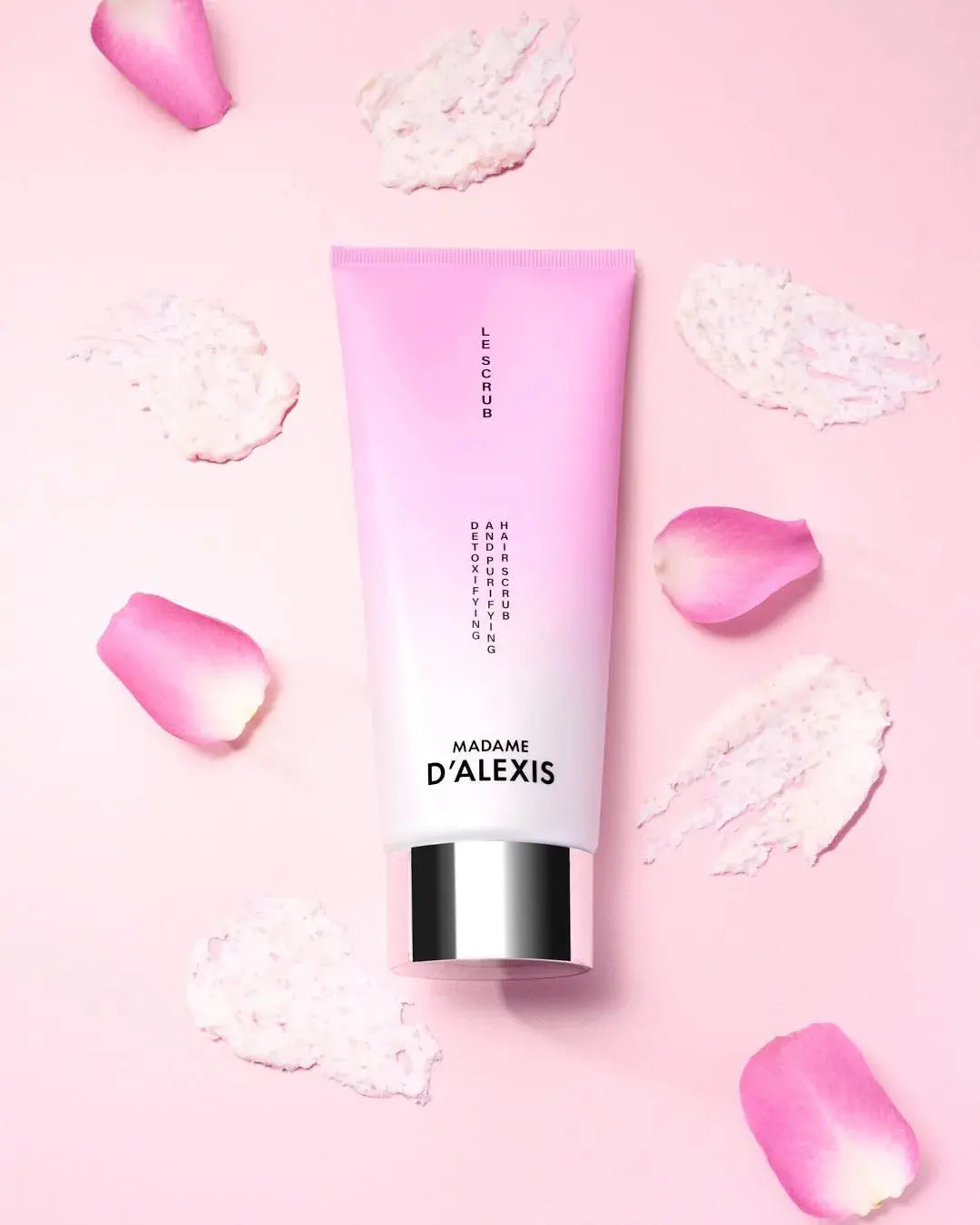
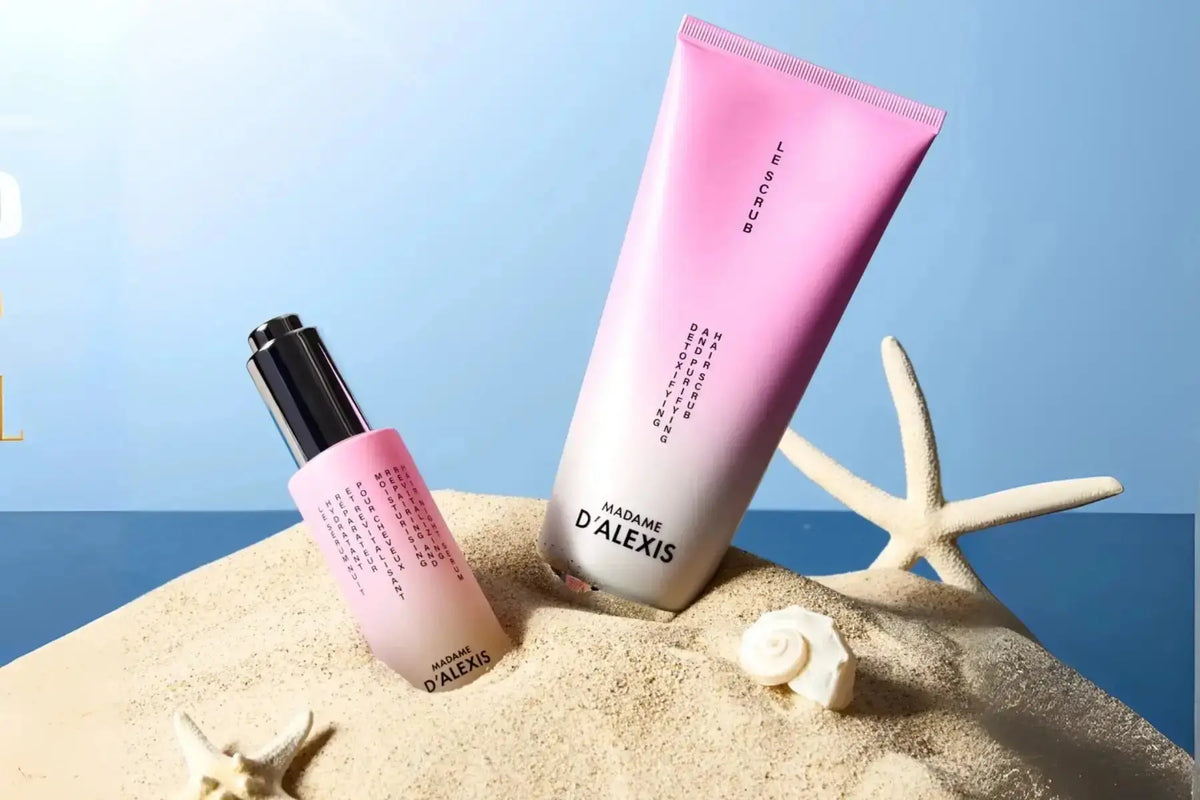
The Floral Scrub
Residue · sebum · a clogged scalp
- Removes residue and dead skin cells from the scalp
- Prepares the follicles before the hair loss treatment routine
- Occasional routine: once every two weeks

Why Does Your Hair Change During Pregnancy?
For nine months, your hair doesn't behave the way it usually does. Some women find their curls straightening out, while others find their hair suddenly getting oily as early as the first trimester. It's not all in your head—it's hormonal.
The Effect of Estrogen on the Hair Growth Cycle
During pregnancy, estrogen levels rise to very high levels—up to ten times higher than normal. As a direct result, hair remains in the anagen phase (the active growth phase) for longer, and much less hair falls out on a daily basis.
In practical terms, you lose fewer than 50 to 100 hairs a day instead of the usual 100 to 150. Your hair appears thicker, denser, and sometimes shinier. It's real. But this "bonus" is temporary—and you'll pay for it after giving birth.
Oily hair in early pregnancy, dry hair in late pregnancy: why?
Oily hair during the first trimester of pregnancy is common. The rise in androgens stimulates the sebaceous glands in the scalp, causing them to produce more sebum. The result: oily roots, sometimes as early as the day after shampooing.
Toward the end of pregnancy, the situation often reverses. Dry hair during the third trimester is caused by a redistribution of nutrients to the fetus, a general difficulty in maintaining hydration, and, in some cases, iron or zinc deficiencies. The hair becomes more porous and dull.
Your hair care routine should therefore be adjusted for each trimester—not just for pregnancy in general. In particular, those with oily roots and dry ends should avoid formulas that are too rich at the roots.
Changing texture: myth or reality?
This is real, but often temporary. Some women with straight hair develop waves during pregnancy; others lose their curls. Hormonal changes alter the structure of keratin and the shape of the hair follicle.
In most cases, the hair returns to its original condition within 12 to 18 months after childbirth. If it does not, this is often due to mechanical damage (blow-drying, heat) or chemical damage (hair coloring) rather than the pregnancy itself.
Postpartum Hair Loss: What's Really Going On
Postpartum hair loss always comes as a surprise, even when you're expecting it. Understanding what causes it helps you avoid panicking—and take action at the right time.
Telogen effluvium: definition and detailed timeline
Telogen effluvium is a diffuse, non-scarring form of hair loss triggered by a physiological shock. Childbirth is the classic trigger.
What happens biologically: During pregnancy, estrogen keeps the hair in the anagen (growth) phase. After childbirth, estrogen levels drop sharply. The hair follicles enter the telogen (resting) phase en masse, and the hair falls out 2 to 3 months later—this is the normal hair cycle.
The timeline specifies, based on a study published on PMC (2024) involving 91.8% of women who reported postpartum hair loss:
| Phase | Average timing | What this means |
|---|---|---|
| A mediocre start to the decline | 2.9 months after giving birth | Hair that has entered the resting phase begins to fall out. |
| Top of the waterfall | 5.1 months after giving birth | The drop is often most noticeable at this point. |
| The End of the Fall | 8.1 months after giving birth | The active phase is gradually subsiding. |
Postpartum hair loss is therefore a process that takes place over several months, not a one-time event. It's normal. It's reversible.
Breastfeeding and Hair Loss: The Hormonal Link
Breastfeeding prolongs the postpartum hormonal state: prolactin levels remain high, while estrogen levels remain low. This same PMC study identifies prolonged breastfeeding as an independent predictor of the duration of the postpartum drop.
That doesn't mean you should stop breastfeeding. It means you should anticipate potentially prolonged hair loss and adjust your hair care routine accordingly—using gentle, nourishing ingredients that don't irritate the scalp. Our guide on hair loss during breastfeeding goes into more detail on this topic.
Regrowth After Hair Loss: How Long Does It Take?
Hair regrowth begins as soon as the triggering factor stabilizes—that is, when hormone levels return to normal. In practice, the first signs of regrowth are visible between 4 and 6 months after childbirth—often in the form of short, fine hairs around the face and temples.
Hair density usually returns to normal between 9 and 12 months after childbirth. If postpartum hair loss persists for more than 6 months without improvement, consult a dermatologist: it may be chronic telogen effluvium or another underlying condition (iron deficiency, hypothyroidism).

Ingredients to Avoid During Pregnancy and the Postpartum Period
Pregnancy is a good time to take a closer look at your hair care products. Some common ingredients are best avoided—not out of excessive caution, but because the scalp absorbs some of what you put on it.
Sulfates, silicones, parabens: Why You Should Avoid Them
Sulfates (SLS, SLES) are harsh surfactants that strip away the scalp’s hydrolipidic film. During pregnancy, the scalp is often more sensitive and reactive. Sulfates aggravate itching, stimulate sebum production in response to dryness, and weaken the hair shaft, which is already under hormonal stress.
Silicones (dimethicone, cyclopentasiloxane) create an occlusive film on the hair. In the short term, this has a smoothing effect. In the long term, they suffocate the scalp, prevent active ingredients from penetrating, and build up on the hair shaft. For hair that’s already weakened by pregnancy, this is counterproductive.
Parabens are preservatives with potential endocrine-disrupting properties. During pregnancy, the precautionary principle clearly applies: they should be avoided. Switching to a gentle, sulfate-free shampoo is the first step to take as soon as pregnancy begins.
Essential oils: Which ones are contraindicated during pregnancy?
Essential oils are not harmless during pregnancy. Several are strongly discouraged, particularly those rich in ketones, phenols, or camphor:
- Peppermint, spearmint, and pennyroyal: neurotoxic and abortifacient in high doses
- Common sage and clary sage: estrogen-like effects; not recommended during pregnancy
- Camphor and verbenone rosemary: neurotoxins
- Thymol-containing thyme, oregano, cinnamon: irritants and potentially dangerous
- Fennel, cypress, niaouli: hormonal effects
In practice: Avoid using essential oils in hair care products during the first trimester, and exercise extreme caution with “natural” formulas that contain them. Organic hydrosols, on the other hand, are a safe alternative—we’ll discuss them further in the next section.
Chemical Hair Dye: What Does Science Say?
The FEBEA (Federation of Beauty Companies) states that the available data do not support a conclusion that hair dyes pose a specific risk to the fetus. However, the prevailing clinical consensus remains cautious:
- Avoid hair dyeing during the first trimester as a precaution (fetal organs are developing)
- Choose techniques that minimize contact with the scalp (balayage, highlights)
- Always perform an allergy test beforehand, as pregnancy can alter skin sensitivity
- Ventilate the room to minimize exposure to vapors
Plant-based hair dyes (pure henna, indigo) remain the safest options—as long as you make sure they don't contain PPD or chemical additives.
Natural Hair Care Routine During Pregnancy
During pregnancy, the ideal hair care routine is simple, gentle, and targeted. You don't need ten products—all you need are three good ones.
Choosing a Shampoo for Pregnant Women: What to Look For
A good shampoo for pregnant women meets the following criteria:
- Sulfate-free (SLS, SLES, ALS) — to avoid irritating an already sensitive scalp
- Silicone-free—so the active ingredients can really work
- Free of essential oils—as a precaution during the first trimester, and ideally throughout the entire pregnancy
- Free of parabens and phenoxyethanol—preservatives to avoid
- With gentle, targeted active ingredients: organic hydrosols, prebiotics, and cationic hyaluronic acid
If your hair is oily early in your pregnancy, look for a balancing shampoo made with purifying hydrosols. If your hair is dry toward the end of your pregnancy, choose a nourishing shampoo for dry hair that won't weigh down your roots.
Madame d'Alexis's Hydrosol Shampoo, an organic hydrosol shampoo, meets these criteria: it is formulated without added water (replaced by active organic hydrosols), is sulfate-free and silicone-free, and contains 98% natural ingredients. It is suitable for both oily and dry hair, depending on how often it is used.
For women who want to begin transitioning to natural care during pregnancy, this is the logical starting point.
Hydrolat Shampoo
Sensitive scalp · oily roots · dry ends
- Ideal when the roots start to get oily again in the first trimester
- Cleans without sulfates, silicones, or harsh chemicals
- Organic, active hydrosols to soothe the sensitive scalp
Hair Masks and Conditioners: Recommended Frequency and Active Ingredients
During pregnancy, a hair mask isn't a luxury—it's a preventive measure. Your hair experiences real nutritional stress, and the ends are the first to suffer.
Recommended frequency: once a week for normal to dry hair, every 10 to 15 days for oily hair.
Assets to Prioritize:
- Ceramides: repair the cuticle and reduce breakage
- Plant-based keratin: strengthens weakened hair strands
- Cationic hyaluronic acid: deeply hydrates without weighing the skin down
- Prebiotics: support the balance of the scalp's microbiome
Madame d'Alexis's nourishing mask incorporates these active ingredients into a base of organic hydrosols—free of silicones so as not to block their absorption. It is the perfect choice as a restorative hair mask for damaged lengths.
The Hydrolat Mask
Prevent breakage · soften · protect the fiber
- Use once a week on damaged hair
- Plant-based ceramides to strengthen the cuticle
- Moisturizes without occlusive silicones, even after childbirth
The Role of Organic Hydrosols During Pregnancy (Damask Rose, German Chamomile)
Organic hydrosols are often overlooked in a pregnancy hair care routine. Unlike essential oils, they do not contain concentrated aromatic compounds—they are gentle, safe to use during pregnancy, and effective.
Damask rose hydrosol is soothing, gently invigorating for the scalp, and suitable for all hair types. It can be used as a mist between shampoos or as a base for formulations.
Chamomile hydrosol is particularly suitable for sensitive or itchy scalps—a common occurrence during pregnancy. It soothes irritation and helps maintain the scalp's natural balance.
At Madame d'Alexis, organic hydrosols replace water in all formulations—this isn't just a marketing ploy; it's a genuine difference in formulation: every drop of the product is active right from the very first ingredient.
Postpartum Hair Care: Promote Regrowth and Minimize Hair Breakage
After giving birth, the focus shifts. We move from “protecting” to “revitalizing.” Postpartum hair needs targeted active ingredients, a healthy scalp, and a routine that doesn’t cause further damage.
Ingredients that promote hair regrowth (plant-based keratin, prebiotics)
To support hair regrowth after postpartum hair loss, certain active ingredients really make a difference:
Plant-based keratin restores the structure of hair strands weakened by hair loss. It strengthens existing hair and prepares the ground for new growth.
Prebiotics and probiotics help restore balance to the scalp’s microbiome—which is often disrupted after childbirth. A scalp with a healthy microbial balance is one that promotes hair growth.
Postbiotics (metabolites produced by fermentation) soothe mild scalp inflammation, which is common after childbirth.
Cationic hyaluronic acid deeply hydrates the scalp, improves elasticity, and reduces breakage in both existing hair and fragile new growth.
If you notice that your hair has stopped growing several months after giving birth, a targeted routine using these active ingredients—combined with a medical evaluation to rule out any deficiencies—is a good place to start. To strengthen the hair shaft, a natural hair fortifier can also be part of your approach.
A Complete Step-by-Step Postpartum Routine
Here is a practical postpartum hair treatment to follow for 8 to 12 weeks:
Mild shampoo, 2 to 3 times a week
Use the shampoo with organic hydrosols without scrubbing your scalp—gently massage with your fingertips to stimulate microcirculation. To adjust the frequency based on your hair type, see our guide: How Often to Shampoo Per Week.
Nourishing mask, once a week
Apply the nourishing mask to the lengths and ends of your hair—never to the scalp if you have oily roots. Leave it on for 10 to 20 minutes under a warm towel.
Repairing Night Serum, 2 to 3 times a week
The nighttime repair serum is applied to the scalp in the evening, before bed. It delivers active ingredients (plant-based keratin, ceramides, postbiotics) right where hair regrowth occurs—at the follicle. Cell regeneration is most active at night.
Scalp scrub, once every two weeks
The detoxifying hair scrub removes product buildup, dead skin cells, and excess sebum that can clog follicles and slow hair regrowth. It’s the essential reset for an effective scalp care routine.
Food and Supplements
No topical treatment can make up for a deficiency. Zinc, iron, biotin, B vitamins: if you're breastfeeding, your nutritional needs remain high. Talk to your doctor before taking any supplements.
The 4-Step Postpartum Skincare Routine: Cleanse, Nourish, Stimulate, Purify
Cleanse, nourish, stimulate, and purify: a complete routine to minimize hair loss, support the scalp, and gradually restore density. To take it a step further, discover how to naturally thicken your hair.
Hydrolat Shampoo
Sensitive scalp · oily roots · dry ends
- Ideal when the roots start to get oily again in the first trimester
- Cleans without sulfates, silicones, or harsh chemicals
- Organic, active hydrosols to soothe the sensitive scalp
The Hydrolat Mask
Prevent breakage · soften · protect the fiber
- Use once a week on damaged hair
- Plant-based ceramides to strengthen the cuticle
- Moisturizes without occlusive silicones, even after childbirth
Night Serum with Hydrolats
Targeted Serum · Follicle · Scalp Microbiome
- Apply in the evening to areas of diffuse hair loss
- Helps with visible regrowth around the temples
- Leave-in formula for an 8- to 12-week treatment
The Floral Scrub
Residue · sebum · a clogged scalp
- Removes residue and dead skin cells from the scalp
- Prepares the follicles before the hair loss treatment routine
- Occasional routine: once every two weeks
What You Should Definitely Avoid Doing
Postpartum hair care can be undermined by bad habits, even if they’re well-intentioned:
- Don't over-shampoo: Washing your hair every day makes hair loss seem worse (your hair falls out anyway, but you see it all at once).
- Don't pull on new hair growth: tight ponytails and overly tight buns weaken fragile new hair growth
- Don't use excessive heat: Blowing-drying on the highest setting and using a straightener every day can damage your hair before it even has a chance to grow.
- Don't change your routine every week: hair care ingredients take 6 to 8 weeks to show results—patience is part of the process
- Don't ignore a warning sign: if hair loss is excessive, uneven, or accompanied by other symptoms, consult a doctor
Daily protection for your hair against heat, UV rays, and pollution also helps preserve damaged ends.
FAQ
What hair care routine should you follow during pregnancy?
During pregnancy, hair care must meet one essential requirement: gentleness. The hair care products you choose should be free of sulfates, silicones, and essential oils, especially during the first trimester. Natural hair care products made with organic hydrosols are best suited, as they are gentle on the scalp, which is more sensitive during this time.
Madame d'Alexis Hydrosol Shampoo is formulated without added water, is 98% natural, and contains active organic hydrosols—making it the ideal natural shampoo for hair during pregnancy. For damaged hair, the Hydrosol Mask rounds out the routine with plant-based ceramides and plant-based keratin, without occlusive silicones.
How Can You Prevent Postpartum Hair Loss?
Postpartum hair loss is a natural hormonal process—it cannot be completely prevented, but it can be minimized. Here are three practical steps: avoid harsh ingredients (sulfates, silicones) that further weaken the hair shaft; use targeted active ingredients starting right after childbirth (plant-based keratin, prebiotics, postbiotics); and avoid over-shampooing.
Madame d'Alexis Night Serum should be applied to the scalp 2 to 3 nights a week to support hair regrowth at the follicular level. The Floral Scrub, used once every two weeks, clears the follicles of residue and accumulated sebum—an essential reset to help minimize postpartum hair loss over the long term.
What products should you use for dry hair during pregnancy?
Dry hair during pregnancy—which is common in the third trimester—needs nourishing hair care without controversial ingredients. Prioritize hair masks rich in ceramides and plant-based keratin, which repair the cuticle without occlusive silicones.
Madame d'Alexis's Hydrosol Mask is specifically formulated for damaged hair lengths: plant-based ceramides, cationic hyaluronic acid, and bioactive hydrosols. Use once a week on the mid-lengths and ends. For washing, the Hydrosol Shampoo is suitable for dry hair without weighing down the roots—it adapts to all hair types depending on how often it is used.
How can you take care of your curly hair during pregnancy?
Curly hair during pregnancy requires a hair care routine tailored to its naturally more porous and drier texture. Hydration is the top priority: an organic, sulfate-free shampoo that doesn’t strip away the hydrolipidic film, a hair mask rich in ceramides and plant-based keratin once a week, and suitable products free of endocrine disruptors.
Madame d'Alexis's Hydrosol Shampoo cleanses without stripping the hair—ideal for caring for curly hair during pregnancy. The Hydrosol Mask provides the deep hydration that curly hair needs, without silicones that weigh down the hair shaft. Avoid using essential oils in your hair care products, especially during the first trimester.
What hair care routine should you follow during pregnancy?
An effective pregnancy hair care routine is based on three simple, regular steps. Step 1: Use an organic, sulfate-free shampoo 2 to 3 times a week, gently massaging the scalp— Madame d’Alexis’s Hydrosol Shampoo is the go-to choice. Step 2: Apply a nourishing hair mask once a week to the lengths of your hair, such as the Hydrosol Mask, to prevent dryness and breakage.
Step 3: Use a scalp serum 2 to 3 nights a week—such as Madame d'Alexis Night Serum—to deeply nourish the hair follicles. Consistency is the real key to this hair care routine: the active ingredients need 6 to 8 weeks to reach their full potential. Avoid using essential oils in your routine, especially during the first trimester.
How can you manage oily hair during pregnancy?
Oily hair during pregnancy—which is very common in the first trimester—is caused by a rise in androgens, which stimulate the sebaceous glands. It’s tempting to wash your hair more often, but this is counterproductive. Washing your hair 2 to 3 times a week with a gentle, sulfate-free shampoo is enough to regulate sebum production without triggering a rebound effect.
Madame d'Alexis Hydrosol Shampoo is formulated with purifying hydrosols (German chamomile, orange blossom) that regulate sebum without irritating the scalp. For an occasional deep cleanse, the Floral Scrub —used once every two weeks—removes excess sebum and residue buildup from scalp treatments without causing irritation.
What ingredients should you absolutely avoid during pregnancy?
During pregnancy, the precautionary principle applies to hair care. Ingredients to avoid above all else: sulfates (SLS, SLES), which strip and irritate an already sensitive scalp; silicones (dimethicone, cyclopentasiloxane), which can clog hair follicles; parabens and phenoxyethanol—preservatives with properties that may act as endocrine disruptors; and essential oils, particularly during the first trimester (some of which are neurotoxic or can cause miscarriage at high doses).
Madame d'Alexis Hydrosol Shampoo is formulated without any of these ingredients: sulfate-free, silicone-free, paraben-free, essential oil-free, 98% natural, and made in Brittany. Harsh chemicals are replaced with bioactive hydrosols—a formula designed for even the most sensitive skin and scalps, including during pregnancy.
Useful sources
- PMC / NCBI - Postpartum telogen effluvium (2024): a study of 91.8% of women reporting postpartum hair loss, with a mean onset at 2.9 months, a peak at 5.1 months, and resolution at 8.1 months.
- PMC / NCBI - Telogen effluvium review: a review of postpartum telogen effluvium, hormonal mechanisms, and predictive factors.
- FEBEA - Hair Dye and Pregnancy: The Federation of Beauty Companies' Official Position on the Safety of Hair Dye for Pregnant Women.
- Aroma-Zone - Essential Oils and Pregnancy: A Detailed List of Essential Oils Contraindicated During Pregnancy, by Trimester.