Advice
Prebiotics and Probiotics for Hair: How Microbiome Science Is Changing Things
Prebiotics, probiotics, and postbiotics: Discover how the science of the scalp microbiome is transforming hair and scalp care.

Prebiotics, Probiotics, and Postbiotics for Hair: Understanding the Scalp Microbiome
Hair prebiotics extend to the scalp a concept already well-known in skincare: supporting the skin’s ecosystem rather than trying to strip it bare. Healthy hair depends in particular on a balanced scalp, where bacteria and yeasts coexist without any single microorganism being solely responsible for all disorders.
This page explains the differences between prebiotics, probiotics, and postbiotics, describes what research on prebiotics in cosmetics entails, and shows how to incorporate them into a microbiome-friendly routine—without promising miraculous hair regrowth.
Does your scalp microbiome seem out of balance?
This is a preliminary self-assessment, not a medical diagnosis. Simply count the number of situations that apply to you.
- The scalp microbiome refers to all the microorganisms naturally present on the surface of the scalp.
- Prebiotics nourish beneficial microorganisms; probiotics and postbiotics are part of the world of microbiome-active ingredients.
- The Night Serum is the product most directly related to probiotics/postbiotics: it is intended for use on the scalp and hair roots only.
- The Scrub is an occasional reset: every 10 to 15 days, it replaces shampoo on that day.
Madame d’Alexis skincare products related to the microbiome
The featured products are those that have a direct connection to the scalp: the Night Serum for the roots, the Shampoo for gentle cleansing, and the Scrub for an occasional deep cleanse.
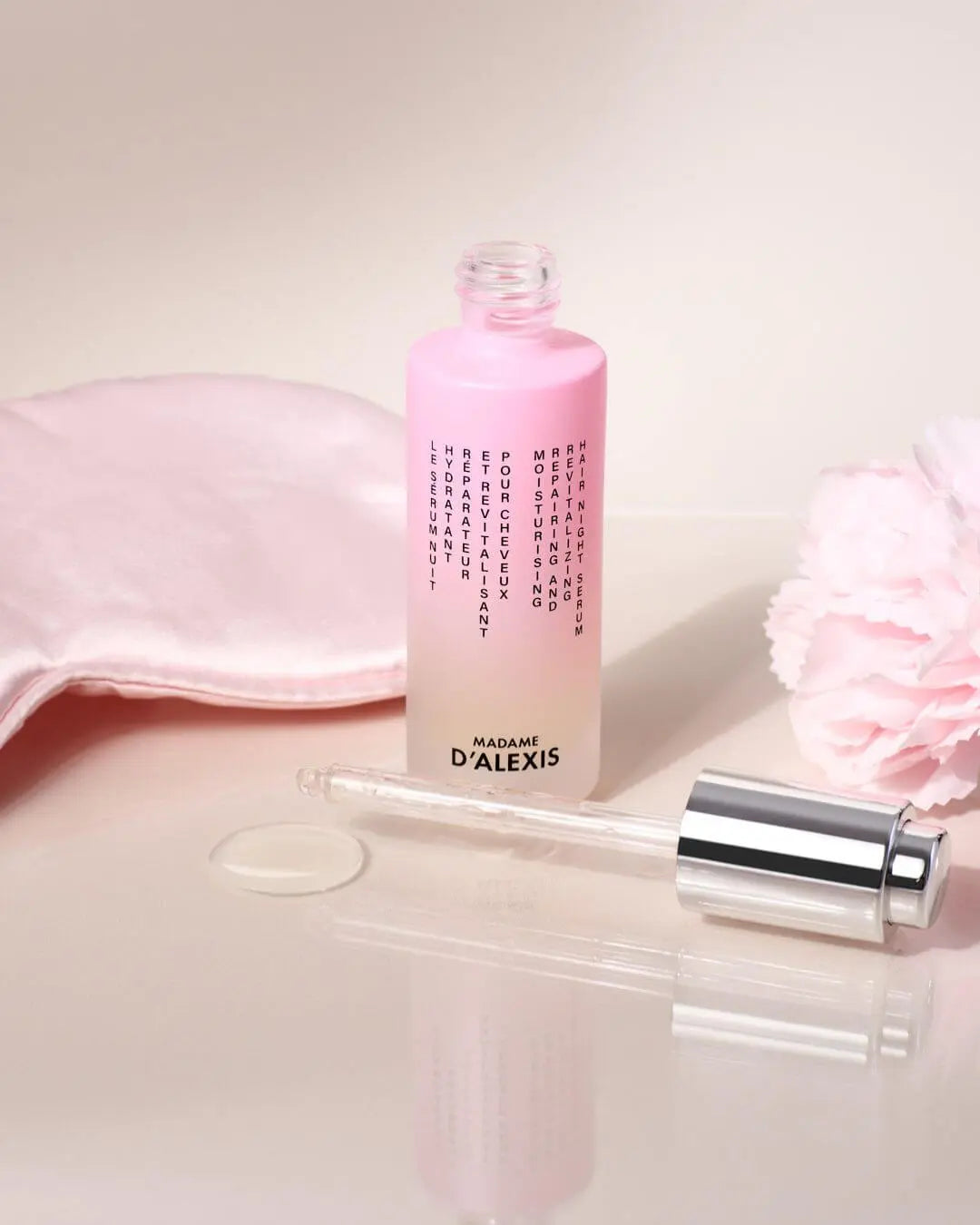
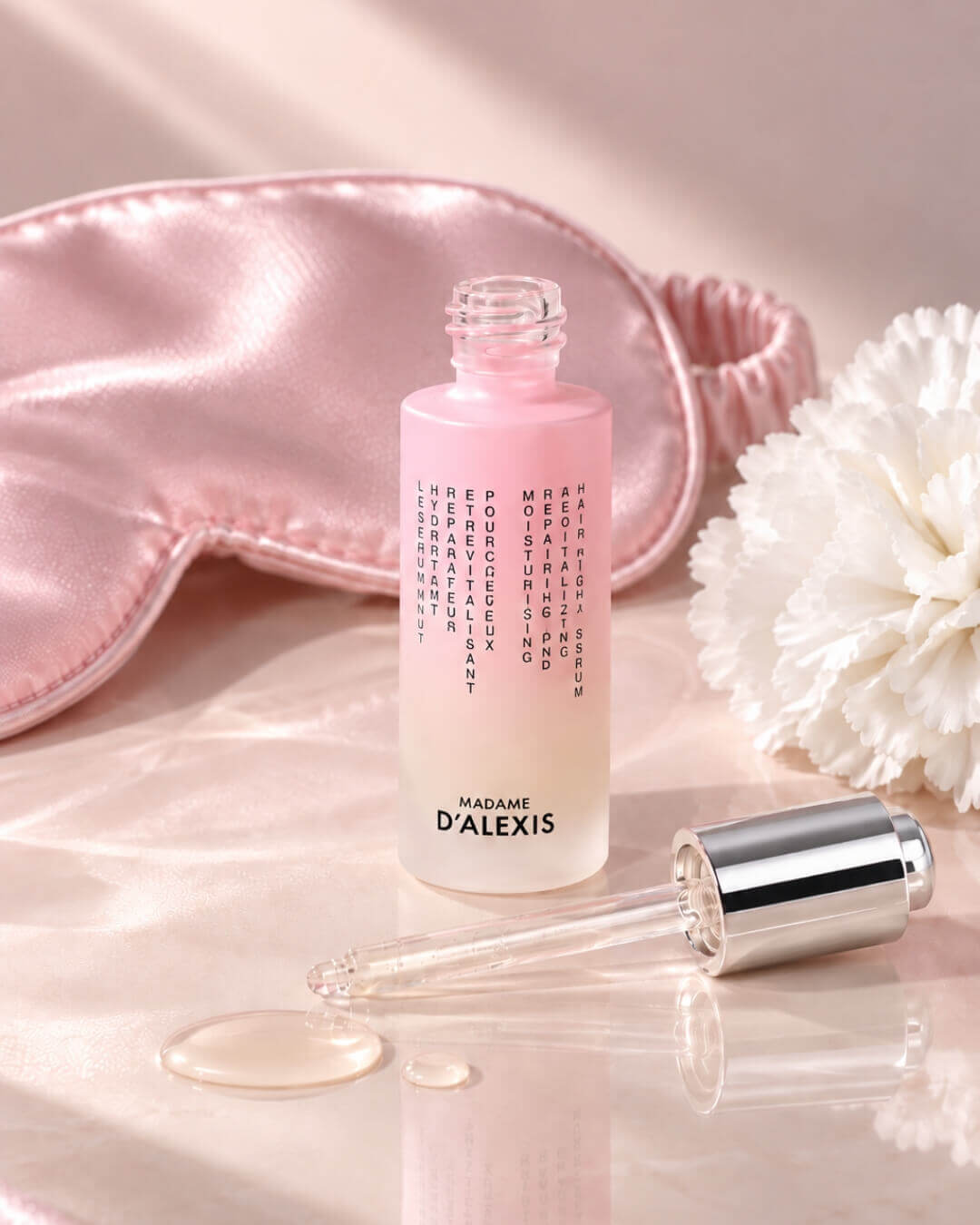
Night Serum for roots
- Scalp and roots only
- In the evening, apply section by section
- A few drops, leave-in
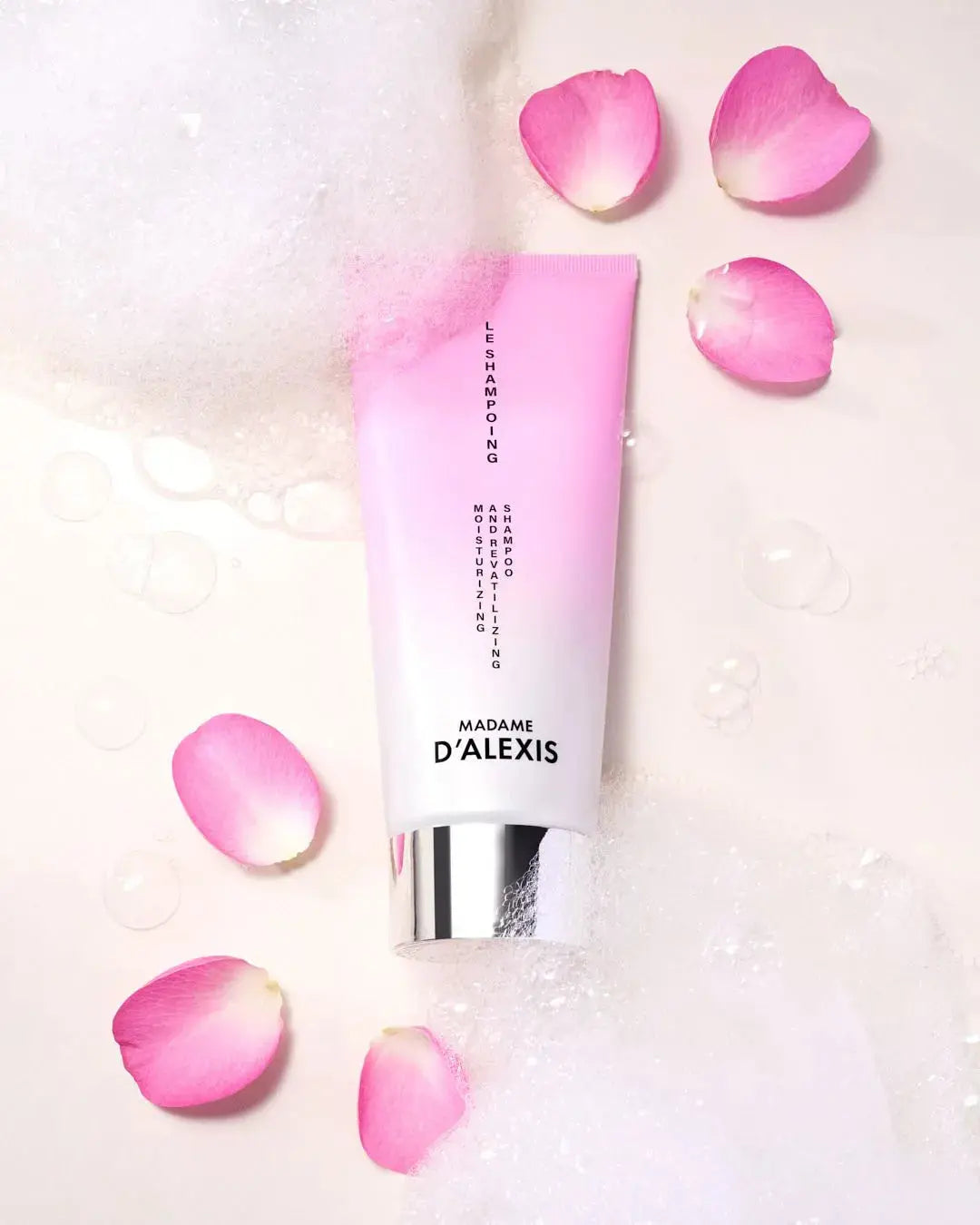
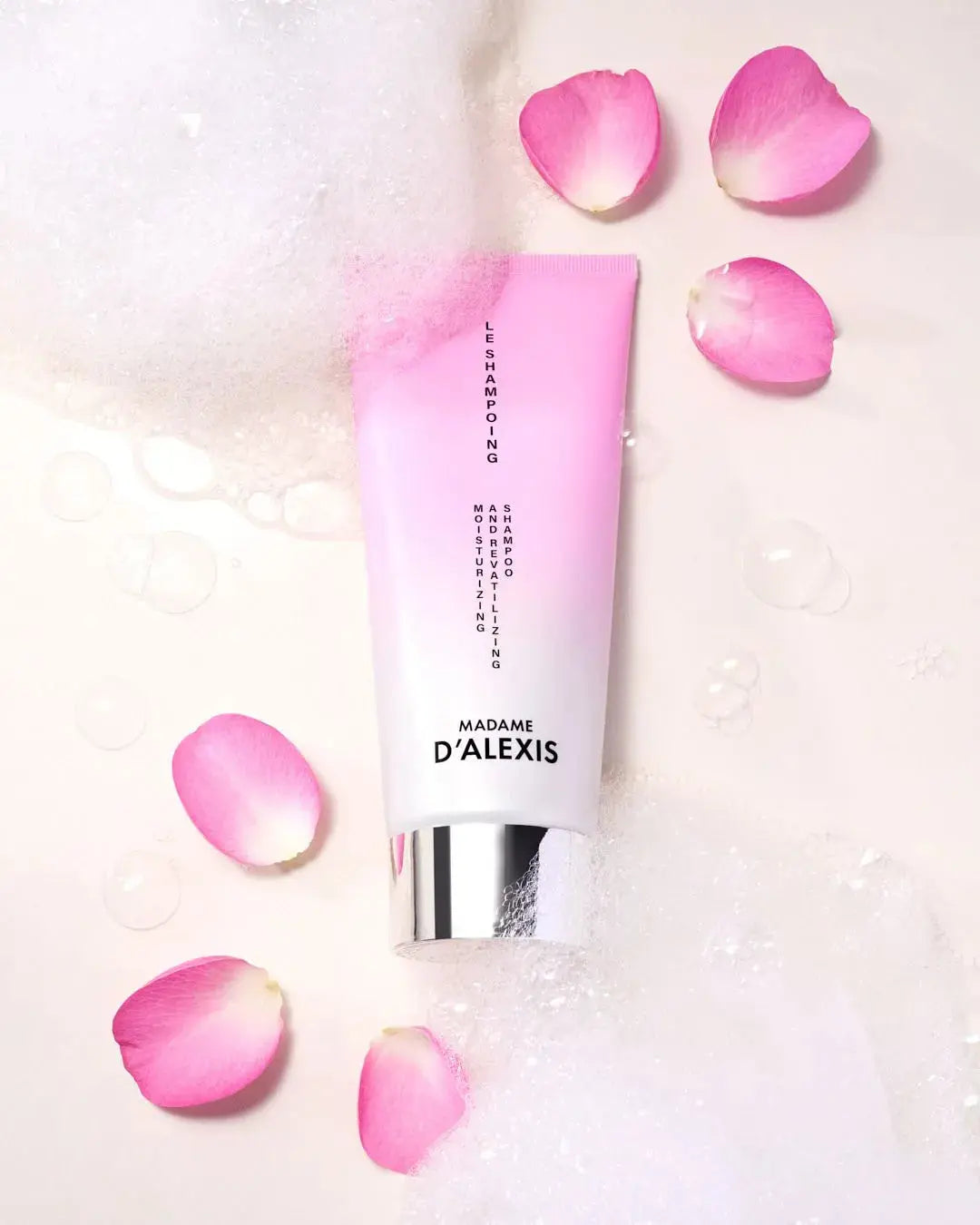
Gentle Shampoo
- Free from sulfates and silicones
- pH 5, gentle cleansing
- Cationic hyaluronic acid
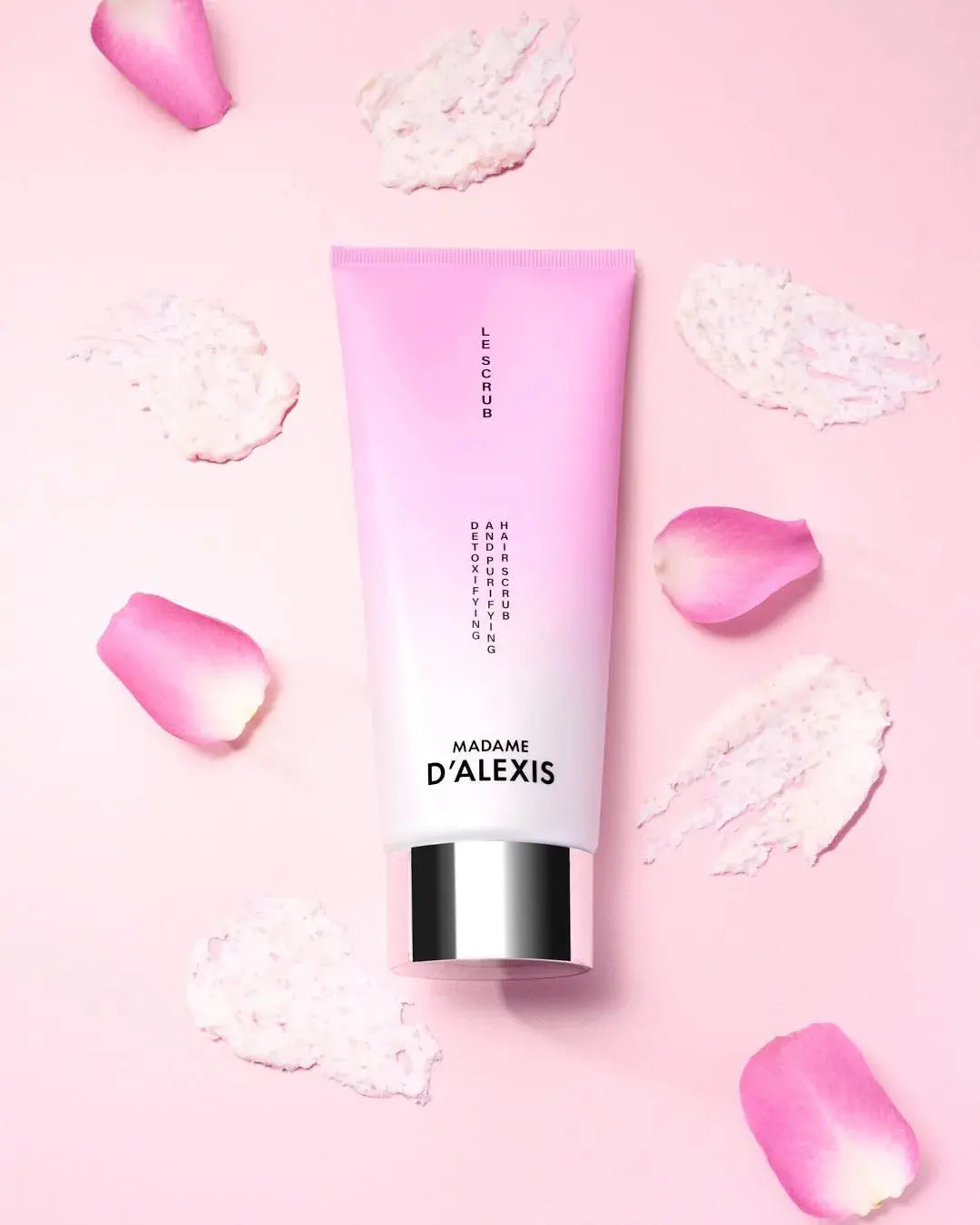
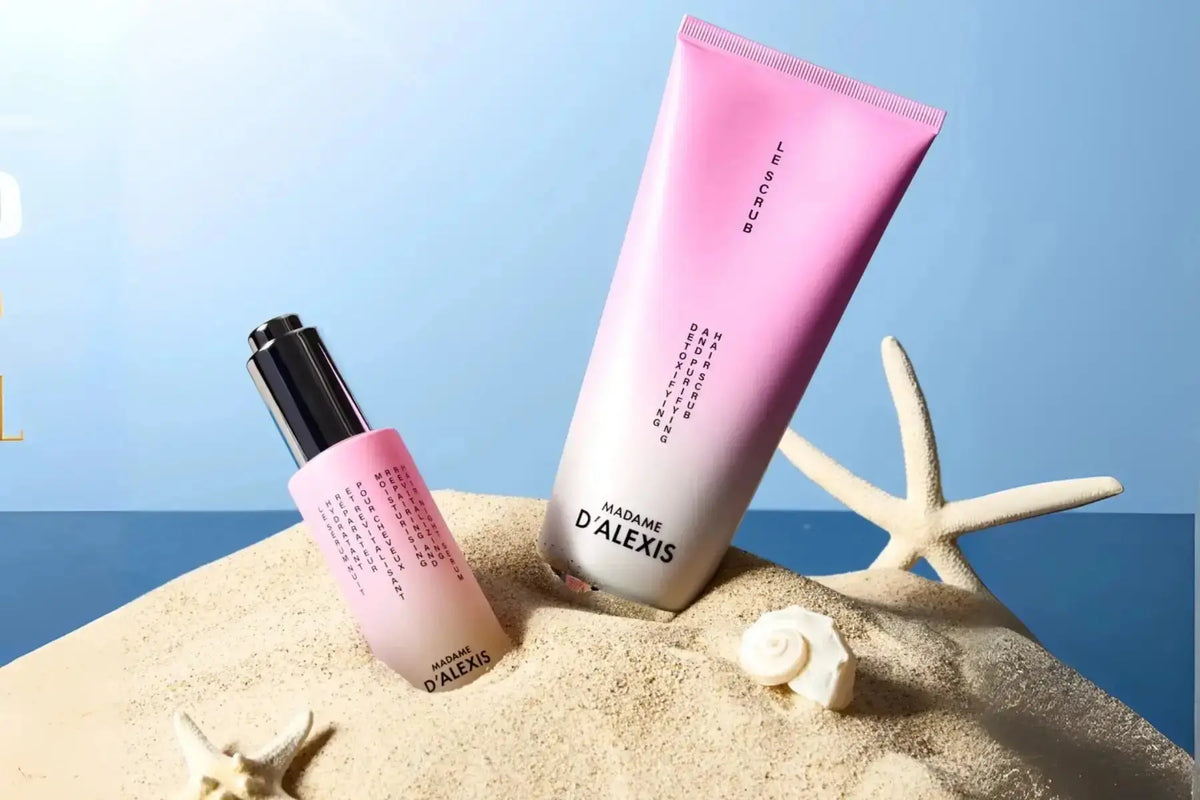
The Reset Scrub
- Every 10 to 15 days
- Replaces shampoo on that day
- Whether it's sebum, pollution, or residue
Which prebiotic shampoo should you choose?
A prebiotic shampoo is, first and foremost, a rinse-off product: its cleansing base, its skin-friendliness, and the stability of the active ingredient are just as important as the presence of the word “prebiotic” on the label. A prebiotic nourishes microorganisms that are already present; it does not necessarily add live bacteria to the scalp.
In a shampoo, the goal is therefore primarily to cleanse without stripping the hair, while incorporating an active ingredient compatible with a rinse-off formula. Madame d’Alexis Shampoo follows this approach with its prebiotics, organic hydrosols, cationic hyaluronic acid, and plant-based keratin. When your roots become saturated after exercise, wearing a helmet, or exposure to heat, check out our guide on sweat and scalp buildup.
The Scalp Microbiome: An Ecosystem That Remains Largely Ununderstood
The scalp is colonized by bacteria and yeasts that naturally coexist. This invisible balance is referred to as the scalp microbiome. When it functions properly, it supports scalp comfort, the hydrolipidic film, and tolerance to hair care products.
An imbalance may be associated with dandruff, excess sebum, or an itchy scalp, but it’s important not to attribute everything to a single cause. If you experience patches, pain, scabs, unusual hair loss, or persistent symptoms, you should still consult a dermatologist.
Cutibacterium
A family of bacteria naturally found on the skin and scalp.
Staphylococcus
A group of microorganisms present in the skin ecosystem, the balance of which depends on the individual's constitution.
Malassezia
A naturally occurring yeast that is often mentioned in discussions of dandruff when it proliferates.
Prebiotics, probiotics, postbiotics: What are the differences?
These three categories are often confused. However, they do not play the same role in a hair care routine.
Let’s start with the term that’s most often misused. A prebiotic is neither a bacterium nor a living microorganism: in the scientific sense, it is a substrate selectively utilized by the host’s microorganisms and associated with a benefit. When used in skincare, a scalp prebiotic therefore aims to nourish the existing microbiota rather than “colonize” the skin. This approach to topically modulating the skin microbiota is still an active area of research; clinical data is more extensive for certain dermatological applications than for hair care. Source: Institut du Microbiote ↗
| Family | Simple Definition | Cosmetic use | Relevant Madame d’Alexis product |
|---|---|---|---|
| Prebiotics | Substrates that provide nourishment for the beneficial microorganisms already present. | Help maintain a more balanced environment. | Shampoo. |
| Probiotics | Assets associated with the microbiome. | Supports scalp balance. | Night Serum. |
| Postbiotics | Compounds produced by fermentation, which are more stable than living microorganisms. | Helps promote comfort and support the skin's protective barrier. | Night Serum. |
Alexis's Microbiome-Friendly Routine
The goal is simple: treat the scalp just like skin. Avoid harsh washing, minimize product buildup, and choose targeted treatments based on the scalp’s actual needs.
Wash gently
This shampoo cleanses the scalp without sulfates or silicones. Its formula combines organic hydrosols, cationic hyaluronic acid, prebiotics, and plant-based keratin to ensure a comfortable hair care routine. To learn more about the botanical basis of these formulas, check out our guide to hydrosols for hair.
Target the roots in the evening
Apply the Night Serum section by section to the scalp and roots. Just a few drops are enough to incorporate probiotics and postbiotics into a light nighttime routine.
Reset when the roots become saturated
If your hair is oily, exposed to pollution, sweaty, or has styling product residue, Le Scrub offers a quick reset every 10 to 15 days. On those days, it replaces shampoo. Our guide to hair scrubs—whether used before or after shampooing —explains why this step stands on its own in your routine.
Establishing a Routine
The microbiome thrives on consistency: lukewarm water, a thorough rinse, minimal use of occlusive products at the roots, and repeated, measured steps rather than an accumulation of treatments.
Which asset should you choose based on your profile?
| Profile | Main Problem | Recommended routine | Business or informational page to promote |
|---|---|---|---|
| Sensitive scalp | Tingling, discomfort, tightness. | The Gentle Shampoo + Night Serum as needed; skip the scrub if there is active irritation. | Shampoo for an itchy scalp. |
| Mild dandruff | Scaling, localized itching. | Gentle daily routine; occasional exfoliation if buildup occurs; consult a doctor if the problem persists. | dandruff, dry scalp. |
| Oily Scalp | Heavy roots, oily hair. | Shampoo and scrub every 10 to 15 days if the product has built up. | Oily hair after shampooing. |
| Weakened Roots | A sensation of reduced density or diffuse loss. | Use the Night Serum as part of your hair care routine; consult a professional if you experience unusual hair loss. | Probiotic scalp serum. |
| Product Accumulation | Heavy roots, dull hair, a feeling of heaviness. | A quick reset with Le Scrub. | scalp scrub. |
Habits That Disrupt the Scalp's Microbiome
- Washing your hair too often with a harsh shampoo.
- Use very hot water, especially on a sensitive scalp.
- Building up dry shampoo, styling sprays, and oils at the roots without occasionally washing your hair.
- Exfoliating too often: According to Madame d’Alexis, the right frequency is every 10 to 15 days.
- Apply the Night Serum to the lengths of your hair instead of the scalp and roots.
- Attributing a significant weight loss solely to the microbiome without professional advice.
3 Tips for Understanding Microbiome Claims Without Falling for Marketing Hype
Prebiotic ≠ probiotic
A prebiotic nourishes an existing microbial ecosystem. A probiotic, in the strict scientific sense, refers to a live microorganism that provides a benefit. In cosmetics, we also encounter ferments, lysates, and postbiotics: it’s therefore important to read the ingredient list rather than relying solely on the marketing name.
In the "rinsed" formula, every little bit counts
For a prebiotic shampoo, the mildness of the cleansing base, the contact time, the stability, and the overall consistency of the formula are just as important as the presence of a prebiotic active ingredient.
Microbiome ≠ a promise of regrowth
A healthy scalp provides a more favorable environment for hair growth, but a microbiome-based treatment should not be marketed as a cure for hair loss. Sudden, localized, or persistent hair loss warrants a consultation with a dermatologist.
FAQ - Prebiotics, Probiotics, and the Scalp Microbiome
What is the difference between prebiotics and probiotics for hair?
Prebiotics serve as a substrate for microorganisms that are already present. In the strict scientific sense, probiotics refer to live microorganisms that provide a benefit; in cosmetics, one also encounters ferments, lysates, and postbiotics. In the Madame d’Alexis line, the Shampoo contains prebiotics, and the Night Serum features probiotics and postbiotics.
Does Madame d’Alexis Shampoo contain probiotics?
No. The shampoo contains, among other ingredients, organic hydrosols, cationic hyaluronic acid, prebiotics, and plant-based keratin. The probiotics and postbiotics are found in the Night Serum.
Should The Night Serum be applied to the lengths?
No. The Night Serum is applied to the scalp and roots in the evening, section by section, and does not need to be rinsed out. It is not a substitute for a finishing serum designed for the lengths of the hair.
Do prebiotics promote hair growth?
You shouldn’t promise guaranteed hair growth. Prebiotics can be part of a microbiome care routine, but hair growth depends on many factors: genetics, hormones, nutritional status, the hair growth cycle, and scalp health.
When should you use the scrub as part of a microbiome routine?
Use as an occasional reset when the scalp is clogged with sebum, pollution, or product buildup. The recommended frequency for Madame d’Alexis is every 10 to 15 days, and on those days, use Le Scrub in place of shampoo. Avoid using it on a scalp that is actively irritated.
What is a prebiotic in a cosmetic product?
In cosmetics, a prebiotic is an ingredient selected to be used selectively by certain microorganisms in the host. The ISAPP reference definition describes it as a substrate that is used selectively by the host’s microorganisms and provides a benefit. Therefore, not all sugars, fibers, or plant extracts are automatically prebiotics. See the ISAPP definition.
Can prebiotics help with hair loss?
Prebiotics are not a treatment for androgenetic alopecia and should not be marketed as an active ingredient that promotes hair regrowth. Their benefit lies in supporting the scalp. The 89% reduction in hair loss observed after 60 days applies to the Night Serum, which combines probiotics/postbiotics and botanical active ingredients, not the Prebiotic Shampoo. If you experience sudden, diffuse, or localized hair loss, consult a dermatologist.
Useful sources
ISAPP—Definition and Criteria for Prebiotics: A prebiotic is a substrate selectively utilized by the host’s microorganisms and associated with a health benefit.
Biocodex Microbiota Institute - Topical modulation of the skin microbiota: Topical approaches are being studied, though the evidence remains limited depending on the indication.
Yin et al. (2024), a systematic review on probiotics, hair growth, and dandruff, PMC/NIH.
Moosbrugger-Martinz et al. (2024), research on the scalp microbiome and postbiotic formulations, *Scientific Reports*.
Madame d’Alexis Product Information: Prebiotic Shampoo, Probiotic/Postbiotic Night Serum, Scalp Reset Scrub for occasional use.